Who this is for
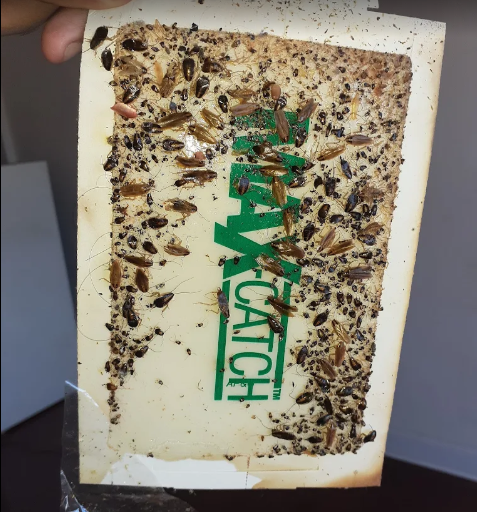
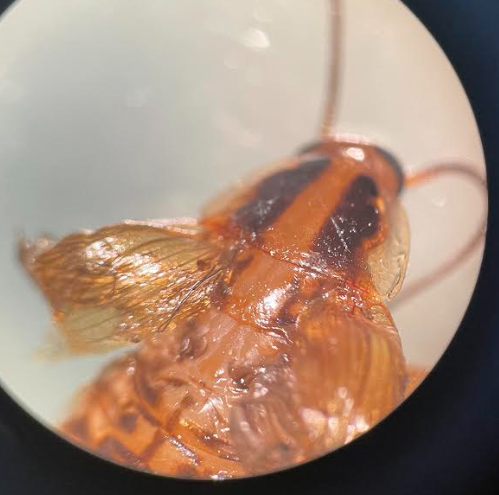
This article is written for licensed pest management professionals, supervisors, and technical directors who are dealing with German cockroach (Blattella germanica) work in NYC-style multi-unit housing—high-rises, large apartment buildings, condos, attached homes, and any structure where kitchens share plumbing walls or chases.
Why I wrote this
If you’ve ever had a “good” German cockroach treatment that still “failed,” the issue is often not effort—it’s building dynamics and strategy.
This is a research-to-field translation of three papers:
Atkinson, Koehler & Patterson (1992) — hydroprene volatile effects vs fenoxycarb
Zha et al. (2019) — spatial distribution and building-wide IPM in a 188-unit high-rise
Hamilton et al. (2020) — novaluron ingestion/topical effects on development and reproduction
The goal is not to summarize the papers like a student. The goal is to extract field decisions:
Where to monitor for maximum diagnostic signal
How to interpret trap patterns like a “roach epidemiologist”
How to think about IGR volatility vs ingestion-based CSIs
Why verification visits are diagnostic, not “upsell”
How to separate local survivors from migrants using biology, not guessing
Executive Summary (read this first)
German cockroach programs fail in multi-unit housing because PMPs often treat like it’s a single-family home.
In a connected building, you are dealing with:
Spatially connected subpopulations (units influence each other)
Migration through plumbing/electrical pathways
Harborages you can’t fully reach
Selection pressure and behavior shifts caused by repellency and inconsistent exposure
Timing effects: what the product can do depends on where the roach is in its reproductive cycle
The research supports a higher-level approach:
Hydroprene can contribute through volatile/space effects in confined harborages.
Novaluron can strongly affect development via ingestion, but “instant elimination” depends on timing.
High-rise infestations aren’t randomly distributed—they’re clustered and correlated. This matters for program design and interpretation.
Monitoring near stove and refrigerator often provides higher signal than under-sink or bathroom placements.
A second visit is not optional in many buildings—it’s the diagnostic moment where you decide whether you’re facing survivors or migrants.
First principles: why apartment-building German roaches are different
Before products, you need the model.
In single-family homes, a “roach job” is often:
a contained infestation
one set of harborages
limited migration inputs
a more predictable decline curve
In multi-unit housing, your treatment curve is distorted by:
incoming roaches from neighboring units
shared structural pathways
sanitation variability by unit
different levels of resident cooperation
building-level “core” infestations that continuously seed other units
This means:
If you don’t diagnose building dynamics, you can “treat correctly” and still fail.
Paper #1 (Atkinson et al., 1992): Hydroprene volatile effects and why “coverage” is the wrong mindset
What was tested (high level)
Atkinson, Koehler & Patterson evaluated German cockroach nymphs held in continuous proximity to surfaces treated with hydroprene or fenoxycarb, while preventing direct contact.
This matters because it isolates the question:
Can an IGR still cause effects when roaches don’t touch the treated surface?
Key field-relevant idea
Hydroprene can contribute through volatile/space activity under certain conditions (especially in confined environments). That aligns with what many experienced PMPs see: hydroprene can affect development in harborages where contact is inconsistent.
Why this matters in real kitchens
German roaches live in places that produce three problems:
your spray line can’t physically reach where they are
your residual doesn’t remain uniform across mixed surfaces
roaches don’t travel “exposed” like ants; they stay tight and protected
So if your strategy assumes “we covered the area,” you’re already losing.
The value of hydroprene in the real world is not “blanket IGR everywhere.”
It’s strategic placement where confinement and harborage behavior allows space effects to matter.
Practical application guidance (what a technical director should tell techs)
Use hydroprene where:
there is confinement (toe-kicks, motor cavities, wall void edges, tight cabinet voids)
roaches spend time developing (nymphal zones)
there’s repeated exposure opportunity
Do not treat hydroprene like a “spray and forget” ingredient added to random tank mixes.
What to look for later (diagnostic signatures)
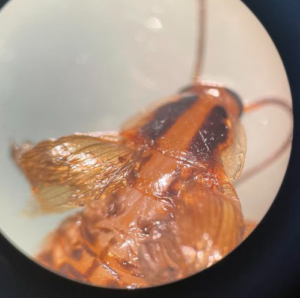
IGRs create visible biological signatures:
adultoids
wing twisting
incomplete ecdysis
developmental deformities
These are more than “cool observations.”
They tell you: development occurred in an IGR-impacted environment.
That becomes important in survivor vs migrant diagnosis (later).
Paper #2 (Hamilton et al., 2020): Novaluron ingestion and the timing trap
What was tested (high level)
Hamilton et al. evaluated novaluron (CSI/BPU) effects via:
ingestion exposure
topical exposure
and assessed development and reproduction outcomes.
Why novaluron is a major tool (when used correctly)
Novaluron is not a knockdown tool. It is a population-growth tool.
Its strongest operational value is:
disrupting successful molting and recruitment
reducing future breeding potential
weakening population math over time
The “timing trap” PMPs must understand
A female German cockroach’s reproductive cycle matters.
If exposure occurs:
before or during the right physiological windows, you can reduce future reproduction output
after ootheca formation has progressed, you should not oversell instant control of what is already biologically underway
This leads to a real-world principle:
CSI bait stops tomorrow’s population more reliably than it stops today’s already-formed ootheca.
So if a client expects:
“all eggs die immediately after you treat”
you must set expectations and design the program accordingly.
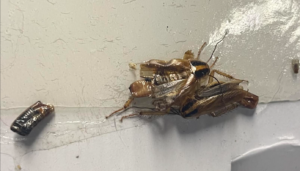
Practical use: what novaluron does best in the field
Prevents recruitment: nymphs that feed fail to successfully molt
Suppresses population rebound: even if reintroduction happens, the “math” becomes slower and weaker
Works best when roaches feed: placement is everything
What to do operationally (PMP playbook)
If using novaluron-based bait:
place where intake is highest (aggregation zones, not random dots)
avoid repellency that reduces feeding contact
pair with a program that reduces adult pressure and forces repeat exposure
confirm with monitoring rather than relying on “product belief”
Paper #3 (Zha et al., 2019): High-rise spatial correlation and why unit-only programs “fail”
What was studied
Zha et al. examined infestation distribution and monitoring patterns in a 188-unit high-rise, before and after building-wide IPM.
Two findings that change field decisions
1) Traps by stove and refrigerator catch more
This is huge for PMPs.
It means:
If you place monitors randomly, you may under-diagnose the infestation and misread program success/failure.
In many kitchens, stove + refrigerator zones are:
warmer
more food residue
motor/void harborages
high movement corridors
So monitoring there provides stronger signal.
2) Infestations are spatially correlated
This supports what techs often know intuitively:
Roaches are not evenly distributed. They cluster, and nearby units influence each other.
So “reinfestation” is often:
not your treated unit failing
but the treated unit being re-seeded
Building-wide IPM reduced dispersal and weakened correlations over time—meaning building participation matters for real elimination.
The full model: why “spray-only” is structurally weak in multi-unit housing
Spray-only programs often fail because:
they don’t reliably reach harborages
they can reduce feeding/bait contact
they can scatter roaches
they do not diagnose migration
they often fail to shut down reproduction consistently
In multi-unit housing, the “silent killer” is not the roach you see.
It’s the roach you don’t see that is breeding next door.
A research-based elimination framework (how to build a program that wins)
Step 1: Establish diagnostic monitoring first
Before and after treatment, monitoring is not optional.
Minimum standard:
2–4 monitors in kitchen
prioritize stove and refrigerator placements
add under-sink as secondary
track counts by location, not just “overall”
A program without monitoring is a program without truth.
Step 2: Reduce adult pressure without sabotaging long-term control
You need fast relief and long-term collapse.
The balance is:
suppress visible adults
preserve feeding and contact behaviors for your long-term tools
This is where many programs destroy their own success with over-repellency.
Step 3: Apply IGR logic strategically, not emotionally
Use hydroprene where confinement makes sense.
Use deformities as verification signatures.
Do not treat IGRs like “magic sterilizers” if exposure is inconsistent.
Step 4: Use CSI ingestion to weaken the population’s future
Novaluron-based baits are best viewed as:
population growth suppressors
recruitment killers
rebound preventers
Place them for feeding, not for appearance.
Step 5: Diagnose survivor vs migrant like a professional
This is the technical director moment.
You must decide what the remaining roaches mean.
Practical diagnostics: survivor vs migrant decision-making
Ask:
Are these roaches developing in my treated unit or arriving from elsewhere?
Signs leaning toward local survival
activity does not decline at all after treatment
trap counts remain strong in the same harborages
developmental abnormalities appear (IGR exposure signatures)
nymphal presence remains consistent in core zones
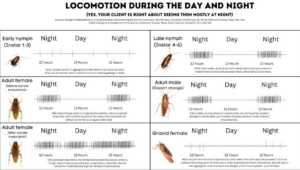
Signs leaning toward migration
you treat hard, counts drop, then rebound with adults
repeated normal adults appear without developmental disruption
patterns correlate to shared walls/plumbing chases
male-heavy adult captures appear repeatedly (common migration signal)
One adult could be a grocery box.
Repeated patterns are building dynamics.
How to explain this to a property manager (without sounding defensive)
Use this framing:
“This is not a single-unit problem. Research confirms infestations cluster and spread between units through structural pathways. Our program combines treatment with monitoring to determine whether remaining activity is survival or migration. If migration is confirmed, controlling the source unit is required for true elimination.”
Common failure modes (what to audit when a program “fails”)
If a program isn’t working, audit in this order:
Monitoring placement: did you monitor stove/fridge zones?
Bait placement: are roaches actually feeding where you placed it?
Repellency: did you unintentionally reduce feeding/contact?
Harborage access: did you treat where they live or where it’s easy?
Migration: did you confirm or ignore adjacent unit pressure?
Resident behavior: sanitation, clutter, exclusion of food/water
Building cooperation: if the source is untreated, your unit will be re-seeded
FAQs (For PMPs and building operators)
Why do German cockroach programs fail in high-rise buildings even when the tech treated correctly?
Because the building behaves like a connected system. Unit-only work can look like failure when migration pressure continues from untreated adjacent units.
What does hydroprene volatility mean in practical terms?
It suggests hydroprene can contribute to developmental disruption in confined harborages even when direct contact is inconsistent—useful in void-adjacent zones where roaches develop.
Does novaluron kill roach eggs inside an already formed ootheca?
Timing matters. Novaluron is strongest through ingestion and disrupts development and recruitment. Effects on an already-formed ootheca are less reliable once embryos are already developing.
Why is stove and refrigerator monitoring emphasized?
High-rise research showed these placements often capture more roaches. They provide high-signal data to diagnose infestation intensity and track collapse.
When should you insist on a verification visit?
When working in multi-unit housing, anytime migration is possible. The second visit is where you confirm reproduction disruption, validate decline curves, and diagnose migration vs survival.
What is the biggest strategic difference between “management” and “elimination”?
Management reduces what the client sees. Elimination collapses reproduction and addresses source pressure so the unit is not continuously re-seeded.
Need help with a complex building case?
If you’re a licensed exterminator, supervisor, or property manager dealing with a persistent German cockroach issue in a multi-unit building—and you want to discuss strategy, monitoring design, or migration diagnosis—I’m available to help.
Jorge Bedoya — Associate Certified Entomologist
New York Exterminating Inc.
1115 E 13th St, Brooklyn, NY 11230
Phone: 347-210-4646
Website: nyepestcontrol.com