Why New York Exterminating
We’re built to solve your pest problem, not to lock you into a monthly contract. We don’t require monthly spray contracts or forced annual agreements, the same technician handles your property whenever possible, and we never blame your housekeeping. Every job is ACE-led (Jorge Bedoya, Associate Certified Entomologist, NYSDEC #15140), bilingual in English and Spanish, and we serve all five boroughs plus Nassau and Westchester — with a callback rate under 1%.
Looking for a dedicated NYC bed bug exterminator? Visit our bed bug exterminator NYC page for K-9 detection, heat & multi-mode treatment and pricing. Book online & save 20% →
Callback rate under 1%
Most NYC surfaces — wood, plaster, and fabric — are porous, so we run a four-mode treatment instead of a single spray.
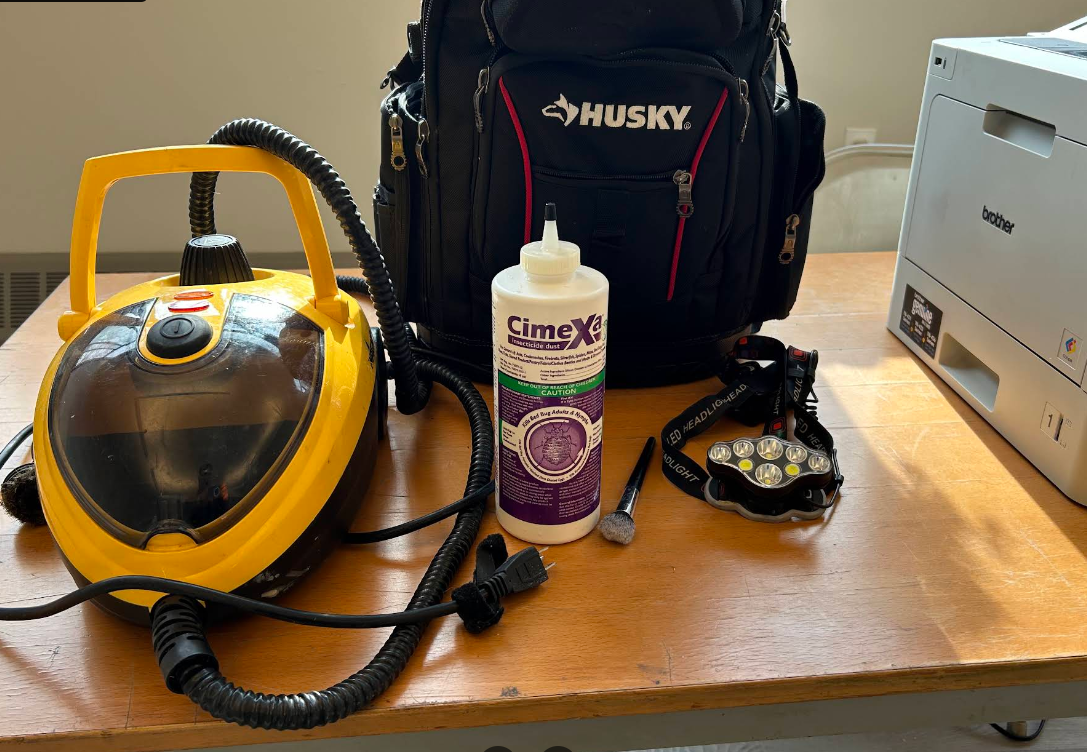
We bring a clean track record of completely controlling bed bugs to every job — from a single apartment to a building-wide infestation. Each one starts with a precise inspection by our Associate Certified Entomologist (ACE) and is treated with specialized professional equipment (no basic backpack sprayer like much of the industry sends). We only deploy products and methods with a proven control record, applied at a lower toxicity than standard treatments but with strong lethality on contact.
Not sure what’s biting you? If you feel bites, itching or crawling but can’t find the culprit, read our guide: Mystery bites & hidden pests — how we find the real cause »
Can’t wait? We offer 24/7 emergency pest control in NYC — same-day and after-hours response.
Renter or landlord? Read our NYC bed bug law & tenant-rights guide »
From Jorge’s experience — Jorge Bedoya, ACE
The most common mistake I see in NYC bed bug cases is people treating the bites instead of confirming the bug. By the time most clients call, the infestation has usually moved along the bed frame and into the wall void — which is why a single spray almost never holds. What works is confirming the extent first, often with a K-9 alert, then committing to a documented protocol with follow-ups timed to the egg hatch. In NYC, the jobs that clear fastest are the ones where we also check the adjoining units, because bed bugs travel between apartments.
Real New York Exterminating jobs
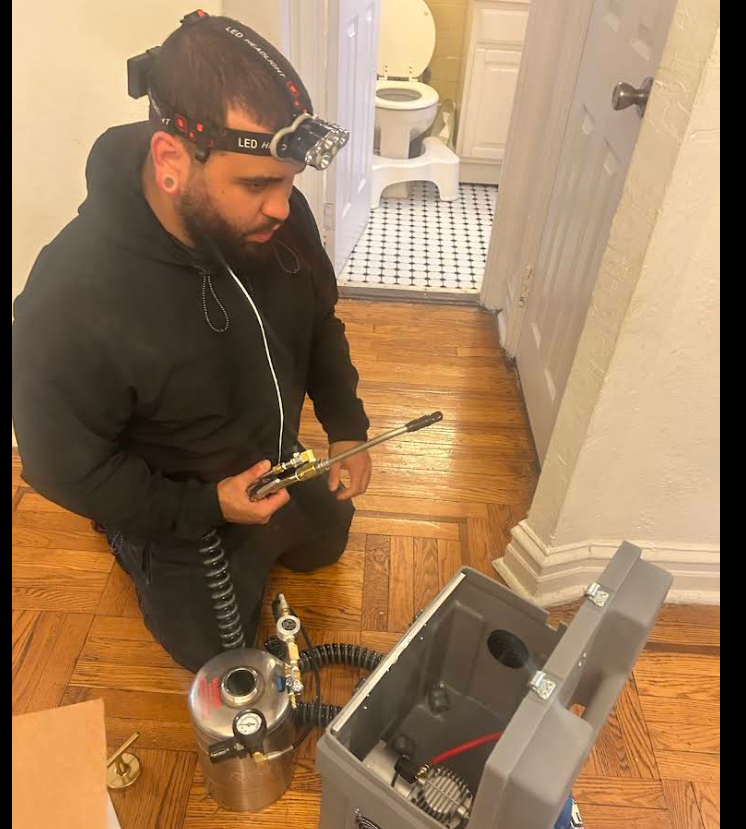
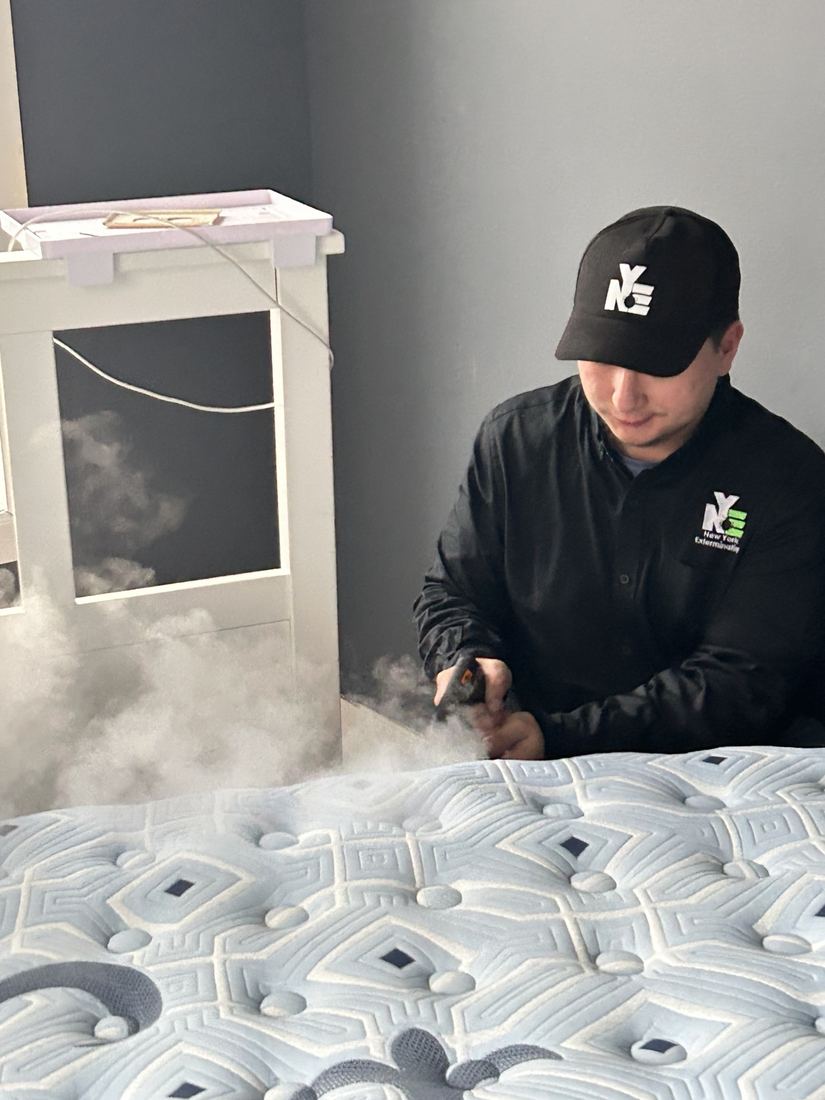
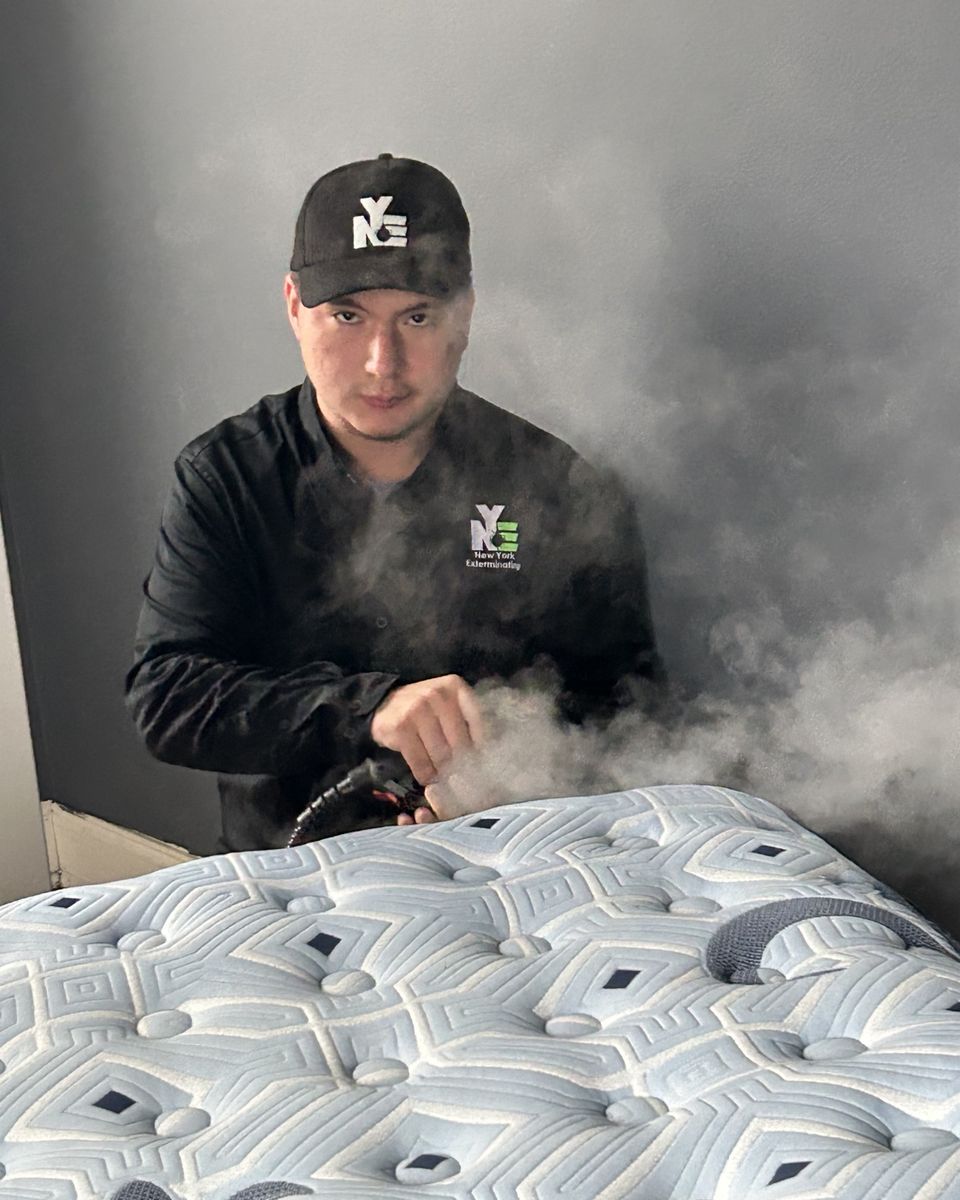
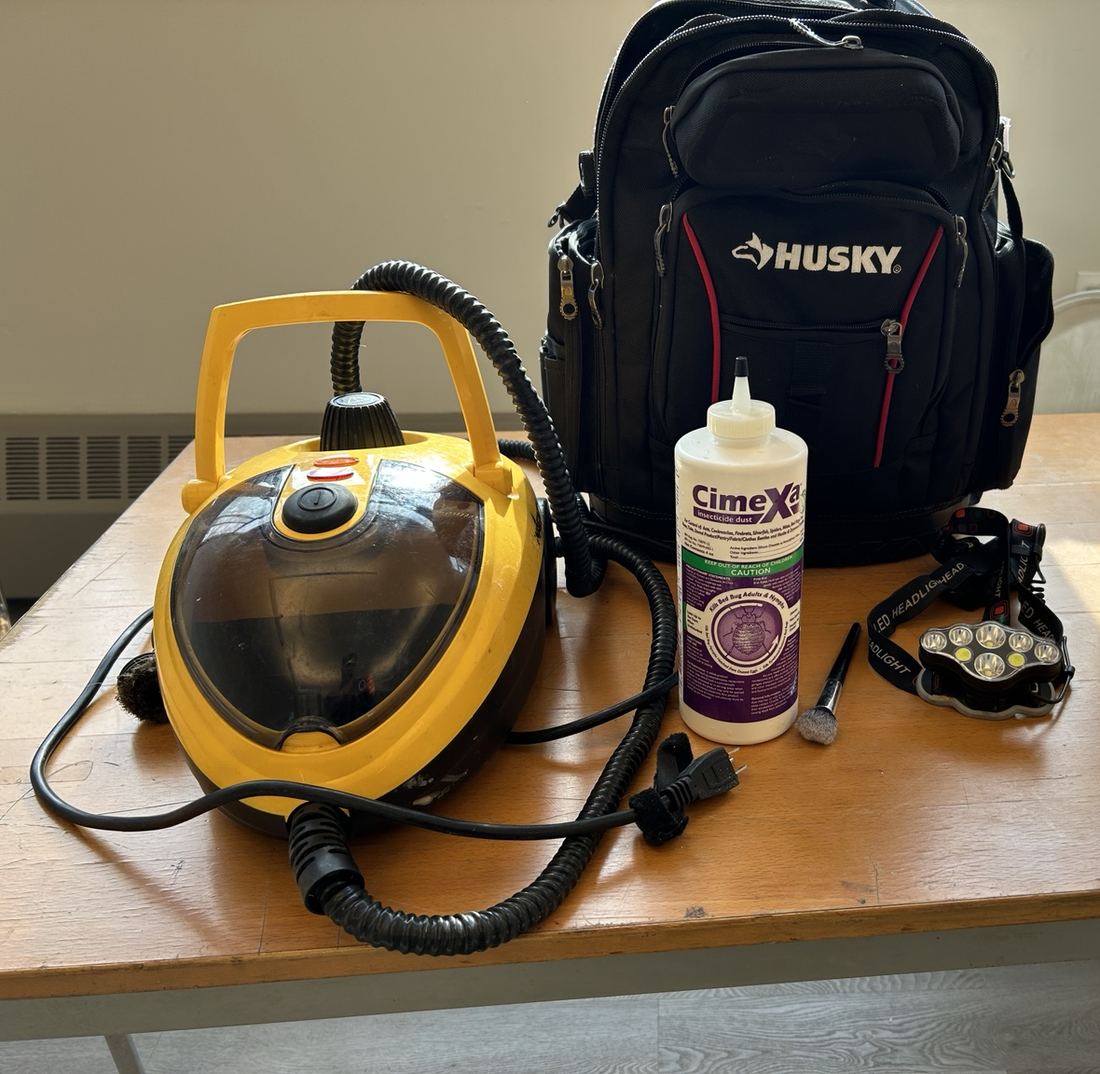
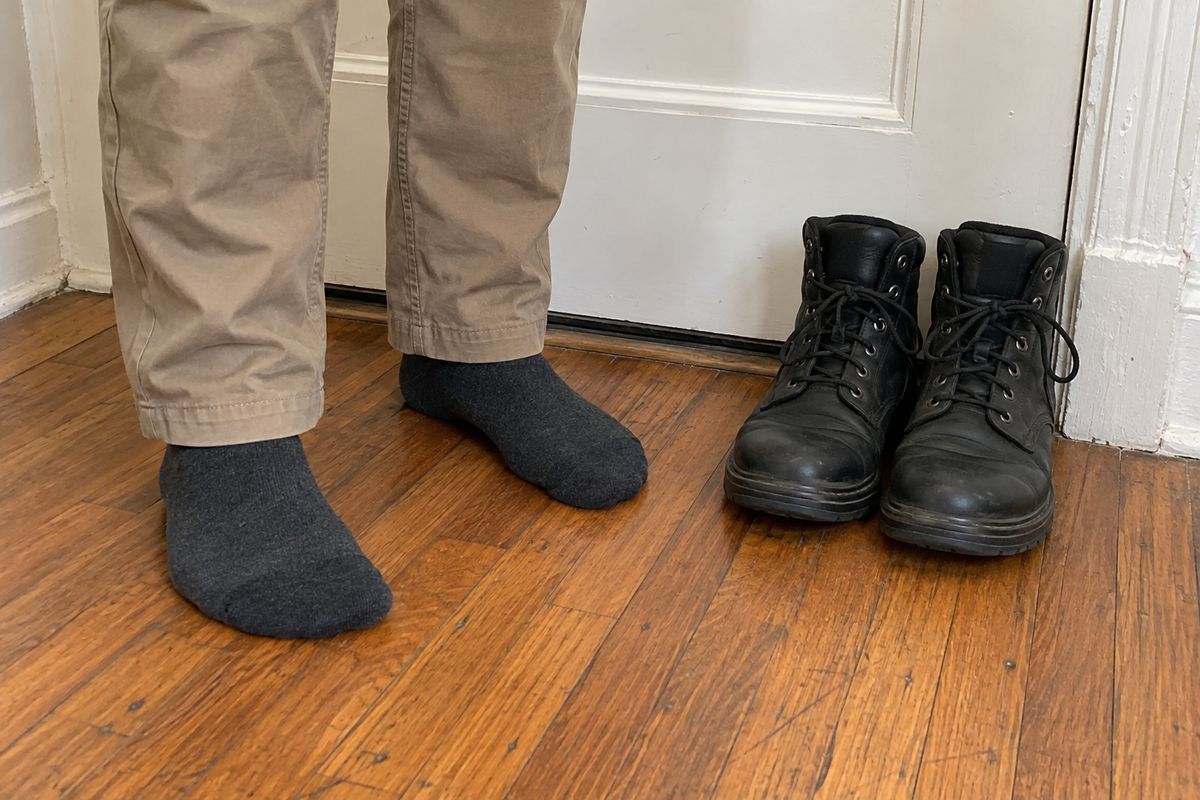
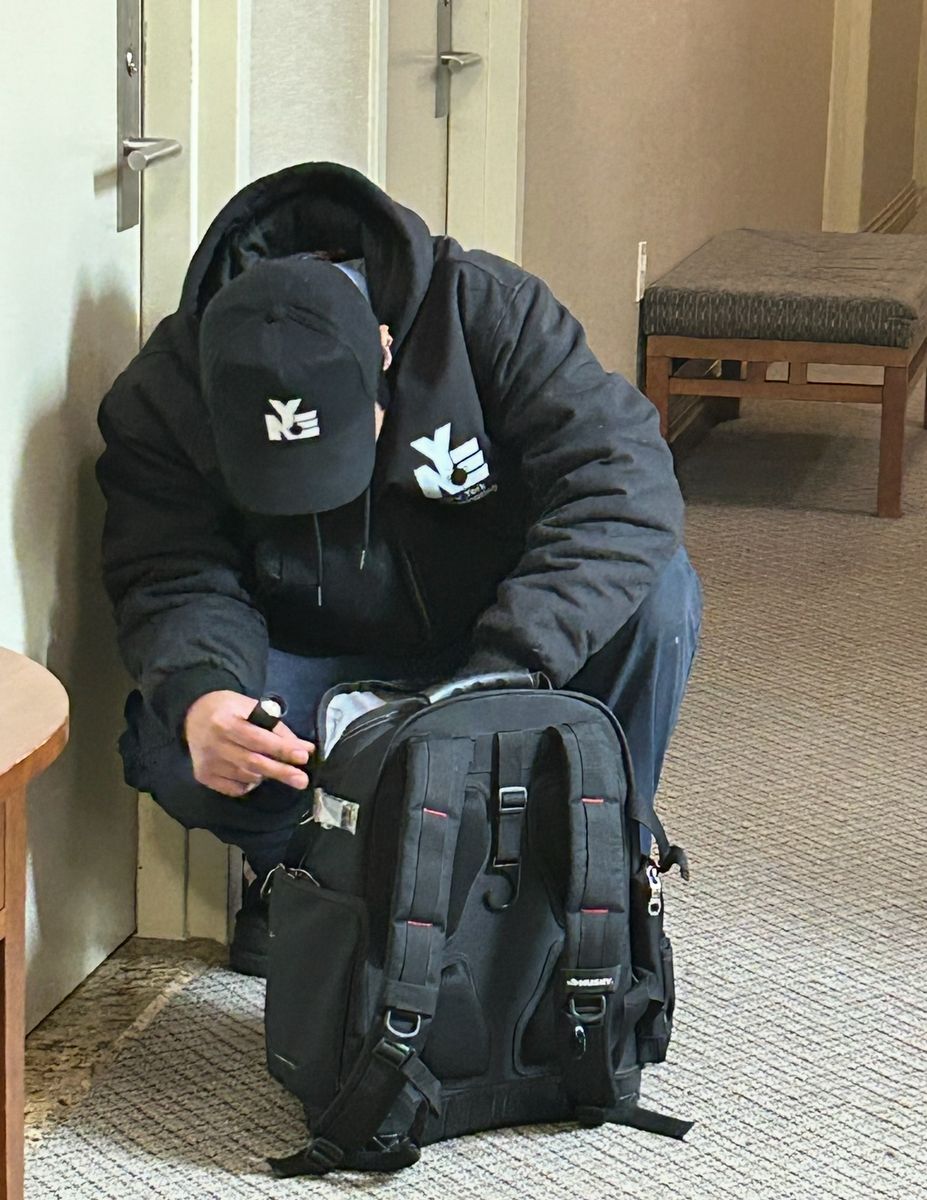
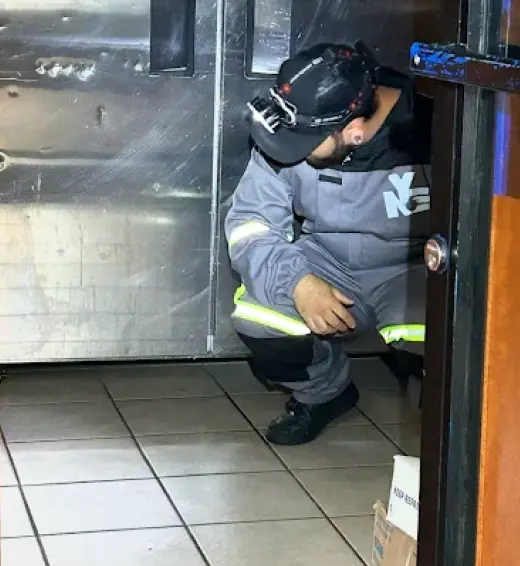
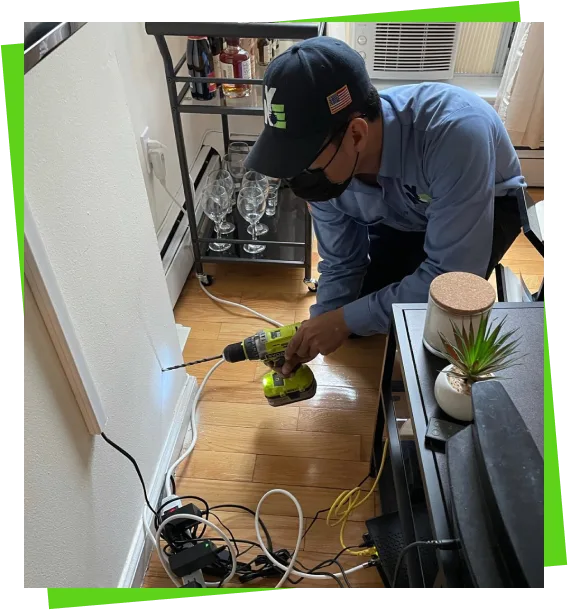
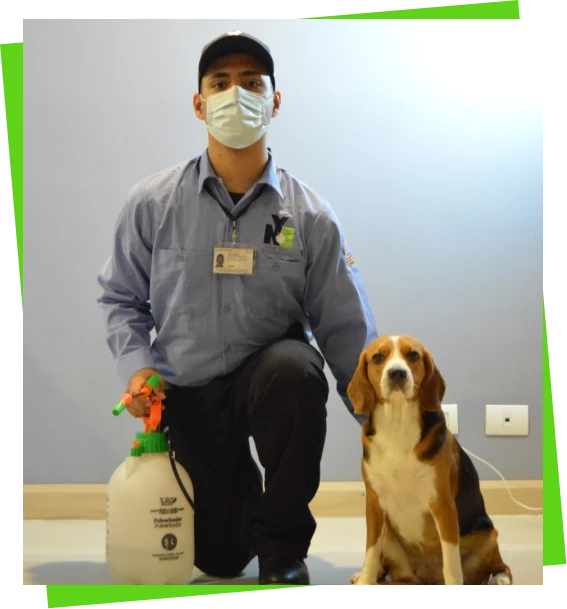
Photos from real NYE service calls across NYC.
Professional bed bug removal in NYC takes more than a single spray. A real NYC bed bug infestation hides in mattress seams, baseboards, outlet plates, and furniture joints, and a bedbug infestation in an NYC apartment can spread to adjoining units within weeks. Our ACE-led team confirms the infestation, maps every harborage, and treats with a documented protocol — conventional, K-9-verified, or heat — so the problem is controlled, not just scattered.
Whether you are a tenant, owner, or property manager, fast bed bug removal protects you legally and financially: under NYC law a bed bug infestation is the landlord’s responsibility, and early treatment keeps a one-unit problem from becoming a building-wide one.
Finding bed bugs is embarrassing. People assume it means you’re dirty or living in a “bad” building. That’s completely wrong.
Bed bugs infest luxury Manhattan penthouses, five-star hotels, brand-new condos, and million-dollar brownstones. They hitchhike on luggage, clothing, bags, furniture, and public transportation. You can bring them home from a Broadway theater, a subway ride, or a friend’s house.
They’re not attracted to dirt—they’re attracted to body heat and carbon dioxide. If you sleep there, bed bugs can live there.
We’ve treated bed bugs in every type of NYC property since 2010. No judgment, no shame—just effective treatment that controls them.
or request service online. We use heat and low-toxicity treatments that kill bugs and eggs without harsh chemicals.
Bed bugs in your home? We’ll get rid of them.
Same-day service across all five boroughs. Free, no-obligation estimate.
Extreme population density — Eight million people in 300 square miles. More people means more opportunities for bed bugs to spread. High-rise buildings, crowded subways, packed theaters—everywhere people gather closely, bed bugs can transfer.
Constant travel and tourism — NYC is a global destination. Hotels, Airbnbs, hostels—travelers bring bed bugs from around the world. Tourists take them home, spreading infestations internationally. Business travelers bring them to hotels, then home to their own beds.
Public transportation — Subways, buses, commuter trains—millions of people sitting in close quarters daily. Bed bugs crawl onto clothing, bags, and belongings. One infested person on the morning commute can spread bugs to dozens of others.
High tenant turnover — People move constantly. Used furniture on sidewalks. Moving trucks carrying belongings between apartments. Each move is an opportunity to transport bed bugs to new locations. Landlords inherit infestations from previous tenants.
Multi-unit housing — Bed bugs travel through walls, electrical conduits, and plumbing chases. Treat one apartment, but if neighbors have infestations, bugs migrate back. Many buildings have low-level chronic infestations that never fully clear.
Second-hand furniture and goods — NYC has a huge market for used furniture, clothing, and household goods. Thrift stores, online marketplaces, sidewalk freebies—all potential sources of bed bug introduction. One infested couch brings thousands of bugs into your home.
Delayed treatment — People don’t recognize bed bugs initially. They assume bites are from mosquitoes or spiders. By the time they realize it’s bed bugs, the infestation is established. Early infestations (10-20 bugs) are much easier to control than severe ones (thousands of bugs).
Pesticide resistance — NYC’s bed bug populations have been exposed to pesticides for decades. Many populations are resistant to pyrethroid insecticides (the most common class). Chemical-only treatments often fail. Heat and low-toxicity treatments work better.
We use heat treatment and low-toxicity solutions—not chemical sprays. Here’s why:
Heat treatment kills all life stages instantly — Bed bugs die when exposed to temperatures above 120°F for 30+ minutes. Heat penetrates mattresses, furniture, walls, and belongings, killing bugs and eggs everywhere. No chemicals, no resistance, no repeat visits for eggs.
Low-toxicity treatments are safer and effective — We use plant-based products (like diatomaceous earth and natural pyrethrins) that kill bed bugs through physical action, not chemical poisoning. Bugs can’t develop resistance. Safe for families with kids, pets, and chemical sensitivities.
Chemical resistance is widespread in NYC — Many NYC bed bug populations are resistant to synthetic pyrethroids. Chemical treatments often fail, requiring multiple retreatments. We skip the chemicals and use methods that actually work.
Success rate — 95-98% control with proper preparation. Failures usually result from neighboring infestations (in multi-unit buildings) or re-introduction.
Reduced-Risk Treatment Option — For customers who prefer non-heat methods or for properties where heat isn’t feasible:
Success rate — 85-90% with two treatments. May require third treatment for severe infestations.
Bed bug control is achievable, but requires thoroughness. Half-measures don’t work.
Store-bought sprays don’t reach hidden bugs — Bed bugs hide deep in mattress seams, inside box springs, behind baseboards, and in wall voids. Surface sprays don’t penetrate these areas. You kill exposed bugs, but the hidden population survives and reproduces.
Bug bombs (foggers) make it worse — Foggers disperse bugs into new areas and don’t penetrate hiding spots. They cause bugs to scatter into walls and neighboring units. They create resistance and make professional treatment harder.
Chemical resistance is widespread — Most consumer products use pyrethroids. NYC bed bugs are highly resistant. Products that worked 20 years ago don’t work now.
Eggs aren’t killed by most treatments — Even if you kill all adult bugs and nymphs, eggs hatch 6-10 days later. You need follow-up treatment or a method that kills eggs (like heat).
Incomplete treatment allows re-establishment — Miss one pregnant female, and the infestation returns. Miss a few eggs, and nymphs mature and start reproducing. Bed bug treatment requires complete thoroughness.
Throwing out furniture spreads bugs — Discarding infested furniture on the sidewalk lets others take it, spreading bed bugs. Bugs also scatter when furniture is moved, infesting other rooms and neighboring apartments.
— False. Bed bugs feed on blood, not dirt. They infest pristine homes just as easily as messy ones. Cleanliness doesn’t prevent or control bed bugs.
— False. Adult bed bugs are visible to the naked eye (apple seed size). You can spot them if you know where and when to look (nighttime, near sleeping areas).
— False. They prefer areas near where people sleep, but infest couches, chairs, walls, electrical outlets, clothing, and bags. Heavy infestations spread throughout entire rooms.
— Mostly false. While bed bugs carry pathogens, there’s no confirmed disease transmission to humans in real-world conditions. Their main health impact is itching, anxiety, and sleep loss.
— False. Bed bugs can survive 6-12 months without feeding. Leaving your home for weeks or months won’t control them.
— Partially true. Freezing below 0°F for several days kills bed bugs, but home freezers and cold weather rarely reach or maintain temperatures low enough. Not a reliable DIY method.
Look, bed bugs are awful. They disrupt sleep, cause anxiety, and spread easily. But they’re treatable with the right methods.
We use heat and low-toxicity treatments—not outdated chemical sprays. Heat kills everything in one day. Low-toxicity treatments are safe and effective when applied properly.
Call us at +1 (347) 210-4646 — or request service online. We’ll inspect, explain your options, and schedule treatment within a week.
1115 E 13th St, Brooklyn, NY 11230
Licensed & Certified Since 2010
Bed bug work is one of Jorge’s core specialties, from accurate identification to targeted remediation. Our team is led by Jorge Bedoya, an Associate Certified Entomologist (ACE) credentialed by the Entomological Society of America (ESA) — so the work is done with ACE-level expertise and a formal Code of Ethics behind it, not guesswork.
Flexible payment options — pay over time
Larger job? You don’t have to pay it all at once. When you settle your invoice online you can pay by card, or split it into smaller payments with Klarna, Affirm, or Afterpay — and we still get your service started right away. Pay-over-time is subject to eligibility; terms are set by each provider.
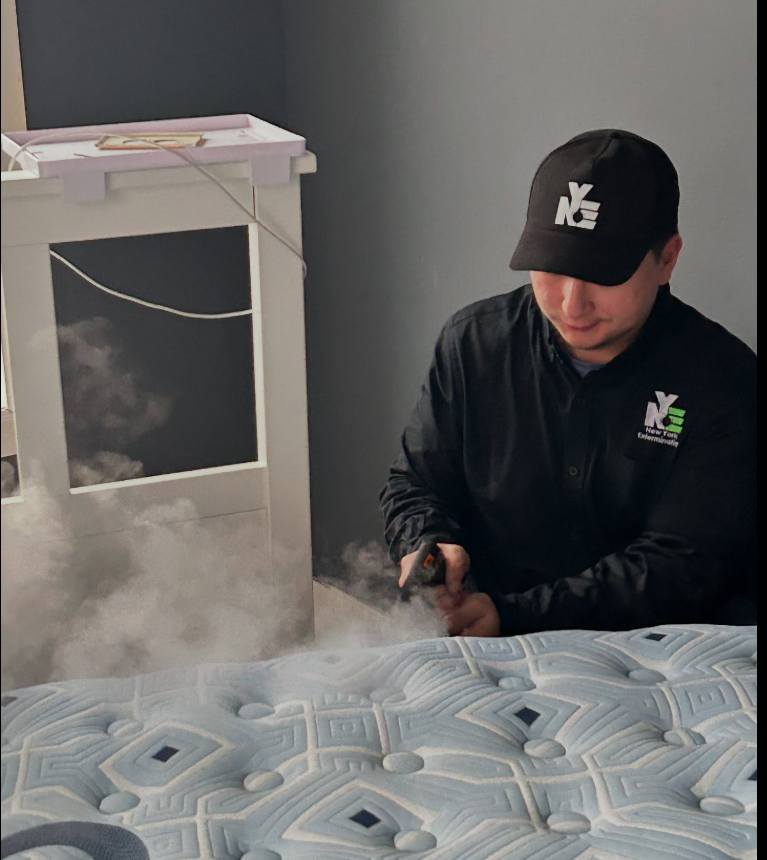
No single technique reliably controls bed bugs (Cimex lectularius), because eggs, adults, and hiding spots all respond differently. As an Associate Certified Entomologist–led team, we combine mechanical, thermal, desiccant, residual, and biological tools, matched to your home and the size of the infestation:
Most companies sell one of these as “the” solution. We pick the right combination — less toxic than the industry average, more lethal on contact — and verify it worked.
Every job is led by an Associate Certified Entomologist. Meet Jorge Bedoya, ACE — the NYC Exterminator »
Bed bugs hide in the things that cannot be steamed or laundered: upholstered furniture, luggage, books, electronics, shoes and stored boxes. For those, we use ZappBug heat chambers — the ZappBug Room for bulky items like sofas, chairs, suitcases and shelving units, and the ZappBug Oven for smaller loads — bringing every item to a temperature that kills bed bugs and their eggs, with no chemical residue. It complements the four-mode treatment in the apartment, so belongings do not carry survivors back in.
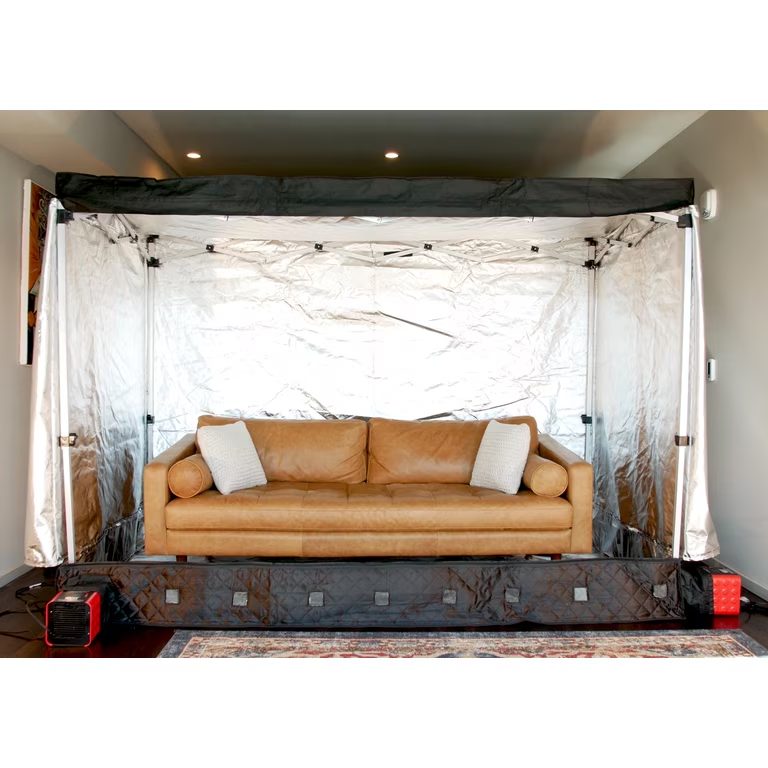
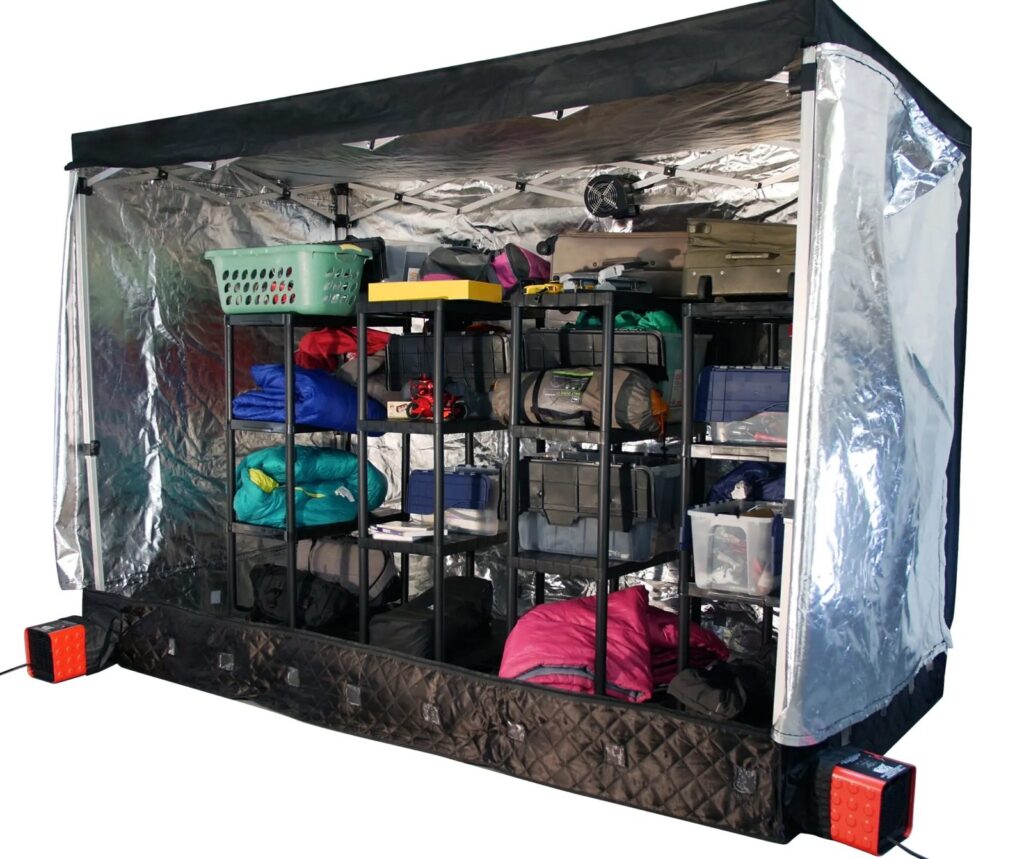
Left: a full sofa inside the ZappBug Room. Right: shelves of belongings heat-treated together. Photos courtesy of ZappBug.
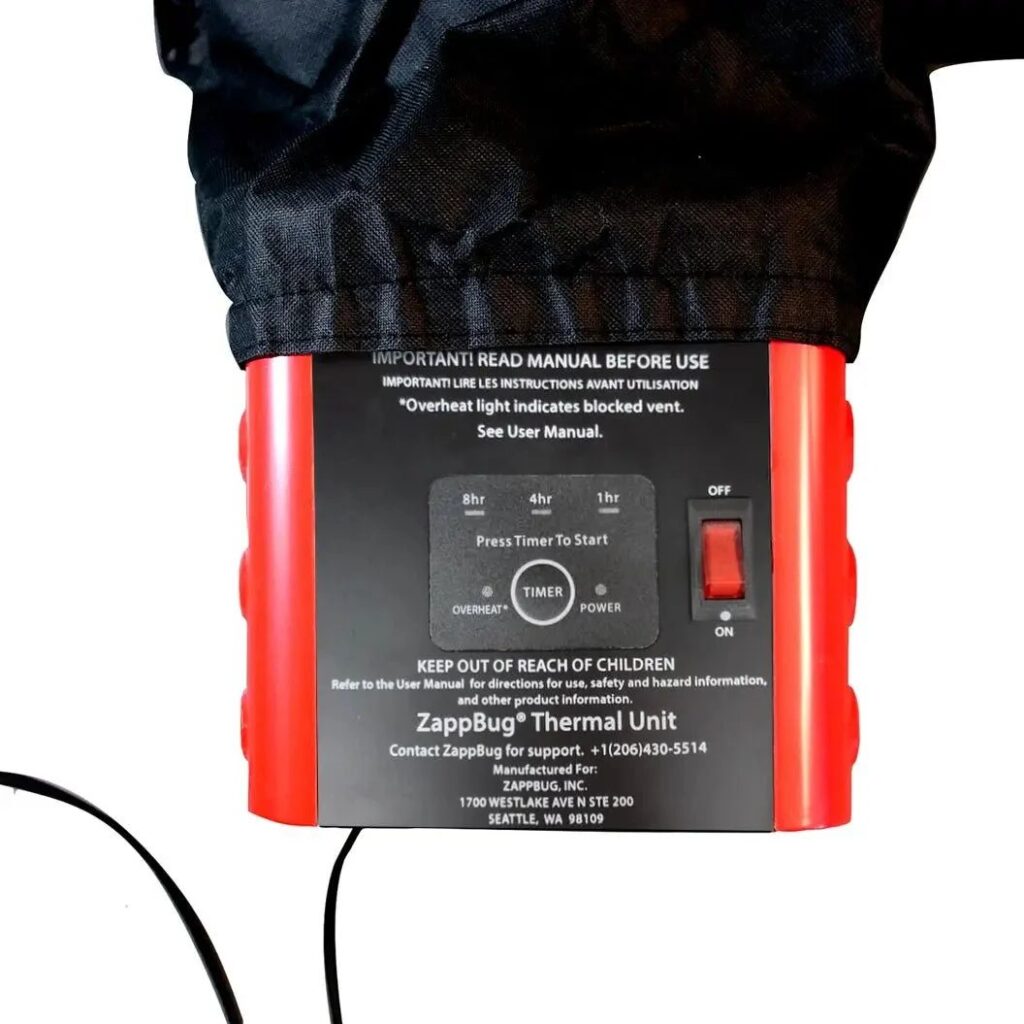
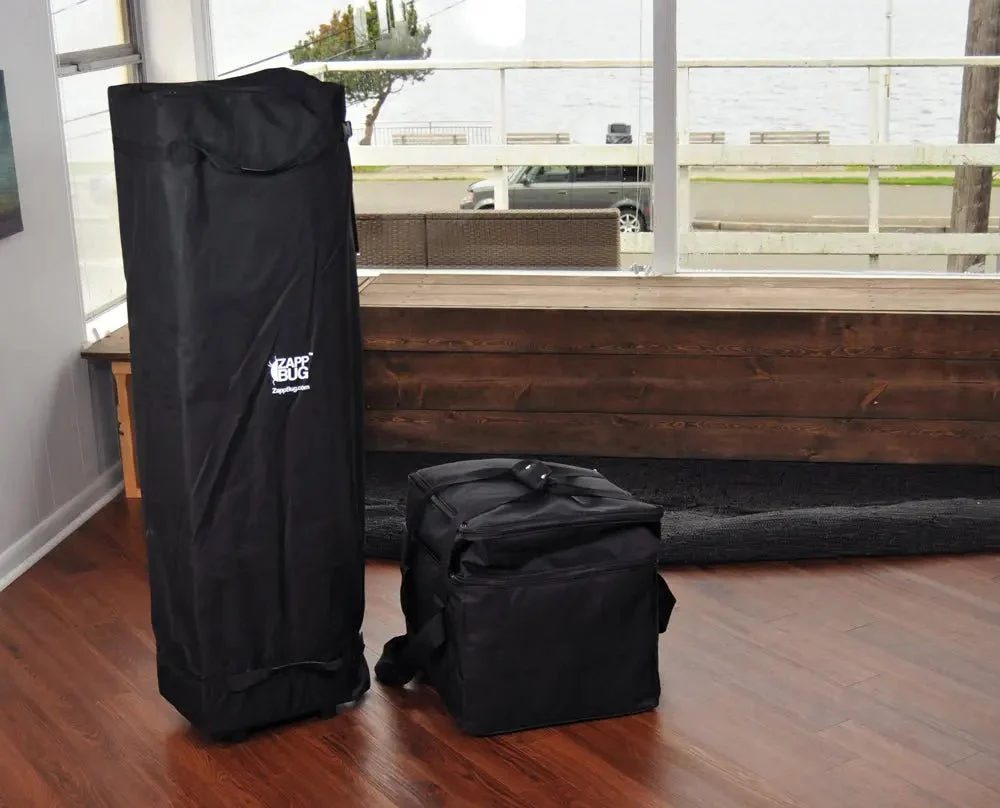
Left: the ZappBug thermal unit and timer. Right: the Room packed for on-site treatment. Photos courtesy of ZappBug.
New York Exterminating is Brooklyn-based and covers the whole city — the same Associate Certified Entomologist–led service in every borough:
Brooklyn · Manhattan · Queens · The Bronx · Staten Island · Yonkers · White Plains · Nassau County
Bed bug identification guides
¿Prefiere español? Exterminador de chinches en NYC »
Wondering about price? See how much bed bug treatment costs in NYC.
Premium pest control, made affordable. Finance your treatment with Klarna, Affirm, or Afterpay and pay over time — money shouldn’t be the reason pests stay.
Finance with Klarna, Affirm, or Afterpay. Checking your rate is a soft check — no credit impact.
Example at 14.9% APR; 0% APR plans may be available. Actual rate shown when you prequalify. New York Exterminating is not a lender.
Infestation that keeps coming back?
New York Exterminating specializes in chronic infestations: we find the source other treatments missed, treat it with a method built for the pest, and verify the result instead of re-spraying.
The clearest signs are itchy bites in lines or clusters, small rust-colored blood spots on sheets, tiny dark fecal specks along mattress seams and headboards, and shed skins. We confirm with a thorough inspection and, when needed, K-9 detection.
We start with a detailed inspection, with K-9 detection when needed, then match the treatment to the infestation: whole-unit heat, targeted chemical and steam treatment, and a heat chamber for belongings. Follow-up visits verify the infestation is gone.
Yes. Bed bugs and their eggs die at sustained temperatures above about 120°F. Heat penetrates the cracks and crevices where they hide and kills every life stage in a single session, with no lingering chemical residue.
Trained detection dogs pinpoint live bed bugs and viable eggs by scent, far more accurately than a visual check. We use K-9 inspection to confirm whether bugs are present, locate exactly where they hide, and verify a home is clear after treatment.
We provide a specific prep checklist — typically laundering and bagging linens and clothing, reducing clutter, and pulling furniture from walls. Good prep is essential, and we walk you through exactly what to do.
Not when every life stage is treated and reintroduction is prevented. We treat all life stages, schedule follow-ups to catch survivors and advise on monitoring. If the same service is needed again within 6 months, it is 50% off the original price.
A one-bedroom treatment starts at $350, two bedrooms with a light infestation run $450 to $650, and three or more bedrooms start at $600. The price is confirmed after a free inspection, before any work starts. See how much bed bug treatment costs in NYC.
Yes. Same-day service is often available when you call before 3 pm, and we answer pest emergencies 24/7 at (347) 210-4646.
No. Bed bug treatment is a one-time service. If the same service is needed again within 6 months, it is 50% off the original price.
Whenever possible, the same technician services your property, so the plan and history stay consistent.
All five boroughs plus Nassau and Westchester, in English and Spanish, from our Midwood, Brooklyn base.



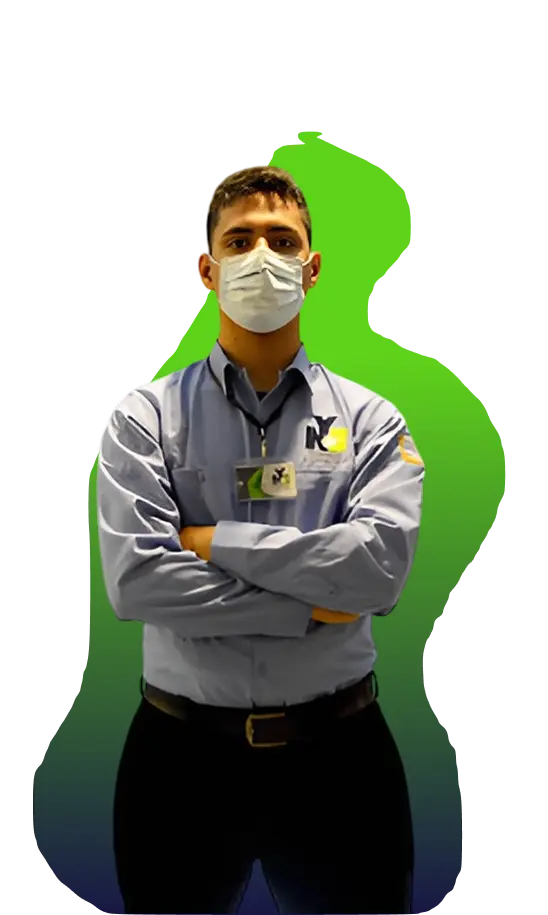





Discreet, same-day bed bug extermination with heat treatment and K-9 detection across all five NYC boroughs. Callback rate under 1%.