Manhattan & all five boroughs · Same-day

The fleas biting today are only one stage of the infestation.

We knock down the adults you can see and treat the eggs, larvae and pupae developing throughout your home — with an inspection-driven, three-step protocol led by an Associate Certified Entomologist. Not a company that simply sprays the fleas on the carpet.

Knock down the adults. Keep killing emerging fleas. Stop the next generation.
Led by an Associate Certified Entomologist (ACE) NYSDEC Reg. #15140 $3,000,000 insured Bilingual · English & Spanish Same-day across NYC Serving NYC since 2010
The part almost nobody explains

The flea biting you is not the stage protecting the infestation.

In one sentence

Adult fleas are the biting stage you notice — but eggs fall off the pet into the environment, larvae hide from light in carpet edges and floor gaps, and pupae wait inside protective cocoons until warmth, movement or carbon dioxide signals a host. Kill only the adults and the protected stages simply replace them. Real control means hitting the adults, the surfaces emerging adults cross, and the immature stages at the same time — and treating every pet alongside the home.

Four stages, one infestation

Egg · Larva · Pupa · Adult

A flea infestation is not a swarm of adults. It is a population distributed across four life stages — and two of those stages are physically protected from many treatments.

Stage 01

Eggs

Laid on the host, they do not stick — they fall off into carpet, bedding, upholstery and floor gaps wherever the pet rests and travels.

Treatable
Stage 02

Larvae

Blind and light-avoiding. They burrow into carpet fibres, floor cracks and under furniture, feeding on organic debris and flea dirt.

Treatable
Stage 03

Pupae

Developing inside a protective cocoon that shields them from many applications. They emerge on their own schedule when a host cue arrives.

Protected
Stage 04

Adults

The biting, jumping, visible stage. Only a portion of the population is here at any moment — the rest is developing out of sight.

Visible
What you see vs. what's developing Adults are the stage you notice. Most of the population is developing where you can't see it. (Illustrative distribution — not exact proportions.) Adults — biting stage you see Eggs · larvae · pupae — out of sight Pupae inside cocoons are protected from many treatments — which is why adults keep appearing after a spray.
Killing only the adults you can see leaves the developing majority untouched.
Why the quick fix doesn't hold

Why foggers and adult-only sprays keep failing.

Store-bought foggers and single-can treatments create temporary relief, then the infestation returns. Here's the mechanism.

Fog sits on the surface. A fogger settles on exposed carpet and floor. Larvae live deep in the fibres and under furniture; pupae are sealed in cocoons. The fog never reaches them.
Pupae are built to survive. The cocoon physically protects the developing flea. Adults keep emerging for days to weeks after a treatment — and people read that as failure and give up.
No growth regulator, no end. Consumer products rarely include an insect growth regulator, so surviving eggs and larvae mature into biting adults and restart the cycle within weeks.
The pet keeps re-seeding the home. If the animal isn't on veterinary flea control, it feeds the infestation continuously. Treating the home alone can't win that race.
We start with an investigation

Diagnosis before any spraying.

Bites alone don't confirm fleas — bed bugs, bird and rodent mites and other pests produce similar complaints. The service begins by confirming the pest and mapping where the population actually lives.

Confirm it's fleas. Positive identification, flea dirt, and where people are actually being bitten (typically the lower legs and ankles).
Map the hotspots. Where pets sleep, rest and travel; carpet vs. hard floor; upholstered furniture; carpet edges and floor gaps; beneath beds, sofas and furniture.
Trace the source. Current, previous or visiting pets; a former tenant's animals; stray animals, wildlife or rodent activity carrying fleas into the home.
Define the scope. Whether the infestation is localized to one room or distributed across several — including basements, crawlspaces or shared building areas when relevant.
The NYE three-step indoor flea protocol

Three coordinated products. Three different jobs.

No single product reaches the biting adults, the surfaces emerging adults cross, and the immature stages developing under the furniture. Each step below closes a gap the others leave open. All products are used only in accordance with their current labels.

01

Immediate adult knockdown

Pyrocide 100 Fogging Concentrate
EPA Reg. No. 1021-1424 · pyrethrins 1% + piperonyl butoxide + MGK-264
  • Botanically derived pyrethrins, enhanced by two synergists — the formulation as a whole is not entirely botanical or organic.
  • Provides flushing action and rapid contact knockdown of exposed, accessible adult fleas.
  • The most aggressive initial population-reduction step.
  • Does not provide long-term control by itself.
  • Does not reliably reach flea pupae protected inside intact cocoons.
02

Targeted residual adulticide

Suspend PolyZone
EPA Reg. No. 101563-143 · deltamethrin
  • The residual adulticide — controls adult fleas that contact properly treated surfaces after the initial knockdown.
  • PolyZone polymer technology protects and slowly releases the active ingredient; the manufacturer promotes residual control up to 90 days under labeled uses and conditions.
  • Applied as targeted spot and crack-and-crevice treatment of flea habitats — pet-bedding surroundings, carpet edges, baseboards, floor gaps and protected areas beneath furniture.
  • Not a broadcast treatment over every carpet or flat upholstered surface.
  • Never applied to people or pets; nobody contacts treated areas until dry.
03

Extended life-cycle interruption

Tekko Trio
EPA Reg. No. 53883-444 · (S)-hydroprene 9% · pyriproxyfen 2.6% · novaluron 2.6%
  • Three insect growth regulators that interfere with the development of flea eggs and larvae that contact the treatment.
  • Prevents immature fleas from developing into biting adults — the label states it works up to seven months on fleas.
  • That long window matters because immature stages do not all develop or emerge at once.
  • Does not provide immediate control of adult fleas.
  • Not effective against adult fleas or pupae that already exist.

“Tekko Trio does not kill the adult flea biting today. It prevents the immature flea developing underneath the furniture from becoming the adult flea that bites later.”

Which step acts on which stage Eggs Larvae Pupae Adults Pyrocide 100 — knockdown Suspend PolyZone — residual Tekko Trio — IGR acts on this stagedoes not act on this stage
Only all three together cover the adults, the residual surfaces and the developing generation. No single product does.
Not optional

Every pet must be treated with the home.

Please read

The premises treatment does not replace veterinary flea treatment for your animals. Every dog or cat in the home must be treated with an appropriate veterinarian-recommended or EPA/FDA-authorized flea product suitable for that animal. The animal and the home have to be addressed together — otherwise an untreated pet keeps re-seeding the infestation.

Consult your veterinarian for the right product for each animal, especially cats, young, pregnant or nursing animals, elderly animals, and any animal with seizures, medical conditions or medication sensitivities. Never apply a premise pesticide to an animal.

Before we arrive

Preparation that makes the treatment work.

Good preparation is a large part of a successful flea job. Work through these steps before service day.

1Confirm pet treatment. Have every pet treated per veterinary guidance, coordinated with the premises service so untreated animals don't keep feeding the infestation.
2Vacuum thoroughly. Carpets, rugs, carpet edges, baseboards, floor gaps, beneath beds/sofas/removable furniture, upholstery seams and under cushions, and every pet-resting area. Vacuuming removes eggs, larvae and debris — and the vibration stimulates protected adults to emerge from cocoons, making them vulnerable.
3Dispose of vacuum contents. Seal disposable bags or collected debris in a bag and place it in an outdoor trash receptacle. Empty and clean reusable canisters outside.
4Process pet bedding & fabrics. Wash and dry pet bedding, blankets and removable covers on the hottest settings safe for the material. Keep clean items sealed or out of the treatment area until surfaces are dry.
5Clear access to treatment zones. Provide access to baseboards, carpet edges, under furniture, pet-resting spots and identified closets. Don't pile belongings into an untreated room and create a new flea harborage.
6Food & personal items. Cover or remove exposed food, dishes, utensils, toys and personal items from treatment zones.
7Aquariums & sensitive animals. Fish tanks must be removed or tightly covered and aerators disconnected per the product label. Remove birds, reptiles and other sensitive animals. Disclose all animals before service.
8Occupants out. All people and pets leave before treatment begins. Re-entry is based on complete drying, proper ventilation and the most restrictive directions among all products applied — not an arbitrary fixed number of hours.
9Cleaning restrictions. Don't shampoo carpets, mop treated floor edges or wash treated baseboards right before or after the application unless instructed — cleaning too soon can remove the residual.
Treatment day

What actually happens.

The technician confirms the hotspots and the scope of treatment.
The initial application rapidly reduces exposed adult fleas.
Targeted residual adulticide is placed where emerging adults are likely to contact it.
Tekko Trio is applied to appropriate development sites to interrupt eggs and larvae.
Everything is targeted to the inspection findings and the product labels — premise products are never applied to pets, people, clothing, human-use bedding surfaces or food-contact surfaces.
Occupants and pets stay out during treatment; re-entry only after treated surfaces are completely dry and required ventilation is done.
What to expect — and when

Short, medium and long term.

A flea program is a curve, not a switch. Here's the honest trajectory — including why you may still see fleas at first.

Brooklyn & NYC Pest Control | New York Exterminating Flea activity over time (relative) high low Day 0Week 1Weeks 2–4Months 1–3Up to 7 mo Pyrocide 100 knockdown emergers hit Suspend residual Tekko Trio stops the next generation temporary bumps = pupae emerging (normal)
Adults drop immediately; existing pupae keep emerging for a while (the bumps); residual + IGR grind activity toward zero. Post-treatment emergence does not mean the service failed.
Day 1 – ~day 7

Immediate / short term

  • Rapid reduction of exposed adult fleas.
  • A possible temporary increase in visible activity — movement and treatment stimulate emergence.
  • Continued bites can occur from adults emerging from existing pupae.
  • Fleas jumping after service do not automatically mean the treatment failed.
  • Avoid wet treated surfaces; keep veterinary flea control active on every pet.
~1 – 4 weeks

Medium term

  • Existing pupae may keep releasing adults.
  • Newly emerged adults contact the residual treatment or treated pets.
  • Egg and larval development is progressively interrupted by Tekko Trio.
  • Activity should trend downward; vacuuming becomes an important mechanical part of the program.
  • Persistent heavy activity may signal an untreated animal, missed hotspot, wildlife/rodent source, an inaccessible area, cleaning that removed the residual, or reinfestation.
~1 – 7 months

Long term

  • Tekko Trio continues preventing contacted immature fleas from reaching adulthood — up to seven months per its label.
  • The residual adulticide keeps working according to surface conditions, cleaning and label-supported performance.
  • The infestation loses the ability to replace dying adults with new generations.
  • Pet prevention must continue; new introductions remain possible via untreated animals, visiting pets, rodents or wildlife.
  • “Long residual” does not mean the home can never acquire fleas again.
After the treatment

Your post-treatment checklist.

Do not re-enter until treated surfaces are dry and ventilation requirements have been met.
Keep children and pets off treated surfaces until dry.
Continue the veterinarian-directed flea program for every pet.
Vacuum frequently after treatment, following the technician's specific timing — focus on pet-resting areas, carpet edges, under furniture and upholstery seams.
Seal and discard vacuum contents outside after each session; wash pet bedding regularly.
Don't immediately shampoo carpets or wash treated baseboards and floor edges.
Watch the trend in activity rather than expecting an instant absolute zero; note where fleas or bites appear.
Don't add store-bought foggers, sprays, powders or essential oils over the professional treatment without discussing it with NYE — they can create exposure problems, interfere with residual placement or make evaluation difficult.
Why vacuuming is not a sign of failure

Vacuuming after treatment helps remove organic material and immature stages, and the vibration encourages protected adults to emerge from their cocoons into a treated environment where they contact the residual. The exact start time and frequency should follow the technician's directions, so you don't remove wet or recently deposited treatment.

Built into the program

Why the follow-up matters.

Recommended roughly 14–21 days after the initial application, adjusted to infestation severity, label restrictions and field observations.

Existing pupae are protected from direct pesticide contact and emerge gradually after the first visit — the follow-up meets that wave.
It evaluates whether activity is declining as expected and identifies missed or newly active hotspots.
It confirms all pets were treated and helps detect wildlife, rodent, basement, crawlspace or adjoining-area sources.
Additional targeted treatment may be performed when warranted and permitted by the labels; the visit evaluates trend, distribution and life-cycle progression — not merely whether one flea is found.
An honest comparison

A single can and this are not the same service.

The NYE flea protocol

  • Positive identification and hotspot mapping
  • Immediate adult knockdown (Pyrocide 100)
  • Targeted residual adulticide (Suspend PolyZone)
  • Three-way insect growth regulator (Tekko Trio)
  • Up to seven months of immature-stage interruption, per the Tekko Trio label
  • Veterinary pet-treatment coordination
  • Vacuuming and sanitation strategy
  • Biologically timed follow-up
  • Led by an Associate Certified Entomologist

A typical incomplete approach

  • Treats only the visible adults
  • Relies on a consumer fogger or one aerosol
  • Doesn't address pets and premises together
  • Ignores protected pupae
  • No long-term larval interruption
  • No post-treatment vacuuming plan
  • Reads normal post-treatment emergence as failure
  • Repeats random applications without finding the source
Straightforward pricing

Quoted after inspection.

Priced after a free inspection

A flea job depends on how far it has spread, so we quote it after we see it — no guessing over the phone. What drives the number:

Property size Apartment or home square footage and layout.
Rooms infested One room vs. distributed through several.
Flooring Carpet vs. hard floors changes the habitat and the work.
Upholstery Amount of upholstered furniture involved.
Severity & duration How long it's been running and how established it is.
Pets Number and type of animals in the home.
Secondary areas Basements, crawlspaces or shared building spaces.
Follow-up Whether a follow-up visit is warranted.
Access & prep Accessibility and preparation conditions on the day.

Pay-over-time available through Klarna, Affirm or Afterpay. Checking your rate is a soft check with no credit impact. New York Exterminating is not a lender.

Get a flea-treatment estimate

Same-day inspections across Manhattan and all five boroughs. Confirm the pest before treating.

Or text an ACE at (347) 210-4646 · Se habla español
Flea treatment in NYC

Frequently asked questions

Why am I still seeing fleas after treatment?

Because pupae inside their cocoons are protected from many applications and keep emerging for a period after service. Newly emerged adults contact the residual treatment and the treated pet and die, but you may see activity — often temporarily higher at first — while that plays out. This is expected, not a failure.

Does seeing fleas after treatment mean it failed?

No. Post-treatment emergence from existing pupae is a normal part of the curve. What matters is the trend over the following weeks. If activity stays heavy or unchanged, that points to something specific — an untreated pet, a missed hotspot, a wildlife or rodent source, an inaccessible area, or cleaning that removed the residual — and we address it at the follow-up.

How long does professional flea treatment take to work?

Exposed adults drop quickly, but full control develops over weeks as existing pupae finish emerging and the growth regulator shuts down the next generation. A biologically timed follow-up around 14–21 days meets the wave of emerging adults. Expect a trend toward zero rather than an instant zero.

Why can't pesticides immediately kill every flea pupa?

The pupa develops inside a protective cocoon that physically shields it from many treatments. That's why a knockdown product alone can't end an infestation, and why the program relies on residual surfaces and a growth regulator to catch fleas as they emerge over time.

Do all pets need to be treated?

Yes. Every dog or cat must be on an appropriate veterinarian-recommended or EPA/FDA-authorized flea product, coordinated with the home treatment. An untreated animal keeps re-seeding the infestation, and treating only one side is the most common reason flea problems drag on.

Can you apply the products directly to my dog or cat?

No. Premise pesticides are never applied to animals. Your veterinarian supplies the product for the pet; we treat the environment. The two must happen together.

When can people and pets return?

After treated surfaces are completely dry and applicable ventilation requirements have been met, following the most restrictive directions among all products applied. We give you the specific guidance for your job rather than a one-size-fits-all number of hours.

Should I vacuum before treatment?

Yes — thoroughly. Vacuuming removes eggs, larvae and debris, and the vibration stimulates protected adults to emerge from cocoons where the treatment can reach them. Seal and discard the vacuum contents outside afterward.

When should I vacuum after treatment?

Follow your technician's specific timing so you don't remove wet or recently deposited residual. After that, vacuum frequently — focusing on pet-resting areas, carpet edges, under furniture and upholstery seams — and discard the contents outside each time.

Can I shampoo the carpet after treatment?

Not immediately. Shampooing carpets or washing treated baseboards and floor edges too soon can strip the residual that catches emerging fleas. Wait for the technician's guidance before deep-cleaning treated surfaces.

How long does Tekko Trio work against fleas — and does it kill adults?

Its label states it works up to seven months on fleas by inhibiting the development of immature stages. It does not kill adult fleas or existing pupae — it prevents the immature fleas that contact it from ever becoming biting adults. Adult control comes from the knockdown and residual steps.

Can fleas survive in a home without pets? Can rodents or wildlife cause an indoor infestation?

Yes to both. Pupae can persist and emerge when a new occupant provides warmth, movement and carbon dioxide — common in apartments after tenant turnover. And rodents, stray animals and wildlife carry fleas that can bite people when a preferred host isn't available, which is why the inspection looks for those sources.

Are flea bites enough to confirm fleas? What's the difference between fleas, bed bugs and mites?

Bites alone aren't enough — bed bugs, bird mites, rodent mites and other pests produce similar complaints. Flea bites are typically clustered on the lower legs and ankles, and confirmation also uses flea dirt and observed fleas. We identify the pest before treating; if it isn't fleas, the plan changes.

Are the products applied to the entire carpet?

No. The residual is a targeted spot and crack-and-crevice treatment of flea habitats — pet-bedding surroundings, carpet edges, baseboards, floor gaps and protected areas under furniture — not a broadcast over every flat carpet or upholstered surface people contact.

How much does flea treatment cost in NYC?

We quote it after a free inspection, because the price depends on property size, how many rooms are infested, carpet vs. hard floor, upholstery, severity, the number of pets and whether secondary areas like basements are involved. Pay-over-time options are available.

Confirm the pest before treating

Stop the fleas you see and the generation you can't.

Every NYE flea program is led by Jorge Bedoya, ACE. Same-day inspections across Manhattan and all five boroughs, in English and Spanish.

JB

Reviewed by Jorge Bedoya, ACE — Associate Certified Entomologist, environmental-science professional and New York State–licensed commercial pesticide applicator. Owner, New York Exterminating, Inc.

Flea complaints are easy to misdiagnose, and the difference between temporary relief and real control is whether the immature stages and the pet are handled alongside the adults. Every NYE flea job is built around that biology — inspection first, three coordinated products, and a follow-up timed to the life cycle. Meet Jorge →

All pesticide products are applied only in accordance with their current EPA and New York–accepted labels. Product names and roles on this page describe how NYE uses them under professional, licensed application; they are not consumer instructions and do not include dilution rates. No pesticide is described here as safe, harmless, non-toxic, pet-safe, child-safe, natural, organic or environmentally friendly. We do not promise that one treatment kills every flea stage, instant elimination, or zero bites immediately.

New York’s Trusted Pest Control Experts

We proudly serve ALL OF NEW YORK CITY AND SURROUNDING AREAS.WHEREVER PESTS SHOW UP,NYE has you covered

Get Your Free Estimate

Hero form

Trusted by New Yorkers

See how homeowners and businesses rate our pest control services across New York.

Trusted Protection Since Day One

Founded in 2010 in Brooklyn, New York, New York Exterminating, Inc. has become a trusted leader in pest management across the entire NYC metropolitan area. From Brooklyn and Queens to Manhattan, the Bronx, Staten Island, and beyond, we proudly serve residential, commercial, and nonprofit clients with reliable, science-based solutions.

Our licensed team, led by Associate Certified Entomologist Jorge Bedoya and co-founder Tomas Cusati, brings decades of combined experience and advanced training in urban entomology.

At New York Exterminating, we combine tradition with innovation. Our eco-friendly, low-toxicity treatments are safe for families, pets, and the environment while delivering proven, long-lasting results.

Our Services

Trusted extermination services to keep your home, business, and customers pest-free
Commercial & Retail

Professional extermination services for offices, retail spaces, and business buildings.
Residential

Complete pest control solutions for homes — safe, effective, and family-friendly.
Food Establishments

Trusted pest management for restaurants, cafés, bars, and kitchens — keeping your reputation spotless.

Your shield Against pests

Our expertise goes beyond simple extermination. Backed by certified specialists and proven methods, we combine science, precision, and care to deliver pest solutions that last. Every treatment is designed with your safety, comfort, and environment in mind.


Many of our clients have remained with us since 2010, demonstrating strong trust and long-term satisfaction.


Licensed by NYSDEC – Reg. #15140

Why Choose Us

Trusted by Institutions Since 2010

Serving property managers, senior facilities, shelters, affordable-housing programs, and businesses across NYC since 2010 — many long-term clients trust our work.

Eco-Friendly and Client-Focused Service

botanical, reduced-risk options, German-cockroach control and rodent-exclusion programs, full bilingual support (EN/ES), plus a client portal with reports, photos, and chemical logs for total transparency.


Fully Licensed, Certified & Compliant

NYSDEC Registered — Reg. #15140 — with fully licensed technicians (Jorge Bedoya, Tomas Cusati, Jason Mendoza). We follow all regulations for safe, legal treatments.

Science-Driven Pest Control Expertise

Led by an Associate Certified Entomologist (Jorge Bedoya) and technicians trained in urban entomology, we use IPM and proven methods for lasting results.

from inspection to protection
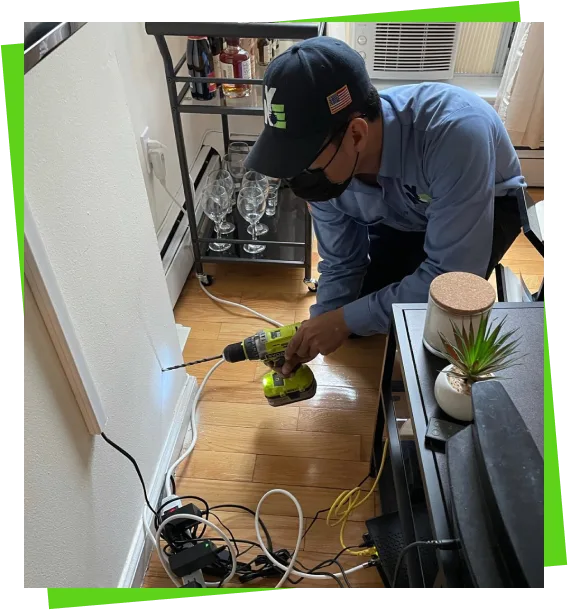
From first inspection to final follow-up, our science-based process ensures every pest problem is solved with precision, safety, and lasting protection

team member

Meet the licensed experts behind New York Exterminating, combining decades of field experience, science-driven training, and a shared commitment to keeping NYC homes and businesses pest-free

Jorge Bedoya

Co-Owner & Operations Manager

Licensed in Structural, Commercial & Food-Handling Pest Control (7a, 7f, 8). Associate Certified Entomologist with advanced training in Urban Entomology. Specializes in German cockroach control, low-toxicity bed bug treatments, and rodent exclusion. Leads innovation, training, and complex infestations.

Tomas Cusati

Co-Owner & CFO

Licensed in Structural & Commercial Pest Control (7a, 7f). Holds a Finance degree and leads administration, customer support, and long-term client relationships.

 Karla De La Cruz

Customer Service

Holds a Bachelor’s in Psychology. Manages scheduling, invoicing, communication, and customer follow-ups, ensuring smooth day-to-day operations.


Your comfort is our mission

completely pest-free or we’ll make it right

Jason Mendoza

Senior pest control technician

Holds an Associate’s in Environmental Science and is licensed in Structural Pest Control (7A). As our lead senior technician, he brings wide experience in IPM, documentation, and rodent management.

frequently asked questions

Find quick answers to common questions about our services, safety practices, and customer support

Are your pest control treatments safe for pets and children?

Yes. We use eco-friendly and low-toxicity treatments designed to protect your family, pets, and the environment.

Yes. We offer bilingual services in English and Spanish to ensure clear communication and support for all our clients across New York City.

We proudly serve all five boroughs of New York City — Brooklyn, Queens, Manhattan, the Bronx, and Staten Island — as well as surrounding areas.

You can access all your service reports, invoices, and treatment details through our secure online Client Portal. Simply log in anytime to view records, photos, and chemical logs for full transparenc

We specialize in removing rodents, insects, raccoons, and other common pests, providing thorough inspections and effective solutions to keep your home or business pest-free.

your neighborhood Experts

We proudly serve residential, commercial, and institutional clients throughout:

Providing reliable pest control solutions for homes, businesses, and institutions across the NYC metro area

Frequently Asked Questions

Is New York Exterminating licensed?

Yes. We are NYSDEC-registered (#15140) and led by an Associate Certified Entomologist (ACE) credentialed by the Entomological Society of America.

What areas do you serve?

All five NYC boroughs — Manhattan, Brooklyn, the Bronx, Queens, and Staten Island — plus Westchester and Nassau County.

Do you offer same-day or emergency pest control?

Yes — same-day appointments are often available across the boroughs, including after-hours emergencies.

Are your treatments safe for children and pets?

We use Integrated Pest Management (IPM) with low-toxicity, targeted methods, and we explain every product before we apply it.

Do you require a contract?

No. We offer no-contract service with free estimates, and we are fully bilingual (English and Spanish).

What pests do you handle?

Bed bugs, German cockroaches (via microinjection), rodents (with exclusion), ants, spiders, and general household and commercial pests.

Why Jorge is NYC’s #1 for German roaches →
WhatsApp
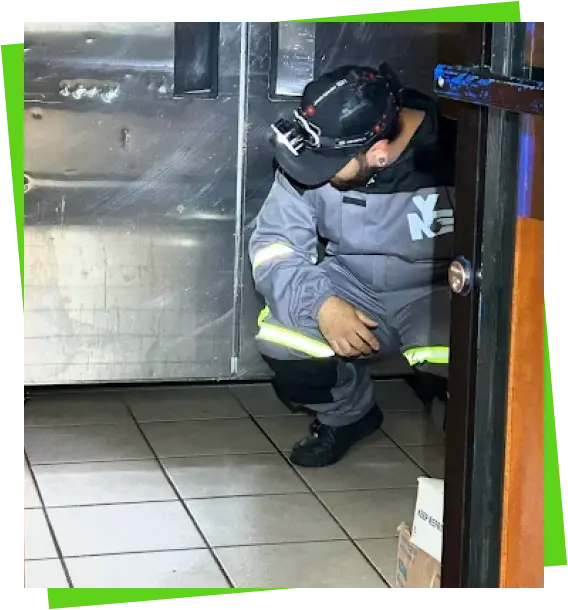
Man in grey jumpsuit with reflective stripes and a headlamp squatting near a stainless steel wall.

request a free estimate

Popup form