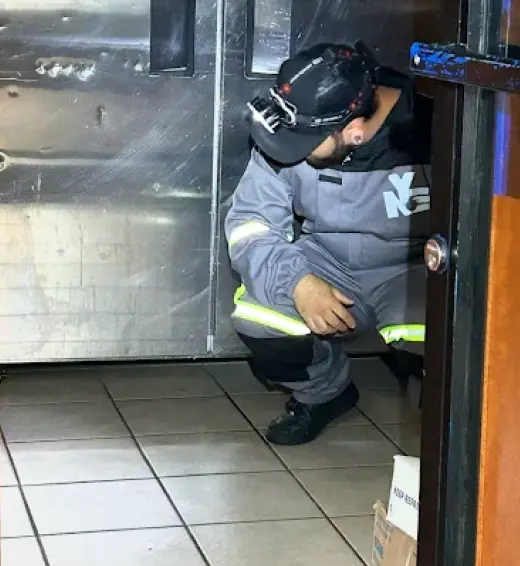
Trusted extermination services to keep your home, business, and customers pest-free
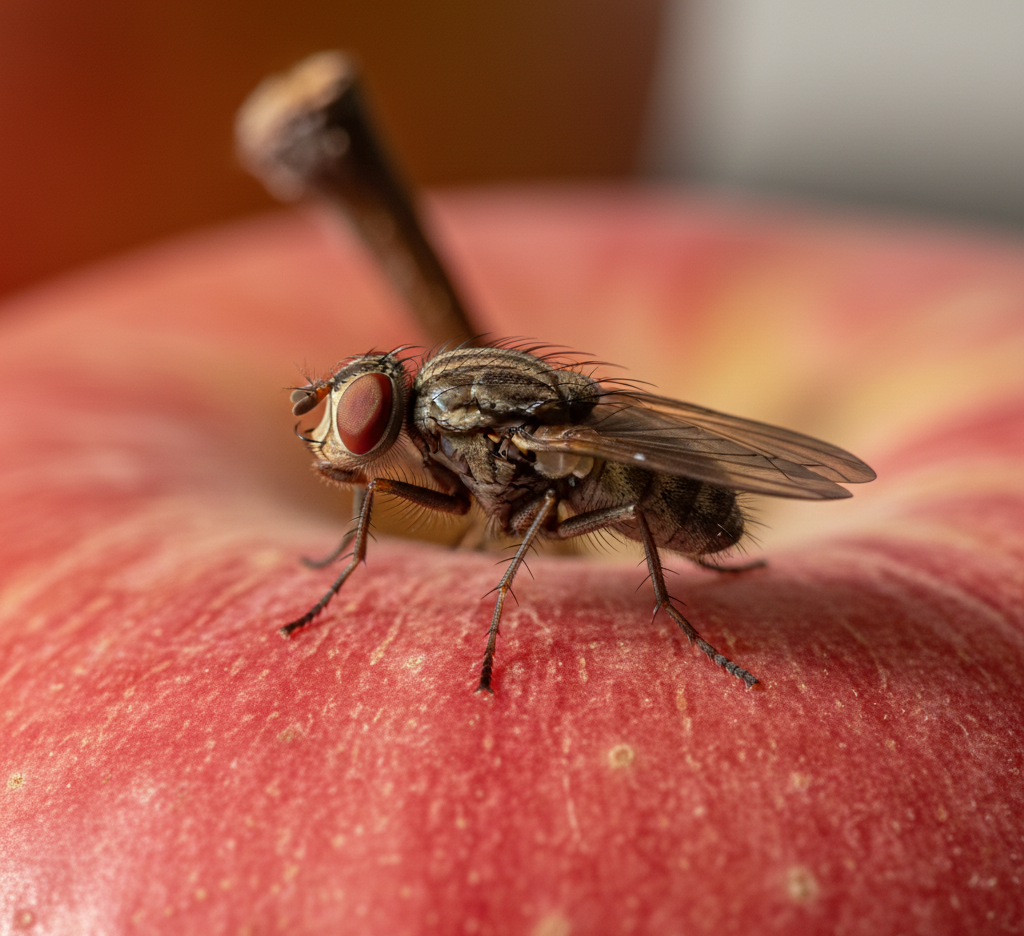
Notice small flies hovering around your fruit bowl? Seeing them swarm when you open the trash? Finding them multiplying in your kitchen faster than you can swat them? Those are fruit flies, and here’s the frustrating part: They breed so fast that killing adults doesn’t stop the problem.
Most people waste weeks trying DIY traps while the population explodes. Why? Because fruit flies complete their life cycle in 8-10 days. By the time you catch 50 adults, 500 more are developing in breeding sites you haven’t found.
We’ve been eliminating fruit fly infestations in NYC homes and businesses since 2010. We locate every breeding site, eliminate larvae, and stop the cycle.
Fruit flies taking over your kitchen? Call +1 (347) 210-4646 or request service online. We’ll find every breeding site and eliminate them fast.
Common Fruit Flies (Drosophila melanogaster)
What they look like: Tiny (⅛ inch), tan to brownish-yellow with distinctive red eyes. They hover and fly in erratic patterns. Often appear in small clouds around food sources.
Life cycle: Female lays 500 eggs near fermenting material. Eggs hatch in 24-30 hours. Larvae develop for 4-5 days. Pupae develop for 4-5 days. Adults emerge ready to breed. The cycle repeats every 8-10 days under ideal conditions.
What attracts them: Overripe or rotting fruit, vegetables, fermenting liquids, garbage disposals, drain gunk, recycling bins, mops and cleaning buckets, damp organic material, alcohol residue, sticky spills.
The problem: They multiply exponentially. A few flies become hundreds within 2-3 weeks. They contaminate food surfaces with bacteria picked up from garbage and drains. Once established, they’re incredibly difficult to eliminate without finding every breeding site.
Drain Flies (Psychodidae) – Often Confused with Fruit Flies
What they look like: Slightly larger than fruit flies (¼ inch), fuzzy gray or black appearance, moth-like with large wings held roof-like over body. Poor fliers, often seen resting on walls near drains.
Where they breed: In organic film that builds up in drains, particularly floor drains, bathroom sinks, and infrequently used fixtures. They’re not fruit flies, but often mistaken for them.
People think fruit flies only breed in fruit bowls. Wrong. Here are the real culprit spots we find during inspections:
Kitchen problem areas:
Hidden breeding sites:
Commercial and multi-unit building issues:
Year-round indoor temperatures – Heated apartments maintain ideal breeding conditions all winter. Fruit flies don’t die off seasonally in NYC buildings—they breed continuously.
Dense urban environment – Restaurant dumpsters, garbage on sidewalks, commercial trash rooms, neighboring apartments with infestations—fruit flies find breeding sites everywhere and migrate through buildings.
Older plumbing systems – Decades of organic buildup in drain systems creates permanent breeding sites. The gunk in pipes is perfect fruit fly habitat that’s impossible to clean completely without professional drain treatment.
Small apartments with limited storage – Keeping fruit on counters, trash under sinks, recycling in kitchens—space limitations force people to store attractants in living areas.
Delayed garbage removal – Waiting a week between trash removal in hot weather creates ideal breeding conditions. Fruit flies can complete multiple generations in one trash bag.
Shared building systems – Flies breed in garbage rooms, then migrate through hallways and vents into individual units. Your kitchen can be spotless, but flies come from building common areas.
Step 1: Comprehensive Breeding Site Inspection
We don’t just look at the obvious spots. We inspect:
Every breeding site must be found. Missing one means continued reproduction.
Step 2: Immediate Source Elimination
We eliminate or treat active breeding sites:
You can’t poison your way out of fruit flies. Breeding sites must be physically eliminated or treated.
Step 3: Adult Population Knockdown
While addressing breeding sites, we reduce adult populations:
This provides immediate relief while breeding sites are eliminated.
Step 4: Drain Treatment Program
Drains are often the persistent source people miss:
Store-bought drain cleaners don’t work. They flow straight through without affecting sidewall buildup where flies actually breed.
Step 5: Sanitation Protocol & Prevention
We provide specific recommendations:
Step 6: Follow-Up Treatment
Initial treatment knocks down populations, but eggs and pupae aren’t affected by treatment. Follow-up visit 7-10 days later catches newly emerged adults before they can breed, breaking the cycle completely.
Days 1-3: Immediate reduction in adult fly activity. Breeding sites are eliminated or treated.
Days 4-7: Continuing decline as remaining adults die off. New adults may emerge from eggs and pupae that were already developing.
Days 8-14: Near-zero activity if all breeding sites were found and eliminated. Follow-up treatment at this point stops the cycle.
Week 3+: Complete elimination maintained through proper sanitation.
If flies persist past 2-3 weeks, there’s a breeding site we haven’t found yet—usually a drain, hidden spill, or external source in a multi-unit building.
Visual sightings:
Rapid population increase:
Seasonal patterns:
If you’re seeing more than a few fruit flies consistently, you have active breeding somewhere.
Traps don’t stop breeding – Apple cider vinegar traps catch adults but do nothing about the hundreds of larvae developing in breeding sites. You’re catching today’s flies while tomorrow’s generation is already growing.
Missing hidden breeding sites – That one rotting potato in the back of the pantry. The organic sludge in your garbage disposal. The gunk in your floor drain. People clean the obvious spots and miss the real sources.
Wrong products – Bug sprays kill visible flies but don’t affect eggs, larvae, or pupae. The next generation emerges unaffected. Store-bought drain products flow through drains without treating sidewall buildup where flies breed.
Timing is everything – Fruit flies complete their life cycle in 8-10 days. Every day you wait, the population doubles. DIY trial-and-error wastes critical time while the infestation explodes.
External sources – In multi-unit buildings, flies can breed in neighbor’s units, garbage rooms, or commercial spaces. You can’t control these sources yourself.
Daily habits that make the difference:
Weekly maintenance:
Monthly prevention:
High-risk times:
Look, fruit flies are more than annoying—they’re contaminating your food prep areas with bacteria from drains and trash. Every day you wait, the population grows exponentially.
The solution isn’t complicated: Find every breeding site, eliminate larvae, break the cycle. We do this quickly because we know exactly where to look and what actually works.
Call us at +1 (347) 210-4646 or request service online. We’ll locate all breeding sites and have your kitchen fly-free within two weeks.
New York Exterminating, Inc.
1115 E 13th St, Brooklyn, NY 11230
Licensed & Certified Since 2010
Fruit fly elimination starts with finding every breeding site.
See how homeowners and businesses rate our pest control services across New York.
Posted onTrustindex verifies that the original source of the review is Google. So let’s start with professionalism, great! Communication, great! Results, great!!! I was recommended to this company by a friend who experienced great results and i decided to give them a try. Everything there after exceeded my expectations. They have officially become my annual exterminator by choice.Posted onTrustindex verifies that the original source of the review is Google. Estoy muy satisfecha , un trabajo muy profesional , dedico mucho tiempo y es una persona muy pasientePosted onTrustindex verifies that the original source of the review is Google. Gorge did what he is supposed to do exterminated the rodents. Not only does he possess the skills necessary to get the job done but he has the needed customer service skills of Courtesy, Professional, and Respect. Muchas gracias for a job well done.Posted onTrustindex verifies that the original source of the review is Google. Jorge is sweet, patient, communicative and honest. Had a company try to quote me $2500 for a job, luckily I contacted Jorge right in time and he did the same job for me for $220. HIGHLY recommend.Posted onTrustindex verifies that the original source of the review is Google. Showed up on short notice, found the problem and provided guidance to assist with resolving our issue. Thank you!!Posted onTrustindex verifies that the original source of the review is Google. Jorge was really thorough and did an excellent job. Thank you 🙏Posted onTrustindex verifies that the original source of the review is Google. Today I had an appointment with Jorge. He was on time. Explained me everything. Perfectly did his work. Very nice and knowledgeable man. I can highly recommend him if you need an exterminator.Posted onTrustindex verifies that the original source of the review is Google. George is outstanding! He came out in the middle of the night when we had an urgent issue and handled everything with professionalism and care. He was patient, thorough, and fully committed to solving the problem, taking the time to explain what he was doing and making sure the job was done right. It’s rare to find someone so dependable and dedicated—George is the person you want to call if you need an exterminator you can trust.Posted onTrustindex verifies that the original source of the review is Google. Jorge was fast, responsive, and knowledgable. I recommend him.

Our expertise goes beyond simple extermination. Backed by certified specialists and proven methods, we combine science, precision, and care to deliver pest solutions that last. Every treatment is designed with your safety, comfort, and environment in mind.
Many of our clients have remained with us since 2010, demonstrating strong trust and long-term satisfaction.


Licensed by NYSDEC – Reg. #15140
Serving property managers, senior facilities, shelters, affordable-housing programs, and businesses across NYC since 2010 — many long-term clients trust our work.
Botanical/organic options, German-cockroach elimination and rodent-exclusion programs, full bilingual support (EN/ES), plus a client portal with reports, photos, and chemical logs for total transparency.
NYSDEC Registered — Reg. #15140 — with fully licensed technicians (Jorge Bedoya, Tomas Cusati, Jason Mendoza). We follow all regulations for safe, legal treatments.
Led by an Associate Certified Entomologist (Jorge Bedoya) and technicians trained in urban entomology, we use IPM and proven methods for lasting results.
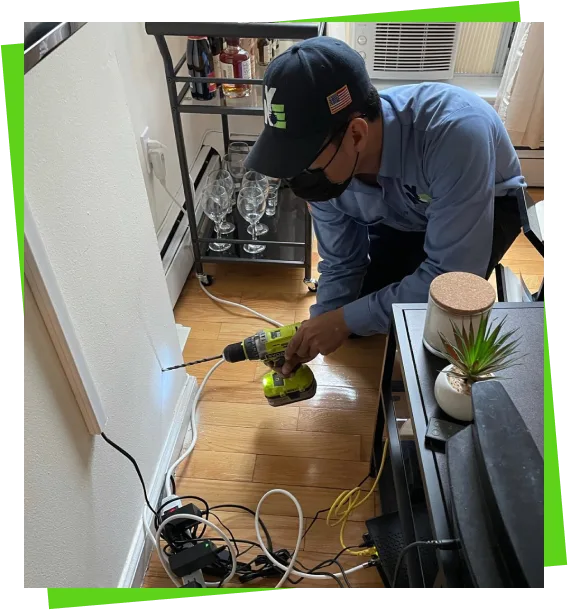
From first inspection to final follow-up, our science-based process ensures every pest problem is solved with precision, safety, and lasting protection
Find quick answers to common questions about our services, safety practices, and customer support
Yes. We use eco-friendly and low-toxicity treatments designed to protect your family, pets, and the environment.
Yes. We offer bilingual services in English and Spanish to ensure clear communication and support for all our clients across New York City.
We proudly serve all five boroughs of New York City — Brooklyn, Queens, Manhattan, the Bronx, and Staten Island — as well as surrounding areas.
You can access all your service reports, invoices, and treatment details through our secure online Client Portal. Simply log in anytime to view records, photos, and chemical logs for full transparenc
We specialize in removing rodents, insects, raccoons, and other common pests, providing thorough inspections and effective solutions to keep your home or business pest-free.
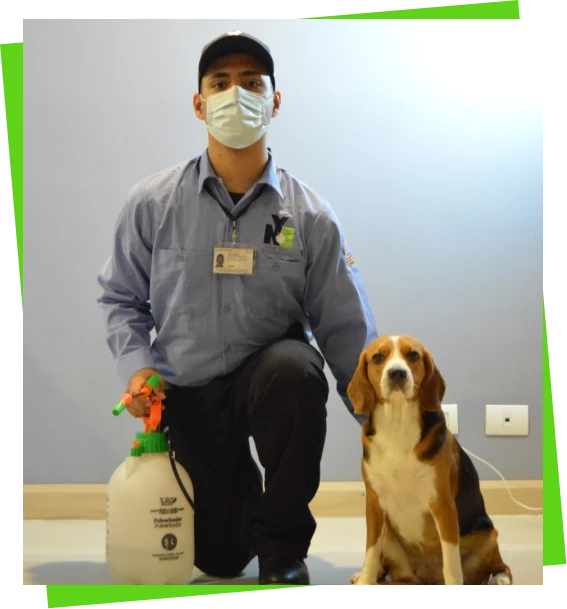
We proudly serve residential, commercial, and institutional clients throughout:
Providing reliable pest control solutions for homes, businesses, and institutions across the NYC metro area


Designed & Managed with 💛 By