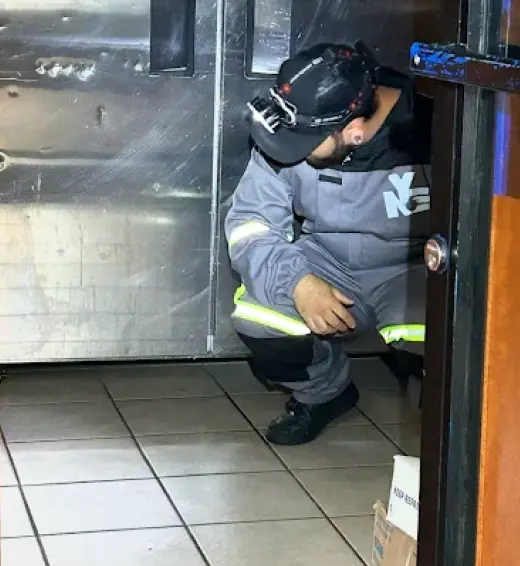
Trusted extermination services to keep your home, business, and customers pest-free

New York Exterminating provides rodent control in NYC for apartments, houses, brownstones, mixed-use properties, restaurants, commercial buildings, co-ops, condos, and multi-unit housing.
If you are searching for a mouse exterminator near you, rat control near you, or a long-term solution for rodents in New York City, the most important thing to understand is this:
Traps and poison alone do not resolve rodent problems.
They may reduce the current population. They may catch a few mice. They may kill a few rats. But if the structure is still open, new rodents will keep replacing the ones removed.
That is why our rodent work is exclusion-driven. We do not just try to kill what is visible. We identify how rodents are entering, where they are nesting, what conditions are supporting them, and what must be sealed or corrected to stop the problem from continuing.
We offer free inspections and free quotes over the phone when possible.
Call +1 (347) 210-4646 or request service online. Open 24/7. Same-day response may be available. Se habla español.
Related services and resources:
German Cockroach Elimination
Bed Bug Treatment
Commercial Pest Control
Brooklyn Pest Control
Queens Pest Control
Are you open now for rodent control?
Yes. New York Exterminating provides 24/7 rodent control in NYC, including urgent response for active mice and rat problems.
How do you get rid of mice permanently?
By combining population reduction with structural exclusion. Killing mice without sealing entry points does not stop reinfestation.
How much does rodent control cost in NYC?
The cost depends on whether you have mice or rats, how severe the infestation is, how many access points exist, and whether exclusion work is needed. In many cases, we can provide a free quote over the phone or after inspection.
Do you provide rat control near me?
Yes. We handle both mice and rat infestations throughout NYC for residential and commercial properties.
Why do mice keep coming back after traps?
Because the structure is still open. Traps remove individuals. Exclusion stops replacement.
Most customers call after trying the same cycle over and over:
This is not bad luck. It is bad strategy.
Rodent infestations fail to resolve when the work is limited to killing visible animals while ignoring the structure that is allowing new rodents to enter.
Cheap extermination often fails because:
Our work is built around elimination plus exclusion. That is the difference between temporary relief and long-term control.
What they look like: Small body, light brown to gray color, pointed nose, large ears relative to the head, thin tail as long as the body.
Where they live: Inside buildings year-round. They nest in cabinets, wall voids, insulation, boxes, appliances, closets, and storage spaces. In established infestations, multiple nesting sites may exist throughout the same property.
How they get in: Through openings as small as a dime. Common access points include gaps around pipes, radiator lines, electrical penetrations, damaged door sweeps, foundation cracks, vent openings, and siding or roofing defects.
Why they are dangerous: They contaminate food, spread disease, damage insulation, chew wiring, and reproduce rapidly. One small mouse problem can become a serious infestation in a short period of time.
What they look like: Larger body, heavier build, blunt nose, smaller ears relative to the head, thick tail shorter than the body.
Where they live: Usually outdoors in burrows, sewers, rubble, beneath slabs, near foundations, and in trash-heavy exterior zones. They enter buildings to forage, drink, and exploit shelter opportunities, especially at basements and ground floors.
How they get in: Through larger structural openings, foundation gaps, damaged basement access points, broken sewer-related openings, floor drain issues, utility penetrations, and deteriorated building envelopes.
Why they are dangerous: Rats are more destructive, more aggressive, and more serious from a public health standpoint. They spread disease, contaminate food and surfaces, damage property, and create severe psychological stress for occupants.
Old infrastructure with endless vulnerabilities
Much of New York City was built long before modern pest-proofing practices. Older buildings accumulate dozens of weaknesses over time: cracked mortar, open pipe gaps, broken sweeps, deteriorated vents, damaged basement access points, and utility penetrations that were never properly sealed.
Dense food environment
Rodents do not live on “dirt.” They live on access to food, water, and shelter. NYC provides all three in enormous supply through garbage, restaurant waste, residential food storage, pet food, and constant human activity.
Construction pressure
Excavation, demolition, and renovation disturb burrows and nesting zones. When outdoor harborages are disrupted, rodents move into nearby buildings.
Connected buildings and shared voids
Attached properties, shared basements, pipe chases, and utility corridors create hidden rodent highways. Your infestation may not start in your exact unit or your exact storefront. It may be traveling through the connected structure.
Warm interiors = year-round breeding
Once mice or rats establish inside a heated building, there is no meaningful seasonal shutdown.
Delayed response
Customers often wait too long. By the time they call, rodents have already established travel routes, harborages, and repeated food access patterns.
We do not just look for droppings and set traps. We inspect the property as a system.
Interior inspection includes:
Exterior inspection includes:
At the end of inspection, the goal is not a vague guess. The goal is a clear assessment of:
Once the problem is mapped, we reduce the current population using the right tools for the situation.
Trapping:
Baiting when appropriate:
We do not set traps and disappear. Population reduction only works when placements are monitored, adjusted, and interpreted correctly.
This is the most important part of the entire job.
If exclusion is skipped, the customer often ends up paying repeatedly for the same problem. That is not our approach.
We focus heavily on rodent access denial, rodent mitigation, and durable exclusion work.
Common exclusion work includes:
Common materials include:
Exclusion is where the money is, and where the long-term result is. This is exactly why exclusion-driven rodent control outperforms cheap extermination.
Even if the building is sealed, severe attractants still increase pressure. We identify what is helping rodents remain active.
Recommendations may include:
The point is not to lecture customers. The point is to remove what is supporting the infestation.
Rodent control is not a one-visit fantasy. We return as needed to:
Typical rodent timelines vary:
Customers who want long-term results should want follow-up. That is how serious control is done.
Droppings
Fresh droppings indicate active use of the space. Mouse droppings are smaller and pointed. Rat droppings are larger and thicker.
Scratching in walls or ceilings
Especially at night. This often indicates active travel routes or nesting inside structural voids.
Gnaw marks
On food packaging, cabinets, baseboards, doors, wires, and stored materials.
Grease marks / rub marks
Established rodent travel routes often leave oily smudges along repeated pathways.
Nesting material
Shredded paper, insulation, fabric, or other material in hidden zones.
Burrows
Especially relevant for exterior rat pressure near foundations, slabs, bushes, and debris areas.
Actual sightings
Daytime sightings usually indicate a more serious problem. By the time rodents are seen openly, the population may already be established.
Unusual pet behavior
Pets staring at walls, scratching at cabinets, or fixating on certain rooms can indicate hidden rodent movement.
Not enough traps
One or two store-bought traps do not control an established infestation.
Wrong placements
Rodents travel along edges and hidden routes, not across open floor centers.
No exclusion
This is the main failure. New rodents replace removed rodents when openings remain.
No access to hidden nesting zones
Customers cannot usually reach wall voids, basements, structural gaps, or concealed travel routes properly.
No monitoring or adjustment
Rodent control is dynamic. Trap placement and strategy must be adjusted based on response.
Unsafe or ineffective poison use
Improper rodenticide use creates safety issues and can lead to odor problems inside inaccessible spaces.
DIY is often cheaper at first and more expensive in the end.
Rodents are not just unpleasant. They create real health and property risks.
Health risks include:
Property risks include:
Authoritative references:
CDC: Rodents and Disease Risks
EPA: Rodenticides and Safe Use
NYC 311
Once the current problem is solved, prevention keeps it solved.
In multi-unit buildings, long-term success may require cooperation with management, neighboring units, and building-wide maintenance practices.
Mice: smaller, more curious, often nesting inside the structure, frequently requiring heavy interior trapping plus fine-detail exclusion.
Rats: larger, more cautious, often tied to exterior pressure, burrows, basements, and foundation-related vulnerabilities.
Treatment is not identical. Correct species identification affects inspection, baiting, trapping, exclusion priority, and timeline.
“One mouse is not a big deal.”
False. One visible mouse often means more are already present.
“Poison is the best solution.”
False. Poison alone does not solve access problems and creates its own risks.
“Clean buildings do not get rats.”
False. Rodents infest clean buildings when access exists.
“Ultrasonic devices work.”
Usually false. They do not replace trapping, inspection, or exclusion.
“Cats solve rodent problems.”
Not reliably. Rodents adapt, and cats do not seal buildings.
Rodent problems expand when ignored. They do not quietly go away.
We eliminate the current population and seal the structure so the problem does not keep replacing itself.
Call +1 (347) 210-4646 or request service online. 24/7 service available.
Do you provide rodent control near me in NYC?
Yes. New York Exterminating provides rodent control for mice and rats throughout New York City.
Are you open now for emergency rodent service?
Yes. We are open 24/7 and may be able to respond quickly depending on demand and location.
Do you only set traps?
No. Traps are only one part of rodent control. Our core differentiator is exclusion-driven rodent mitigation.
How do you stop mice from coming back?
By identifying and sealing access points, reducing active populations, and correcting conditions that support reinfestation.
How much does rat control cost?
That depends on severity, building type, and whether exclusion work is needed. We provide free quotes when possible.
Do you work on houses, apartments, and commercial buildings?
Yes. We service residential, multi-unit, and commercial properties.
Midwood Rodent Control
Flatbush Pest Control
Kensington Pest Control
East Flatbush Pest Control
New York Exterminating, Inc.
1115 E 13th St, Brooklyn, NY 11230
Licensed & Certified Since 2010
Rodent-free buildings require elimination plus exclusion. We do both.
See how homeowners and businesses rate our pest control services across New York.
Posted onTrustindex verifies that the original source of the review is Google. So let’s start with professionalism, great! Communication, great! Results, great!!! I was recommended to this company by a friend who experienced great results and i decided to give them a try. Everything there after exceeded my expectations. They have officially become my annual exterminator by choice.Posted onTrustindex verifies that the original source of the review is Google. Estoy muy satisfecha , un trabajo muy profesional , dedico mucho tiempo y es una persona muy pasientePosted onTrustindex verifies that the original source of the review is Google. Gorge did what he is supposed to do exterminated the rodents. Not only does he possess the skills necessary to get the job done but he has the needed customer service skills of Courtesy, Professional, and Respect. Muchas gracias for a job well done.Posted onTrustindex verifies that the original source of the review is Google. Jorge is sweet, patient, communicative and honest. Had a company try to quote me $2500 for a job, luckily I contacted Jorge right in time and he did the same job for me for $220. HIGHLY recommend.Posted onTrustindex verifies that the original source of the review is Google. Showed up on short notice, found the problem and provided guidance to assist with resolving our issue. Thank you!!Posted onTrustindex verifies that the original source of the review is Google. Jorge was really thorough and did an excellent job. Thank you 🙏Posted onTrustindex verifies that the original source of the review is Google. Today I had an appointment with Jorge. He was on time. Explained me everything. Perfectly did his work. Very nice and knowledgeable man. I can highly recommend him if you need an exterminator.Posted onTrustindex verifies that the original source of the review is Google. George is outstanding! He came out in the middle of the night when we had an urgent issue and handled everything with professionalism and care. He was patient, thorough, and fully committed to solving the problem, taking the time to explain what he was doing and making sure the job was done right. It’s rare to find someone so dependable and dedicated—George is the person you want to call if you need an exterminator you can trust.Posted onTrustindex verifies that the original source of the review is Google. Jorge was fast, responsive, and knowledgable. I recommend him.

Our expertise goes beyond simple extermination. Backed by certified specialists and proven methods, we combine science, precision, and care to deliver pest solutions that last. Every treatment is designed with your safety, comfort, and environment in mind.
Many of our clients have remained with us since 2010, demonstrating strong trust and long-term satisfaction.


Licensed by NYSDEC – Reg. #15140
Serving property managers, senior facilities, shelters, affordable-housing programs, and businesses across NYC since 2010 — many long-term clients trust our work.
Botanical/organic options, German-cockroach elimination and rodent-exclusion programs, full bilingual support (EN/ES), plus a client portal with reports, photos, and chemical logs for total transparency.
NYSDEC Registered — Reg. #15140 — with fully licensed technicians (Jorge Bedoya, Tomas Cusati, Jason Mendoza). We follow all regulations for safe, legal treatments.
Led by an Associate Certified Entomologist (Jorge Bedoya) and technicians trained in urban entomology, we use IPM and proven methods for lasting results.
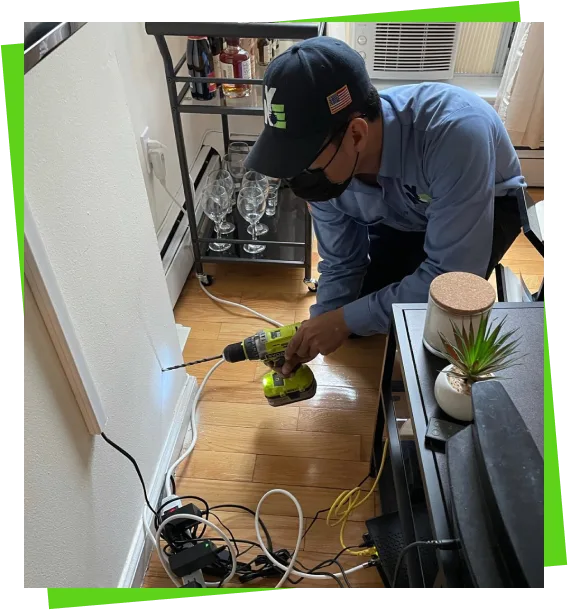
From first inspection to final follow-up, our science-based process ensures every pest problem is solved with precision, safety, and lasting protection
Find quick answers to common questions about our services, safety practices, and customer support
Yes. We use eco-friendly and low-toxicity treatments designed to protect your family, pets, and the environment.
Yes. We offer bilingual services in English and Spanish to ensure clear communication and support for all our clients across New York City.
We proudly serve all five boroughs of New York City — Brooklyn, Queens, Manhattan, the Bronx, and Staten Island — as well as surrounding areas.
You can access all your service reports, invoices, and treatment details through our secure online Client Portal. Simply log in anytime to view records, photos, and chemical logs for full transparenc
We specialize in removing rodents, insects, raccoons, and other common pests, providing thorough inspections and effective solutions to keep your home or business pest-free.
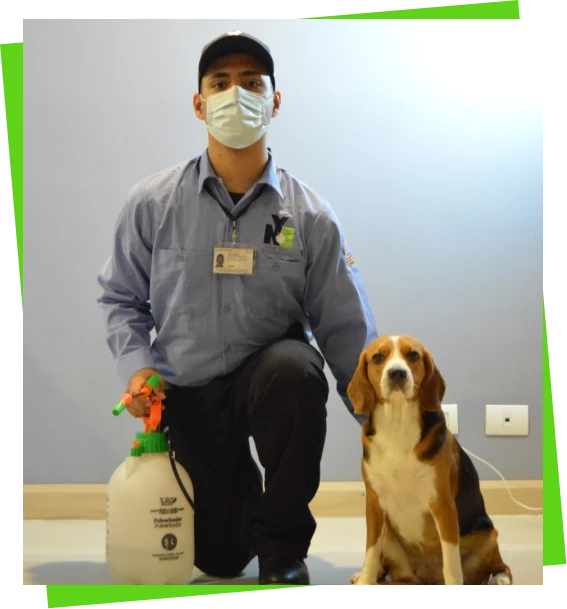
We proudly serve residential, commercial, and institutional clients throughout:
Providing reliable pest control solutions for homes, businesses, and institutions across the NYC metro area


Designed & Managed with 💛 By