Why New York Exterminating
We’re built to solve your pest problem, not to lock you into a monthly contract. We don’t require monthly spray contracts or forced annual agreements, the same technician handles your property whenever possible, and we never blame your housekeeping. Every job is ACE-led (Jorge Bedoya, Associate Certified Entomologist, NYSDEC #15140), bilingual in English and Spanish, and we serve all five boroughs plus Nassau and Westchester — with a callback rate under 1%.
Those big bees hovering around your eaves and the neat, round holes appearing in your fascia and railings are carpenter bees — and left alone they tunnel deeper every spring and invite woodpeckers that tear the wood open chasing the larvae. New York Exterminating treats the galleries, stops the damage, and seals the wood so they cannot return. The work is led by an Associate Certified Entomologist (ACE) licensed in structural pest control, trained on the full range of wood-damaging insects.
Real New York Exterminating jobs
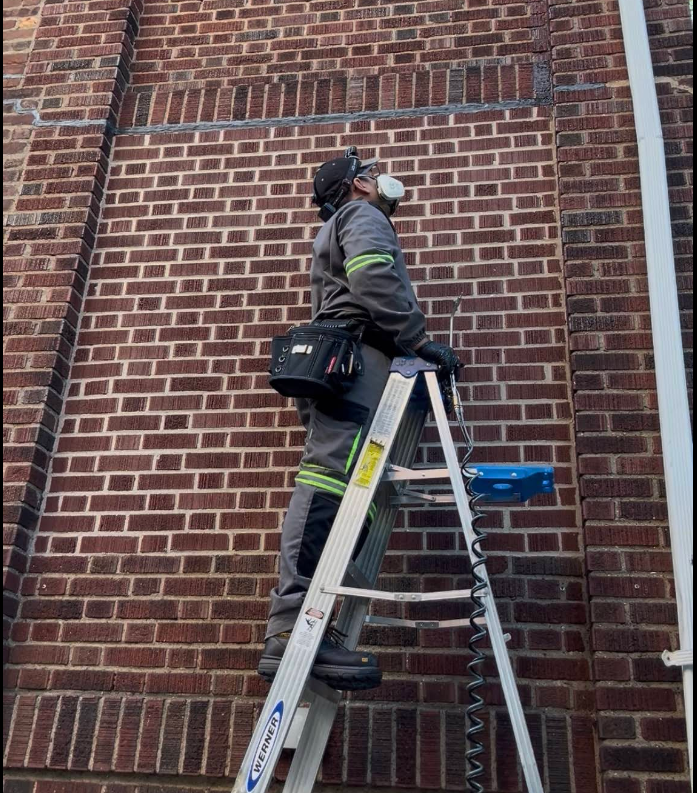
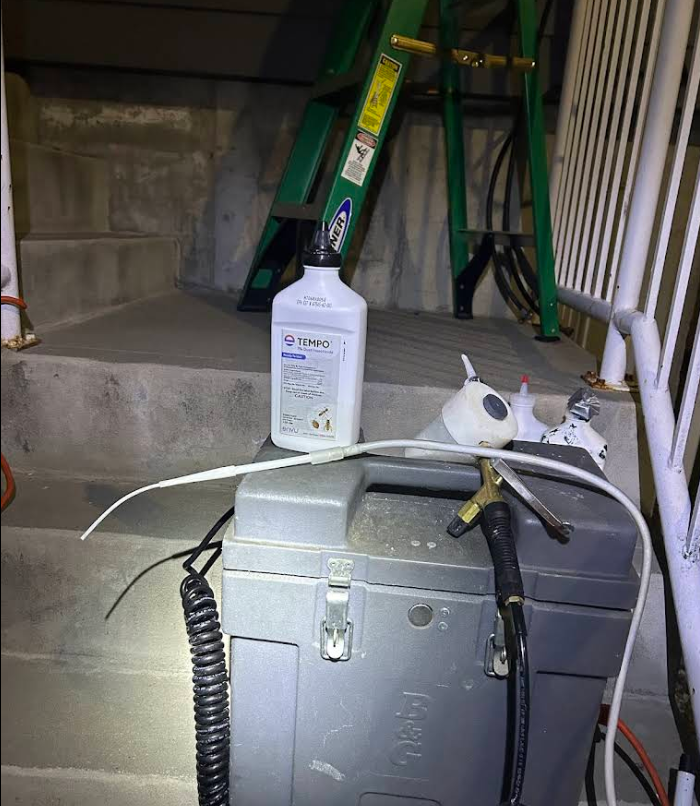
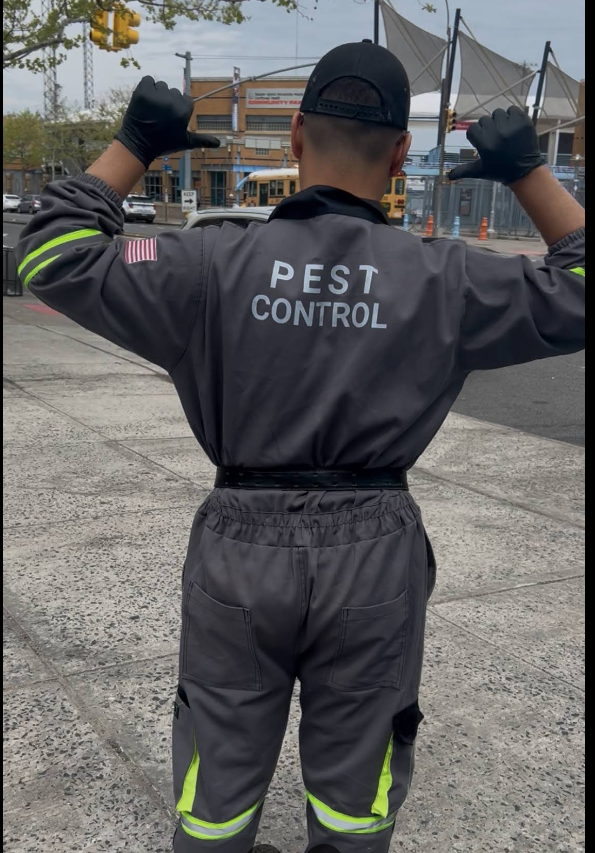

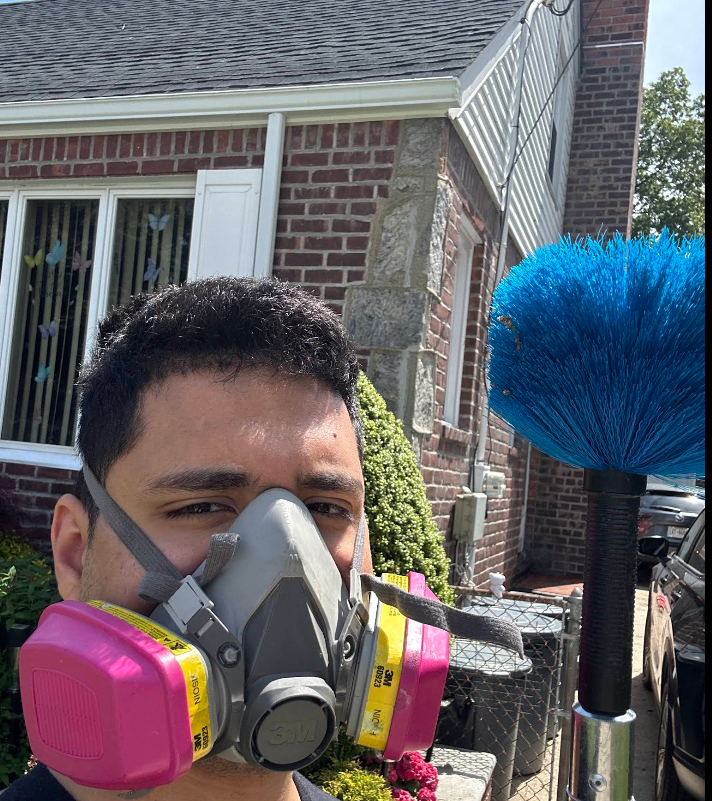

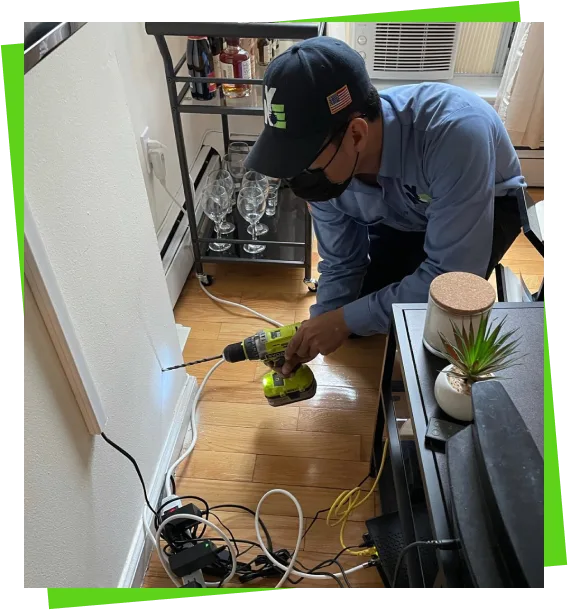
Photos from real NYE service calls across NYC.
The mix-up matters because the two bees need completely different responses. A carpenter bee has a shiny, hairless black abdomen, hovers around eaves and railings, and drills perfectly round half-inch holes — it is a wood-destroying insect. A bumblebee has a fuzzy yellow-and-black abdomen, nests in the ground, and bores nothing; it is a pollinator we do not target. The hovering, dive-bombing bee that alarms you is usually a male carpenter bee that cannot sting at all. So the threat here is structural, not a stinging emergency — though we treat genuine stinging-insect nests too. Identifying carpenter bee versus bumblebee (and versus the wasps people also confuse them with) is the first thing we confirm.
Round holes in your deck or eaves? Carpenter bees are at work.
Gallery treatment and wood protection across all five boroughs. ACE-led. Free estimate.
Carpenter bee damage compounds. The bees overwinter inside the old galleries, emerge in spring to reuse and branch them, and new females are drawn to existing holes — so the same fascia or railing gets hollowed a little more every year. Then woodpeckers find the larvae and open the galleries wide, turning a few small holes into real structural and cosmetic repair. The professional fix is sequence-sensitive: we treat the galleries first so the bees inside are controlled, then seal the holes, because sealing untreated galleries traps bees and invites re-colonization.
They favor bare, weathered softwood that warms in the sun — exactly the untreated eaves, fascia, porch railings, decks, fences, and trim common on houses across the outer boroughs and the metro. South- and east-facing wood that warms early in spring is hit first. Because finished wood is far less attractive to them, a lasting solution pairs treatment with a paint or stain recommendation for the vulnerable surfaces.
1. Identify & inspect. We confirm carpenter bees and map the active galleries and entry holes.
2. Treat the galleries. We treat the tunnels directly so the bees and developing larvae are controlled.
3. Seal. Once treated, we seal the holes so the galleries cannot be reused next spring.
4. Prevent. We recommend finishing the vulnerable softwood and address conditions that make your trim a target.
Related services: Carpenter Ant & WDI Control, Wasp & Stinging Insect Control, and WDO Inspection.
Yes — we identify the bee, map the galleries, and quote before any work.
Yes — removing the larvae removes what the woodpeckers are after, so the secondary damage stops.
Yes — we are equipped to treat and seal galleries in high fascia, eaves, and railings safely.
Look at the abdomen and the behavior. Carpenter bees have a shiny, hairless black abdomen; bumblebees have a fuzzy, yellow-and-black abdomen. Carpenter bees hover aggressively around eaves, railings, and decks and drill perfectly round, half-inch holes in wood; bumblebees nest in the ground and do not bore. If a large bee is hovering near your trim and you see round holes, it is a carpenter bee.
The males that hover and dive-bomb you are intimidating but cannot sting at all — they have no stinger. The females can sting but are docile and rarely do unless handled. The real danger is structural, not medical: their tunneling weakens wood over time and attracts woodpeckers that tear open the galleries to eat the larvae, multiplying the damage.
A single season’s holes look minor, but carpenter bees reuse and extend the same galleries year after year, and multiple bees working the same fascia or railing can hollow out significant tunneling over time. Add woodpecker damage chasing the larvae, and a cosmetic problem becomes a repair bill. Treating early, before galleries branch, is far cheaper.
Because they are returning to existing galleries. Carpenter bees overwinter in the old tunnels and emerge in spring to reuse and expand them, and new females are attracted to the existing holes. Simply filling a hole without treating the gallery traps bees or invites reuse. We treat the galleries, then seal them properly so they cannot be re-colonized.
Spring, as they become active and start drilling, is ideal — you interrupt the nesting cycle before galleries branch and eggs are laid. We also treat through the summer when activity and damage are visible. The key is treating the galleries before sealing; sealing alone, at the wrong time, makes the problem worse.
Bare, weathered, and unpainted softwood. They favor untreated eaves, fascia, railings, decks, fences, and trim — especially south- and east-facing wood that warms early. Painted and stained wood is far less attractive, which is why treatment plus a finish recommendation is part of a lasting fix.
New York Exterminating, Inc.
1115 E 13th St, Brooklyn, NY 11230
ACE-Certified · Licensed in Structural & Food-Establishment Pest Control · Serving all five boroughs
Every job is led by an Associate Certified Entomologist. Meet Jorge Bedoya, ACE — the NYC Exterminator »
New York Exterminating is Brooklyn-based and covers the whole city — the same Associate Certified Entomologist–led service in every borough:
Brooklyn · Manhattan · Queens · The Bronx · Staten Island · Yonkers · White Plains · Nassau County
No. We don’t lock you into monthly spray contracts or forced annual agreements.
Yes. Whenever possible, the same technician services your property, so the plan and history stay consistent.
We serve all five boroughs plus Nassau and Westchester, in English and Spanish, from our Midwood, Brooklyn base.











Carpenter bee control in NYC — we treat the galleries, protect your wood, and stop the damage from spreading. Dependable.