Reviewed by Jorge Bedoya, ACE (Associate Certified Entomologist, NYSDEC #15140). Last updated September 2026.
People search “drain flies vs fruit flies vs gnats” because the same tiny fly can mean four different problems. This guide, reviewed by Jorge Bedoya, ACE, gives the field marks, the breeding site of each species, a simple overnight test, and the fix that actually works in NYC buildings.
How to tell them apart
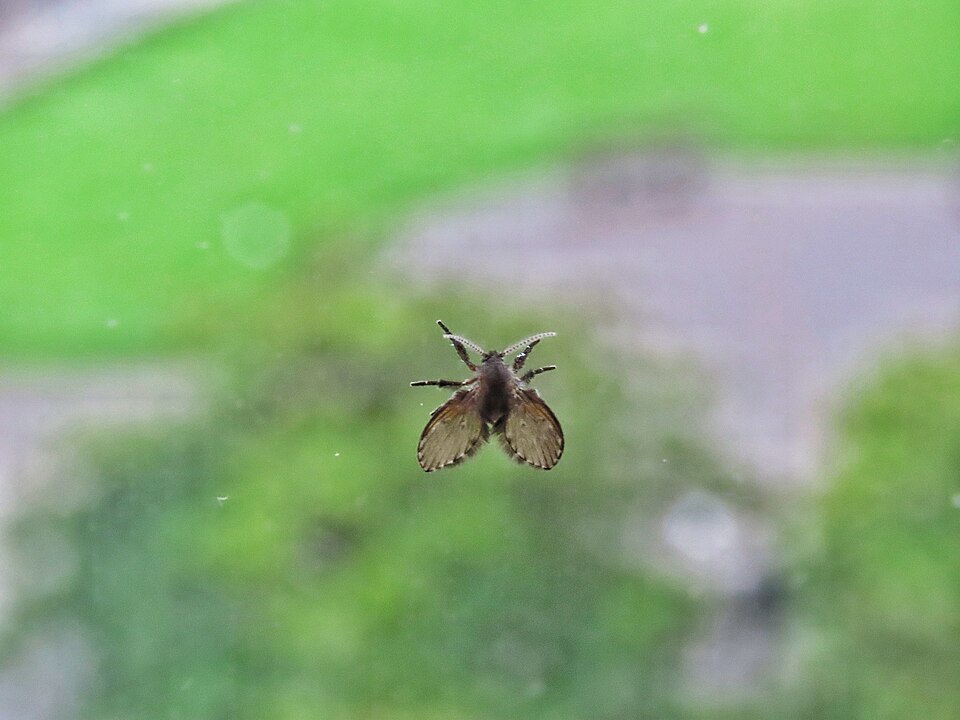
| Fly | Size and look | Where you see it | Where it breeds |
|---|---|---|---|
| Fruit fly | About 3 to 4 mm; tan body, red eyes | Hovering over fruit, trash, recycling, wine and beer bottles | Ripe or fermenting produce, sticky residue, bottle residue, the disposal |
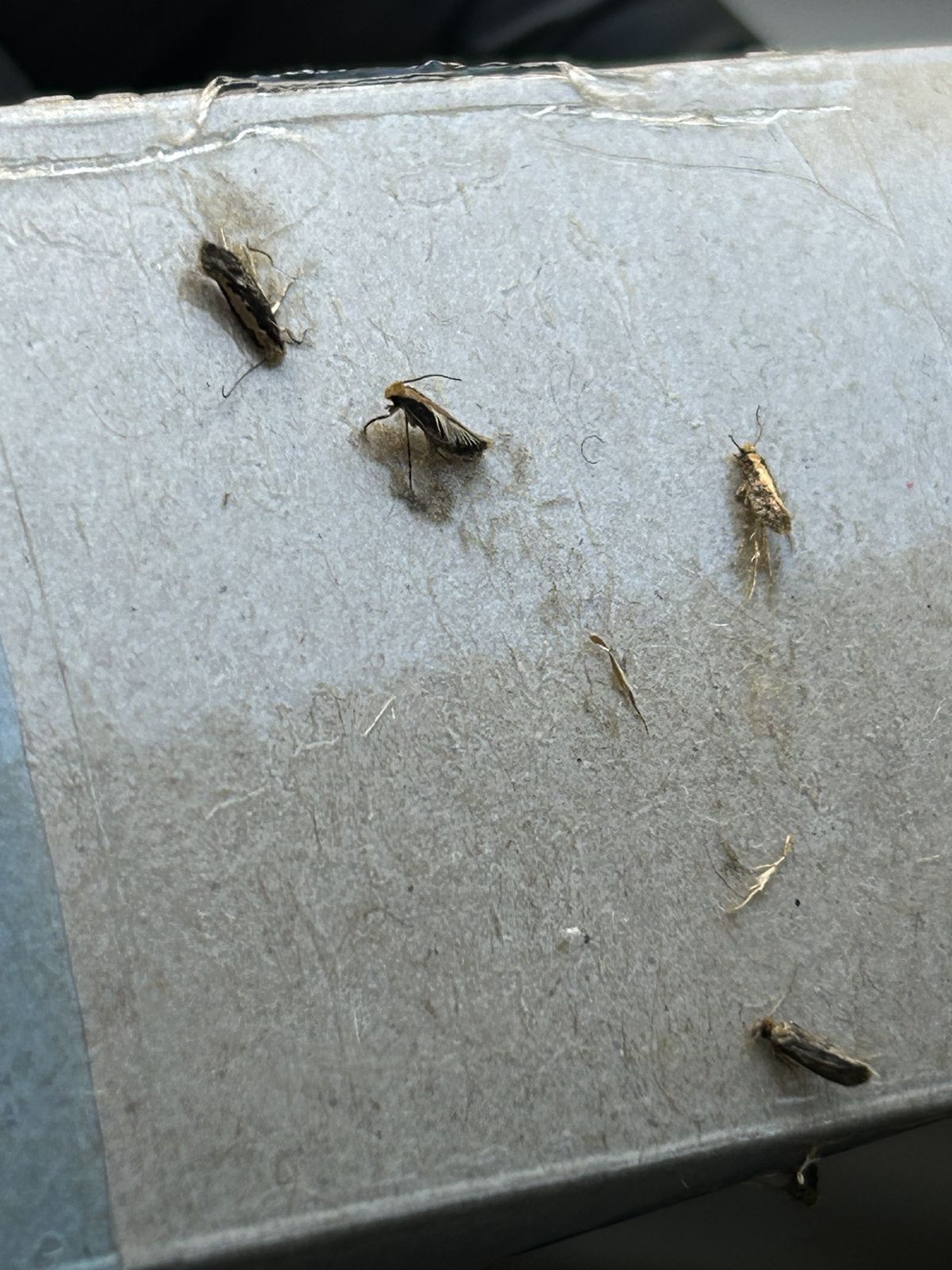
| Drain fly (moth fly) | About 2 to 5 mm; gray, fuzzy, moth-like wings held roof-like | Resting on walls near sinks, tubs and floor drains; weak, hopping flight | The slimy film inside drains, overflow openings and unused traps |
| Fungus gnat | About 2 to 4 mm; slender, dark, long legs | Around houseplants and windows | Constantly damp potting soil |
| Phorid fly | About 2 to 3 mm; humpbacked, runs in bursts | Running across floors and counters | Leaking drains, broken sewer lines, decaying organic matter |
The overnight cup test: tape a clear cup upside down over a suspect drain, with a thin smear of petroleum jelly on the rim, and check in the morning. Drain flies come up out of the pipe and collect inside. If the cup stays empty, look at trash, recycling, produce or plants instead.
Where each one breeds (this is the real fix)
Flies do not come from nowhere, and spraying adults never solves it. Fruit flies breed in fermenting material, often something small: a sticky spot under the fridge, a bottle in a recycling bin, the rubber flange of a disposal. Drain flies breed in the slimy film that builds up inside drain pipes, overflow holes and the P-trap of a sink or shower nobody uses. Fungus gnats breed in wet soil. Phorid flies breed in decaying matter and often mean a leak or a cracked drain line inside a wall or under a slab.
In NYC buildings, the common hidden sources are basement and laundry floor drains, unused bathroom sinks and tubs where the trap has dried out, condensate pans, and old cast-iron stacks shared between units. A tenant who scrubs a drain and still sees flies a week later is often dealing with a source outside the apartment.
How to get rid of them
- Identify the species with the field marks above and the cup test.
- Remove the breeding material. For fruit flies: empty trash and recycling, remove overripe produce, and clean the disposal and sink rim. For drain flies: scrub the inside of the drain and overflow with a stiff brush and an enzymatic cleaner, then run water to keep the trap sealed.
- Skip the shortcuts. Boiling water and bleach usually run through the pipe without breaking up the film, and aerosol sprays kill only adults.
- Trap adults meanwhile with a vinegar-and-dish-soap cup or sticky traps, but treat the source, not the trap, as the fix.
- Call a professional if flies come back within a week or two, or if you see phorid flies, which can point to a plumbing problem.
When a professional should be called
Repeated tiny flies usually mean the source is out of reach: a drain line, a wall void, a shared stack or a neighboring unit. We identify the species, locate the moisture or drain source, treat the drain and breeding site, and tell you when a plumber should be involved. See our drain fly treatment service, and the species profiles for drain flies, fruit flies and house flies.
Why New York Exterminating
New York Exterminating is an ACE-led, NYSDEC-registered company (#15140) at 1115 E 13th St, Brooklyn, NY 11230. We identify the pest before treating it, we do not put you on a monthly spray contract, the same technician handles your home whenever possible, and our callback rate is under 1%. Rated 4.9 on Google. We serve all five boroughs plus Nassau and Westchester, in English and Spanish. Call (347) 210-4646.
Problem keeps coming back? See how we handle chronic infestations — source first, verification instead of re-spraying.
Phorid flies: if your flies are humpbacked and run in bursts, read phorid flies in NYC: why they keep coming back.
Tiny Kitchen Flies FAQ
How do I know if they are fruit flies or drain flies?
Look at the wings and where they hover. Fruit flies are tan with red eyes and cluster around fruit, trash and recycling. Drain flies are small, fuzzy and moth-like, with wings held roof-like over the body, and they rest on walls near sinks, tubs and floor drains. Tape a clear cup over the drain overnight: drain flies collect under it.
Why do I have tiny flies in my kitchen with no fruit out?
Usually drain flies or phorid flies breeding in a drain or hidden moisture. Fruit flies can also breed in a forgotten bottle, a dry-looking recycling bin or fermenting residue in the disposal. The flies are the symptom; the breeding site is the problem.
How do I get rid of drain flies?
Find and clean the breeding film: scrub the inside of the drain and overflow with a stiff brush and an enzymatic cleaner, then keep the trap wet. Boiling water and bleach usually miss the film, and sprays only kill adults. If flies return, the source is deeper in the plumbing.
What kills fruit flies fast?
Removing the breeding material does: take out overripe produce, empty trash and recycling, and clean the disposal and the underside of the sink rim. A vinegar-and-dish-soap trap catches adults while you do that, but it will not stop new flies without a source fix.
What are phorid flies, and are they worse?
Phorid flies are small humpbacked flies that scuttle rather than fly. They breed in decaying organic matter and can point to a leaking or broken drain line under a slab or behind a wall, so they are a stronger signal that a plumber and a pest professional are both needed.
I live in a Brooklyn apartment and the flies come from the bathroom. Whose problem is that?
If the breeding site is in your own fixtures, cleaning the drain and running water in seldom-used traps often fixes it. If flies return after cleaning, the source may be in a shared stack or a neighboring unit, and management should inspect the plumbing.
Do you treat drain flies and fruit flies?
Yes. We identify the species first, locate the breeding source, and treat the drain and hidden moisture area, not just the flies. Pricing is quoted after a free inspection.