Straight answers from a licensed New York exterminator and Associate Certified Entomologist (ACE) — serving all five boroughs, in English and Spanish.
Get a Free Estimate →⏱ 3 min read
If a rodent problem keeps coming back after treatment, the issue usually isn’t the bait — it’s an entry point that was never properly closed. Here’s why the cheap fix fails, and what long‑lasting exclusion actually involves.
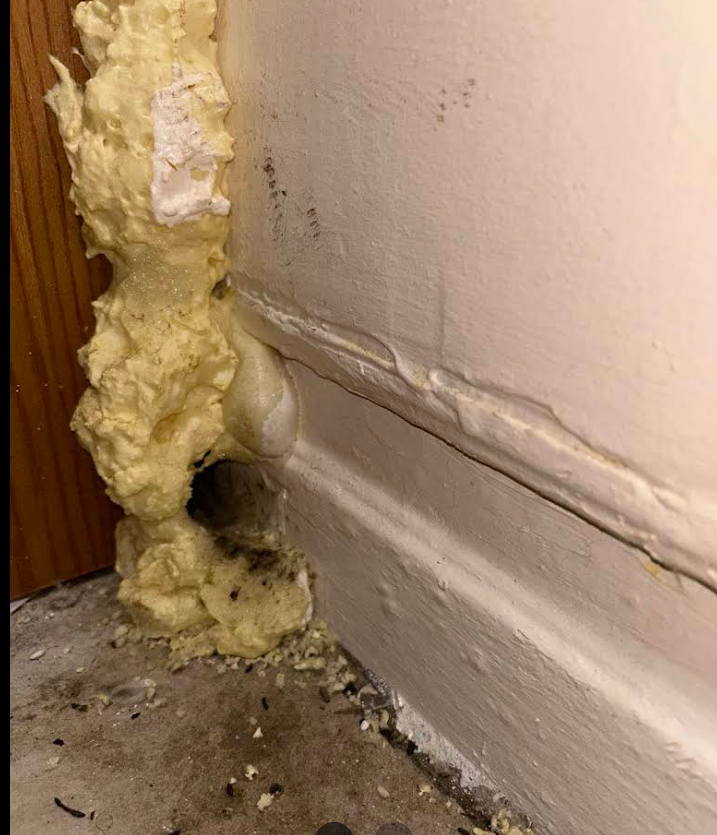
Why spray foam fails
Mice can squeeze through a gap the size of a dime; rats need only about a quarter. When that gap is plugged with expanding foam, rodents simply chew a new path straight through it. The grease and rub marks they leave behind show how many times they’ve used the same route. We see it constantly on second‑opinion calls: a previous company foamed the gaps, activity paused for a week or two, and then the mice were back.
How we seal it instead
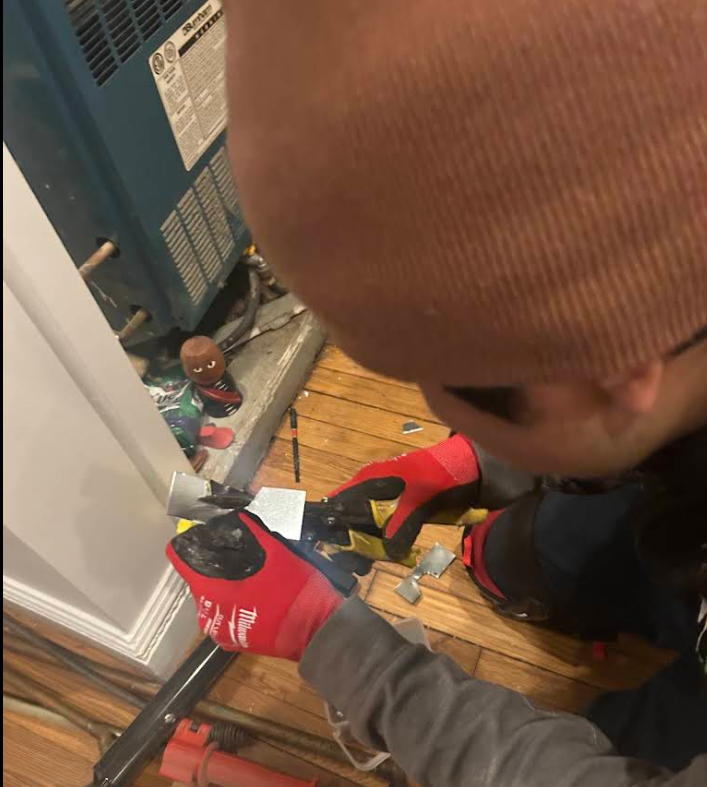
Our technicians measure and cut metal to fit each opening — around pipes, behind radiators, under sinks, and at gas‑line and conduit penetrations — then lock it in place with an elastomeric sealant that stays flexible and bonded over time. Where appropriate, a licensed applicator treats the void before the opening is closed. The result is an entry point rodents can’t chew, claw, or squeeze back through.
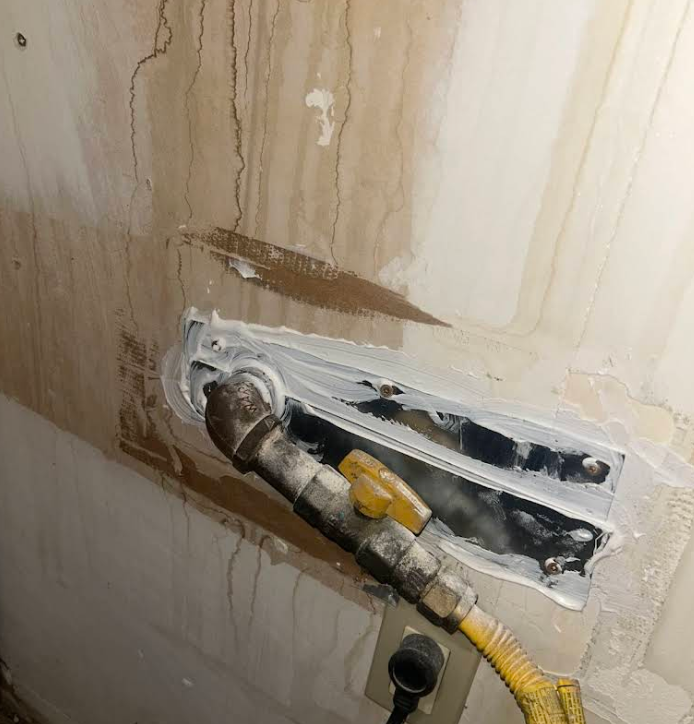
Bait reduces numbers; exclusion ends the cycle
Bait stations and trapping bring the current population down, but if the entry hole is still open, new rodents keep arriving to replace the ones removed. Real control pairs population reduction with exclusion — physically closing the routes rodents use. That’s what turns a recurring problem into a solved one.
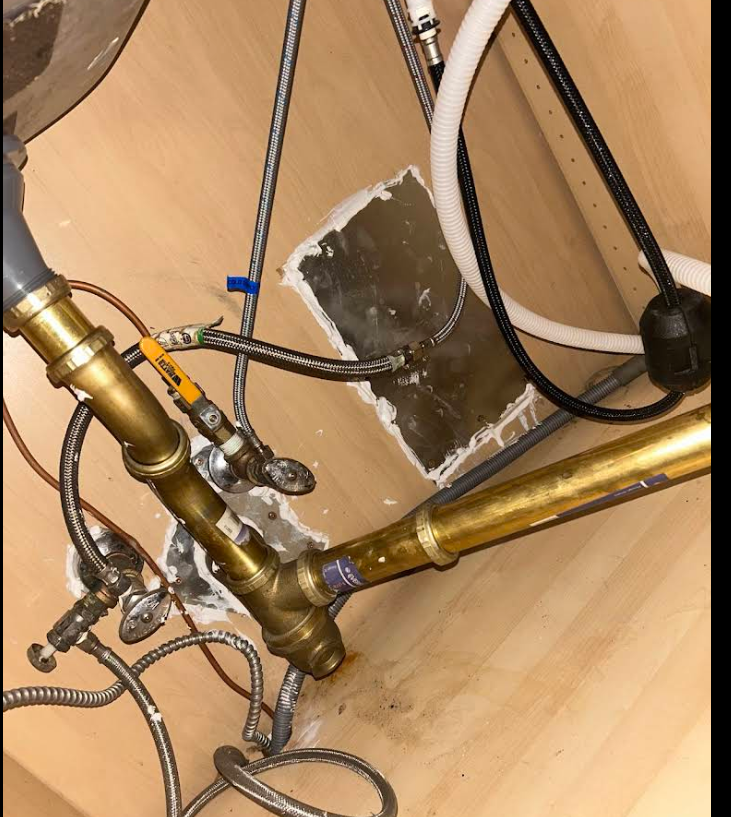
A Brooklyn-based, NYSDEC-registered company (Reg. #15140) led by Jorge Bedoya, an Associate Certified Entomologist (ACE). For rodents, NYE provides rodent exclusion that seals the entry points, not just trapping. ACE-led work comes with a client portal of service reports and photos, fully bilingual service, and no long-term contract.
Foam vs. Metal Rodent Exclusion FAQ
Can mice really chew through spray foam?
Yes. Expanding foam is soft and rodents gnaw through it easily, often within days. It can hide a gap visually but does not block entry.
What materials actually keep rodents out?
Rodent‑proof materials cut to fit the opening: galvanized sheet metal or hardware cloth, secured with a durable elastomeric sealant. Hard cement‑based fillers also work in the right spots.
Why does my mouse problem keep coming back?
Almost always because the entry point was never sealed. Trapping and bait reduce the numbers you see, but open gaps let new rodents back in. Sealing the structure is the step that lasts.
Do you seal around pipes and gas lines?
Yes — including awkward penetrations around plumbing, conduit, and gas lines. Those are exactly the spots cheaper jobs tend to leave open.
Related: The rodent entry point five companies couldn’t seal — a Brooklyn case study.