Why New York Exterminating
We’re built to solve your pest problem, not to lock you into a monthly contract. We don’t require monthly spray contracts or forced annual agreements, the same technician handles your property whenever possible, and we never blame your housekeeping. Every job is ACE-led (Jorge Bedoya, Associate Certified Entomologist, NYSDEC #15140), bilingual in English and Spanish, and we serve all five boroughs plus Nassau and Westchester — with a callback rate under 1%.
Large black ants trailing along a baseboard or a sprinkle of sawdust under a windowsill are not a nuisance — they are a warning that wood is being hollowed out and that you likely have a moisture problem feeding the colony. New York Exterminating is led by an Associate Certified Entomologist (ACE) who is trained on the full range of wood-destroying insects and licensed in structural pest control. We find the nest, control the colony, and fix the conditions that invited it — not just the ants you happened to see.
Real New York Exterminating jobs
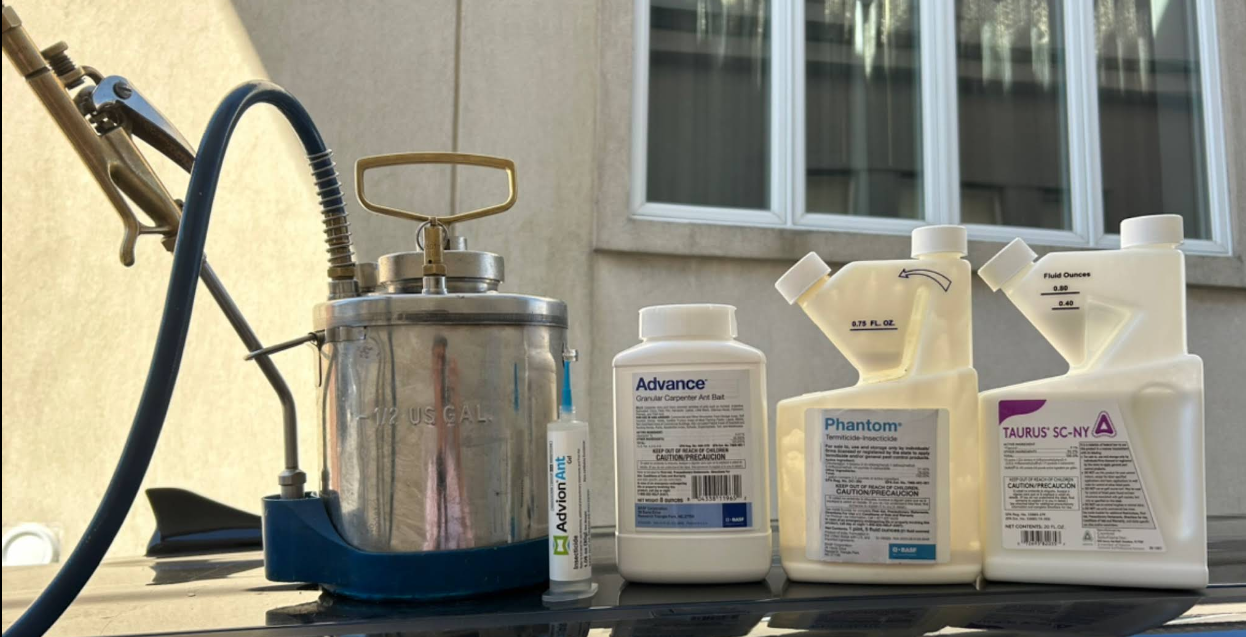
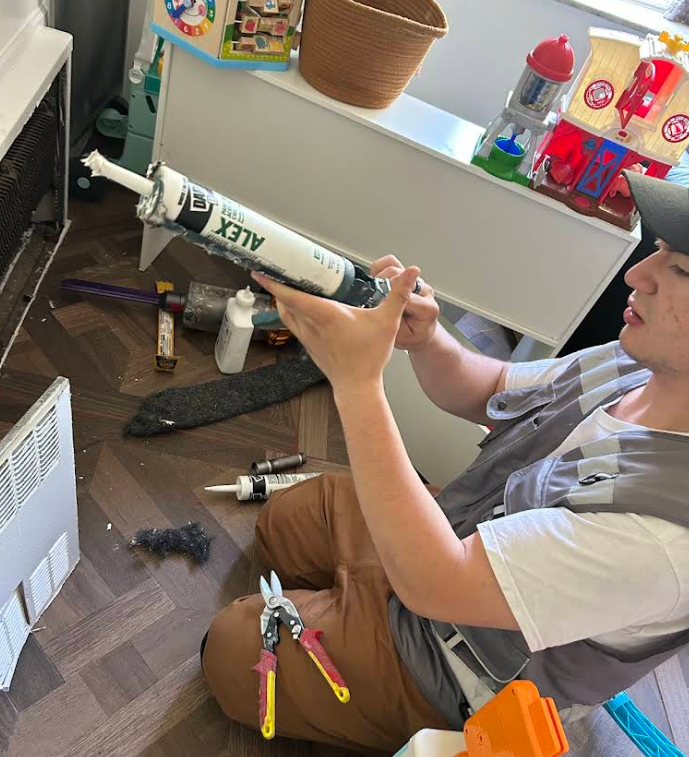
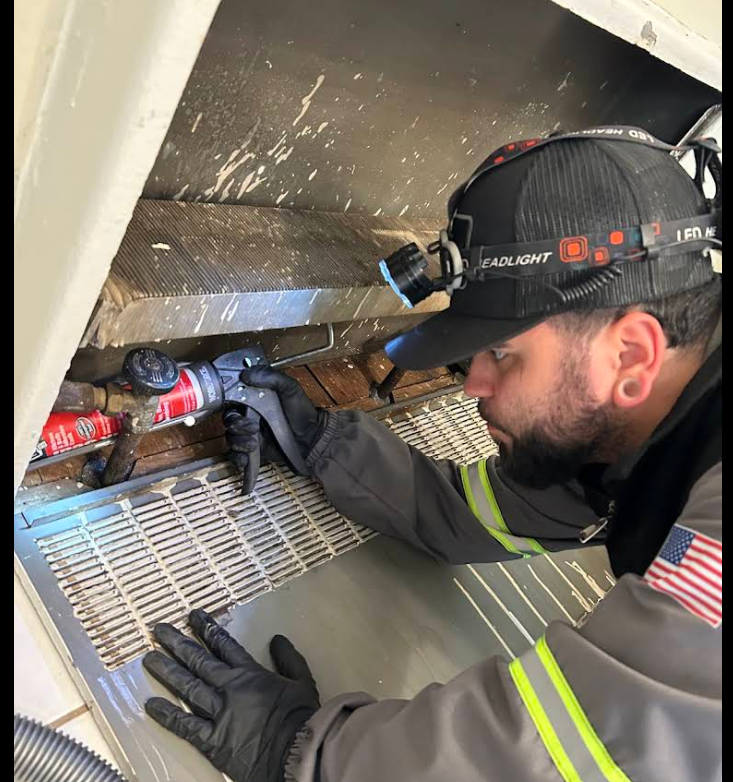
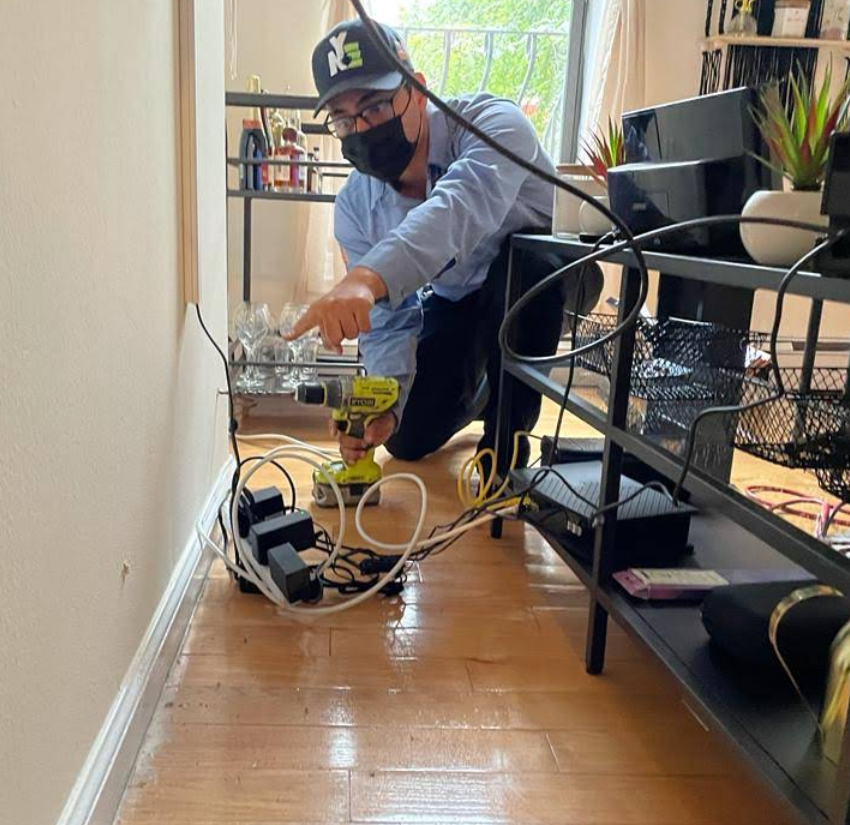
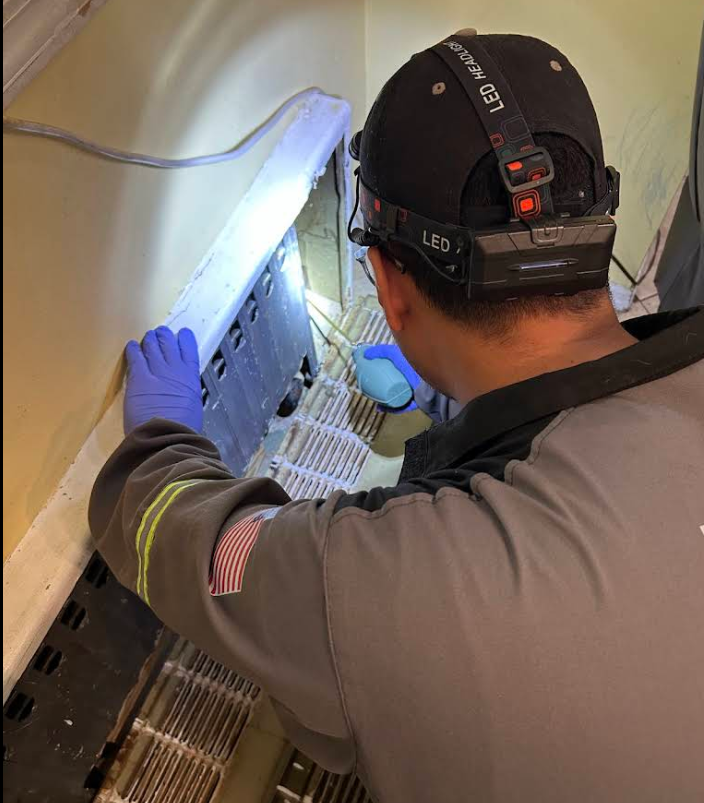
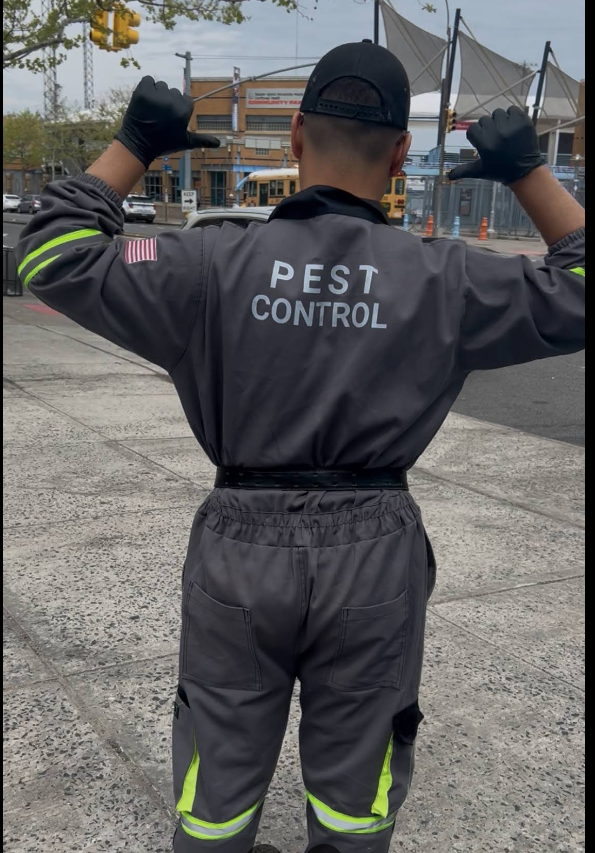
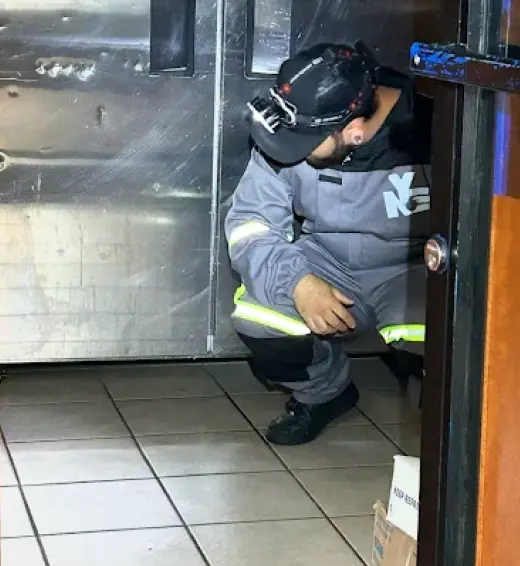
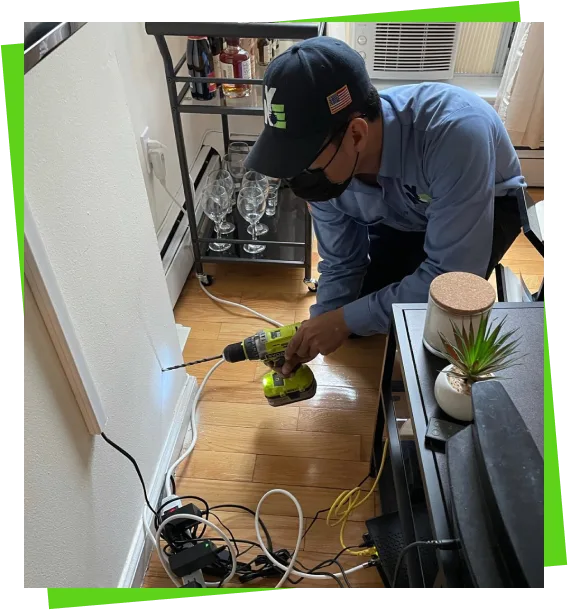
Photos from real NYE service calls across NYC.
This is the single most important distinction, because the treatment and the urgency differ. Carpenter ants are large and dark, leave coarse sawdust-like frass with insect parts, and excavate smooth, clean galleries — they do not eat the wood. Termites are smaller, pack their galleries with mud, build mud tubes up foundations, and actively consume the wood, usually causing faster damage. Flying ants (swarmers) have bent antennae, a pinched waist, and unequal wings; termite swarmers have straight antennae, no waist, and equal wings. Misreading frass for termite damage — or vice versa — sends the whole treatment in the wrong direction. We confirm the species before we treat.
Carpenter ants in the wood? Protect your home before damage spreads.
Nest location and targeted treatment across all five boroughs. ACE-led. Free estimate.
Carpenter ants follow water, and NYC housing gives them plenty of it: flat-roof and parapet edges where water pools, cornice and roofline framing, old window and door sills, wood around tubs and kitchens, and porch columns. In attached homes and brownstones a colony can sit inside a shared wall and forage into multiple units. Because the nest is almost always in moisture-damaged wood, we start the inspection at the leak-prone framing — that is where they live, even when the trail you see is in the kitchen.
1. Inspect & identify. We confirm carpenter ants (not termites), follow the trails, and locate the parent and satellite nests — usually by finding the moisture.
2. Colony control. We treat the nest directly and use non-repellent products the foragers carry back, so the colony is controlled rather than just scattered.
3. Moisture & access correction. We identify the leaks, damp framing, and wood-to-soil or branch bridges feeding them, so the conditions do not simply recruit a new colony.
4. Monitoring. We confirm the activity has stopped and recommend ongoing inspection where the building has a history of moisture.
Related services: Termite Treatment & Inspection, Carpenter Bee Control, and WDO Inspection & Reports.
Yes — we inspect, identify the species, locate the nest, and give you a written quote before any work begins.
Yes. Tracing activity to the parent and satellite nests is the whole job — spraying foragers alone never solves it.
Yes. Carpenter ants are most active in spring and summer, but nests inside heated buildings stay active, and we treat whenever activity appears.
Look at the frass and the galleries. Carpenter ants do not eat wood — they excavate it and push the debris out, leaving coarse, sawdust-like frass often mixed with insect parts below the nest, and their galleries are smooth and clean. Termites eat the wood and pack their galleries with mud. Carpenter ants are large (a quarter to half an inch) and dark; termite swarmers are smaller with equal-length wings. Send us a photo of the insect or the frass and we will identify it free.
Because the spray only kills the foragers you see, not the colony. The main nest is usually hidden in a wall void, a damp sill, a roofline, or even a tree outside, and there are often satellite nests too. Until the parent nest and the moisture feeding it are addressed, new foragers keep appearing. We trace the trails back to the nest and treat the source.
Moisture and accessible wood. Roof and plumbing leaks, poor drainage, condensation, and damp framing create the soft wood they prefer to tunnel. Overhanging tree branches, firewood stacked against the house, and wood-to-soil contact give them a bridge inside. Fixing the moisture is half the treatment.
They work more slowly than termites, but an established colony left alone for years can cause serious structural damage by hollowing out joists, sills, and studs — especially where wood is already damp. The danger is that they signal a moisture problem you may not have known about. Early treatment is far cheaper than the repairs.
In our housing stock, the recurring spots are damp roof and cornice framing, window and door sills with old leaks, wood around tubs and kitchens, porch columns, and parapet or flat-roof edges where water collects. In attached homes a nest can sit in a shared wall. We inspect the moisture-prone framing first, because that is where they almost always are.
Yes. We handle the full range of wood-destroying insects — carpenter ants, carpenter bees, and powderpost beetles — with treatment matched to the specific pest and the damage pattern, plus the moisture and access corrections that keep them from returning.
New York Exterminating, Inc.
1115 E 13th St, Brooklyn, NY 11230
ACE-Certified · Licensed in Structural & Food-Establishment Pest Control · Since 2010
Every job is led by an Associate Certified Entomologist. Meet Jorge Bedoya, ACE — the NYC Exterminator »
New York Exterminating is Brooklyn-based and covers the whole city — the same Associate Certified Entomologist–led service in every borough:
Brooklyn · Manhattan · Queens · The Bronx · Staten Island · Yonkers · White Plains · Nassau County
No. We don’t lock you into monthly spray contracts or forced annual agreements.
Yes. Whenever possible, the same technician services your property, so the plan and history stay consistent.
We serve all five boroughs plus Nassau and Westchester, in English and Spanish, from our Midwood, Brooklyn base.
Premium pest control, made affordable. Finance your treatment with Klarna, Affirm, or Afterpay and pay over time — money shouldn’t be the reason pests stay.
Finance with Klarna, Affirm, or Afterpay. Checking your rate is a soft check — no credit impact.
Example at 14.9% APR; 0% APR plans may be available. Actual rate shown when you prequalify. New York Exterminating is not a lender.











Carpenter ant and wood-destroying insect control in NYC — we locate the nest, treat the galleries, and protect your structure. Dependable.