Straight answers from a licensed New York exterminator and Associate Certified Entomologist (ACE) — serving all five boroughs, in English and Spanish.
Get a Free Estimate →⏱ 6 min read
One roommate calls it a water bug, the other calls it a cockroach. Both are right about what they saw and wrong about what to do next. Here is how an Associate Certified Entomologist (ACE) tells them apart in a New York City building, and how we keep them from coming back up.
Are water bugs the same as cockroaches?
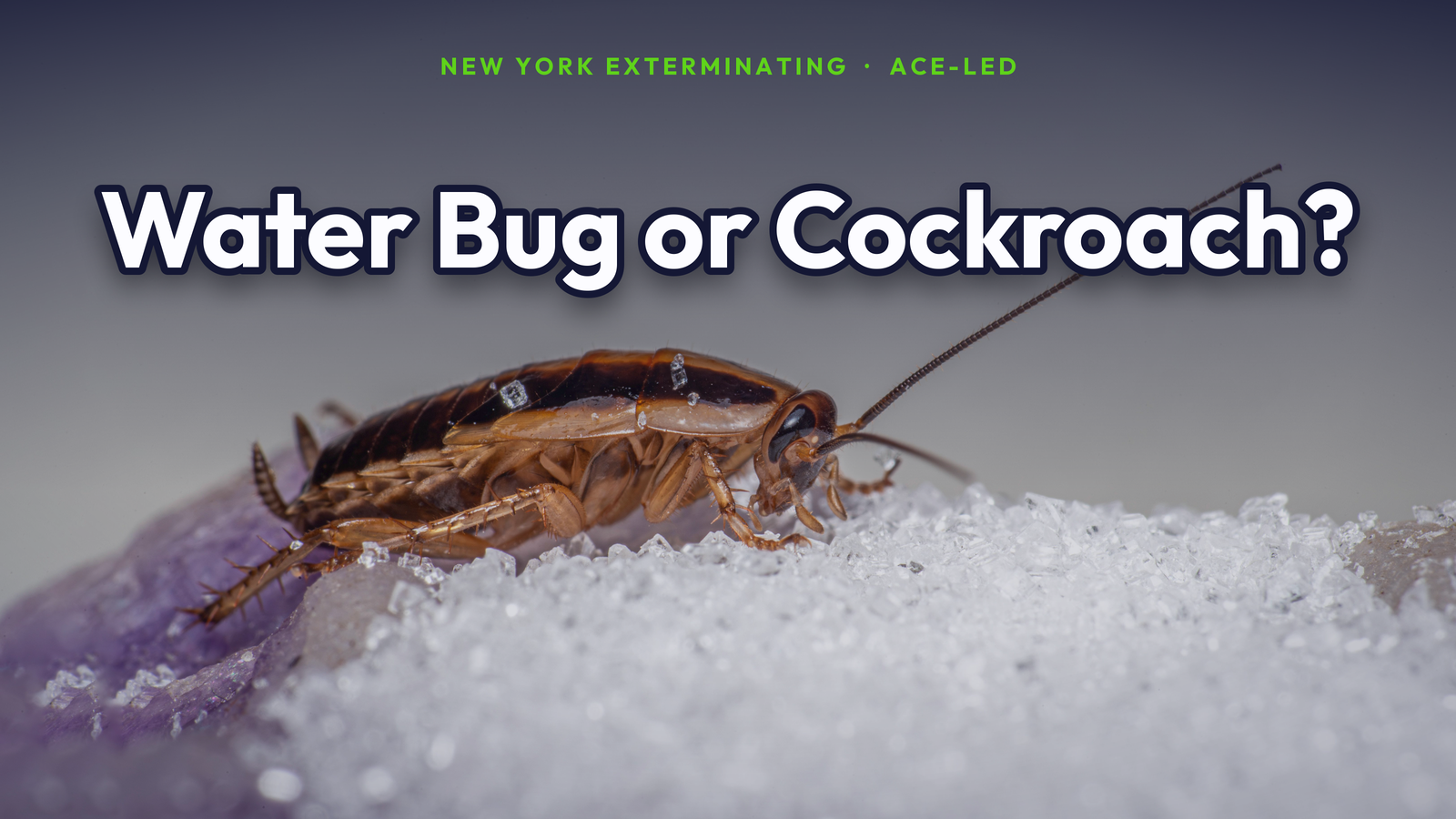
Indoors in New York City, yes. “Water bug” is a nickname, not a species. The large insects people mean are the American cockroach (Periplaneta americana) and the Oriental cockroach (Blatta orientalis). The Oriental cockroach earns the nickname most honestly because it favors cool, wet places. The American cockroach is bigger, faster and the one most often seen coming out of a drain. Real water bugs, such as giant water bugs and backswimmers, are aquatic insects that live in ponds and streams.
| American cockroach | Oriental cockroach | German cockroach (not a “water bug”) | |
|---|---|---|---|
| Size | 1.3 to 2 in | About 1 in | About 0.5 in |
| Color | Reddish-brown, yellowish band behind the head | Very dark brown to black, glossy | Tan with two dark stripes |
| Movement | Fast; can glide short distances | Slow; often mistaken for a beetle | Fast; does not really fly |
| Where in NYC | Boiler rooms, sewers, trash rooms, risers | Cool damp basements, floor drains, ground floors | Inside kitchens and bathrooms, near appliances |
| What it signals | A building-level moisture or plumbing pathway | Damp harborage and entry points from below | A breeding population inside the unit |
If what you have is the small tan roach with two stripes, it is a German cockroach, a different problem with a different method. See our German vs American cockroach guide and our German cockroach Trio Protocol.
Why do water bugs come up the drains?
American and Oriental cockroaches live in the shared, damp parts of a building and forage upward at night. In NYC apartment buildings they travel up cold-water risers and pipe chases, come through floor drains and tub or sink overflows, and wander up from basement laundry, boiler and trash rooms. They are chasing moisture and warmth, not crumbs. That is why a spotless apartment can still get them: the route is the building’s plumbing, not your kitchen habits.
Which NYC buildings get them worst?
Older buildings with shared basements and long vertical pipe runs see the most water bugs: pre-war walk-ups and apartment buildings, brownstones with original drain lines, and mixed-use buildings with a restaurant or trash room on the ground floor. Ground-floor and garden units, and apartments directly above a boiler room or laundry room, usually report them first. Buildings with recurring basement leaks or standing water keep them longest.
When are water bugs most active?
Both species are nocturnal and seek humidity, so most sightings happen at night near sinks, tubs and radiators. They are most active in warm, humid weather, and sightings often rise after heavy rain or a plumbing leak pushes them out of drains and basements.
How we get rid of water bugs, and what it costs
Spraying your kitchen does not fix a basement source; it only moves them. Our method is source-first:
- Inspect and find the source. An ACE-led inspection traces activity to its origin: basement, floor drains, trash room, risers or a neighboring unit.
- Exclude, dry and treat. We seal entry points and pipe chases with metal, not foam, address the moisture and drains feeding them, and place targeted baits and growth regulators in the harborage.
- Verify and keep them out. A verification visit confirms the drop-off. If the building source needs building-level work, we tell you and your landlord exactly where it is.
The price depends on whether the source is inside your unit or in the building’s common areas, how many units are involved, and how much sealing is needed. It is quoted after a free inspection, before any work starts. If the same service is needed again within 6 months, it is 50% off the original price. For a broader view of roach work, see our cockroach control in NYC service.
What are your rights as a tenant?
Under the NYC Housing Maintenance Code, landlords must keep apartments and common areas free of roaches and other pests, and Local Law 55 requires pest work in multi-unit buildings to follow integrated pest management. Because water bugs usually come from shared basements and plumbing, report sightings to your super or management in writing. If nothing is done, you can call 311 to file a complaint with the Department of Housing Preservation and Development (HPD).
What about the “real” water bug?
Entomologists use “water bug” for a different insect entirely: the giant water bug (family Belostomatidae), sometimes called a toe-biter. It is a flat, oval, brown insect up to 2 inches long with grasping front legs like a praying mantis, and it lives in ponds, lakes and slow streams — in NYC that means park waters such as those in Central Park, Prospect Park and Van Cortlandt Park. Giant water bugs fly to lights in summer, so one occasionally lands on a balcony or near a building entrance, and unlike roaches they can deliver a painful bite if handled.
Two quick tells separate them from the roaches people call water bugs: a giant water bug has short, thick front “pincer” legs and a flattened, paddle-like body built for swimming, while American and Oriental cockroaches have long antennae, spiny running legs and no grasping forelegs. A giant water bug indoors is an accidental visitor and needs no treatment — a “water bug” coming up your drains is a cockroach and does.
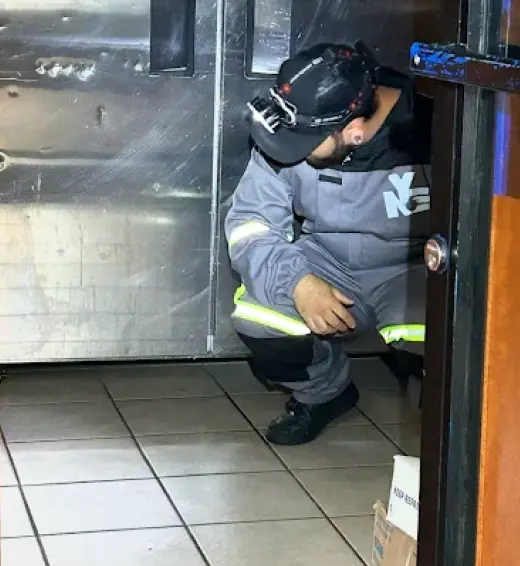
A Brooklyn-based, NYSDEC-registered company (Reg. #15140) led by Jorge Bedoya, an Associate Certified Entomologist (ACE). For cockroaches, NYE provides a non-repellent microinjection protocol for German cockroaches, placed at the harborage, plus a triple-active IGR. ACE-led work comes with a client portal of service reports and photos, fully bilingual service, and no long-term contract.
Water Bugs in NYC FAQ
Are water bugs and cockroaches the same thing?
Indoors in NYC, yes. The “water bugs” people see are American or Oriental cockroaches. True water bugs are aquatic insects that live in ponds and streams, not apartments.
What is the difference between a water bug and a German cockroach?
Both are roaches, but “water bug” means the large ones, 1 to 2 inches, that come up from drains and basements. The small tan roach with two stripes is a German cockroach, which breeds inside kitchens and needs a different treatment.
Why do I have water bugs in my clean apartment?
Because they come from the building, not your housekeeping. American and Oriental cockroaches travel up risers, drains and pipe gaps from shared basements, so the fix is closing the pathway, not cleaning harder.
Do NYC water bugs fly?
American cockroaches can glide short distances. Oriental cockroaches are slow and do not fly. Neither one chases people; they are fleeing light and looking for moisture.
Can water bugs harm you?
They do not bite people, but cockroaches can carry bacteria across food surfaces, and cockroach allergens are a known indoor asthma trigger.
Is one big cockroach a sign of an infestation?
Not always. A single American cockroach can be a lone wanderer from the basement. Repeated sightings in the same spot point to an active pathway into your unit that is worth inspecting.
How do I keep water bugs out of my apartment?
Keep drain covers in place, run water in rarely used drains, fix drips, and seal gaps around pipes under sinks. Report basement leaks or activity to your building, because the source is usually shared.
Who should I call about water bugs in my building?
Start with your super or management company, since landlords are responsible for pest control under the NYC Housing Maintenance Code. If nothing is done, call 311 to file an HPD complaint. For an inspection, call New York Exterminating at (347) 210-4646.
Reviewed by Jorge Bedoya, Associate Certified Entomologist (ACE), New York Exterminating.