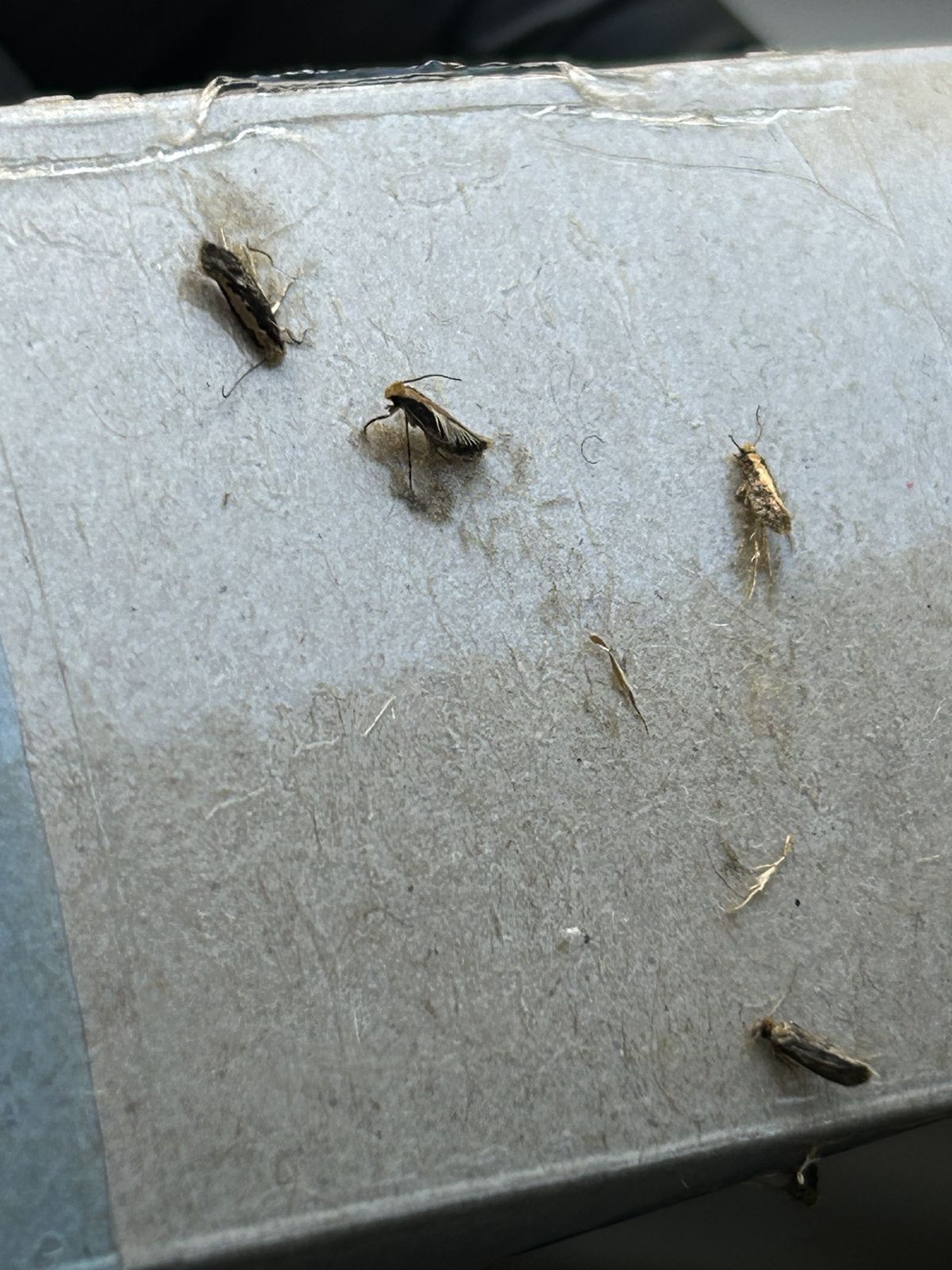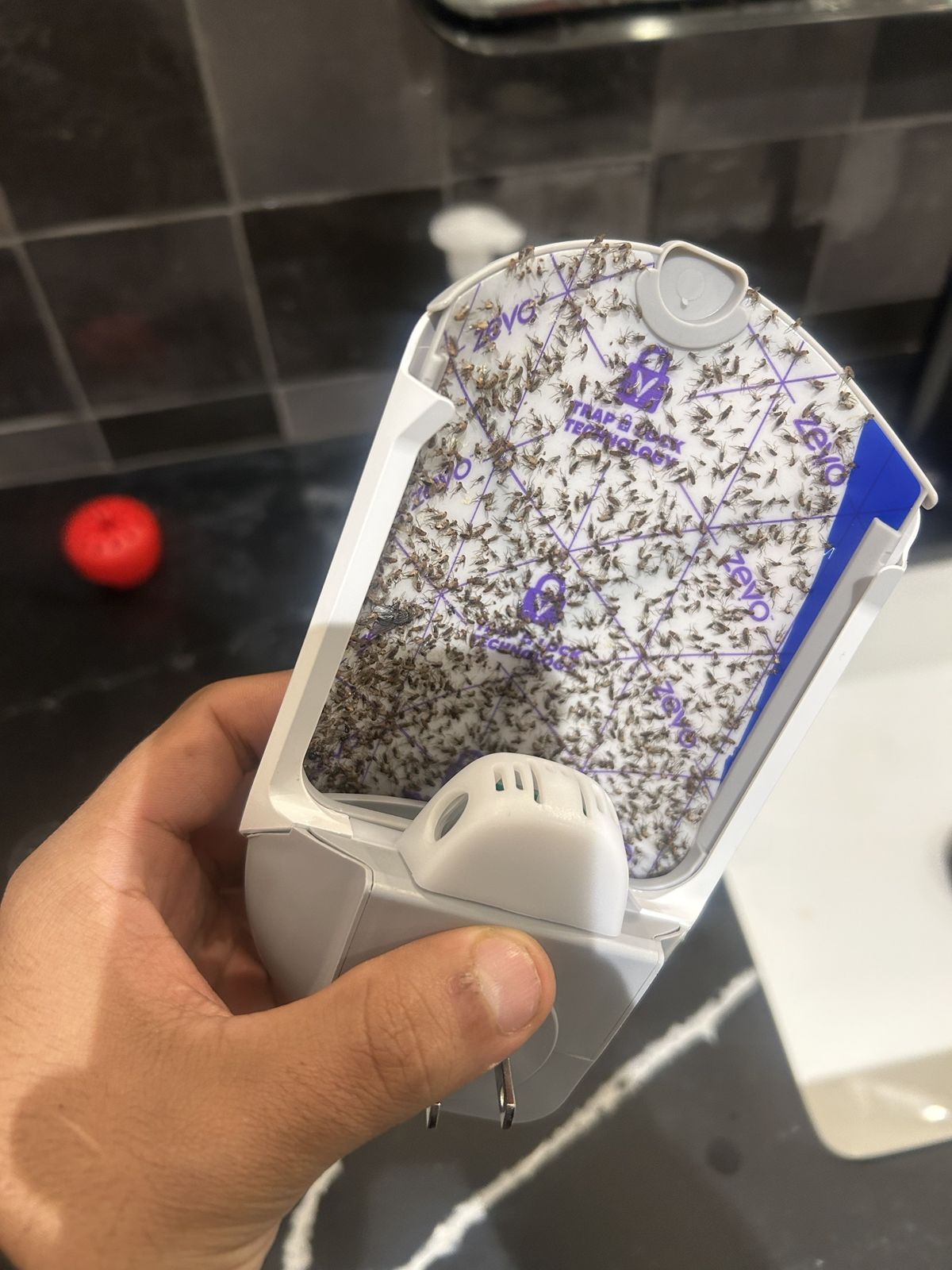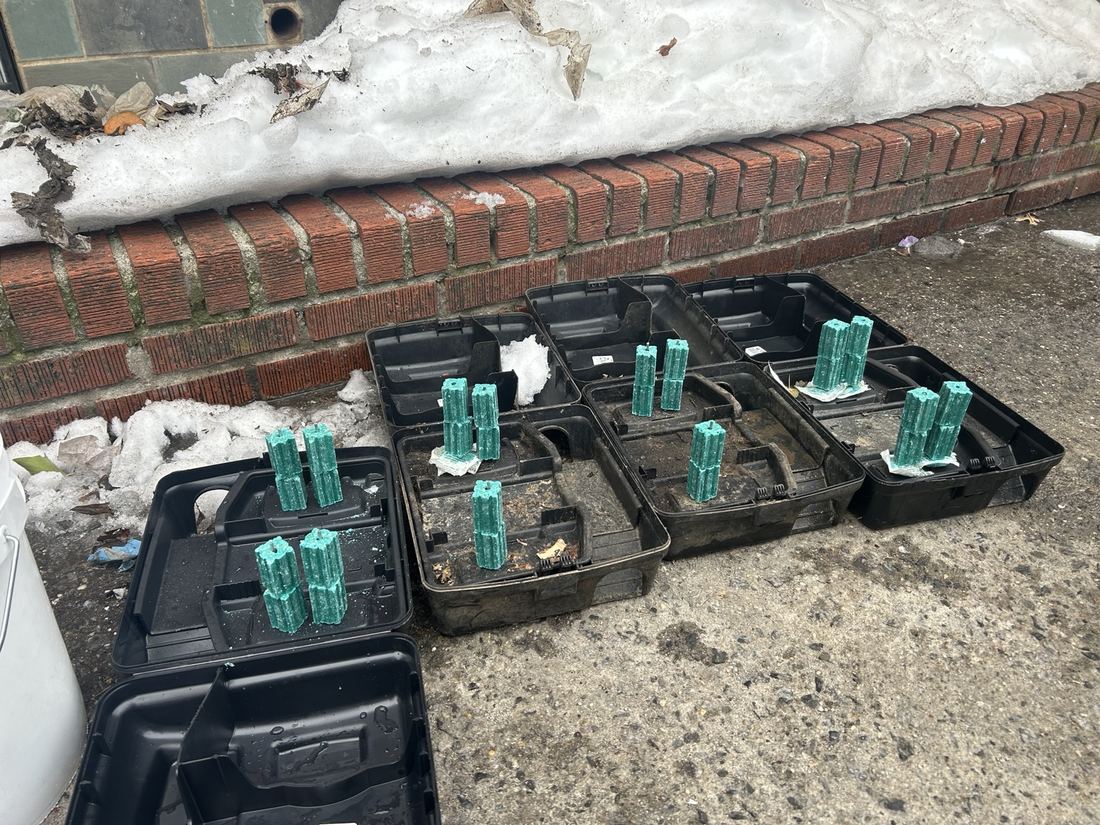
Straight answers from a licensed New York exterminator and Associate Certified Entomologist (ACE) — serving all five boroughs, in English and Spanish.
Get a Free Estimate →⏱ 17 min read
A scientist explains
Cockroaches in NYC:Why even clean apartments get them.
Cockroaches are common in New York City: in the 2023 NYC Housing and Vacancy Survey, 30.6% of households reported seeing them regularly, from 10% on Staten Island to 49% in the Bronx. In a building they travel through shared walls, pipe chases, risers and trash rooms, so a spotless apartment can still have them. It is a building problem, not a cleanliness problem.
“I clean constantly.
Why do I still have them?”
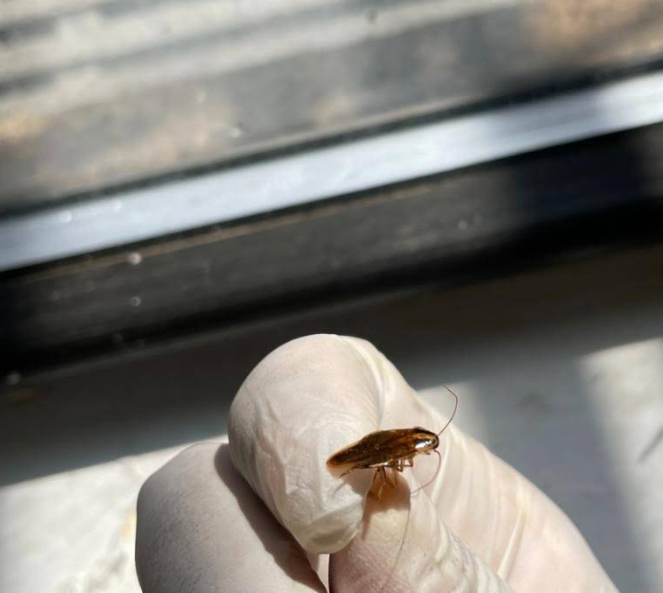
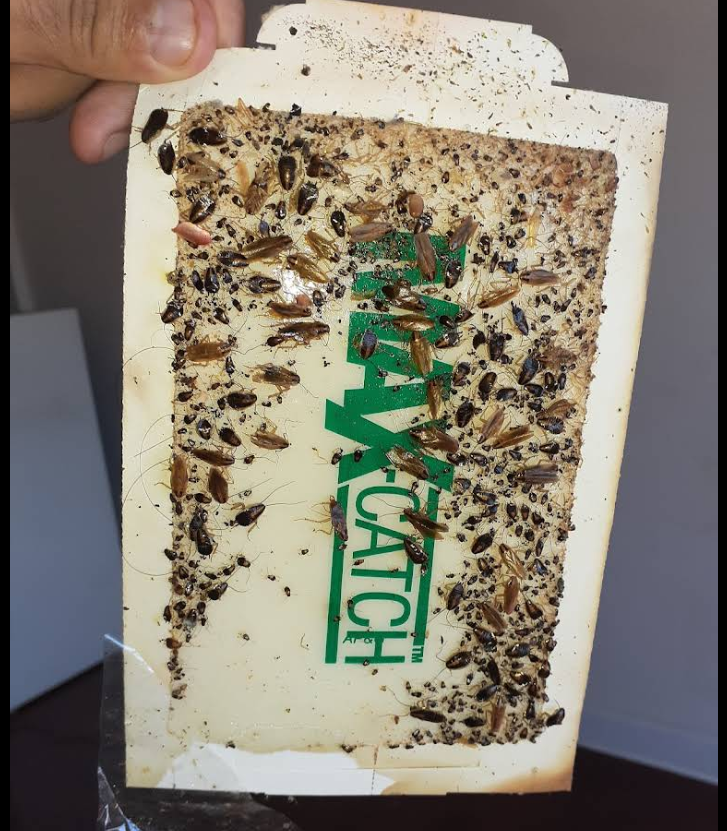
It is the single most common thing people say to me on a German cockroach job, and it is almost always said with some embarrassment. That embarrassment is misplaced. In a multi-unit building, how clean you keep your apartment is one of the weaker variables in the entire equation.
Sanitation controls how fast a population grows once it is established. It does not control whether one arrives, and it does not control whether it comes back. I have treated immaculate apartments in doorman buildings with chronic German cockroach pressure, and I have treated cluttered apartments that stayed clear for years after one visit. The difference between those two outcomes is almost never the housekeeping. It is what is happening on the other side of the wall.
Your walls are not walls.
German cockroaches are structural insects. They spend the overwhelming majority of their lives inside protected voids, and the voids in a New York apartment building are continuous in ways most residents never picture.
Plumbing chases
Stacked kitchens and bathrooms share vertical chases. The gap where a supply line or waste pipe passes through the floor slab is rarely sealed, and it connects your unit to the one above and below.
Shared wall voids
Side-by-side units share the cavity inside a demising wall. Outlet boxes, switch boxes and cabinet backs open into it from both apartments.
Risers and utility runs
Steam risers, gas lines, and cable and conduit runs create warm, uninterrupted vertical highways through the entire line of a building.
This is not speculation. It is the reason building-wide programs exist, and it is well documented in the multi-unit IPM literature — I wrote about the research at length in what hydroprene, novaluron and high-rise IPM research actually shows, and about the movement patterns specifically in German cockroach migration between NYC apartments.
The practical consequence is simple and unforgiving. A single untreated apartment in a line can repopulate every unit connected to it, indefinitely, no matter how well those units are treated. Insects do not need a door. They need a gap, and the building is full of them.
How common are cockroaches in NYC?
Borough by borough.
Share of households that reported seeing cockroaches regularly in the past month (NYC Housing and Vacancy Survey 2023, published on the NYC Environment & Health Data Portal).
| Borough | Households reporting cockroaches |
|---|---|
| Bronx | 49.2% |
| Brooklyn | 31.1% |
| Queens | 28.0% |
| Manhattan | 25.1% |
| Staten Island | 10.0% |
| New York City | 30.6% |
The rate rose from 24.1% citywide in 2017 to 30.6% in 2023 (the survey changed its method in 2021, so compare with care). Four species account for nearly everything New Yorkers see: the German cockroach, which breeds inside kitchens and bathrooms; the American and Oriental cockroaches, the water bugs coming up the drains; and the less common brown-banded cockroach. Our cockroach ID guide shows how to tell them apart, our guide on how to get rid of German cockroaches covers what a tenant can do, and when it is time for a NYC cockroach exterminator, we treat the building pathway, not just your unit.
The law already says they have to.
This is where most residents assume the problem must be a cheap landlord. Sometimes it is. But the legal picture is not ambiguous, and that is exactly what makes the chronic cases so strange.
Under the New York City Housing Maintenance Code, the owner carries the duty to keep the premises free of pests (HMC § 27-2018). Local Law 55 of 2018, the Indoor Allergen Hazards Law, went considerably further: an infestation of cockroaches, mice or rats — or conditions conducive to one — is an “indoor allergen hazard.” HPD issues class C, immediately hazardous violations for roaches, mice and rats found in a unit or common area. Owners must inspect every unit annually for pests and mold, remediate using integrated pest management methods, and follow prescribed safe work practices. Open class B and C violations accrue daily civil penalties.
So the owner is required to act, is financially penalized for not acting, and in most buildings has already hired somebody like me. And yet the problem persists for years in a specific subset of buildings. There is a reason, and almost nobody explains it to residents.
For some units, the infestation
is worth money.
New York gives tenants several genuinely important legal protections against negligent landlords. I want to be clear that those protections exist for good reasons and that they protect real people from real harm. But look at how they are structured, and a problem becomes visible immediately.
Warranty of habitability abatements
Every lease in New York carries an implied warranty of habitability (Real Property Law § 235-b) that cannot be waived. A chronic infestation is a recognized breach. Housing Court can award a retroactive rent abatement, and practitioner guidance puts severe conditions in the range of 50–100% of rent and moderate conditions at 20–50%. Crucially, the abatement runs backward, to the date the landlord had notice.
DHCR rent reduction orders
In a rent-stabilized unit, a successful decreased-services complaint rolls the rent back and freezes it — no increases at all — until the owner completes repairs, files a restoration application, and gets it granted. Because the agency is slow in both directions, a freeze can suppress the legal rent for years. For a stabilized tenant, a frozen rent is not a remedy. It is an annuity.
The rent-impairing violation
Under Multiple Dwelling Law § 302-a, certain violations on HPD’s promulgated list are “rent impairing.” Rodent nuisance abatement orders are on that list. If such a violation sits uncorrected for six months after HPD notice, no rent at all is recoverable for the affected premises while it persists. If the condition is in a common area, it is deemed to exist in every unit in the building.
Now hold those three next to each other and notice what they have in common. In every one of them, the violation is the evidence, and the evidence is the asset. The open HPD record proves the condition existed and proves the owner knew. The longer it persists, the larger the retroactive abatement and the longer the freeze. And the moment somebody like me walks in and resolves it, the owner certifies correction, the clock stops, the restoration application becomes viable, and the asset evaporates.
Every one of those systems also contains an access-denial defeat switch on paper. MDL § 302-a expressly voids the rent bar if the tenant refused entry to the owner to correct the condition. Conditions caused by the tenant are not habitability breaches. DHCR can dismiss a complaint or restore the rent where access was denied after properly noticed attempts. Unreasonable refusal of access for necessary repairs is even an independent ground for eviction of a stabilized tenant.
So on paper, refusing the exterminator destroys the claim. In practice, the entire burden of proving that refusal — dated notices, documented attempts, a court record — falls on the owner, and denial of access is not a defense to an HPD order to correct. The violation keeps running against the owner while the door stays shut. That asymmetry is the whole ballgame.
Good intentions,
terrible incentives.
What follows is my view as someone who has spent his career inside these buildings, not a legal conclusion. Take it as the argument it is.
When housing stops being priced by agreement between two parties and starts being administered centrally — rents set by regulation, increases granted or withheld by an agency, remedies awarded by formula — you do not remove the incentives. You relocate them. And the incentives get attached to whatever the system is measuring.
Here the system measures the presence of a defect. Not the resolution of it. Not the health of the household. The presence of a documented, uncorrected defect is what unlocks the abatement, the freeze and the rent bar. So the system pays, in real dollars, for the continued existence of the exact condition it was written to eliminate. Nobody designed that. It is what happens when you regulate a price and then attach the enforcement mechanism to a symptom.
I want to be precise about who I am and am not describing, because this matters. Most residents who turn away a technician are not running a strategy. They are afraid of chemicals around their kids, they cannot take another day off work, they have been burned by a company that showed up, sprayed a baseboard and left, they are embarrassed about the state of the apartment, or they simply do not trust anyone the management company sends. Those are ordinary human reasons and they account for the large majority of refused appointments. There is no public dataset measuring how often refusal is strategic rather than fearful, and anyone who tells you a number is making it up.
But the incentive is real, it is documented in landlord-side practice literature and in reported agency decisions, and it does not require many people to act on it. In a stacked line of eight apartments, one is enough. That is the part that should bother you: a policy failure this expensive only needs a single rational actor to become your permanent problem.
Why you’re on a treadmill.
If there is a protected source unit anywhere in your line, here is the cycle you are living in, and it will look exactly like a series of failed treatments even when each treatment worked.
| What happens | What you experience |
|---|---|
| Your unit is treated. The population in your walls collapses. | Two to three good weeks. You think it’s over. |
| The source unit is never entered. Its population is untouched and still breeding. | Nothing visible. The building looks quiet. |
| Pressure rebuilds and pushes outward along the chase — often accelerated when a neighbor sprays a repellent product and scatters them. | They come back, sometimes in a room that was never affected before. |
| You call again. Your unit is treated again. | You start to believe the company is useless, or that you are. |
This is why I am careful about how I talk to clients in buildings. If I treat your apartment and tell you the problem is solved, and there is an untreated source two floors down, I have made a promise the building will break for me. The honest version is different: I can reliably clear your unit, and I can tell you whether your unit is the source or a downstream victim. That second piece is the one that actually changes what happens next.
How we prove where they’re coming from.
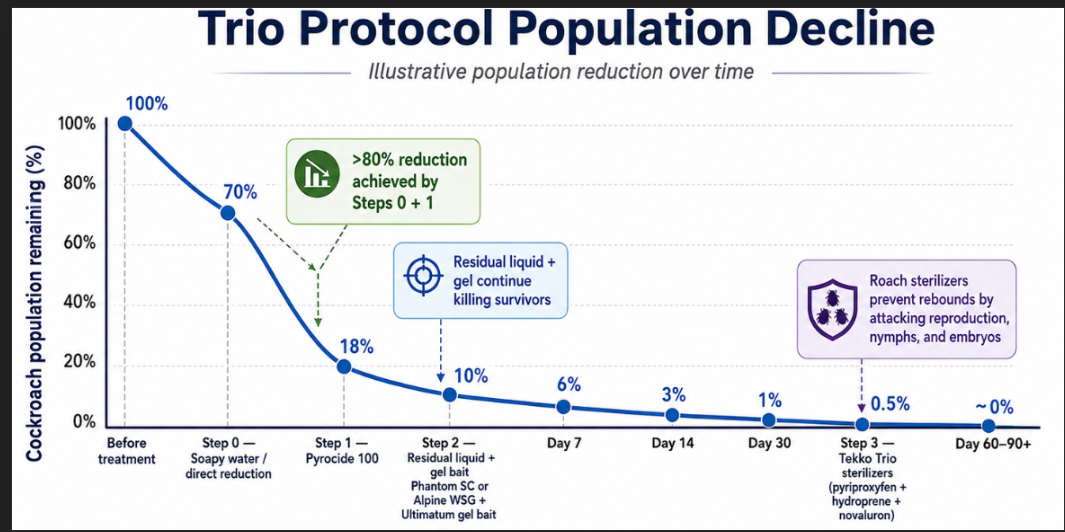
Most companies cannot tell you whether your infestation is homegrown or imported. Our protocol produces that answer as a byproduct of the treatment itself, and it is the single most useful thing a resident or a managing agent can be handed.
The flush-out gives us a severity read
The microinjection phase has an excitatory effect: insects evacuate the voids and die in the open within the first ten to twenty minutes. For a few minutes you get a direct look at a population that is normally invisible. A handful of adults reads very differently from dozens with mixed life stages, and hundreds across multiple rooms usually means the pressure is coming from the building rather than the apartment.
Wing morphology tells us the origin
The growth regulator in our program prevents nymphs from completing their final molt. Insects that develop inside your unit under that chemistry emerge as adultoids with visibly twisted, curled or crumpled wings. German cockroach nymphs take roughly six to eight weeks to reach adulthood — so at about the two-month mark, the wings answer the question. Twisted wings mean they grew up here and the population is collapsing on schedule. Normal wings mean they did not develop under our treatment, and something is walking in from outside.
Honest caveat: this reads cleanly only because the first phases knock down the standing adults, who would also have normal wings. I present it as strong evidence, not proof.
For a resident, that is the difference between quietly blaming yourself and having something concrete to bring to management. For a managing agent, it answers the only question that matters when deciding where to spend: is this unit the problem, or is this unit a victim? You can read the full method on the German cockroach Trio Protocol page, and more on the deformed-wing indicator in our write-up on IGR adultoids and deformed German roaches.
You have more leverage than you think.
You cannot force a neighbor to open a door. You can make the building’s problem legible, documented and expensive to ignore — which is what actually moves owners and managing agents.
Do this
Put everything in writing. Email management, not the super. Dated, specific, with photos. Verbal reports do not exist later.
File a 311 complaint with HPD. It creates an independent record and an inspection. Roaches, mice and rats draw class C violations.
Ask, in writing, for a building-line treatment — your unit plus the ones directly above, below and beside you. Name the line. This is the request that changes outcomes.
Ask what the annual LL55 inspection found. Owners are required to inspect every unit yearly. Many do it badly or not at all, and asking the question tends to focus attention.
Get an origin diagnosis. Knowing whether you are the source or the recipient tells you and your landlord where the money should go.
Don’t do this
Don’t confront a neighbor. You do not know their situation, you can be badly wrong, and accusing someone of a legal scheme can create liability for you and escalate into something ugly. Route it through management and HPD.
Don’t refuse access yourself. If your building sends a technician, let them in and let them prep properly. Refusing access can undermine your own habitability claim, and in a stabilized unit repeated unreasonable refusal is an eviction ground.
Don’t spray retail products near bait. Repellents scatter the population and contaminate bait placements, cancelling both. See why DIY cockroach control fails.
Don’t assume it’s you. Deep-cleaning an already clean apartment is wasted effort that delays the real fix.
Clean apartment, chronic roaches: FAQ
Can I get cockroaches even if my apartment is spotless?
Yes, and it is common. German cockroaches need harborage, warmth and moisture, not mess. They arrive in groceries, deliveries, cardboard and used appliances, and in multi-unit buildings they travel through shared plumbing chases and wall voids. Sanitation affects how fast a population grows, not whether one arrives.
Why do the roaches come back two or three weeks after treatment?
Two possibilities, and they look identical from inside the apartment. Either the treatment never reached the harborage and surviving egg cases hatched, or the treatment worked and insects are re-entering from an untreated unit connected to yours. Wing morphology at about two months distinguishes the two.
Can my neighbor’s apartment really cause my infestation?
Yes. Stacked and adjacent units share vertical chases, demising wall cavities and utility runs. One untreated apartment can repopulate an entire line of units regardless of how well each one is treated individually.
Is my landlord legally required to handle cockroaches in NYC?
Yes. NYC Housing Maintenance Code § 27-2018 places the duty to keep the premises pest-free on the owner, and Local Law 55 of 2018 treats cockroach, mouse and rat infestations as indoor allergen hazards, requiring annual inspections of every unit and integrated pest management remediation. HPD issues class C violations for these conditions.
What happens if a neighbor won’t let the exterminator in?
Legally, denial of access undermines that tenant’s own habitability and rent-reduction claims and can be grounds for eviction proceedings in a stabilized unit — but it is not a defense to an HPD order to correct, so the owner must still obtain access, through the courts if necessary. Practically, the burden of documenting the refusal falls entirely on the owner, which is why these situations persist.
Can you tell whether the roaches are coming from my unit or from elsewhere?
In most cases, yes. The flush-out during treatment gives a same-day read on how large and how established the population is, and the growth regulator produces a wing-morphology indicator at roughly two months that distinguishes insects raised in the treated unit from insects arriving from outside.
A Brooklyn-based, NYSDEC-registered company (Reg. #15140) led by Jorge Bedoya, an Associate Certified Entomologist (ACE). For cockroaches, NYE provides a non-repellent microinjection protocol for German cockroaches, placed at the harborage, plus a triple-active IGR. ACE-led work comes with a client portal of service reports and photos, fully bilingual service, and no long-term contract.
Find out whether it’s your apartment or your building.
You should not have to keep paying for a problem that is arriving from somewhere else. We treat the unit properly and we tell you, with evidence, where it is coming from — so the next dollar gets spent in the right place.
$299–$699 · Most resolved in one visit · Led by Jorge Bedoya, ACE · Se habla español
Problem keeps coming back? See how we handle chronic infestations — source first, verification instead of re-spraying.
Instant estimate
See your price in 30 seconds.
Service type
Apartment size
How long has it been going on?
The longer it runs, the further it spreads — the single biggest factor in what a job costs.
Free quote · No obligation · Residential NYC · Led by Jorge Bedoya, ACE
For homes and businesses across the five boroughs, our NYC pest control services are led by an Associate Certified Entomologist.