Straight answers from a licensed New York exterminator and Associate Certified Entomologist (ACE) — serving all five boroughs, in English and Spanish.
Get a Free Estimate →⏱ 7 min read
Bed bug eggs are white to pearly, oval, and about 1 mm long (1/16 inch) — roughly the size of a pinhead or a grain of salt. They’re laid in clusters, cemented into cracks and crevices near where bed bugs harbor, so they’re sticky and don’t brush off easily. After about five days a tiny dark eye spot appears, and at room temperature eggs hatch in 5 to 10 days. Because eggs are shielded from most sprays, missing them is the #1 reason DIY bed bug treatments fail.
Spotting bed bug eggs early can stop an infestation before it explodes — but they’re small and easy to confuse with other specks. This guide shows what bed bug eggs look like, where they’re hidden, and how to tell them from look-alikes. Written and reviewed by Jorge Bedoya, an Associate Certified Entomologist (ACE).
- Size: ~1 mm (1/16″) — pinhead / grain of salt
- Color: pearly white to translucent; a dark eye spot after ~5 days
- Shape: elongated oval, slightly curved, like a tiny grain of rice
- Where: cemented in clusters in seams, cracks, and crevices near harborage
- Hatch: 5–10 days at room temperature
- Key point: sticky and glued in place — they don’t wipe off like lint
What bed bug eggs look like
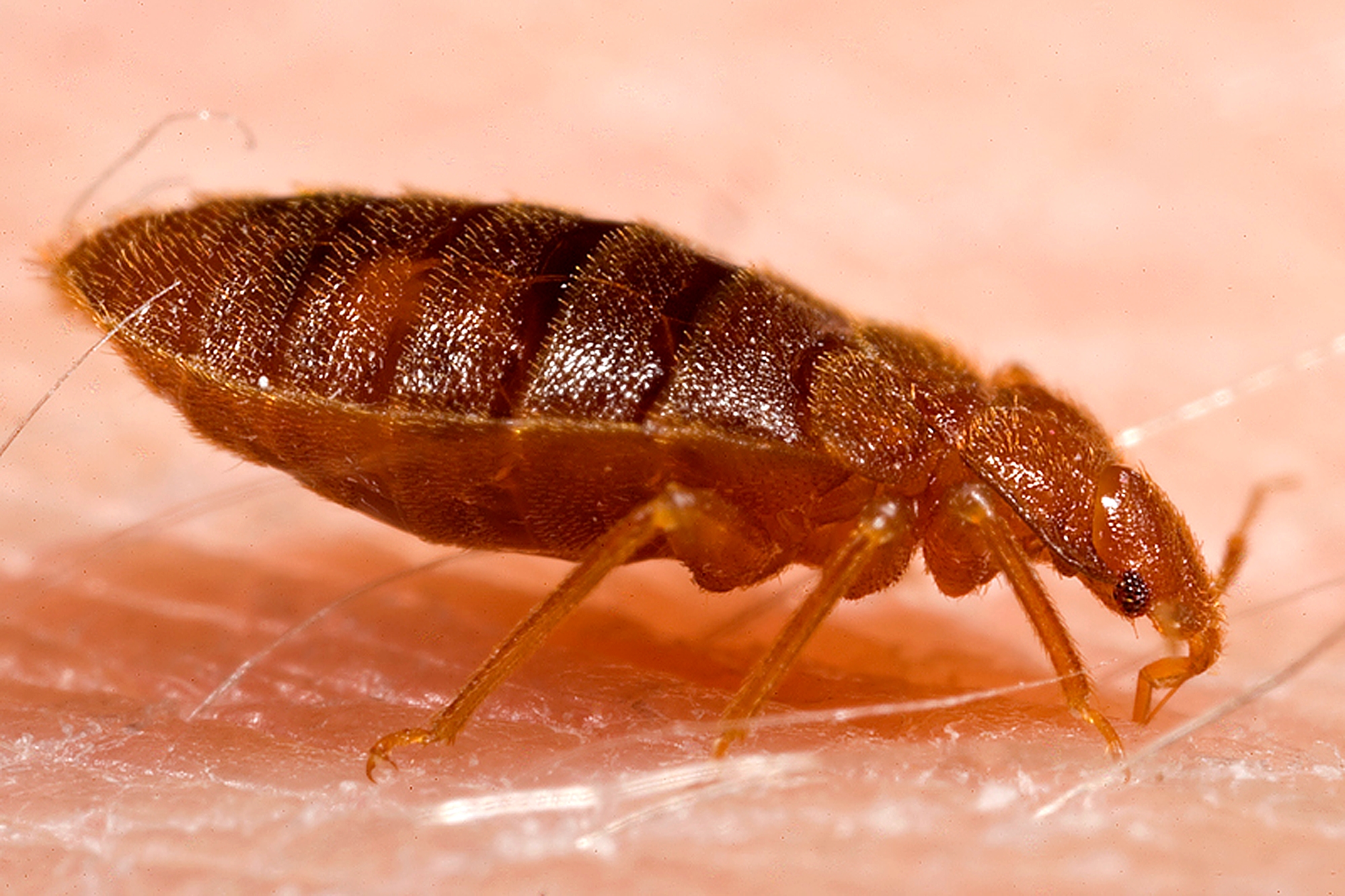
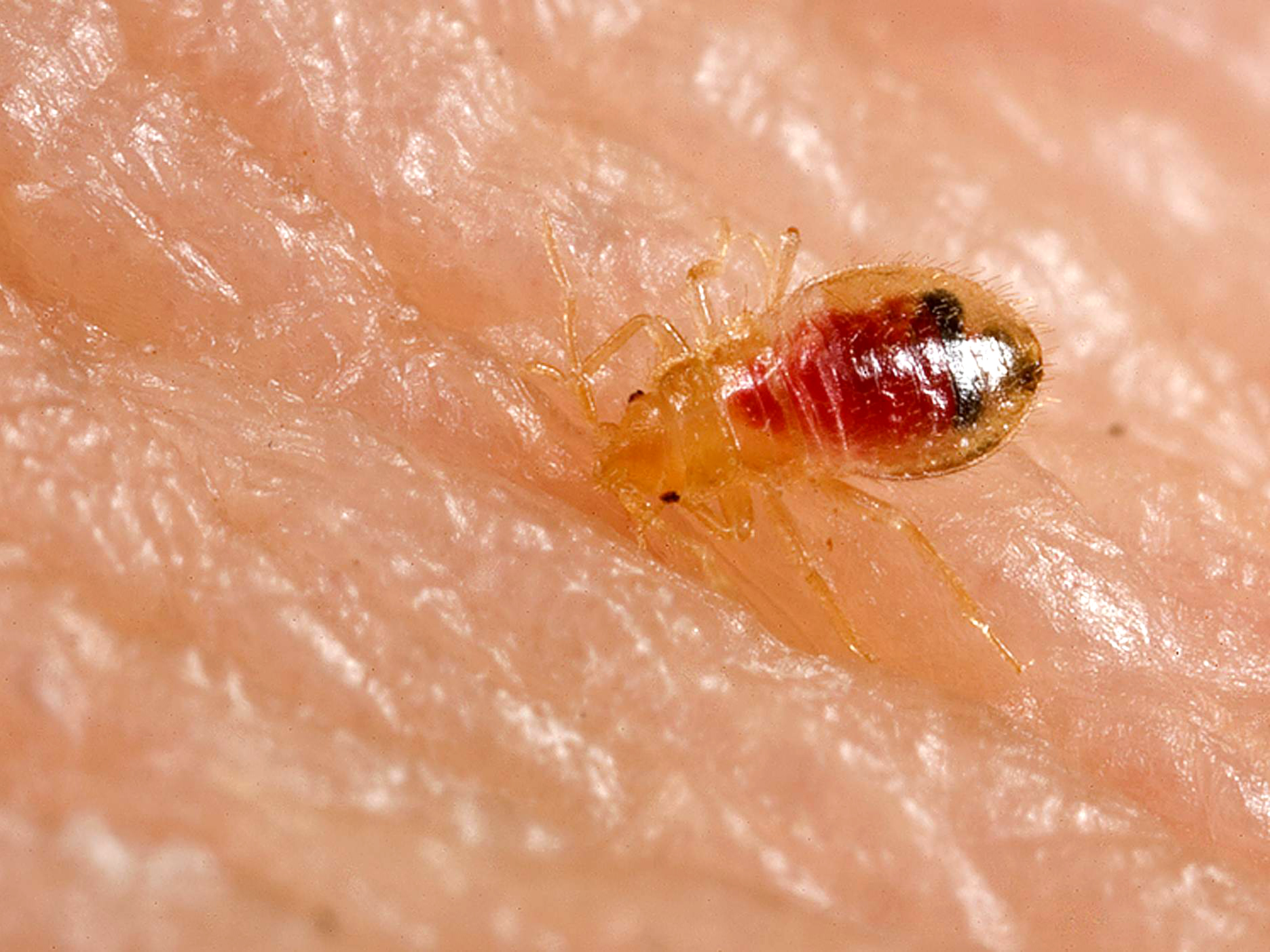
A single bed bug egg looks like a tiny, elongated white grain of rice — pearly and slightly translucent, about a millimeter long. Females lay them in clusters and cement them to the surface, so you’ll usually see several together tucked into a seam or crack rather than one alone. Fresh eggs are bright pearly white; after roughly five days a small reddish-brown eye spot becomes visible through the shell. After hatching, the empty shells remain stuck in place as pale, hollow casings — another sign of an active, reproducing population.
Because the eggs are glued down, a useful test is whether the speck brushes away easily. Lint, dust, and debris wipe off; cemented bed bug eggs do not.
Where bed bug eggs are hidden
Females lay eggs close to their harborage, wedged into protected cracks and crevices: mattress seams and tufts, the box-spring frame, headboard joints, cracks in the bed frame, behind baseboards, and in furniture seams within a few feet of where people sleep. In NYC apartments they also turn up along wiring runs and in wall voids that connect to neighboring units. A bright flashlight and a thin card to check seams are the basic inspection tools — but small egg clusters are exactly what K-9 detection and a trained inspector catch that the naked eye misses.
Bed bug eggs vs. look-alikes
- Lint / dust: wipes off easily; bed bug eggs are cemented in place.
- Carpet beetle eggs: found near fabric, rugs, and closets rather than the bed.
- Mold or salt specks: irregular and powdery, not the uniform oval shape of an egg cluster.
- Shed skins: pale and bug-shaped (a hollow nymph outline), not oval eggs — both confirm bed bugs, though.
If you’ve also seen the bugs themselves, compare with our guide to what baby bed bugs look like.
Why bed bug eggs make DIY treatment fail
Bed bug eggs are resistant to most over-the-counter sprays and are tucked into protected crevices, so even a treatment that kills every visible bug can leave eggs to hatch days later — restarting the infestation. That’s why effective control isn’t a one-time spray: it’s a documented plan (conventional, heat, or a combination) with follow-up visits timed to the 5–10-day hatch cycle so newly emerged nymphs are eliminated before they can lay eggs of their own. Every job we run is led by an Associate Certified Entomologist (ACE). See our bed bug treatment service.
A Brooklyn-based, NYSDEC-registered company (Reg. #15140) led by Jorge Bedoya, an Associate Certified Entomologist (ACE). For bed bugs, NYE provides discreet bed bug treatment (heat and targeted options) verified with a follow-up visit. ACE-led work comes with a client portal of service reports and photos, fully bilingual service, and no long-term contract.
Bed bug egg FAQ
What size are bed bug eggs?
About 1 millimeter (1/16 inch) long — roughly the size of a pinhead or a grain of salt.
What color are bed bug eggs?
Pearly white to slightly translucent. After about five days a small dark eye spot becomes visible through the shell.
Where do bed bugs lay their eggs?
In clusters cemented into protected cracks and crevices near where they harbor: mattress seams, box springs, headboards, bed-frame joints, and nearby furniture and baseboards.
How long do bed bug eggs take to hatch?
About 5 to 10 days at room temperature.
Can you see bed bug eggs with the naked eye?
Yes, but they are small and pale. They’re easiest to find with a bright flashlight in seams and crevices; small clusters are often confirmed by a trained inspector or K-9 detection.
Do bed bug eggs brush off easily?
No. They are cemented in place, so they don’t wipe off like lint or dust — a useful way to tell them apart.
Why do bed bugs keep coming back after I treat?
Eggs are shielded from most sprays. If a treatment doesn’t account for the hatch cycle with follow-ups, surviving eggs hatch and restart the infestation.
Are bed bug eggs a sign of a serious infestation?
Eggs mean a reproducing population is present. The sooner they’re found and treated, the easier the infestation is to clear.
An ACE inspection confirms it and finds what you can’t see. Get a free estimate or call (347) 210-4646.
About the author: Written and reviewed by Jorge Bedoya, an Associate Certified Entomologist (ACE) at New York Exterminating.
Why New Yorkers choose NYE
Led by an ACE
Every job is overseen by Jorge Bedoya, an Associate Certified Entomologist (ESA) — not a call center.
No contracts
One thorough treatment with an optional 50%-off verification visit. No auto-renewal, no lock-in.
Elimination, not spraying
Resistance-aware methods — including our signature microinjection — that target the source, with documentation.
Licensed & local
NYSDEC Reg. #15140, serving all five boroughs since 2010. Fully bilingual (EN/ES).
Backed by science, not guesswork. Your treatment is led by Jorge Bedoya, an Associate Certified Entomologist (ACE) credentialed by the Entomological Society of America — correct pest ID, resistance-aware products, and a documented plan.
What happens after you call
- Fast response. Call (347) 210-4646 — same-day appointments are often available, including after-hours emergencies.
- Inspection & ID. We confirm the pest and find the source, not just where you saw it.
- Targeted treatment. A resistance-aware plan matched to the pest, explained before we start.
- Verification & prevention. Optional follow-up to confirm zero activity, plus reports and photos in your client portal.