Straight answers from a licensed New York exterminator and Associate Certified Entomologist (ACE) — serving all five boroughs, in English and Spanish.
Get a Free Estimate →⏱ 8 min read
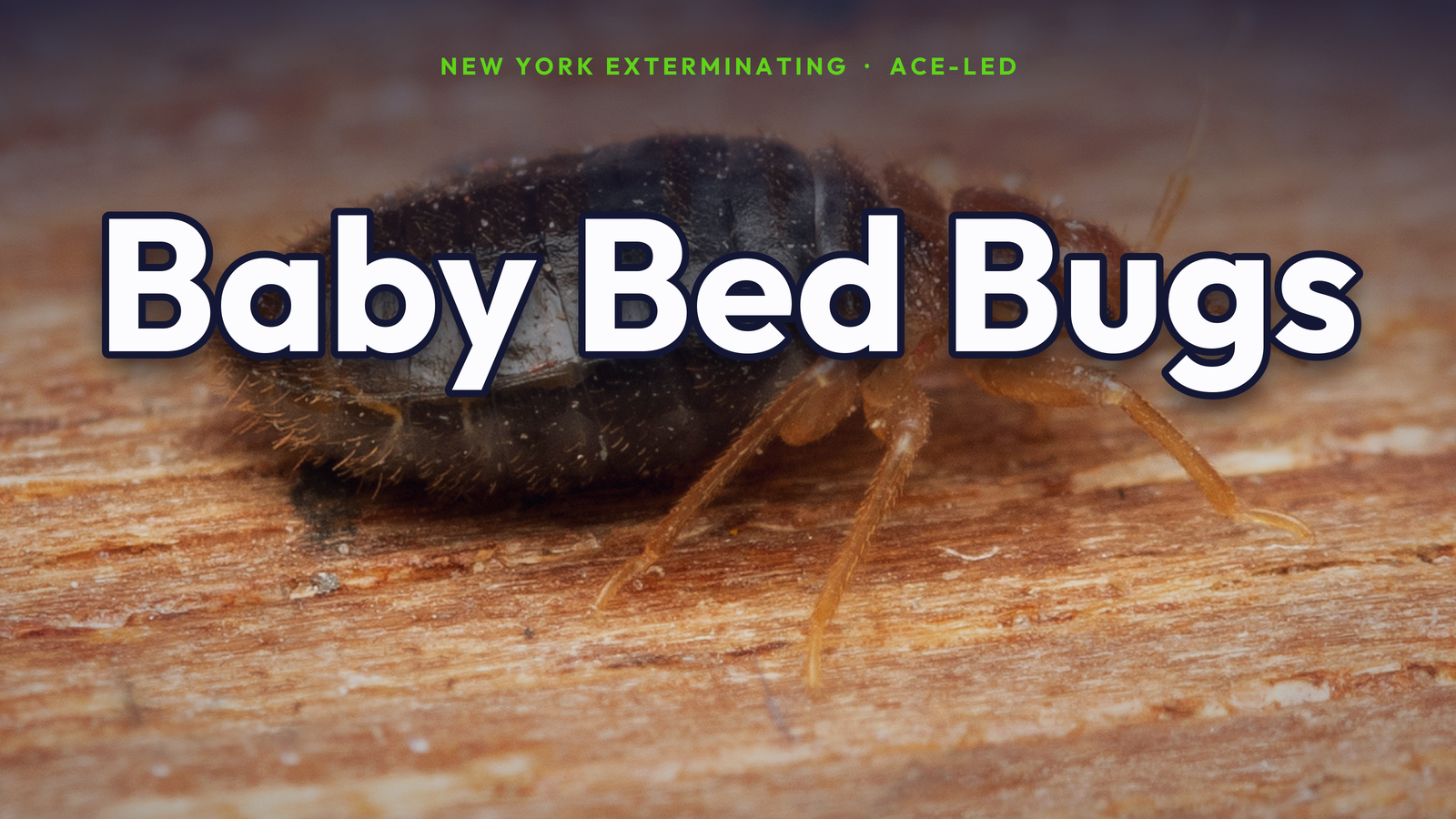
Baby bed bugs (called nymphs) are tiny — from about 1/16 inch when they hatch to 1/5 inch at the last stage. They are oval, flat, and wingless, like a miniature adult. When they haven’t fed they are translucent, whitish-yellow, and very hard to see; right after a blood meal they turn bright red to rusty brown. Each of the five nymph stages needs a blood meal before it can molt to the next, so finding nymphs means a breeding infestation is feeding in the room.
If you’ve found a pale, almost see-through speck near your mattress and weren’t sure if it was a baby bed bug, this guide shows exactly what bed bug nymphs look like at each stage, how to tell them from other tiny bugs, and what their presence means. Written and reviewed by Jorge Bedoya, an Associate Certified Entomologist (ACE).
- Size: 1/16″ (1st stage) to about 1/5″ (5th stage)
- Color: translucent whitish-yellow when unfed; bright red to rust after feeding
- Shape: oval and flat, wingless — a smaller copy of the adult
- Stages: 5 nymph instars, each requiring one blood meal to molt
- Where: mattress seams, box spring, headboard, cracks within a few feet of where you sleep
- Also look for: pale shed skins (cast skins) and tiny white eggs nearby
What a baby bed bug looks like
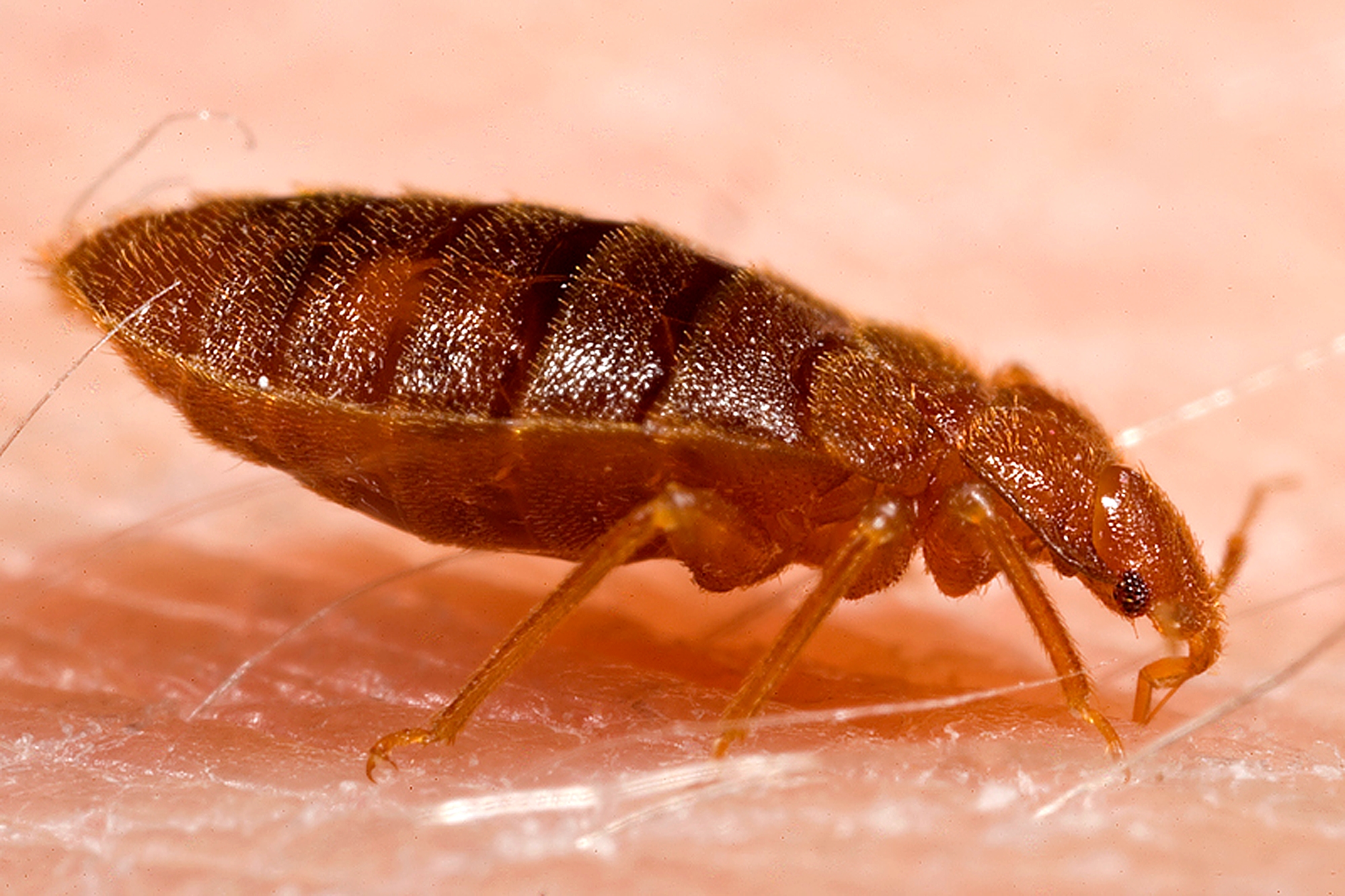
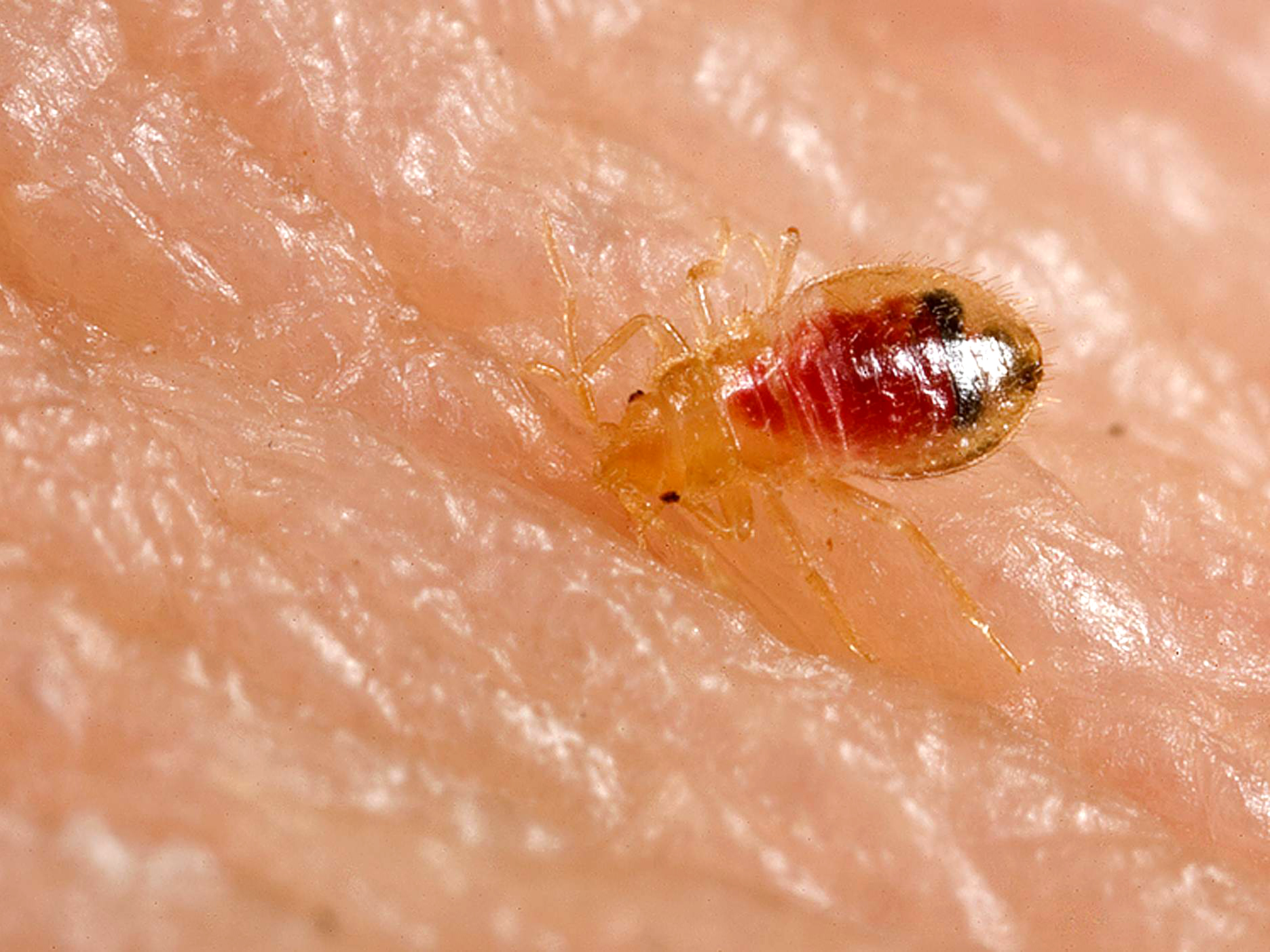
A bed bug nymph is a true miniature of the adult: same oval, flattened, wingless body, just smaller and paler. The key difference is color and transparency. Before its first meal a nymph is translucent and whitish-yellow, which makes it nearly invisible against light-colored sheets. After it feeds, the blood shows through its body and it looks bright red, then darkens to rusty brown as the meal digests. This colour change is one of the most reliable ways to confirm you’re looking at a bed bug and not something else.
As you inspect, also look for the things nymphs leave behind: pale, empty shed skins (cast cuticles they molt out of as they grow) and tiny white, oval eggs cemented into seams and crevices. Finding skins and eggs alongside live nymphs confirms an active, reproducing population — see our guide to what bed bug eggs look like.
The five nymph stages (and why they matter)
Bed bugs grow through five nymph stages after hatching. Each stage must take a full blood meal before it can molt to the next, and at room temperature a nymph can move from hatch to adult in roughly five weeks. That’s the part that makes them dangerous to ignore: every nymph you see is a future egg-laying adult, and a female can lay one to several eggs a day once mature. A small, “just a couple of bugs” sighting can become a room-wide infestation within a couple of months.
Baby bed bug vs. other tiny bugs
| Bug | How to tell it apart |
|---|---|
| Baby cockroach | Long, cylindrical body and antennae nearly as long as the body; darts fast. Bed bug nymphs are oval, flat, and slow. See our baby cockroach guide. |
| Carpet beetle larva | Fuzzy and bristly like a tiny caterpillar; found near rugs, closets, and fabric, not the bed. |
| Booklice | Much smaller (under 1/16″), soft, pale, and found in damp spots near books and wallpaper; they don’t bite. |
| Spider beetle | Round, globular, shiny abdomen with long antennae — looks like a tiny spider, not a flat oval. |
Not sure what you’re seeing or feeling? Start with our What’s Biting Me? identifier.
Where you’ll find baby bed bugs
Because nymphs need regular blood meals and can’t travel far, they stay close to where you sleep. Check the mattress seams and tufts, the box spring, the headboard and bed frame joints, and cracks in nearby furniture and baseboards. In NYC apartments they also move along wiring and through wall voids between adjoining units, which is why a neighbor’s infestation can become yours.
What to do if you find baby bed bugs
Live nymphs mean an established, feeding population — not a stray hitchhiker. DIY sprays often scatter bed bugs deeper and rarely reach eggs, which are shielded from most products. A reliable path is a confirmed inspection (including K-9 detection for low-level infestations), then a documented treatment plan — conventional, heat, or a combination — with follow-ups timed to the egg-hatch cycle. Every bed bug job we run is led by an Associate Certified Entomologist (ACE). See our bed bug treatment service, and if you rent, know your rights under NYC bed bug law.
A Brooklyn-based, NYSDEC-registered company (Reg. #15140) led by Jorge Bedoya, an Associate Certified Entomologist (ACE). For bed bugs, NYE provides discreet bed bug treatment (heat and targeted options) verified with a follow-up visit. ACE-led work comes with a client portal of service reports and photos, fully bilingual service, and no long-term contract.
Baby bed bug FAQ
What do newborn bed bugs look like?
A newborn (first-stage) bed bug is about 1/16 inch, oval, flat, and translucent whitish-yellow — almost see-through until it feeds, when it turns bright red.
Are baby bed bugs hard to see?
Yes. Unfed nymphs are pale and tiny, so they blend into light bedding. They are easiest to spot right after feeding, when they turn red, or by looking for their pale shed skins and eggs in seams.
Do baby bed bugs bite?
Yes. Every nymph stage needs a blood meal to grow, so nymphs bite just like adults.
How fast do baby bed bugs grow up?
At room temperature a nymph can reach adulthood in about five weeks, molting through five stages, with each molt requiring a blood meal.
Does finding one baby bed bug mean an infestation?
Usually. Nymphs cannot fly or travel far, so a nymph indoors means eggs are hatching nearby — a sign of an active, reproducing population.
What’s the difference between a baby bed bug and a baby cockroach?
Baby bed bugs are oval, flat, and slow with short antennae; baby cockroaches are long and cylindrical with antennae nearly as long as the body and move fast.
Can I get rid of baby bed bugs myself?
It’s difficult. Over-the-counter sprays scatter bed bugs and miss the eggs. A confirmed inspection and a professional, follow-up-based plan is far more reliable.
What else should I look for besides the bugs?
Look for pale shed skins, tiny white eggs in crevices, small dark fecal spots on sheets, and rusty smears — all signs of an active population.
Send a photo or book a same-day inspection — an ACE will confirm it. Get a free estimate or call (347) 210-4646.
About the author: Written and reviewed by Jorge Bedoya, an Associate Certified Entomologist (ACE) at New York Exterminating.
Why New Yorkers choose NYE
Led by an ACE
Every job is overseen by Jorge Bedoya, an Associate Certified Entomologist (ESA) — not a call center.
No contracts
One thorough treatment with an optional 50%-off verification visit. No auto-renewal, no lock-in.
Elimination, not spraying
Resistance-aware methods — including our signature microinjection — that target the source, with documentation.
Licensed & local
NYSDEC Reg. #15140, serving all five boroughs since 2010. Fully bilingual (EN/ES).
Backed by science, not guesswork. Your treatment is led by Jorge Bedoya, an Associate Certified Entomologist (ACE) credentialed by the Entomological Society of America — correct pest ID, resistance-aware products, and a documented plan.
What happens after you call
- Fast response. Call (347) 210-4646 — same-day appointments are often available, including after-hours emergencies.
- Inspection & ID. We confirm the pest and find the source, not just where you saw it.
- Targeted treatment. A resistance-aware plan matched to the pest, explained before we start.
- Verification & prevention. Optional follow-up to confirm zero activity, plus reports and photos in your client portal.