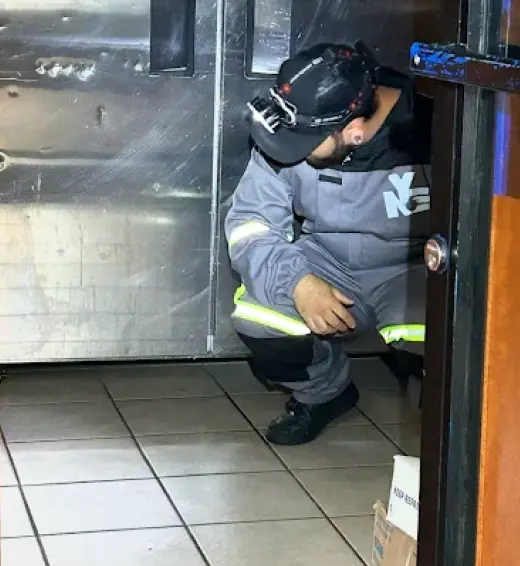

Straight answers from a licensed New York exterminator and Associate Certified Entomologist (ACE) — serving all five boroughs, in English and Spanish.
Get a Free Estimate →⏱ 5 min read
Quick answer: In a NYC rental, keeping the apartment free of mice (Mus musculus) is generally the landlord’s responsibility under the Housing Maintenance Code and the warranty of habitability — so your first move is to report the problem in writing to your landlord or super and keep a record. While you wait, you can legally do the reversible things: snap traps, rigorous sanitation, removing food sources, and stuffing entry gaps with removable copper mesh or steel wool. Avoid anything that alters the unit (drilling, permanent sealing, or holes) without permission, since that can violate your lease. The landlord owns the building-level fix; you own the day-to-day denial of food and shelter.
Getting rid of mice in a New York City apartment has a wrinkle suburban guides ignore: you do not own the building, and your lease limits what you can change. As an Associate Certified Entomologist who works in NYC rentals constantly, here is how to actually solve a mouse problem without creating a lease problem.
First: who is responsible?
In NYC rental housing, a mouse infestation is generally the property owner’s responsibility to correct. Tenants have a right to a habitable home (the implied warranty of habitability under NY Real Property Law §235-b), and the NYC Housing Maintenance Code treats pest infestation as a condition the owner must address. That means professional treatment and building-level repairs — sealing structural gaps, fixing the cellar door, addressing a shared wall void — are on the landlord, not you. This is general information, not legal advice; for your specific situation contact HPD or a tenant attorney.
Step 1 — Report it in writing and document everything
Tell your super, but also put it in writing (email or text creates a timestamp). Note the date you first saw activity, where, and any droppings or damage — photos help. If the landlord does not respond, you can file a complaint with the city by calling 311 or contacting HPD, which can inspect and issue a violation. Documentation is what turns “I asked” into an enforceable record, and it protects you if the problem persists.
Step 2 — Lease-safe things you can do right now
These deny mice food and shelter and are reversible, so they generally do not run afoul of a lease:
- Snap traps placed against walls where you see droppings (mice run along edges). A reliable, low-risk DIY tool. Avoid glue boards where possible — they are inhumane and often less effective.
- Remove food access: store dry goods in hard containers, clear crumbs nightly, take out trash, and do not leave pet food out overnight. A mouse needs very little; removing easy calories matters more than people think.
- Stuff entry gaps with copper mesh or steel wool — mice cannot chew through it, and it is removable, so it does not alter the unit. Focus on the gaps around pipes under the sink and behind the stove and radiator. A quarter-inch gap is enough for a mouse, so look small.
- Reduce clutter that creates harborage, especially in cabinets and under the sink.
Step 3 — What NOT to do (lease and safety)
- Do not drill, cut, or permanently seal walls or structural gaps without written landlord permission — that is the landlord’s repair and can be a lease violation.
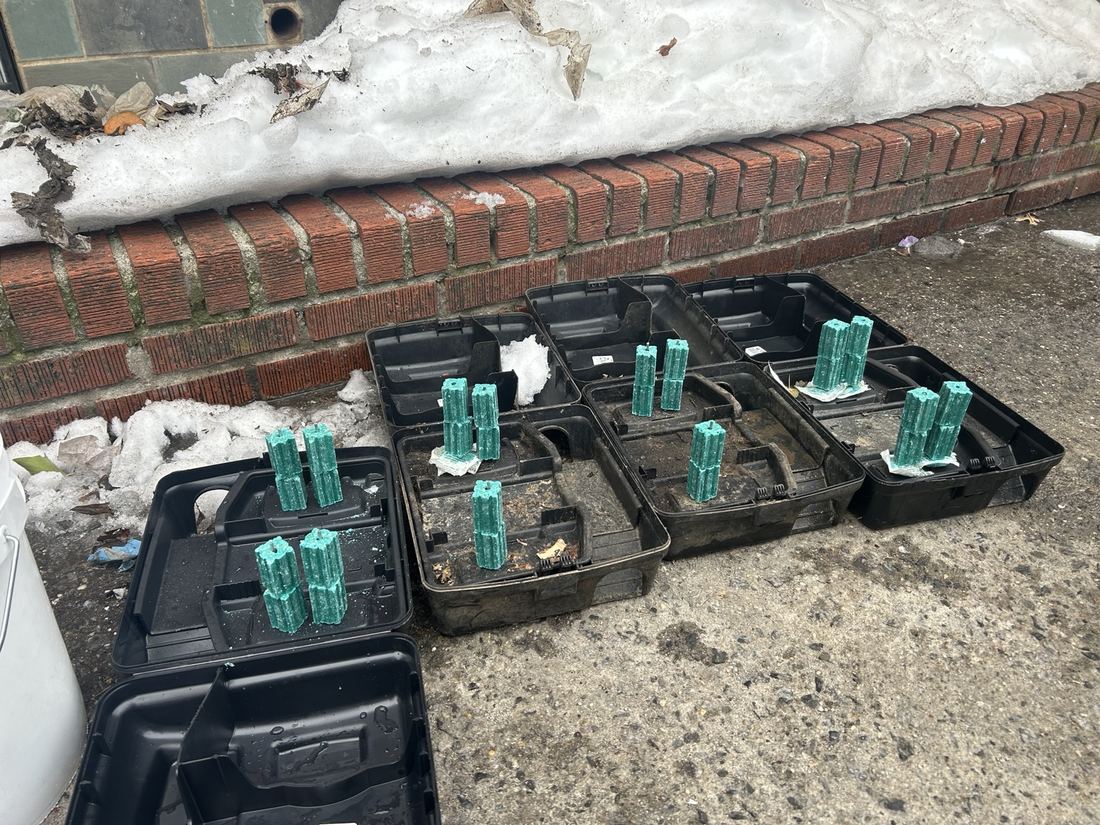
- Be cautious with rodenticides (poison baits) in an apartment: a poisoned mouse often dies in a wall void and creates an odor problem, and baits are a real hazard around children and pets. This is better left to a professional who can place tamper-resistant stations appropriately. NYC also has restrictions on certain rodenticide use.
- Do not ignore the building source. If mice are coming from a shared wall, the hallway, or the basement, no amount of in-unit work ends it — that is precisely the part the landlord must fix.
Step 4 — Push for the building-level fix
The durable solution to NYC mice is exclusion: sealing the entry points and pathways mice use through the building envelope. Because those are usually structural and shared, this is the landlord’s job, ideally handled by a professional doing real pest-proofing and exclusion rather than just setting traps. If you are in a multi-unit building, a coordinated building-wide program is what holds, because mice travel between units. New York Exterminating works with both tenants and property managers on rodent control and exclusion — and for the deeper how-to, see our NYC rat and mouse guide.
A Brooklyn-based, NYSDEC-registered company (Reg. #15140) led by Jorge Bedoya, an Associate Certified Entomologist (ACE). For mice and rats, NYE provides rodent exclusion that seals the entry points, not just trapping. ACE-led work comes with a client portal of service reports and photos, fully bilingual service, and no long-term contract.
NYC Apartment Mice FAQ
Is my landlord required to get rid of mice in NYC?
Generally yes. Under the warranty of habitability and the NYC Housing Maintenance Code, addressing a rodent infestation in a rental is typically the property owner’s responsibility. Report it in writing; if it is not addressed, you can complain to 311/HPD. This is general information, not legal advice.
What can I do about mice without violating my lease?
Reversible measures are generally safe: snap traps, strict sanitation, sealing food in containers, and stuffing entry gaps with removable copper mesh or steel wool. Avoid drilling or permanently sealing walls without landlord permission, which can be a lease violation.
Should I use mouse poison in my apartment?
Usually not on your own. Poisoned mice often die inside walls and cause odor, and baits are hazardous around children and pets. Tamper-resistant stations placed by a professional are safer and more controlled, and NYC restricts certain rodenticide uses.
How are mice getting into my apartment?
Through gaps as small as a quarter inch — around pipes, behind appliances, under cabinets, worn door sweeps, and shared wall voids. In apartment buildings, mice frequently travel between units, which is why a building-level fix matters more than treating one apartment.
What if my landlord ignores the problem?
Keep your written records, then escalate to 311 or HPD, which can inspect and issue a violation requiring the owner to act. Documenting dates, locations, and photos from the start makes enforcement much easier. This is general information, not legal advice.
Tenant or property manager dealing with mice? An Associate Certified Entomologist can handle the in-unit treatment and the building exclusion that actually ends it. New York Exterminating serves all five boroughs. Call (347) 210-4646 or see our rodent control service.
Reviewed by Jorge Bedoya, Associate Certified Entomologist (ACE), New York Exterminating. Legal points are general information, not legal advice — consult HPD or a qualified attorney for your situation.