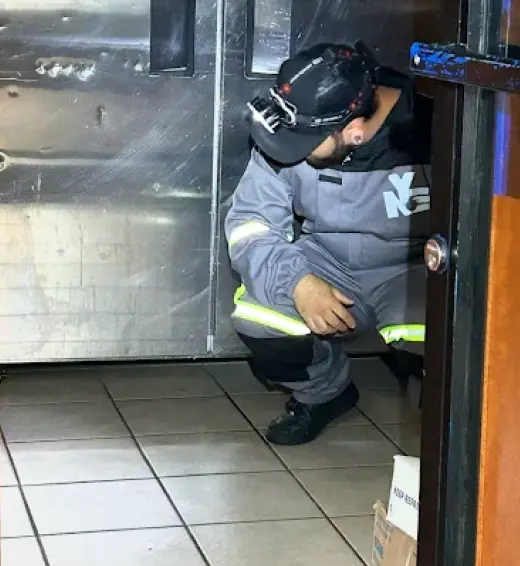
Same-day mouse calls
Mouse Exterminator in NYC
We’re not the cheapest.We’re the last one you’ll call.
Ninety percent of what we do on a mouse job is inspection and exclusion. Ten percent is traps and bait. That ratio is the entire difference between paying us once and paying somebody else every month for years.
A cheap visit isn’t cheap.
It’s a subscription.
The $99 monthly plan sounds like the affordable option right up until you notice it has no end date. Bait stations get refilled, traps get reset, somebody comes back every month, and the hole the mice are walking through is exactly where it was the first day.
That is not incompetence. It is a business model. A mouse problem that never resolves is recurring revenue, and sealing the building ends it. We do the opposite: we find the openings and we close them, so the reason for the monthly visit stops existing.
| What you pay | What you get |
|---|---|
| $99/month, forever — $1,188 a year, every year | Bait replaced. Traps reset. Entry points untouched. Mice keep coming in. |
| $280–$600 for most jobs — our full program, once | Openings found and sealed in metal. The route in is gone. |
The full internal inspection.Every place they hide.
Most technicians inspect the room. We inspect the voids — the concealed spaces mice actually travel and nest in, which in a New York apartment are almost never visible from the middle of the floor. This is the part of the job that takes real time, and it is the part almost nobody does properly.
Behind and under the stove
One of the two most reliable entry areas in any NYC kitchen. The gas line penetration behind the range is frequently an open hole straight into the wall, and the warmth plus spilled food makes it prime real estate.
Behind the refrigerator
Warm motor housing, condensation, crumbs, and a water line penetration nobody has looked behind in years. We pull it out. Every time.
Behind the dishwasher
Plumbing and electrical both enter here, the cavity is dark and undisturbed, and the gap under the unit connects to the cabinet run. A classic missed harborage.
Cabinet toe-kicks
The recessed space beneath your base cabinets is a continuous, hidden highway running the length of the kitchen. Mice use it constantly and you cannot see into it without removing the kick plate. We remove it.
Radiators and steam risers
The pipe penetration at the floor is often wide open, and it connects your apartment vertically to the units above and below. In a pre-war building this is frequently the single source.
Closets, floor to ceiling
Especially closets on shared or exterior walls. Corners, shelving supports, the floor junction, and anything stored on the floor long enough to be nested in. Closets get skipped constantly and they are where quiet infestations live.
Molding and baseboard junctions
The gap where baseboard meets floor, and where molding pulls away from settled walls, gives access to the wall cavity behind it. Small separations that look cosmetic are functional doorways.
Every other penetration
Under-sink plumbing, radiator valves, electrical and cable entries, door sweeps, vent chases. Anywhere something passes through a wall or floor is a candidate, and we check them all.
90% exclusion.10% traps and bait.
Almost every company you call inverts this. They arrive with bait, place it, and leave. Bait manages a population. It does not stop new mice walking in through the same opening tomorrow, which is why that service never ends.
Full internal inspection
Appliances pulled, toe-kicks off, closets emptied where needed, every penetration checked. We map where they are entering and where they are travelling before we touch a single product.
Exclusion in metal
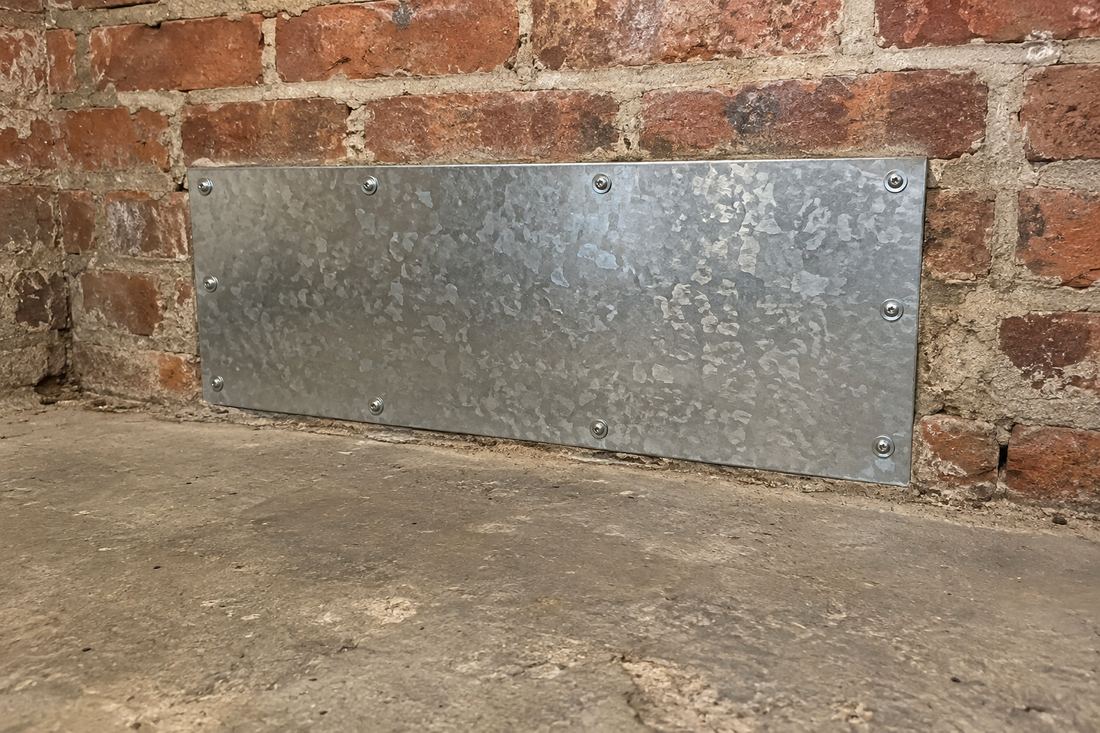
Openings sealed with metal — never foam. Mice chew straight through expanding foam and steel wool packs out; properly installed metal is a permanent barrier, and our sealing work is warrantied for 6 months. This is the work that ends the problem, and it is why our visits stop.
Targeted trapping and bait
The remaining ten percent. Once the route in is closed, we resolve the population already inside, placed where the inspection showed activity rather than sprinkled around the room.
Verification
We confirm activity has stopped rather than assuming it. If something was missed, we come back and close it — fewer than 1% of our jobs generate a callback.
Foam is not a seal.It’s a suggestion.
Expanding foam is the industry default because it is fast, cheap, and looks finished the moment it cures. It is also chewable. Mice go through it, and the repair that was supposed to be permanent quietly fails somewhere behind an appliance where nobody will look for another year.
Metal cannot be chewed. Installed correctly into the opening rather than smeared across it, it is a permanent structural closure — which is exactly why it costs more in labour and exactly why it works. If a company sealed your apartment with foam and the mice came back, that is not bad luck. That is the material doing what it always does.
More on this in our write-up on why foam fails and metal doesn’t, and the case study on the apartment five companies couldn’t seal.
What a mouse job looks like.
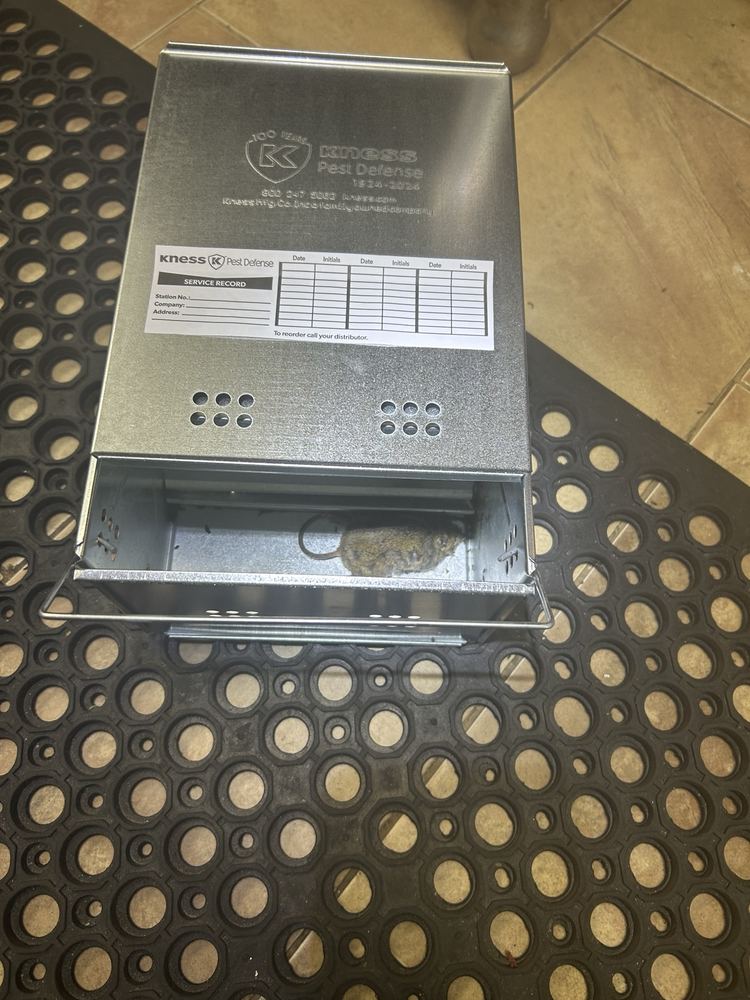
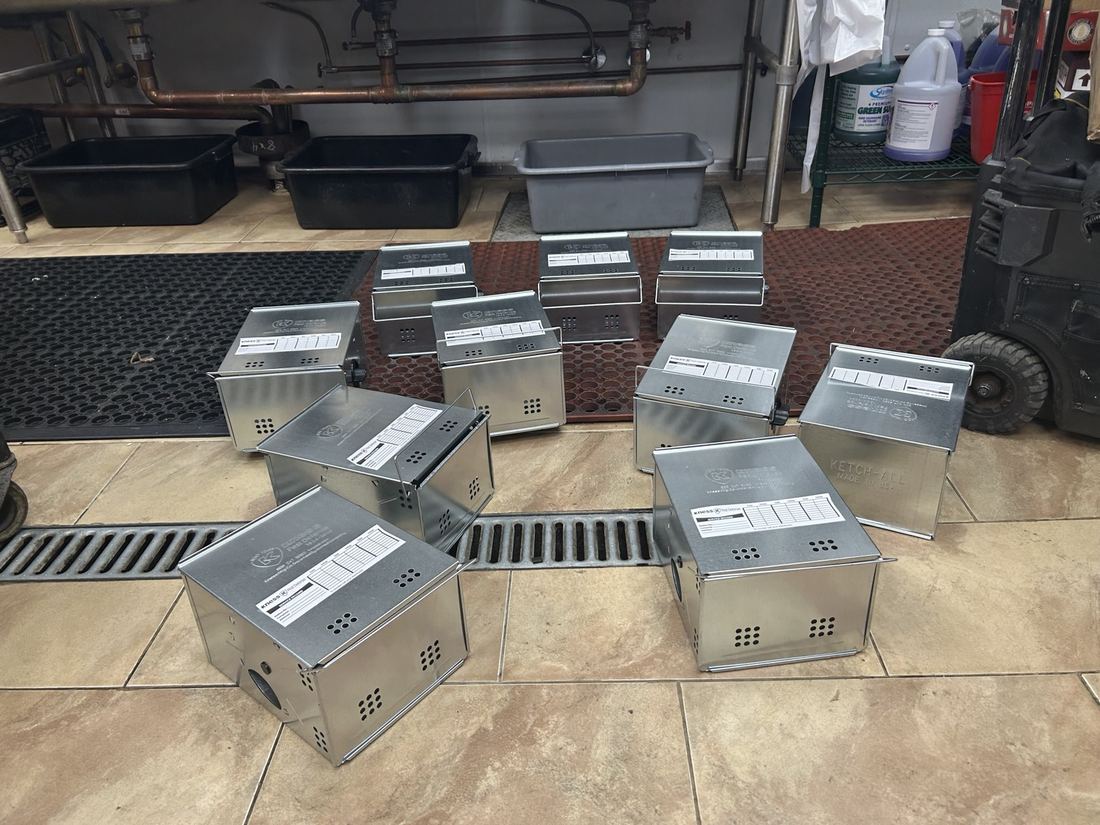
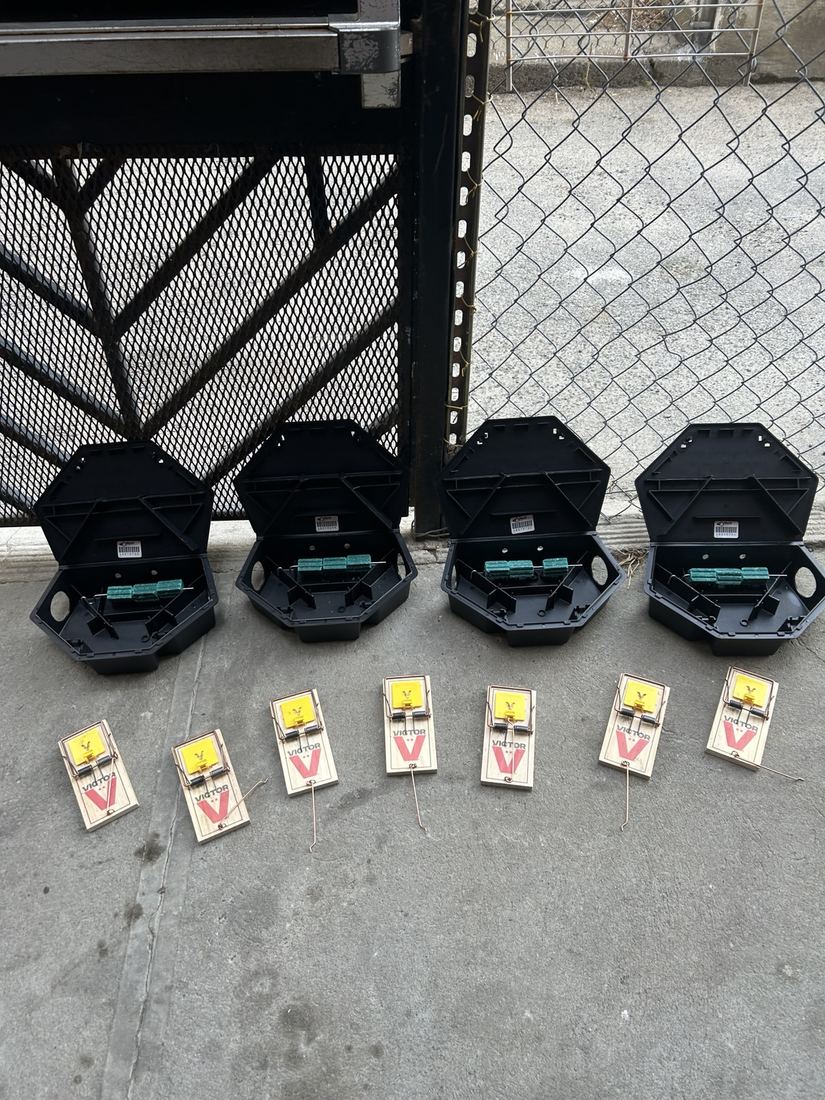
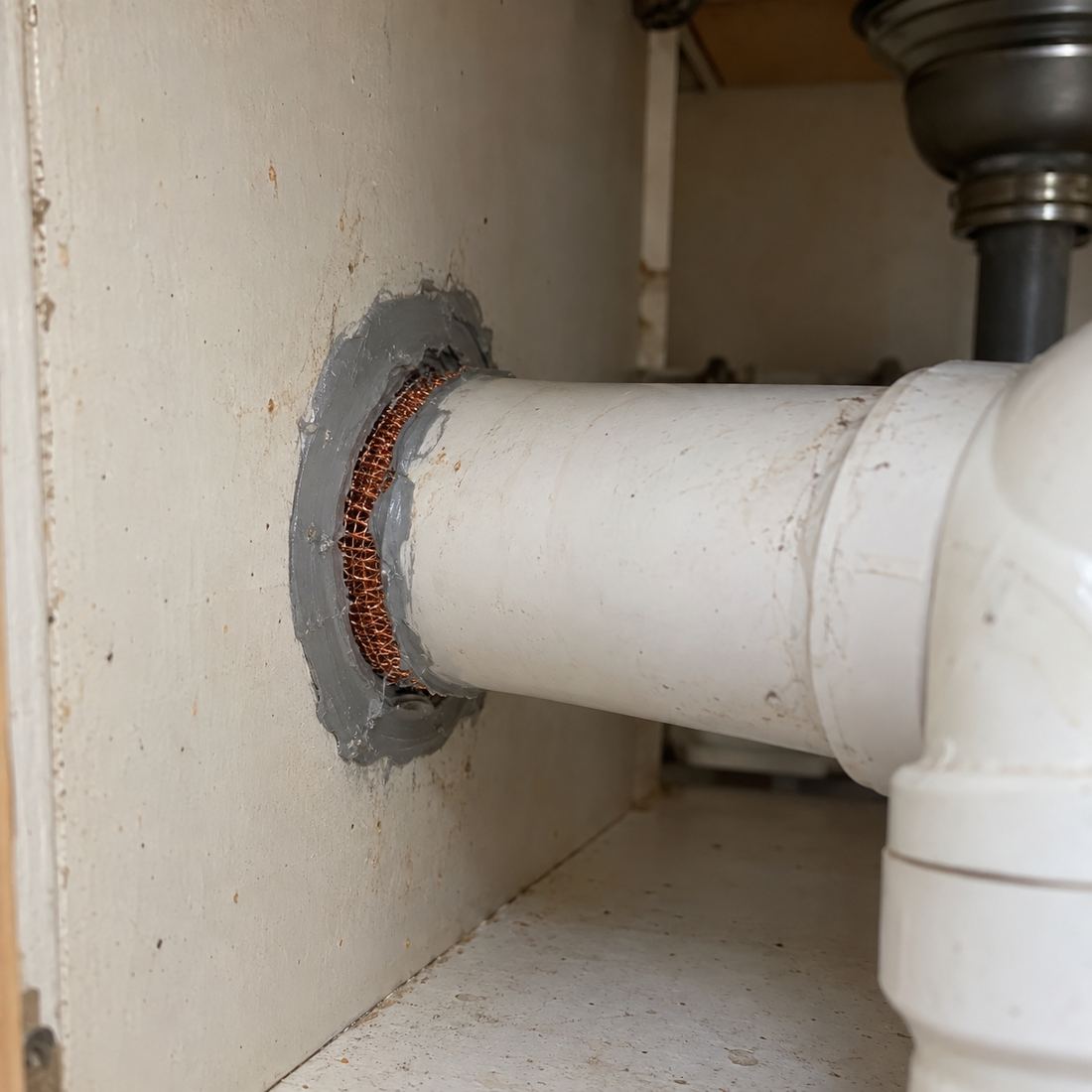
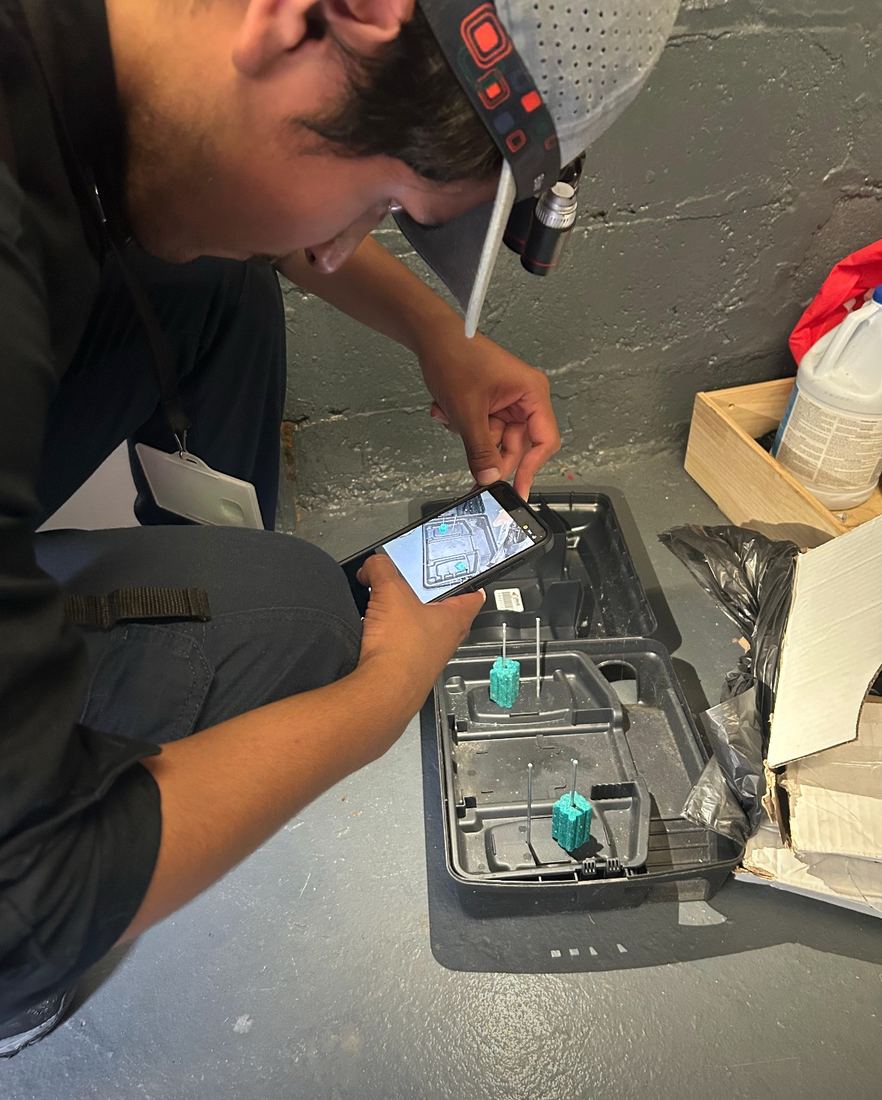
Photos from NYE mouse jobs: traps placed where mice travel, every device logged, and entry points sealed with metal and copper mesh.
$280 to $3,500. Most jobs $280–$600.
Mouse work is priced after inspection because the honest number depends on how many openings the building has and how much has to come apart to reach them. The large majority of jobs land between $280 and $600 — $280 covers a straightforward apartment, and $3,500 is a chronic case needing extensive work. Here is what moves it.
Number of entry points
A single gap behind the stove is a different job from a pre-war apartment with open penetrations at every radiator.
Access required
Appliances that must be pulled, toe-kicks removed, cabinetry opened. Labour, not product, is the cost driver.
Apartment size
More rooms and more penetrations mean more inspection time and more material.
Chronic cases
Long-running infestations need more time and more material, and where the structure itself has failed we sometimes bring in a contractor. That is what carries a job toward the top of the range.
Building-level pressure
If mice are arriving from shared chases, we will tell you plainly — and give you something in writing for management.
Pay for the fix, not the subscription.
We offer some of the broadest financing in NYC pest control — Klarna, Affirm and Afterpay through Stripe. Spread the one-time repair instead of paying a monthly plan that never ends.
Estimate only. Final terms come from the provider at checkout and depend on approval.
A bait-and-leave visit and this are not the same service.
The NYE program
Appliances pulled, toe-kicks removed — we inspect the voids, not the room.
90% of the work is exclusion and inspection.
Metal seals that cannot be chewed through.
Targeted trapping placed where activity actually is.
Verification that activity stopped, not an assumption.
Licensed exterminators, supervised by an Associate Certified Entomologist.
An end date. The visits stop because the reason for them is gone.
The cheap monthly plan
A visual walk-through. Nothing moved, nothing opened.
90% of the work is placing bait.
Foam or steel wool, if anything is sealed at all.
Stations placed on a standard pattern, not on evidence.
No verification — you find out when you hear them again.
Whoever is on the route that day.
No end date. The plan renews as long as you keep paying.
Mouse control in NYC: FAQ
How much does a mouse exterminator cost in NYC?
Our mouse program runs $280 to $3,500, and the large majority of jobs land between $280 and $600. The number depends on how many entry points the apartment has and how much access is required to reach them — labour, not product, is the cost driver. Chronic cases need more time and more material, and occasionally a contractor for structural work. Financing is available through Klarna, Affirm and Afterpay.
Why are you more expensive than the monthly plan?
Because we are selling a different thing. A monthly plan manages mice indefinitely; our program is built to end the problem by sealing the ways in. A year of a $99 plan costs $1,188 and leaves the openings exactly where they were. Ours is a one-time cost with an end date.
What does the inspection actually involve?
We pull the stove, the refrigerator and the dishwasher, remove cabinet toe-kicks, and check radiator and steam riser penetrations, closets floor to ceiling, molding and baseboard junctions, under-sink plumbing, electrical and cable entries and door sweeps. Mice travel in concealed voids, so inspecting only what is visible from the middle of the room finds nothing.
Why won’t you use expanding foam?
Mice chew through it. Foam is fast, cheap and looks finished the moment it cures, which is why it is the industry default, but it is not a barrier. We seal in metal, which cannot be chewed. It costs more in labour and it is the reason our repairs hold.
How small an opening can a mouse use?
A gap roughly the width of a pencil is enough. That is why the inspection matters more than the products — the openings that let them in are usually ones you would never notice, behind appliances or beneath cabinetry.
Do you use traps and bait at all?
Yes, as about ten percent of the job. Once the entry points are closed we resolve the population already inside, placed according to where the inspection showed activity. Bait alone manages numbers without stopping new mice getting in, which is why bait-only service never finishes.
Who performs the work?
Licensed exterminators, with the program supervised by Jorge Bedoya, an Associate Certified Entomologist. Fewer than 1% of our jobs generate a callback.
What if the mice are coming from elsewhere in the building?
In multi-unit buildings shared plumbing chases and steam risers connect apartments vertically, and treating one unit repeatedly cannot resolve a population arriving from a connected one. We will tell you plainly if that is what you are dealing with and give you documentation for management. More in why a clean apartment can still have pests in a shared building.
Stop renting a solution. Buy the repair.
Jorge Bedoya, ACE, supervises every rodent program at NYE. If you have been on a monthly plan for a year and still hear them at night, you did not hire the wrong price — you hired the wrong approach.
$280–$3,500 · most jobs $280–$600 · 90% exclusion, 10% bait · Financing available · Licensed exterminators, ACE-supervised · Se habla español
Instant estimate
See your price in 30 seconds.
Service type
Apartment size
How long has it been going on?
The longer it runs, the further it spreads — the single biggest factor in what a job costs.
Free quote · No obligation · Residential NYC · Led by Jorge Bedoya, ACE