Quick answer
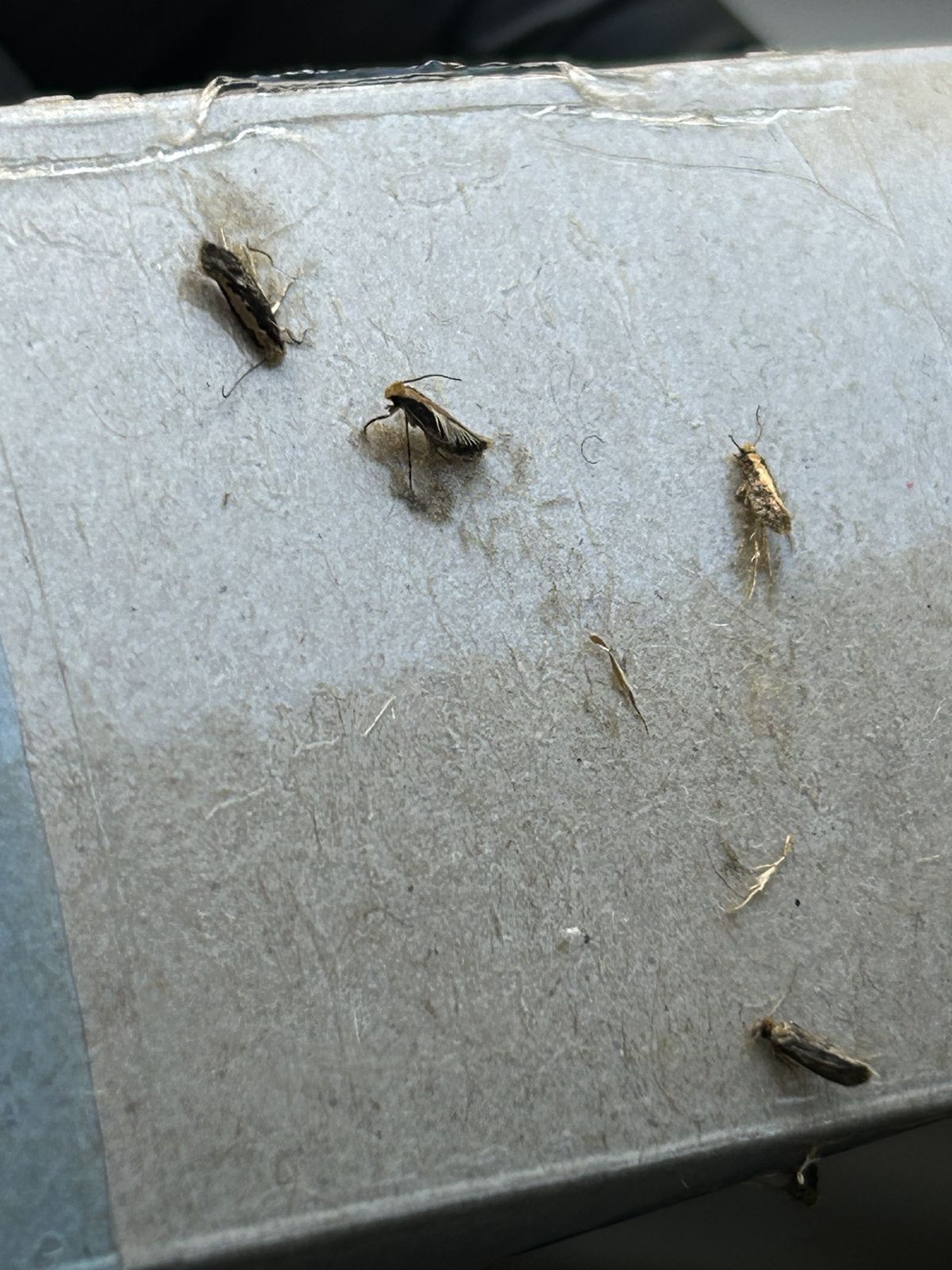
Baby cockroaches (roach nymphs) are small — about 1/8 to 1/4 inch long — wingless, and dark brown to nearly black, usually with two dark stripes running front-to-back just behind the head. In NYC apartments the one you almost always see is the German cockroach nymph. They look like a tiny version of an adult roach, move fast, and have antennae nearly as long as their body. Spotting even one or two usually means a breeding population is already nearby — roaches are rarely loners.
If you’ve found a tiny, fast-moving bug in your kitchen or bathroom and wondered “is that a baby roach?”, this guide walks through exactly what baby cockroaches look like, how to tell them apart from bed bugs and beetles, which species you’re likely seeing in New York City, and what finding one actually means. It’s written and reviewed by Jorge Bedoya, an Associate Certified Entomologist (ACE) who treats roach infestations across the five boroughs every week.
BABY COCKROACH AT A GLANCE
- Size: 1/8″ (German, at hatch) to 1/4″ (American & Oriental); grows to ~1/2″ as an adult
- Color: dark brown to black; lightens with age; two dark parallel stripes behind the head
- Wings: none — nymphs are always wingless
- Antennae: long, nearly the length of the body
- Where: near food, water, and warmth — under sinks, behind the fridge, around the dishwasher and stove
- What it means: active indoor breeding — one egg case (ootheca) holds 30–48 eggs
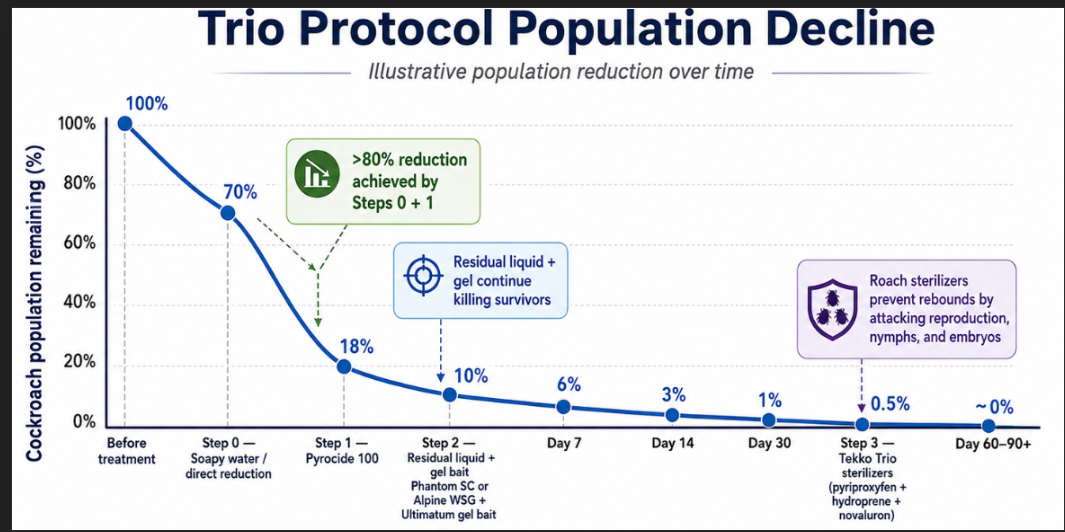
Small roach in NYC, in short: A small roach in a NYC apartment is almost always a young German cockroach — a nymph about 3–6 mm long, dark brown with two darker stripes behind the head, wingless, and very fast. Seeing even one or two usually means a breeding population is already hidden nearby, since roaches stay concealed far more than they show. The move is to identify it correctly, then treat the source — not just the strays you see.
Small roach vs. baby cockroach vs. other tiny bugs

| What you’re seeing | Size | Color & key tell | What it usually is |
|---|---|---|---|
| Small, fast roach with stripes | 3–6 mm | Dark brown, two dark stripes behind the head, no wings | A German cockroach nymph (the most common NYC “small roach”) |
| Larger reddish “baby cockroach” | 4–8 mm+ | Reddish-brown, glossy | An American or Oriental cockroach nymph — the big “water bugs“ |
| Flat, oval, slow bug near the bed | 1–5 mm | Reddish-brown, flat, no stripes | A bed bug — not a roach |
| Tiny fuzzy striped bug near fabrics/carpet | 2–4 mm | Mottled/fuzzy | A carpet beetle larva — not a roach |
| Tiny bug that jumps in damp spots | 1–2 mm | Grey/white | A springtail — not a roach |
Rule of thumb: a small, striped, fast-moving roach indoors is a German cockroach nymph — and nymphs mean the population is breeding.
Does one small roach mean an infestation?
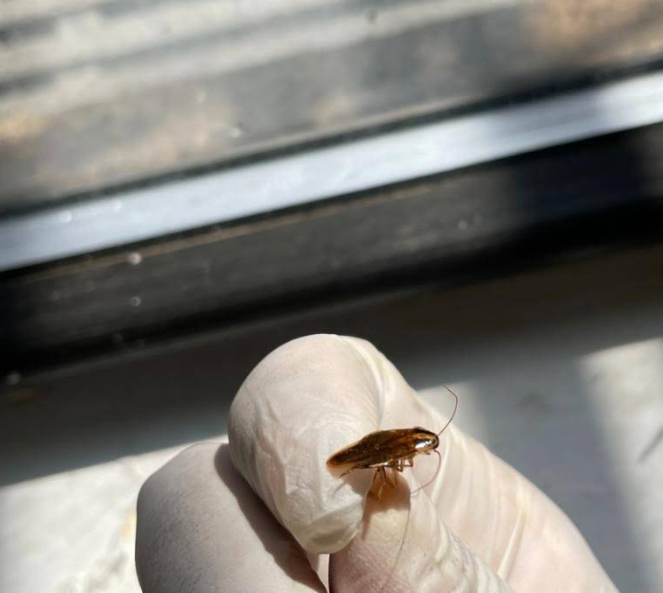
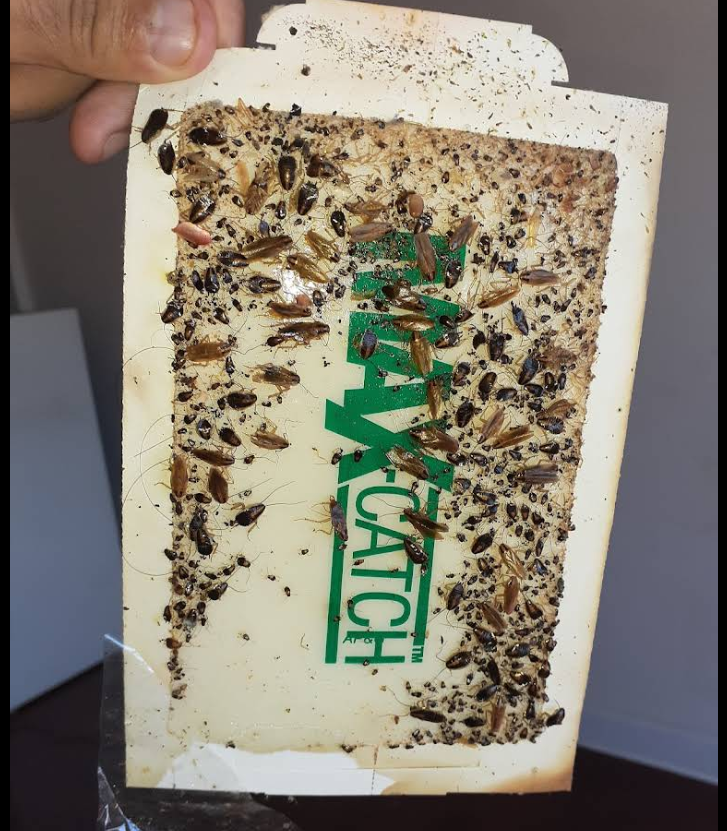
Usually, yes — or at least the early stage of one. Cockroaches are cryptic insects that spend most of their time hidden in cracks, wall voids, and behind appliances, so for every small roach you see, many more are out of sight. Spotting one in daylight is a sign of pressure: the harborage is getting crowded or food is scarce enough to push them into the open.
A small roach that is a nymph matters even more, because nymphs mean the population is actively reproducing on-site rather than wandering in from outside. Acting early — while numbers are still low — makes control faster and less disruptive. For the full walkthrough, see our guide to German cockroach treatment, review typical cockroach exterminator cost, or book cockroach control with our NYC team.
What a baby cockroach actually looks like
A baby cockroach is simply a roach that hasn’t finished growing. Cockroaches develop through incomplete metamorphosis: an egg hatches into a nymph, and that nymph molts six to seven times — each stage is called an instar — getting larger and lighter each time until it reaches adulthood. So a “small cockroach” and a “tiny roach” are usually the same insect caught at different ages.
The features that give a baby roach away:
- A long, cylindrical (tube-like) body — not flat or oval.
- Two dark stripes running lengthwise on the shield just behind the head (the pronotum). On a German cockroach nymph these are unmistakable and are the single best ID clue.
- Six spiny legs built for speed — baby roaches dart and seek cover instantly when a light comes on.
- Long, thread-like antennae, often as long as the whole body.
- No wings. If it has wings, it’s an adult, not a nymph.
The youngest nymphs are dark, almost black, and roughly the size of a grain of rice. As they mature they turn the familiar tan-brown of an adult while keeping the two stripes.
German cockroach nymphs: the baby roach you’re most likely seeing in NYC
In New York City apartments, the overwhelming majority of “baby roach” sightings are German cockroach (Blattella germanica) nymphs. German cockroaches are the small (about 1/2 inch as adults), light-brown, two-striped roaches that thrive in heated buildings year-round. They breed faster than any other house roach, and because NYC apartments share walls, plumbing chases, and trash rooms, a German cockroach problem in one unit easily becomes a building problem.
German cockroach nymphs cluster where it’s warm, humid, and close to food: under and behind the refrigerator, around the dishwasher motor, beneath the sink, in the cracks behind the stove, and inside cluttered cabinets. If you’re seeing tiny roaches in the kitchen at night, this is almost certainly what you have. Our full treatment walkthrough is here: how to get rid of German cockroaches in NYC.

The six nymph stages: a size guide
Sizes below are approximate and vary with food and temperature.
| Stage (instar) | Approximate length | What you notice |
|---|---|---|
| 1st | About 3 mm (1/8 in) | Dark, seed-sized, often clustered near where the egg case hatched |
| 2nd | About 4 mm | Still dark and wingless, starting to spread from the hatch site |
| 3rd | About 5 to 6 mm | Pale tan band across the back becomes visible |
| 4th | About 7 mm | Looks like a small adult without wings, moves between rooms |
| 5th | About 8 to 9 mm | Noticeably larger, wing pads begin to show |
| 6th | About 10 to 11 mm | Wing pads clear; one molt from a winged adult of 13 to 16 mm |
How long the nymph stage lasts
In a warm, humid NYC kitchen with steady food and water, a German cockroach nymph takes roughly six to twelve weeks to reach adulthood, molting about six times. Cooler, drier or food-poor conditions stretch that out. Because a single egg case releases 30 to 40 nymphs (see our guide to German cockroach eggs), the nymph population grows faster than it seems, and a colony that started with one pregnant female can show dozens of nymphs within weeks.
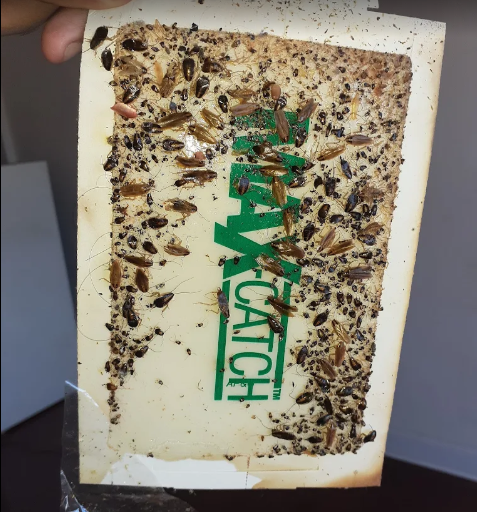
German cockroaches are nocturnal. When nymphs show up in daylight, it usually means the hiding places are crowded and the youngest roaches are being pushed out, which points to a larger population than the one you see. For the other signs, see what German cockroach activity looks like.
Other baby roaches: American (“water bug”) and Oriental nymphs
Two larger species show up in NYC basements, boiler rooms, and ground-floor units:
- American cockroach nymphs — the babies of the big reddish-brown roach New Yorkers call a “water bug.” They start around 1/4 inch and get much larger than German roaches. They favor sewers, drains, basements, and steam tunnels.
- Oriental cockroach nymphs — dark, almost black, and tied to dampness: floor drains, crawl spaces, and around leaking pipes.
Size is the quickest tell: a baby roach the size of a rice grain in your kitchen is almost always German; a noticeably larger nymph in a basement is more likely American or Oriental.
Brown-banded cockroach nymphs are the other small roach that turns up in NYC apartments, usually away from the kitchen: in bedrooms, living rooms, upper cabinets and electronics. They are easy to mistake for German nymphs, but they carry two light bands across the body instead of a stripe down the back. Other exterminators misdiagnosed a 12th-floor Midtown case we solved for exactly this reason. See our brown-banded cockroach guide. If you are not sure the bug is a roach at all, start with tiny black bugs in NYC apartments.
Baby cockroach vs. bed bug vs. beetle — how to tell them apart
This is the most common mix-up, because a small dark bug near the bed sends people in very different directions. Here’s the side-by-side:
| Feature | Baby cockroach | Bed bug | Beetle |
|---|---|---|---|
| Body shape | Long, cylindrical | Oval, very flat | Rounded, hard-shelled |
| Antennae | Long, ~body length | Short | Short, often clubbed |
| Wings/back | No wings; soft, striped | No wings; smooth | Hard wing covers meeting in a straight line |
| Movement | Fast, darts to cover | Slow crawl | Slow; may fly in |
| Where you find it | Kitchen, bathroom, near food/water | Mattress seams, headboard, box spring | Near windows, pantry, or wandered from outside |
If the bug is flat, oval, slow, and living around your mattress, you’re likely dealing with bed bugs, not roaches — start with our What’s Biting Me? identifier and bed bug treatment page instead.
What it means if you see a baby cockroach
One baby roach is rarely just one roach. Nymphs can’t fly and don’t travel far, so a nymph in your living space means eggs are hatching inside your home, not wandering in from outside. A single female German cockroach carries an egg case (ootheca) holding 30 to 48 eggs and can produce several in her life — which is why a few visible nymphs can become a heavy infestation in a matter of weeks. Seeing baby cockroaches is the clearest possible signal that a breeding population is established and growing.
How to get rid of baby cockroaches in an NYC apartment
Because nymphs mean active breeding, spot-spraying what you can see almost never works — with German cockroaches, repellent sprays actually scatter the population deeper into wall voids. A method that holds up looks like this:
- Targeted gel bait + insect growth regulator (IGR) placed precisely in harborage, so foraging nymphs and adults carry it back to the nest and the IGR stops new ones from maturing.
- Sanitation & moisture control — deny food, water, and clutter under the sink, behind appliances, and around the trash.
- Sealing harborage — close the cracks and gaps where they shelter and travel between units.
- Follow-up to break the egg-hatch cycle, since eggs already laid are shielded from most products.
Every roach job we run is led by an Associate Certified Entomologist (ACE), which means a correct species ID and a plan matched to it on the first visit. See our German cockroach extermination and cockroach control services, or call us to confirm what you’re seeing.
Seeing baby roaches? Don’t wait for them to multiply.Same-day ACE-led roach control across all five boroughs.
Dealing with German cockroaches? Our signature microinjection technique targets the colony in its harborage — including inside appliances — and pairs it with an IGR that shuts down reproduction. See how it works, or go straight to our German Cockroach Extermination service.
Not sure what you found?
Send us a photo or book a same-day inspection — an ACE will identify it and tell you exactly what to do. Get a free estimate or call (347) 210-4646.
About the author: This guide was written and reviewed by Jorge Bedoya, an Associate Certified Entomologist (ACE) at New York Exterminating, who leads roach identification and treatment for homes and businesses across NYC.
More NYC pest guides & tools
Related: brown-banded cockroach nymphs carry bands across the back instead of the German nymph’s lengthwise stripe.
Baby cockroach FAQ
Are baby cockroaches a sign of an infestation?
Yes. Nymphs can’t fly and don’t travel far, so their presence means eggs are hatching inside your home. Because one German cockroach egg case holds 30–48 eggs, even a few visible nymphs indicate an established, growing population.
What’s the difference between a baby cockroach and a bed bug?
A baby cockroach is long and cylindrical with antennae nearly as long as its body and is found near food and water. A bed bug is flat and oval with short antennae and lives around the mattress. Roaches dart for cover; bed bugs crawl slowly.
Why do I keep seeing tiny roaches in my kitchen?
German cockroaches nest where it’s warm, humid, and close to food — under the sink, behind the refrigerator, and around the dishwasher and stove. They breed continuously, and in NYC apartment buildings they spread between units through shared walls and plumbing.
Can baby cockroaches fly?
No. Nymphs are always wingless, and even adult German cockroaches rarely fly. A small flying insect is something else.
Are baby cockroaches harmful?
They don’t bite, but they carry bacteria, contaminate food and surfaces, and their shed skins and droppings are a known asthma and allergy trigger — a particular concern in apartments with children.
What kills baby cockroaches?
A gel-bait-plus-IGR program combined with sanitation and harborage sealing is the most reliable approach. Over-the-counter sprays tend to scatter German cockroaches and make the problem harder to clear.
What is the difference between a small roach and a water bug?
“Water bugs” are large American or Oriental cockroaches. A small, dark, striped roach that moves fast is a German cockroach. For the full comparison, see what are water bugs.
How do you get rid of small roaches in NYC?
Correct identification first, then targeted baiting and IPM that treats the hidden source — not just the strays you see. Our cockroach control service handles this for NYC apartments and buildings.
How many stages does a German cockroach nymph go through?
Typically six nymph stages, called instars, though five to seven can occur. The nymph molts between each stage and becomes a winged adult after the last molt.
How long does it take a German cockroach nymph to become an adult?
Roughly six to twelve weeks in a warm apartment with food and water. Cooler temperatures and limited food slow development, and a heated NYC kitchen is close to ideal conditions.
Why New Yorkers choose NYE
Led by an ACE
Every job is overseen by Jorge Bedoya, an Associate Certified Entomologist (ESA) — not a call center.
No contracts
One thorough treatment with an optional 50%-off verification visit. No auto-renewal, no lock-in.
Elimination, not spraying
Resistance-aware methods — including our signature microinjection — that target the source, with documentation.
Licensed & local
NYSDEC Reg. #15140, serving all five boroughs since 2010. Fully bilingual (EN/ES).
Backed by science, not guesswork. Your treatment is led by Jorge Bedoya, an Associate Certified Entomologist (ACE) credentialed by the Entomological Society of America — correct pest ID, resistance-aware products, and a documented plan.
What happens after you call
- Fast response. Call (347) 210-4646 — same-day appointments are often available, including after-hours emergencies.
- Inspection & ID. We confirm the pest and find the source, not just where you saw it.
- Targeted treatment. A resistance-aware plan matched to the pest, explained before we start.
- Verification & prevention. Optional follow-up to confirm zero activity, plus reports and photos in your client portal.