Why New York Exterminating
We’re built to solve your pest problem, not to lock you into a monthly contract. We don’t require monthly spray contracts or forced annual agreements, the same technician handles your property on every visit, and we never blame your housekeeping. Every job is ACE-led (Jorge Bedoya, Associate Certified Entomologist, NYSDEC #15140), bilingual in English and Spanish, and we serve all five boroughs plus Nassau and Westchester — with a callback rate under 1%.
Quick answer
Millipedes feed on decaying organic matter and migrate indoors in large numbers during wet weather or seasonal shifts, gathering in basements, garages, and ground-floor rooms. New York Exterminating treats the exterior perimeter and damp harborage, and seals entry points to stop the migration. Service is dependable, with a free estimate.
When dozens of slow, coiling millipedes turn up along a baseboard or in the basement after a rainstorm, it looks like an infestation — but they wandered in from the soil outside and cannot survive indoors. The real fix is sealing them out and treating the perimeter. New York Exterminating stops millipede invasions at the source, led by an Associate Certified Entomologist (ACE) licensed in structural pest control.
Real New York Exterminating jobs
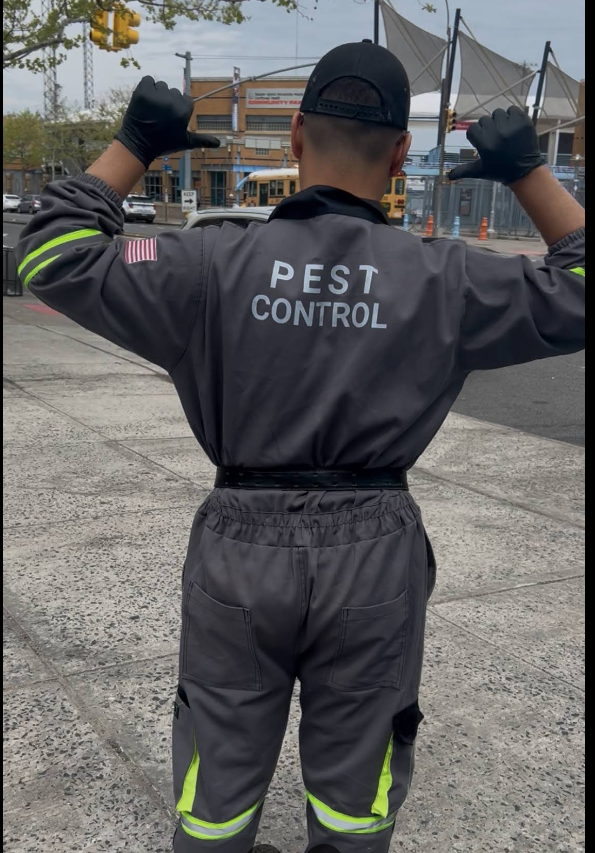
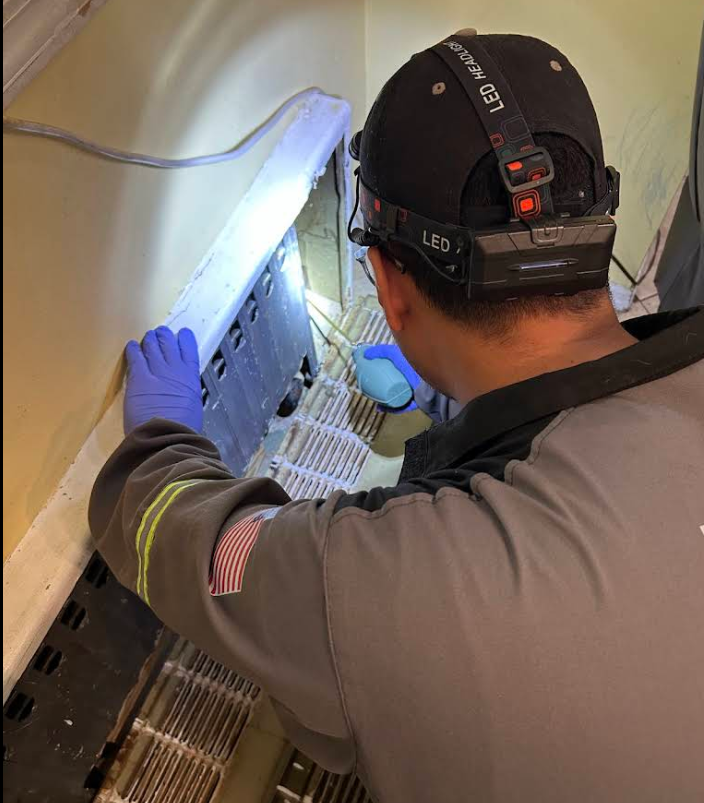
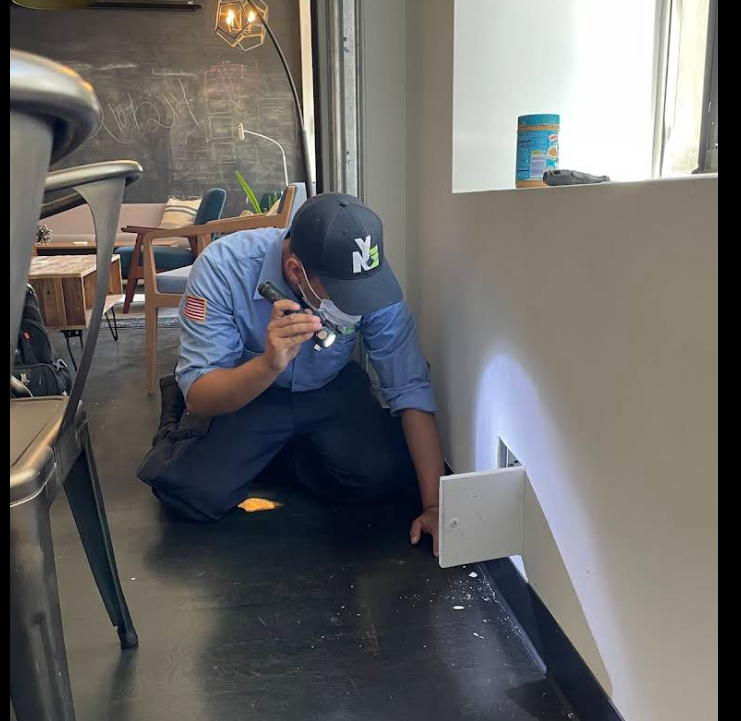
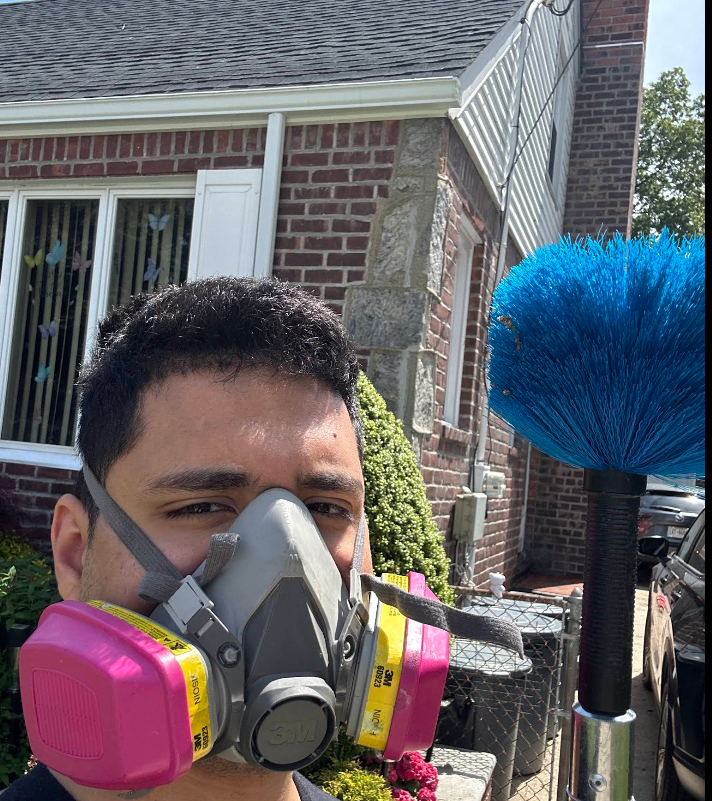
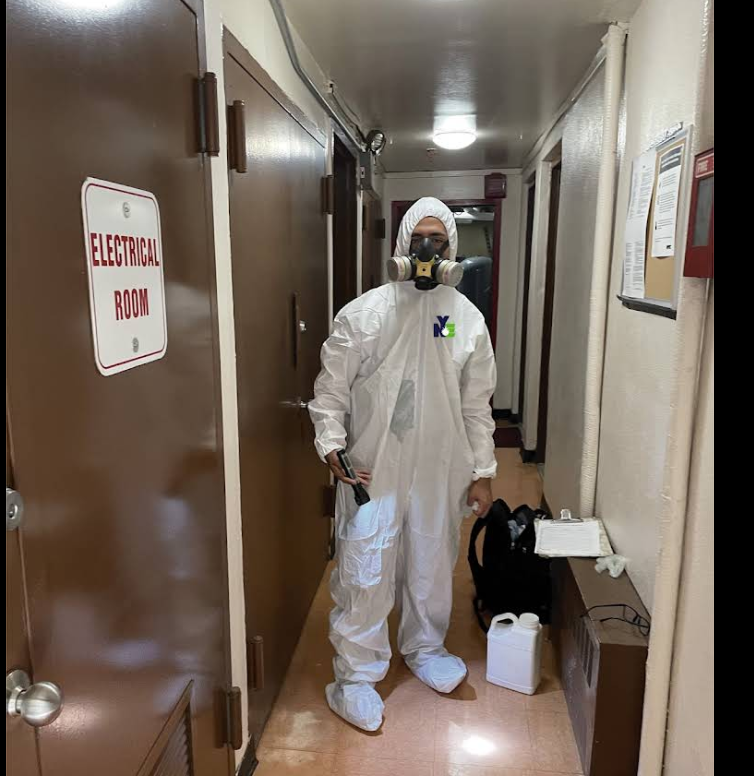
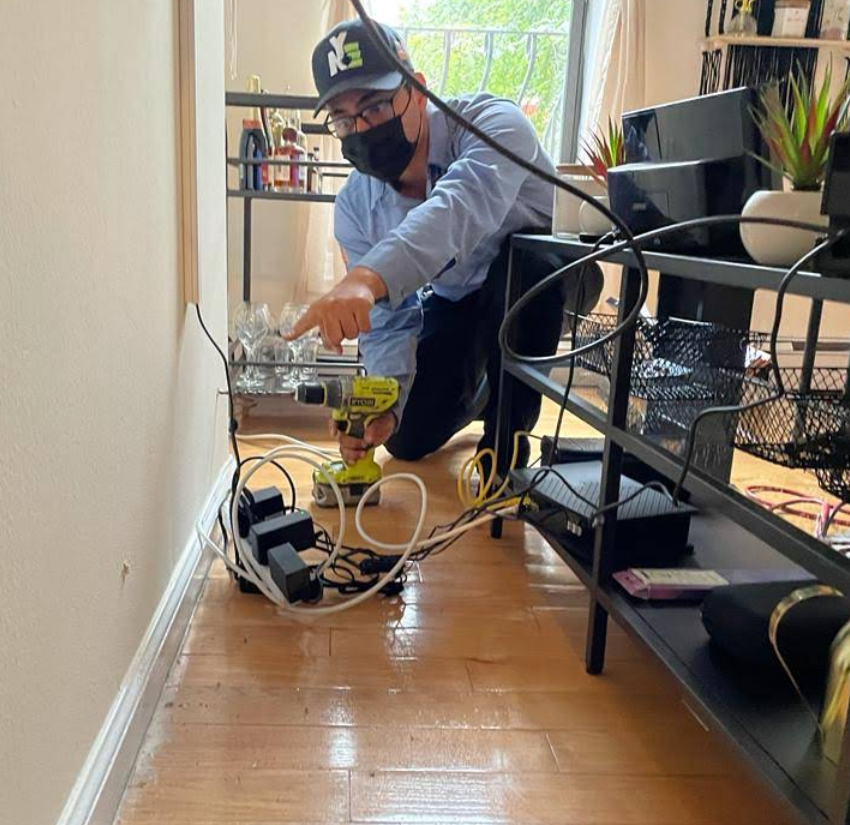
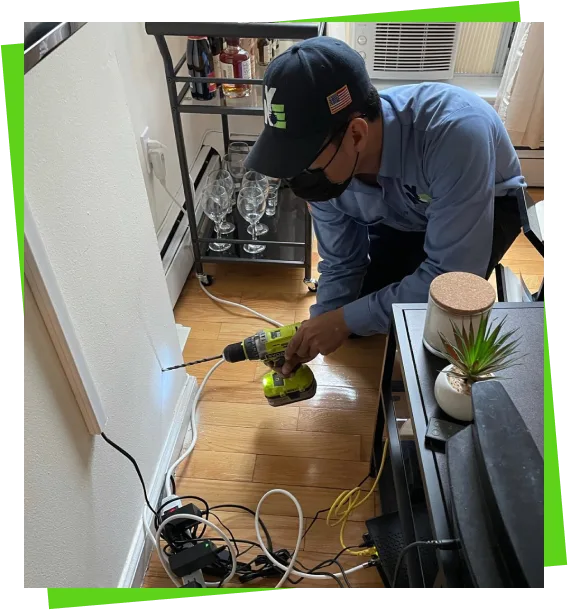
Photos from real NYE service calls across NYC.


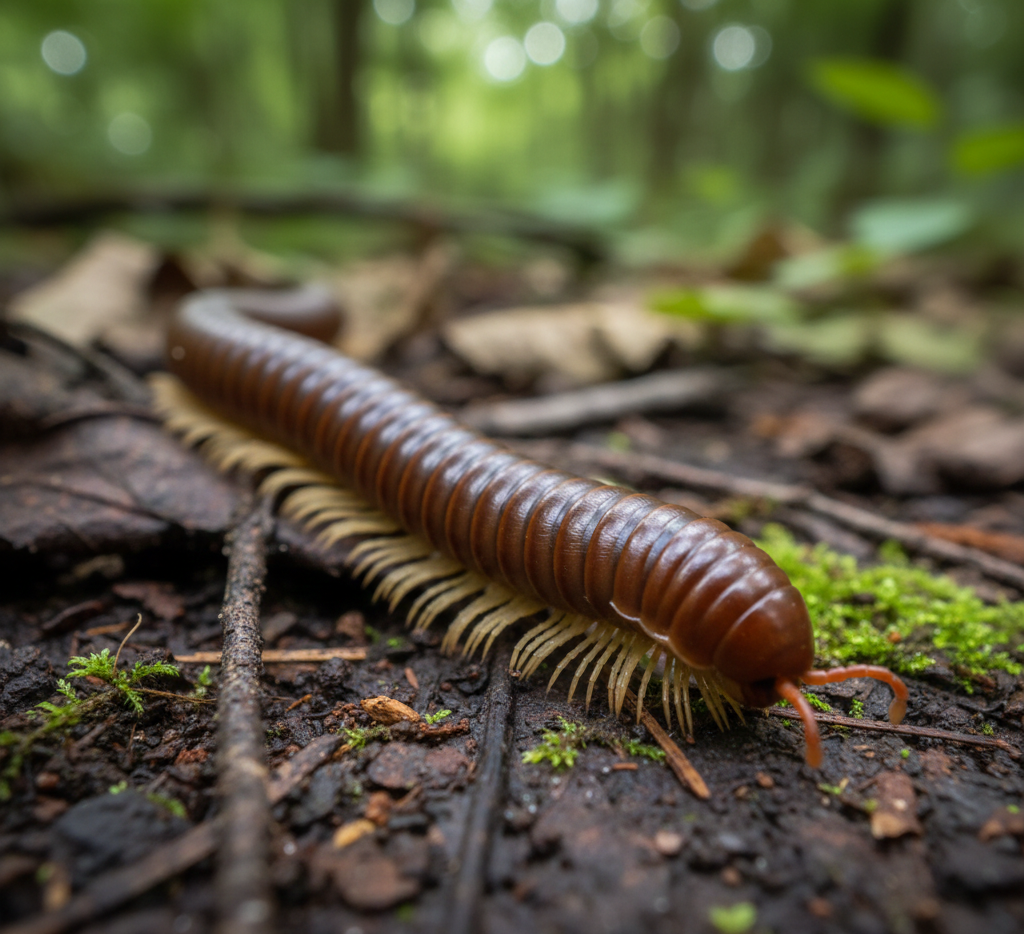
People mix these up, and the difference guides the treatment. A millipede has two pairs of legs per segment, a rounded body, moves slowly, and curls into a spiral when touched — it grazes on decaying plant matter. A centipede has one pair of legs per segment, moves fast, and hunts other insects. Millipedes live in damp soil, mulch, and leaf litter, and they migrate in waves when heavy rain floods their habitat or fall cooling drives them to shelter — which is why you get a sudden influx over a few days. They do not bite, sting, or breed indoors; the ones inside are simply dying off.
Millipedes migrating into your home? We seal them out.
Perimeter treatment and exclusion across NYC. Dependable. Free estimate.
Our landscaped perimeters, mulch beds, ground cover, and older foundations give millipedes ample damp harborage right against the building, and ground-floor and basement units are the first to see them push inside through foundation cracks and door gaps. Because the trigger is weather and the habitat is the soil at your foundation line, lasting control is exterior and structural — not a matter of spraying the ones indoors, which are already on their way out.
1. Identify. We confirm millipede (vs. centipede) and assess the harborage and moisture against the foundation.
2. Exterior perimeter treatment. We treat the building’s edge — the barrier they must cross.
3. Exclusion. We seal door sweeps, foundation cracks, and utility gaps they use to get in.
4. Harborage & moisture reduction. We address the mulch, leaf litter, ground cover, and dampness staging them — timed ahead of the spring and fall waves.
Related services: Centipede Control, Silverfish Control, and General Pest Control.
Yes — we identify the pest, find the harborage and entry points, and quote before any work.
Usually yes — the slow movement and coiling make millipedes easy to confirm from a clear photo.
For recurring seasonal waves, a perimeter maintenance program keeps the barrier intact; a single treatment plus exclusion is often enough for a one-time surge.
No. Millipedes have no bite and no sting and are harmless to people and pets. Their only defense is to curl into a spiral and secrete a fluid that can stain skin or surfaces and irritate if you handle them — which is why you should sweep or vacuum them rather than crush them on carpet or upholstery. They are a nuisance invader, not a threat.
Legs and behavior. A millipede has two pairs of legs per segment, a rounded body, moves slowly, and curls up when disturbed; it eats decaying plant matter. A centipede has one pair of legs per segment, moves fast, has long antennae, and is a predator. Millipedes drift in from damp soil and mulch; centipedes come hunting other insects. The source and fix differ, so we confirm which you have.
Weather. Millipedes live in soil, mulch, and leaf litter, and they migrate in large numbers when conditions change — heavy rain floods their habitat and pushes them to higher, drier ground (your foundation and then inside), and fall cooling sends them seeking shelter. Because they all respond to the same trigger, you can get a sudden wave over a few days, then it stops.
Indoors they cause no damage — they cannot survive long inside and simply die off, which is why you often find them dead. In the garden they mostly eat decaying matter, though large numbers can occasionally nibble seedlings. The real issue is the nuisance of a mass invasion, and what it signals about moisture and harborage against your foundation.
No. Millipedes need damp soil to live and reproduce, so they cannot establish a population indoors — the ones inside wandered in and are dying. That is exactly why the solution is sealing them out and treating the perimeter, not repeated indoor spraying.
By treating the building like a barrier. We apply an exterior perimeter treatment, seal the door sweeps, foundation cracks, and utility gaps they use, and reduce the mulch, leaf litter, ground cover, and moisture staging them against the foundation. Timed ahead of the spring and fall waves, that stops the influx at the source.
New York Exterminating, Inc.
1115 E 13th St, Brooklyn, NY 11230
ACE-Certified · Licensed in Structural & Food-Establishment Pest Control · Serving all five boroughs
Every job is led by an Associate Certified Entomologist. Meet Jorge Bedoya, ACE — the NYC Exterminator »
New York Exterminating is Brooklyn-based and covers the whole city — the same Associate Certified Entomologist–led service in every borough:
Brooklyn · Manhattan · Queens · The Bronx · Staten Island · Yonkers · White Plains · Nassau County
No. We don’t lock you into monthly spray contracts or forced annual agreements.
Yes. The same technician services your property on every visit, so the plan and history stay consistent.
We serve all five boroughs plus Nassau and Westchester, in English and Spanish, from our Midwood, Brooklyn base.
{“@context”:”https://schema.org”,”@type”:”FAQPage”,”mainEntity”:[{“@type”:”Question”,”name”:”Do you require a monthly contract?”,”acceptedAnswer”:{“@type”:”Answer”,”text”:”No. We do not lock you into monthly spray contracts or forced annual agreements.”}},{“@type”:”Question”,”name”:”Will the same technician handle my property each visit?”,”acceptedAnswer”:{“@type”:”Answer”,”text”:”Yes. The same technician services your property on every visit, so the plan and history stay consistent.”}},{“@type”:”Question”,”name”:”What areas do you serve?”,”acceptedAnswer”:{“@type”:”Answer”,”text”:”We serve all five boroughs plus Nassau and Westchester, in English and Spanish, from our Midwood, Brooklyn base.”}}]}













Designed & Managed with 💛 By
Millipede extermination in NYC — we treat the perimeter and damp zones where they gather and migrate indoors. Dependable.