Stink Bug Removal

in NYC

Trusted extermination services to keep your home, business, and customers pest-free

Shield-Shaped Invaders Clustering on Your Walls? Let’s Get Them Out

Finding stink bugs on windows and ceilings? Seeing them cluster on exterior walls in fall? Noticing that awful smell when you accidentally crush one? When stink bugs invade, they show up in numbers—dozens or hundreds seeking shelter for winter.

Here’s what’s happening: Stink bugs don’t breed inside your home. They’re outdoor agricultural pests that invade buildings in fall to overwinter in protected spaces. Once inside, they hide in wall voids, attics, and unused rooms, then emerge in spring—or warm winter days—looking for a way back outside.

We’ve been managing stink bug invasions in NYC since 2010. We eliminate active populations, treat entry points, and prevent future invasions with proper timing and placement.

Stink bugs taking over your home? Call +1 (347) 210-4646 or request service online. We’ll remove them and stop future invasions.

The Stink Bug Situation in NYC

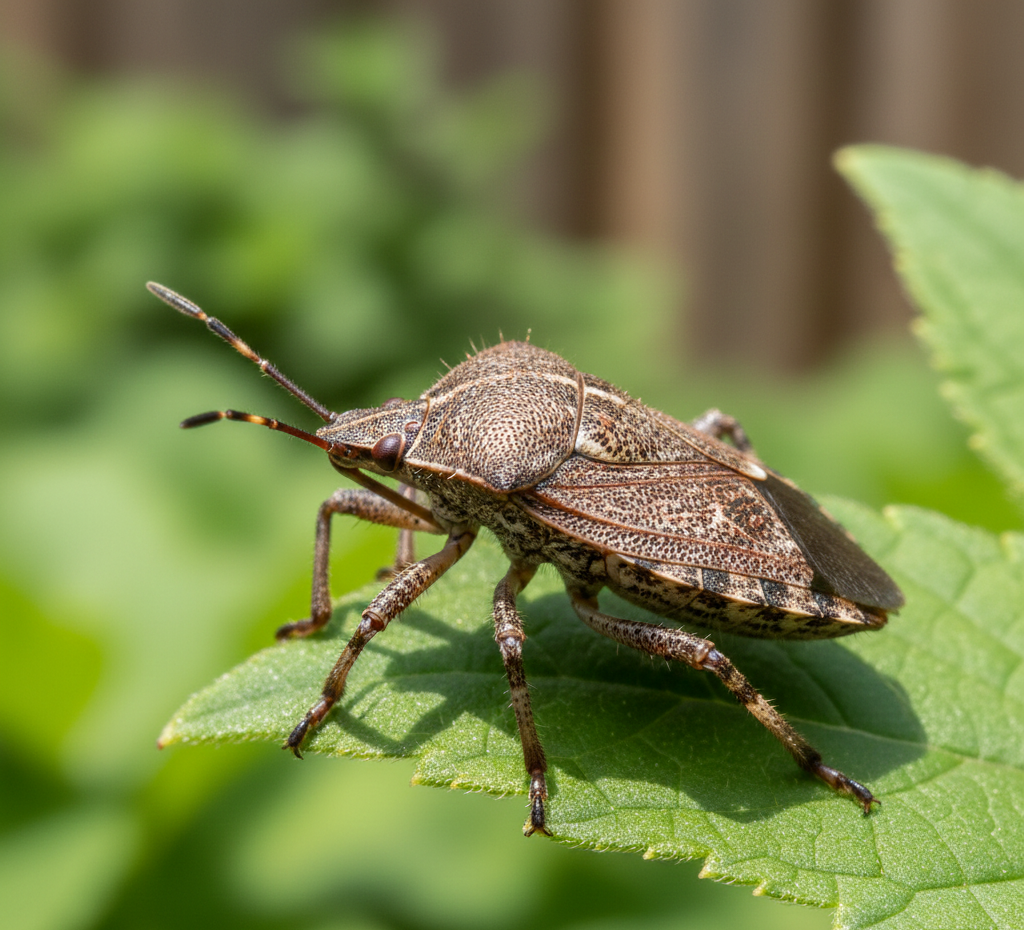
Brown Marmorated Stink Bug (Halyomorpha halys)
What they look like: ½ to ¾ inch long, shield-shaped, mottled brown with white bands on antennae and legs. Distinctive marbled pattern on back. Strong, unpleasant odor when disturbed or crushed—smells like cilantro or rotten vegetables.

Life cycle and behavior: Adults emerge in spring, feed on plants and crops through summer, then seek overwintering sites in fall (late September through October). They’re attracted to warm, sunny exterior walls on cooler days. Once inside, they hide in wall voids, attics, and crevices, entering a dormant state. They don’t reproduce indoors—they’re just hiding until spring.

Why they invade: NYC buildings provide ideal overwintering shelter. Stink bugs follow heat signatures and light, congregating on south and west-facing walls in fall. They enter through any available gap—around windows, doors, vents, siding, soffits. Properties near parks, gardens, or tree-lined streets see heaviest invasions.

The problem: Large numbers invading and emerging inside is disturbing. The smell when crushed is offensive and difficult to remove. They stain surfaces with defensive secretions. Spring emergence inside creates nuisance as they try to exit, often dying in light fixtures and window tracks.

Why NYC Buildings Get Stink Bug Invasions

Established local populations – Stink bugs were accidentally introduced to the U.S. in the late 1990s and have become well-established in the Northeast. NYC has significant populations feeding on urban vegetation year-round.

Perfect overwintering conditions – Heated buildings with accessible voids provide ideal hibernation sites. Stink bugs survive winter in wall cavities, attics, and unused spaces, protected from cold.

Building design and age – Older buildings have countless entry points. Modern buildings with decorative features, vinyl siding, and complex rooflines create perfect hiding spots and access routes. Any gap ⅛ inch or larger admits stink bugs.

Urban heat island effect – Buildings in NYC stay warmer than surrounding areas. Stink bugs are attracted to this warmth in fall, concentrating on structures rather than natural overwintering sites.

South and west-facing exposure – Buildings with significant sun exposure on south and west walls experience heaviest invasions. Stink bugs congregate on these warm surfaces, then find entry points.

Proximity to vegetation – Properties near parks, street trees, gardens, or vegetated areas have more stink bugs. These provide summer feeding sites, and bugs simply migrate to nearby buildings in fall.

Peak invasion timing – September through October is peak invasion period. Warm, sunny fall days with temperatures in 60s-70s trigger mass movement toward buildings.

Our Stink Bug Control Program

Step 1: Timing and Inspection Assessment
Timing is critical with stink bugs. Treatment timing depends on when you call:

Fall (Prevention Mode – September-October):

  • Inspect exterior for congregation areas and entry points
  • Focus on south and west-facing walls
  • Identify gaps in siding, windows, vents, soffits
  • Assess attic and wall void access points

Winter/Spring (Removal Mode – November-April):

  • Locate interior populations in attics, voids, unused rooms
  • Identify emergence points
  • Assess extent of invasion

Step 2: Fall Prevention Treatment (Most Effective Approach)
The best stink bug control happens BEFORE they get inside:

Exterior barrier treatment:

  • Treat south and west-facing walls where bugs congregate
  • Focus on sunny, warm surfaces bugs are attracted to
  • Apply to soffits, eaves, and upper structure
  • Treat around windows, doors, vents, and gaps
  • Create barrier bugs must cross to enter building

Entry point treatment:

  • Direct application into gaps and cracks
  • Treatment of siding seams and overlaps
  • Attention to attic vents and roof penetrations

Timing: Late August to mid-September, before mass invasion begins. This prevents entry rather than dealing with established populations inside.

Step 3: Winter/Spring Removal Treatment
If bugs are already inside:

Attic and void treatment:

  • Dust applications in attic spaces if accessible
  • Void treatments through wall penetrations
  • Focus on areas with visible activity or droppings

Interior crack-and-crevice treatment:

  • Treatment around windows and door frames
  • Baseboards and ceiling joints where bugs emerge
  • Light fixtures where bugs congregate

Physical removal:

  • Vacuum removal of accessible populations
  • Disposal of collected bugs away from building

Winter treatment provides relief but doesn’t prevent next fall’s invasion. Spring treatment targets emerging populations before they exit.

Step 4: Exclusion Work Guidance
We identify and document gaps that need sealing:

  • Gaps around windows and doors
  • Vents without proper screening
  • Soffit and fascia gaps
  • Siding seams and penetrations
  • Utility entry points
  • Attic vents and gable openings

Major exclusion work is your responsibility, but we seal accessible gaps during service and provide detailed recommendations.

Step 5: Annual Prevention Schedule
Properties with recurring stink bug problems benefit from annual fall prevention treatment. We schedule service in late August/early September, treating before invasion begins. This is far more effective than dealing with established populations inside.

Timeline and Expectations

Fall Prevention Treatment (Late August-September):

  • Treated before invasion begins
  • Dramatic reduction in bugs attempting entry
  • Some bugs may still find untreated gaps
  • Best possible outcome—prevention rather than removal

Winter Treatment (November-February):

  • Immediate reduction in visible indoor activity
  • Bugs already inside wall voids aren’t accessible
  • Dead bugs may appear in spring as voids warm up
  • Provides relief but doesn’t eliminate hidden populations

Spring Treatment (March-April):

  • Targets bugs emerging from overwintering sites
  • Reduces bugs successfully exiting building
  • Some dead bugs will appear as they fail to exit

Reality check: Once stink bugs are inside wall voids and attics for winter, complete elimination is difficult. Prevention treatment before fall invasion is the most effective approach.

Signs of Stink Bug Problems

Fall invasion indicators:

  • Stink bugs clustering on exterior walls (especially sunny sides)
  • Groups gathering on windows and siding
  • Bugs flying around building exterior on warm fall days
  • Finding bugs crawling indoors in increasing numbers

Winter presence:

  • Occasional bugs appearing inside on warm days
  • Finding them on windows trying to exit
  • Dead bugs accumulating in light fixtures
  • Bugs emerging from wall voids or ceiling cracks

Spring emergence:

  • Increased indoor activity as weather warms
  • Bugs flying toward windows and lights
  • Multiple bugs appearing daily
  • Finding dead bugs in window tracks and fixtures

If you see more than a few stink bugs, you have an invasion. Single bugs are chance occurrences. Consistent sightings indicate established populations.

Why Professional Treatment Is Essential

Timing and placement matter – Consumer products applied at wrong times or in wrong locations waste money. We know exactly when and where to treat for maximum effectiveness.

Prevention beats removal – Treating building exterior in fall prevents invasion. DIY interior sprays after bugs are inside wall voids do nothing. Professional prevention is far more cost-effective than dealing with established populations.

Access to hidden populations – Stink bugs hide in wall voids and attics most homeowners can’t access safely. We have equipment and products for treating these spaces effectively.

Professional-grade products – Our exterior barrier treatments last longer and work better than consumer sprays. They’re specifically formulated for stink bug behavior and metabolism.

We identify all entry points – Buildings have dozens of potential entry points people don’t notice. We inspect thoroughly and treat every access route, not just obvious gaps.

Proper exclusion guidance – We show you exactly what needs sealing and in what priority. Proper exclusion combined with treatment provides long-term control.

Preventing Future Stink Bug Invasions

Seal entry points before fall:

  • Repair or replace damaged window screens
  • Install door sweeps on exterior doors
  • Fill gaps and cracks around windows and doors
  • Seal utility penetrations and pipe entries
  • Screen attic vents and gable openings
  • Repair damaged siding and soffit areas

Schedule preventive treatment:

  • Annual exterior treatment in late August/early September
  • Before bugs begin seeking overwintering sites
  • Treat south and west-facing walls particularly

Manage exterior lighting:

  • Stink bugs are attracted to light in fall
  • Use motion-activated exterior lights
  • Keep blinds/curtains closed on warm fall evenings
  • Consider yellow bulbs less attractive to insects

Monitor early warning signs:

  • Watch for clustering on exterior walls in September
  • First appearance of a few bugs means invasion is beginning
  • Act immediately when you see first congregation

Physical barriers:

  • Temporary caulking around window AC units before fall
  • Weather stripping on doors and windows
  • Screening over larger vents and openings

Get Ahead of Stink Bug Season

Look, stink bugs are incredibly frustrating—they invade in fall, hide all winter, then emerge in spring when you least expect them. That smell when you accidentally crush one? It lingers for hours. Finding dozens crawling on your ceiling in February is not how anyone wants to live.

The solution is preventing fall invasion with properly timed exterior treatment. If they’re already inside, we’ll remove accessible populations and show you what needs sealing for next year.

Call us at +1 (347) 210-4646 or request service online. For fall prevention, schedule before mid-September. For current infestations, we’ll provide relief and prevent future invasions.

New York Exterminating, Inc.
1115 E 13th St, Brooklyn, NY 11230
Licensed & Certified Since 2010

Stink bug control works best with prevention before fall invasion.

request a free estimate

Popup form

Trusted by New Yorkers

See how homeowners and businesses rate our pest control services across New York.

Your shield Against pests

Our expertise goes beyond simple extermination. Backed by certified specialists and proven methods, we combine science, precision, and care to deliver pest solutions that last. Every treatment is designed with your safety, comfort, and environment in mind.


Many of our clients have remained with us since 2010, demonstrating strong trust and long-term satisfaction.

Licensed by NYSDEC – Reg. #15140

Why Choose Us

Trusted by Institutions Since 2010

Serving property managers, senior facilities, shelters, affordable-housing programs, and businesses across NYC since 2010 — many long-term clients trust our work.

Eco-Friendly and Client-Focused Service

Botanical/organic options, German-cockroach elimination and rodent-exclusion programs, full bilingual support (EN/ES), plus a client portal with reports, photos, and chemical logs for total transparency.

Fully Licensed, Certified & Compliant

NYSDEC Registered — Reg. #15140 — with fully licensed technicians (Jorge Bedoya, Tomas Cusati, Jason Mendoza). We follow all regulations for safe, legal treatments.

Science-Driven Pest Control Expertise

Led by an Associate Certified Entomologist (Jorge Bedoya) and technicians trained in urban entomology, we use IPM and proven methods for lasting results.

from inspection to protection

From first inspection to final follow-up, our science-based process ensures every pest problem is solved with precision, safety, and lasting protection

frequently asked questions

Find quick answers to common questions about our services, safety practices, and customer support

Are your pest control treatments safe for pets and children?

Yes. We use eco-friendly and low-toxicity treatments designed to protect your family, pets, and the environment.

Yes. We offer bilingual services in English and Spanish to ensure clear communication and support for all our clients across New York City.

We proudly serve all five boroughs of New York City — Brooklyn, Queens, Manhattan, the Bronx, and Staten Island — as well as surrounding areas.

You can access all your service reports, invoices, and treatment details through our secure online Client Portal. Simply log in anytime to view records, photos, and chemical logs for full transparenc

We specialize in removing rodents, insects, raccoons, and other common pests, providing thorough inspections and effective solutions to keep your home or business pest-free.

your neighberhood Experts

We proudly serve residential, commercial, and institutional clients throughout:

Providing reliable pest control solutions for homes, businesses, and institutions across the NYC metro area

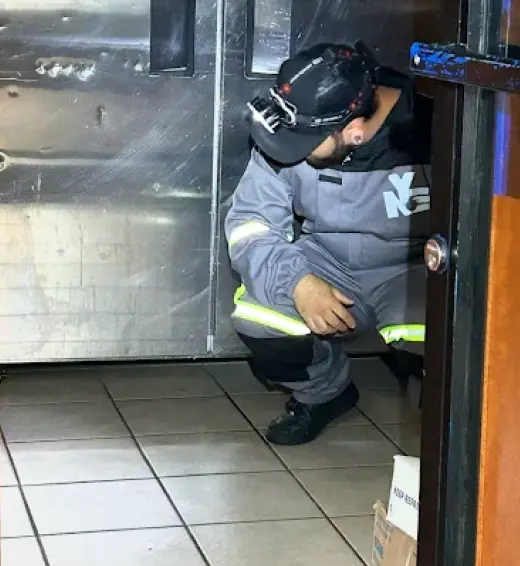
Man in grey jumpsuit with reflective stripes and a headlamp squatting near a stainless steel wall.

request a free estimate

Popup form