Straight answers from a licensed New York exterminator and Associate Certified Entomologist (ACE) — serving all five boroughs, in English and Spanish.
Get a Free Estimate →⏱ 10 min read
Quick answer: Clothes moth traps work as a detection tool, not a treatment. They are baited with a copy of the female moth’s scent, so they catch males only. In New York City many of the moths on those traps are not even clothes moths. They are bird’s nest moths drawn in from outside. And after a professional treatment, a trap count only becomes meaningful about one month later. Here is how to choose, place and read a trap so it tells you the truth.
From Jorge Bedoya, ACE: The trap I recommend to clients is Dr. Killigan’s. It pulls males well and holds them flat on the glue, so you can actually identify what you caught. That last part is where most people go wrong.
How clothes moth traps work
A clothes moth trap is a sticky card with a pheromone lure. The lure imitates the sex pheromone a female webbing clothes moth releases to attract a mate. Males follow the scent, land on the glue and stay there.
That design has three consequences:
- Only males are caught. Females are not attracted to their own scent.
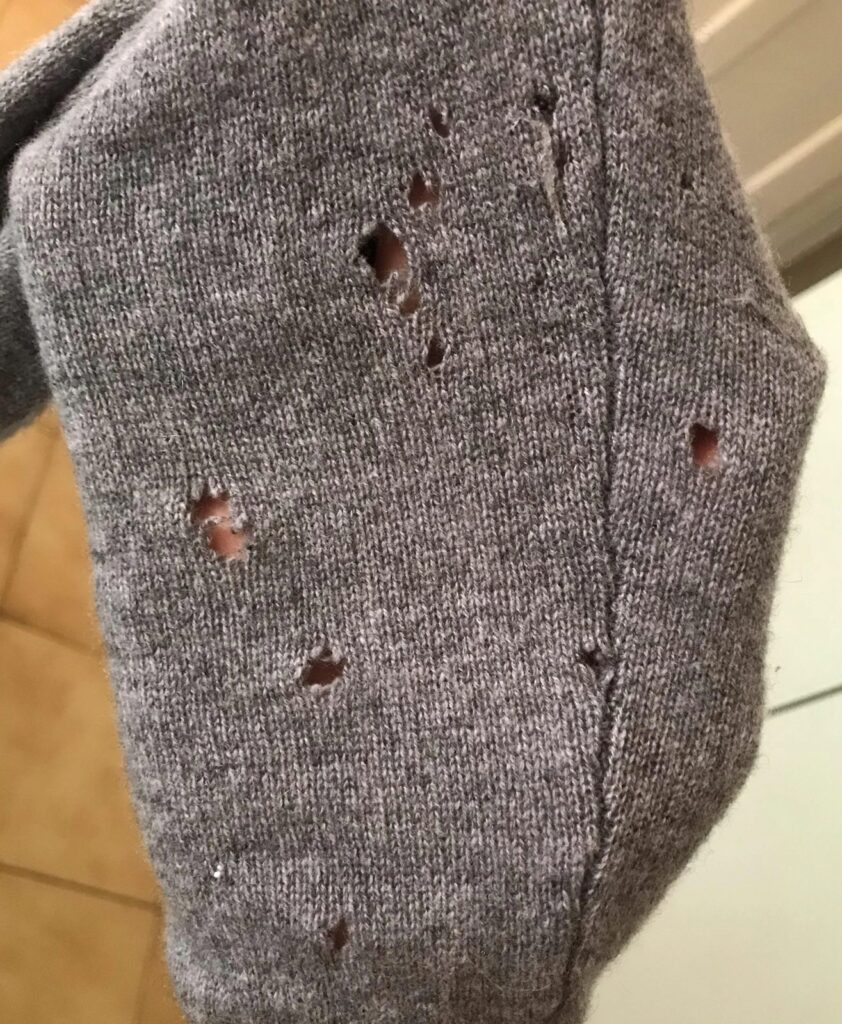
- Eggs, larvae and pupae are never touched. The larvae are the only stage that eats fabric, and they stay hidden in wool, cashmere, silk, felt, rugs and closet edges.
- Removing some males does not stop mating. One male can mate with several females, so a trap catches a share of males while the population keeps breeding.
So a trap answers one question: are male moths that respond to this pheromone flying here? It does not tell you how big the infestation is, where the larvae are feeding, or whether it is over. For the stages that cause the damage, see how to identify clothes moth larvae.
Why we recommend Dr. Killigan’s clothes moth traps
We have used and seen many brands of moth traps in NYC apartments, closets and storage rooms. Dr. Killigan’s is the one we tell clients to buy, for practical reasons:
- They attract well. When males are flying, these traps find them.
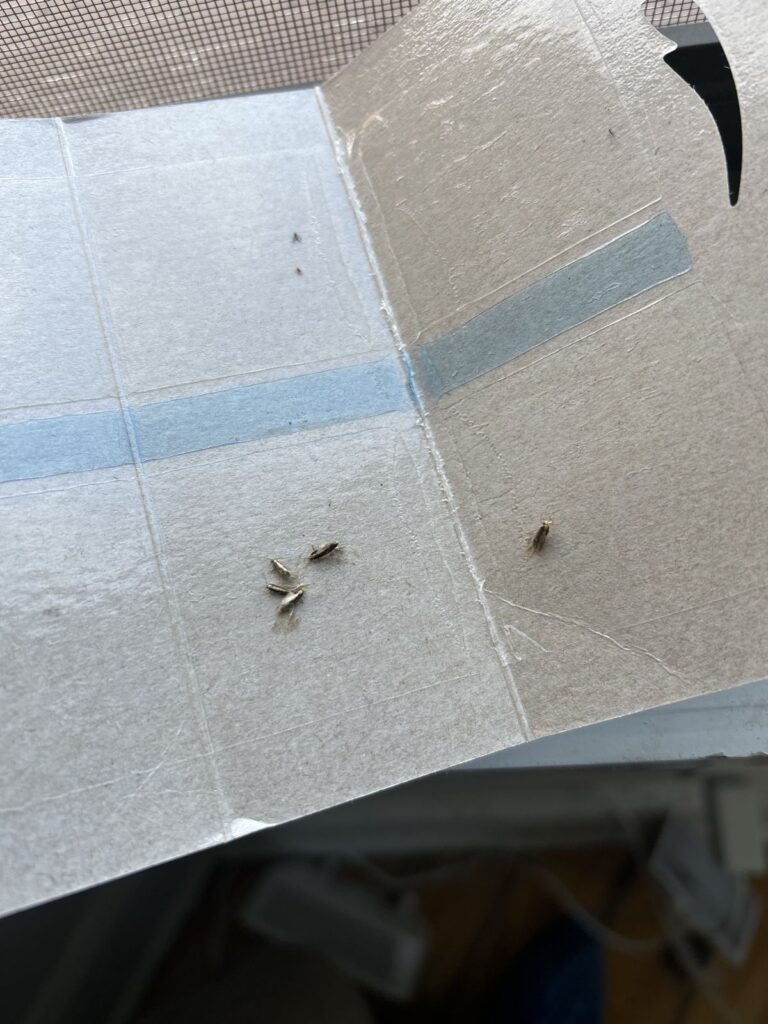
- The catch stays readable. Moths lie flat on a light surface, so wing color and markings can be checked. That is what lets you separate clothes moths from look-alikes.
- They are easy to place. The folded card stands or hangs inside a closet, on a shelf or near a rug without getting in the way.
- No pesticide. The lure is a pheromone, so traps can sit near clothing and in kids’ rooms.
Use them for what they are: an early warning and a measuring tool. A trap is not a substitute for finding and treating the larvae.
The bias problem: a full trap is not always an infestation
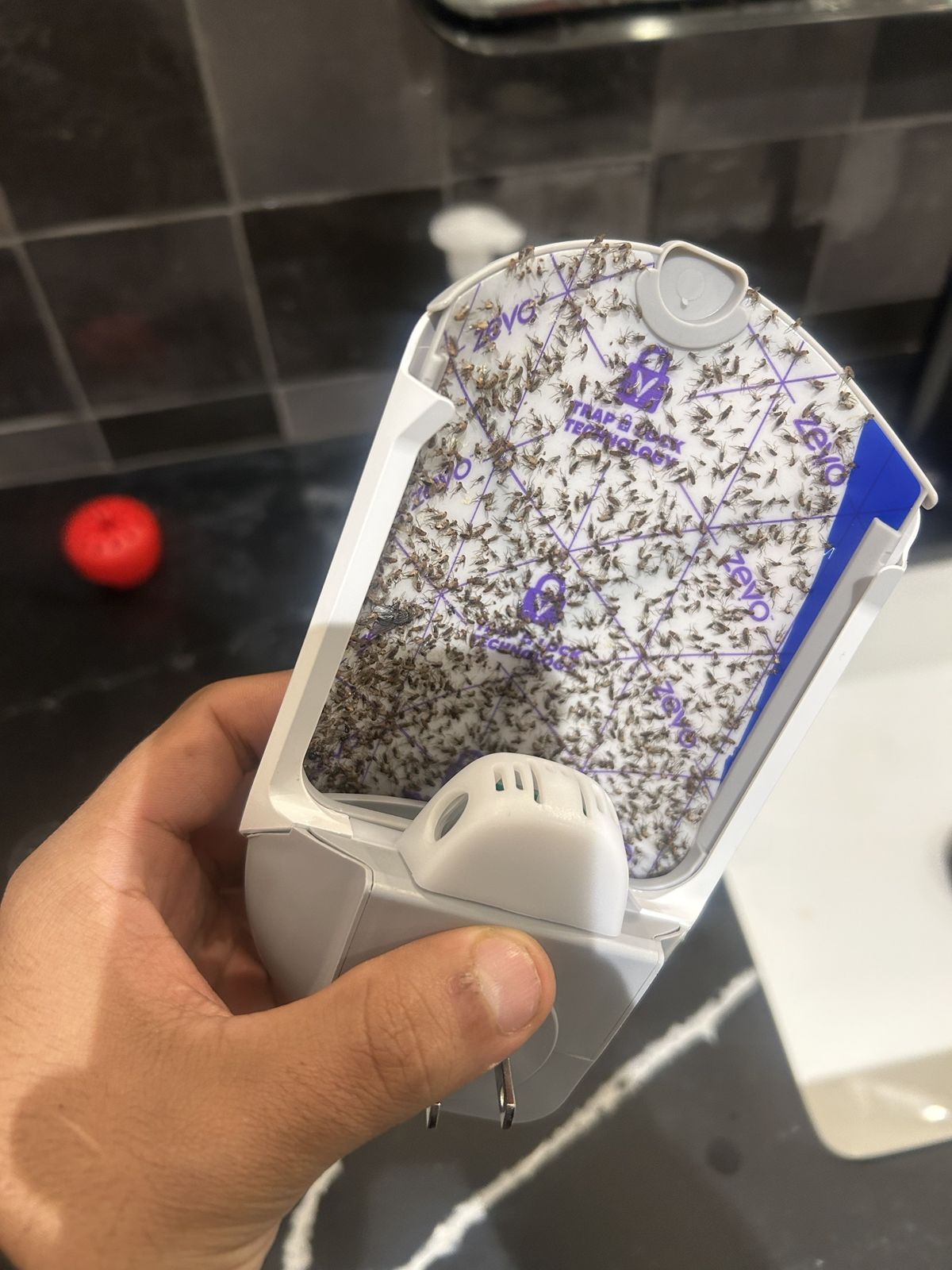
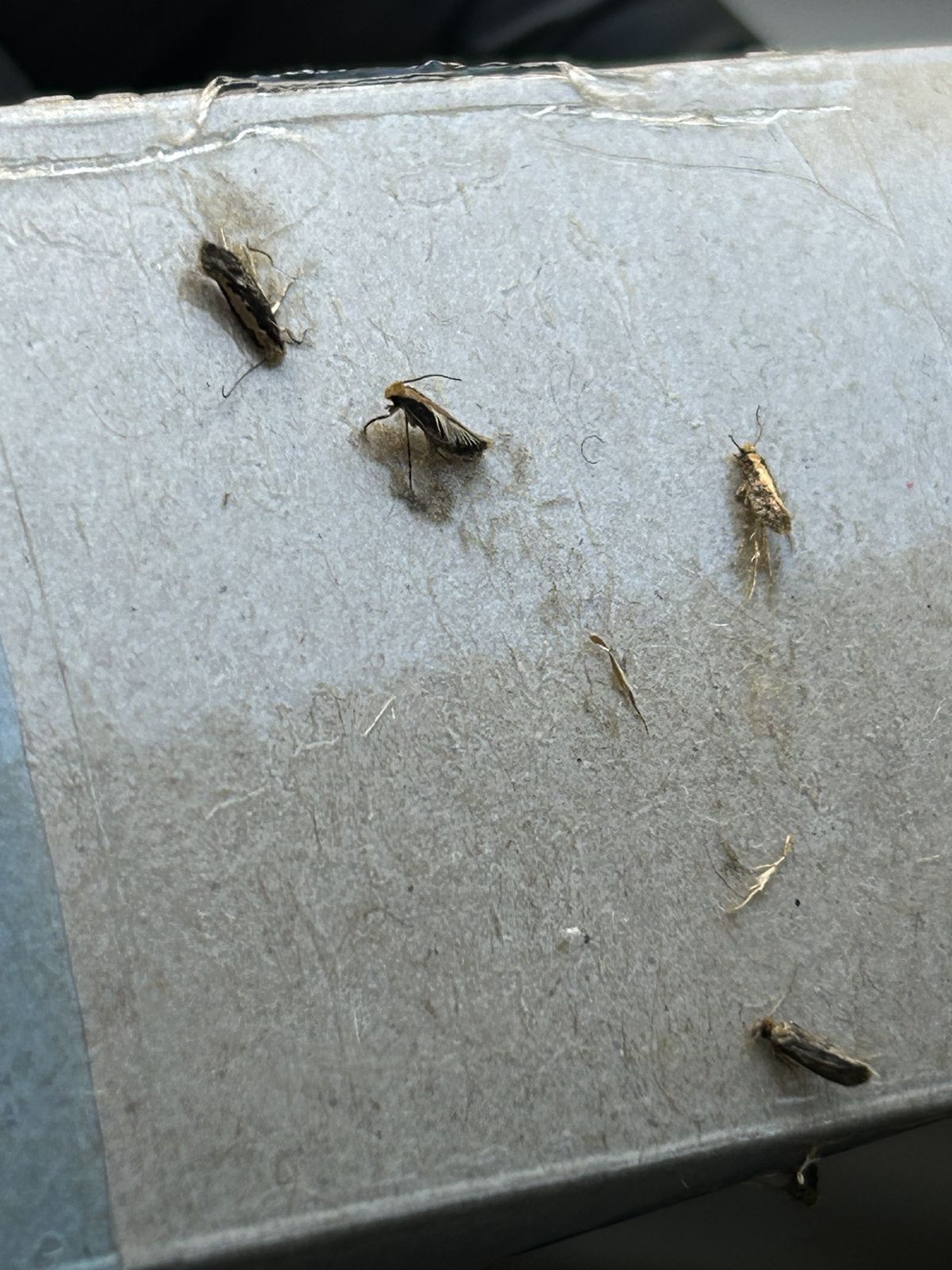
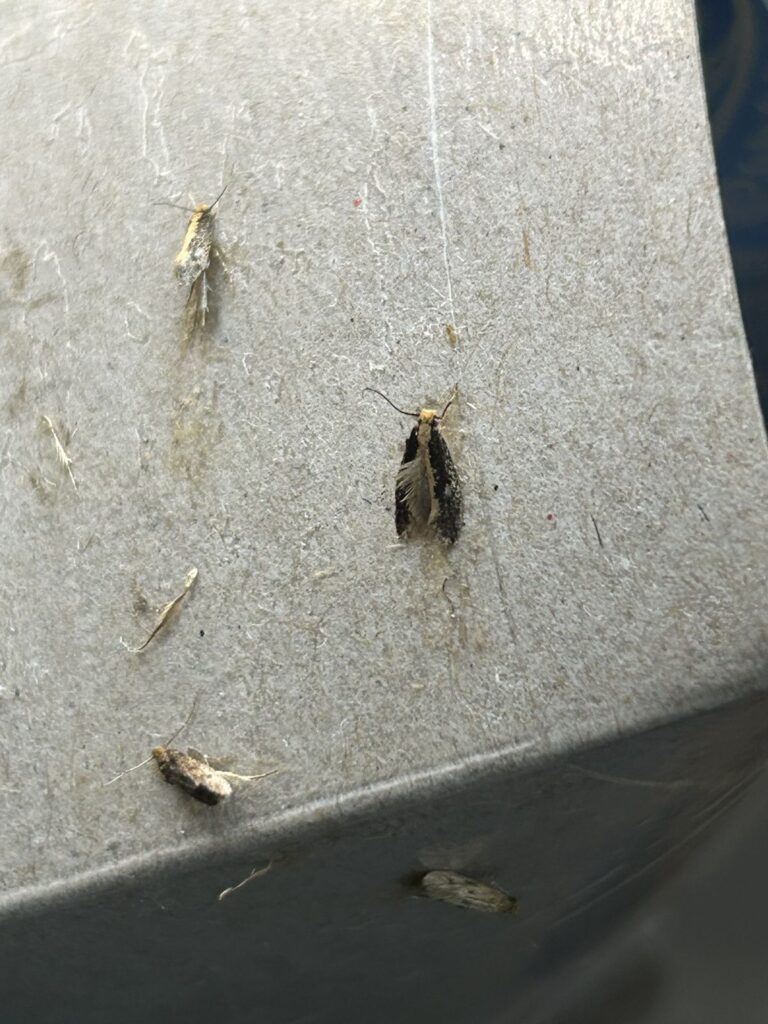
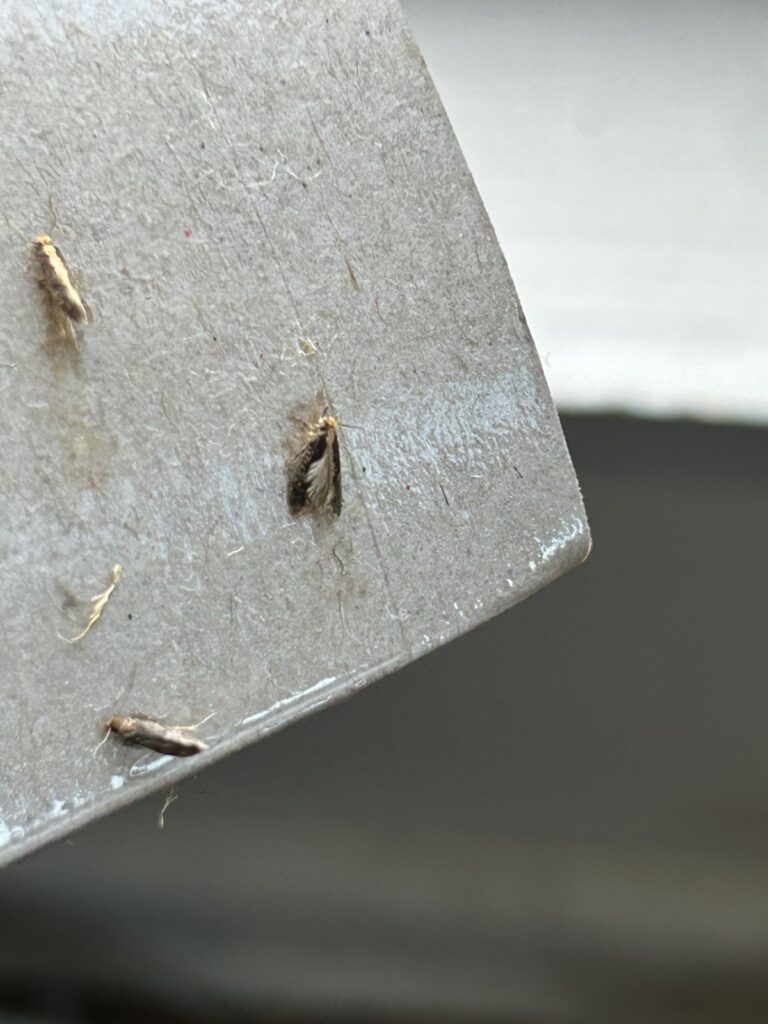
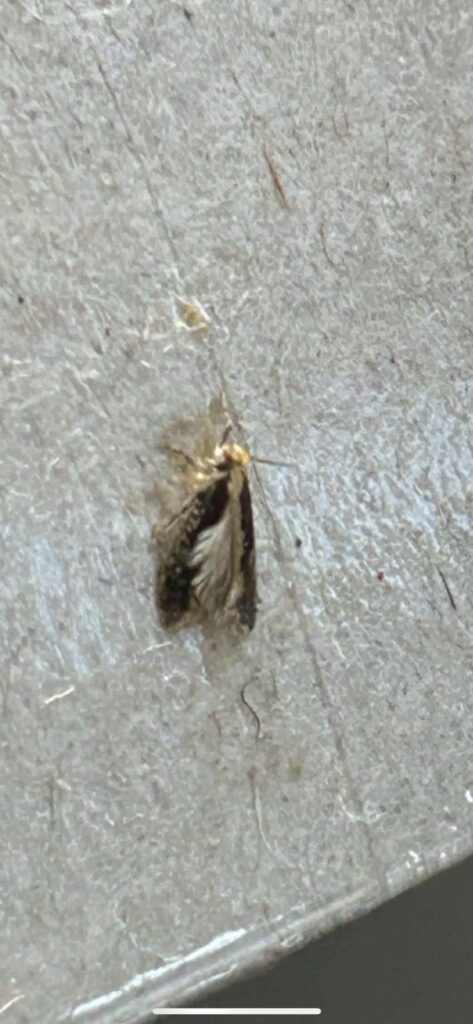
This is the most common misread we see in New York. A client sends us a photo of a trap covered in moths and assumes their closet is infested. When we look closely, many of those moths are bird’s nest moths (genus Monopis), not clothes moths.
Bird’s nest moths respond to clothes moth pheromone. They breed in bird nests and animal debris, and NYC has plenty of both: pigeon nests on air conditioner units, ledges, fire escapes and roof spaces. The males fly toward the scent, enter through windows and gaps, and end up on your trap. Their larvae are not living in your sweaters.
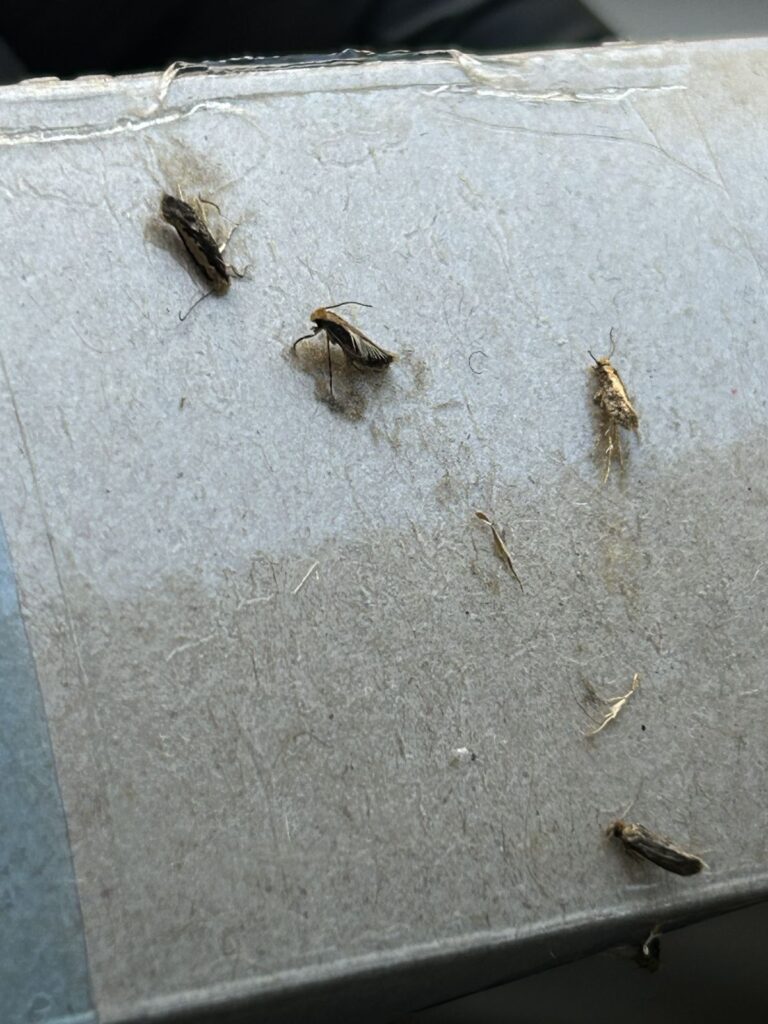
The photos on this page are from our own NYC jobs. Every one of these traps was Dr. Killigan’s, and the catch was mostly bird’s nest moths.
How to tell them apart on the trap
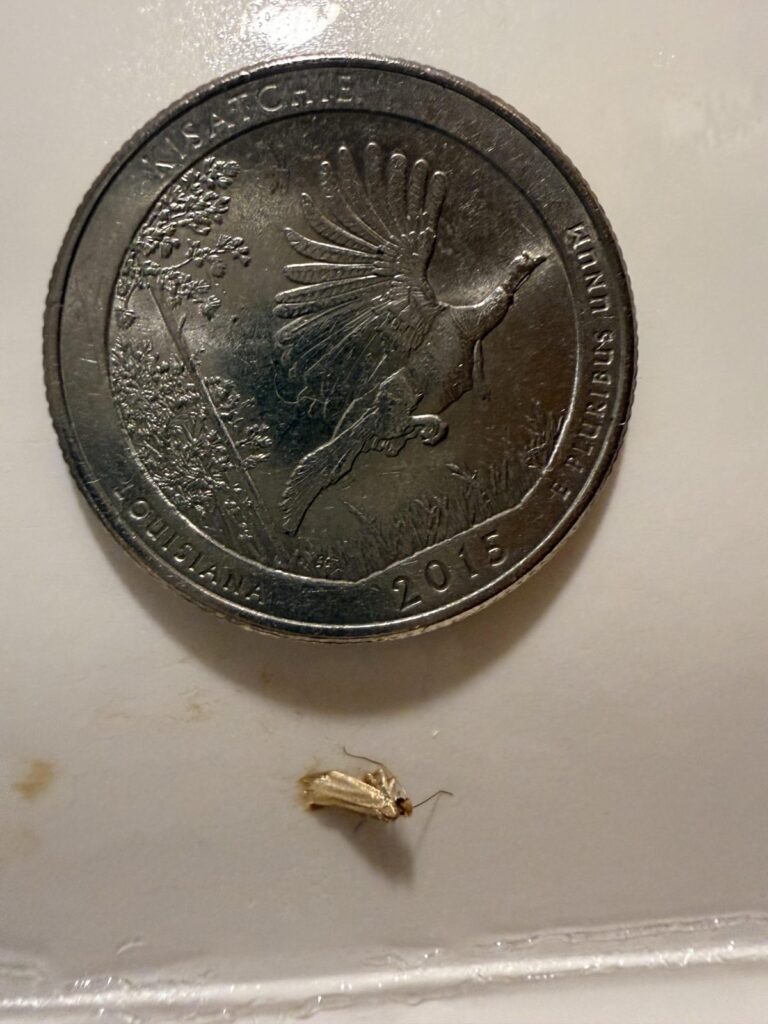
| Webbing clothes moth | Bird’s nest moth | |
|---|---|---|
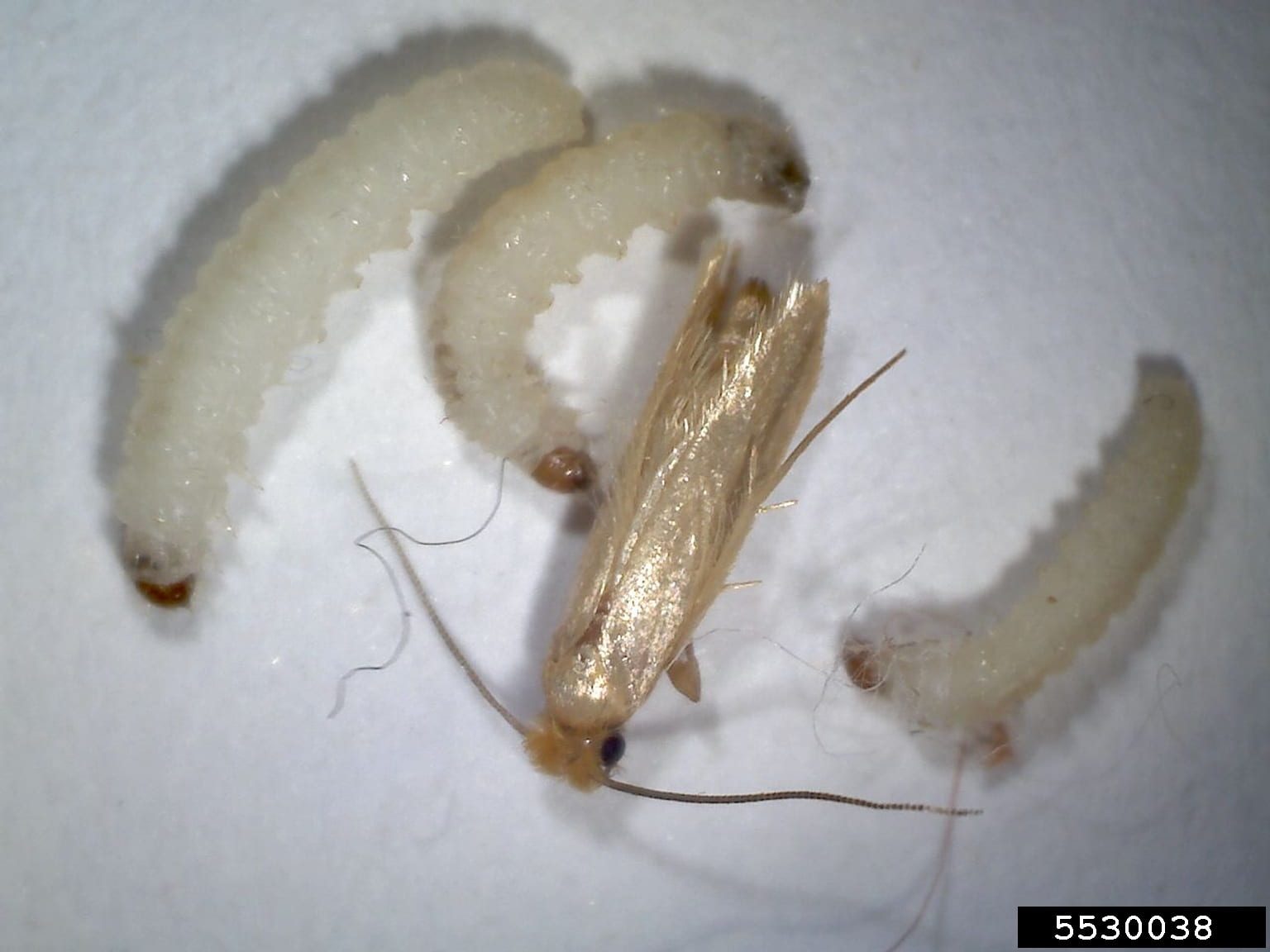
| Wing color | Plain golden-buff, satin sheen, no spots | Darker brown to gray-brown, mottled |
| Markings | None | A pale or cream spot on each forewing |
| Head | Tuft of reddish-gold hairs | Usually lighter tuft, darker body |
| Where it breeds | Wool, cashmere, silk, fur, felt, rugs, lint | Bird nests, animal debris, sometimes old debris in wall voids and attics |
| What it means | Look for larvae and damage indoors | Look outside: pigeons, nests, open windows |
Other ways traps bias your assessment
- More traps, more males. Every trap adds pheromone to the air. Put out six where two would do and the total count climbs, even if nothing changed in the closet. Counts reflect trap density as much as moth density.
- Window placement. A trap near an open window or an AC sleeve advertises to the outdoors. It will catch more bird’s nest moths and tell you less about the room.
- Old traps. A lure past its date catches less, which can look like improvement when nothing changed.
- Zero is not proof. Larvae can feed for months in a closed drawer or under a rug while few males are flying. No moths on a trap does not mean no larvae in the wool.
We cover the bird’s nest moth issue alongside other look-alikes in moths eating your clothes: how to stop it and carpet beetle vs clothes moth.
Where to place clothes moth traps
- Inside closets and wardrobes, at shelf height, near wool and cashmere.
- Near rugs and upholstered furniture made of wool or with natural fiber stuffing.
- Away from windows, AC units and exterior doors, so you measure the room and not the street.
- One trap per closet or small room is usually enough for monitoring. Write the date on each trap.
- Keep the same number and the same spots each time, so this month’s count can be compared with last month’s.
Why real monitoring starts one month after treatment
When we treat clothes moths we do not put traps back right away. That is deliberate, and it is the part clients question most until it is explained.
Treatment works through the population over weeks. Eggs and pupae that had not emerged on treatment day keep emerging, and those adults die in an environment that is now hostile to them. Set traps during that window and you will catch moths. That data looks like failure while the program is succeeding, and it pushes people toward unnecessary re-treatment and worry.
Waiting about a month lets mortality complete across every life stage. From then on, a trap count means something:
- Day 0: treatment. Remove or bag old traps.
- Day 30 or so: place fresh Dr. Killigan’s traps in the same closets and rooms, away from windows.
- Weekly: check and photograph each trap. Identify what is on it: clothes moth or bird’s nest moth.
- Read the trend: a falling number of true clothes moths is the signal. Bird’s nest moths point to an outdoor source, not a treatment problem.
Measuring too early does not give you an early answer. It gives you a wrong one. The full reasoning, and how each life stage is reached, is on our clothes moth treatment NYC page.
When a trap means it is time to call
- You are catching plain golden-buff moths in closets, week after week.
- You find holes, silken tubes, cases or frass in wool, cashmere, silk or rugs.
- Catches continue after you have cleaned, vacuumed and laundered.
- Moths have come back after a previous treatment. That is a chronic infestation, and it needs a source investigation, not another round of traps.
Not sure what is on your trap? Take a clear, close photo of it and call us at (347) 210-4646. Identifying the moth correctly is the first step, and sometimes the answer is a pigeon nest outside, not your closet.
A Brooklyn-based, NYSDEC-registered company (Reg. #15140) led by Jorge Bedoya, an Associate Certified Entomologist (ACE). For pests in your home or building, NYE provides IPM-based, low-exposure control matched to the exact pest and verified with a follow-up. ACE-led work comes with a client portal of service reports and photos, fully bilingual service, and no long-term contract.
Frequently asked questions
Do clothes moth traps work?
Yes, for what they are designed to do: detect moths and show you where activity is. A pheromone trap attracts and holds adult males. It does not catch females, and it does not touch eggs or larvae, so a trap on its own will not end an infestation. Use it to find the problem and to check the result after treatment.
Which clothes moth trap do you recommend?
Dr. Killigan’s clothes moth traps. In our NYC jobs they pull males reliably and the glue board holds them well enough to identify what you caught, which matters because many moths on NYC traps are not clothes moths.
Do clothes moth traps catch female moths?
No. The lure is a copy of the scent females release to attract mates, so only males respond. Females stay free to lay eggs, and the larvae that hatch are the stage that eats wool, cashmere and silk.
Why is my moth trap full but my clothes look fine?
Very often the trap is full of bird’s nest moths. They respond to the same pheromone, breed in bird and animal nests outside, such as pigeon nests on air conditioners and ledges, and fly in through windows. They are not feeding on your clothes. Check the wings: clothes moths are plain golden-buff; bird’s nest moths are darker with a pale spot.
Does more traps mean better control?
No. More traps spread more pheromone and pull in more males, including bird’s nest moths from outside, so the count goes up without telling you more about your closet. For monitoring, use a consistent number of traps in the same spots so counts are comparable over time.
When should I put traps back after moth treatment?
About one month after treatment. Before that, moths from stages that had not yet emerged are still coming out and dying, so early catches look like failure while the program is working. After a month, a trap count starts to mean something.
How long does a clothes moth trap last?
Most pheromone lures are rated for roughly three months. Follow the date on the package, and replace the trap sooner if the glue surface is covered or dusty.