Straight answers from a licensed New York exterminator and Associate Certified Entomologist (ACE) — serving all five boroughs, in English and Spanish.
Get a Free Estimate →⏱ 4 min read
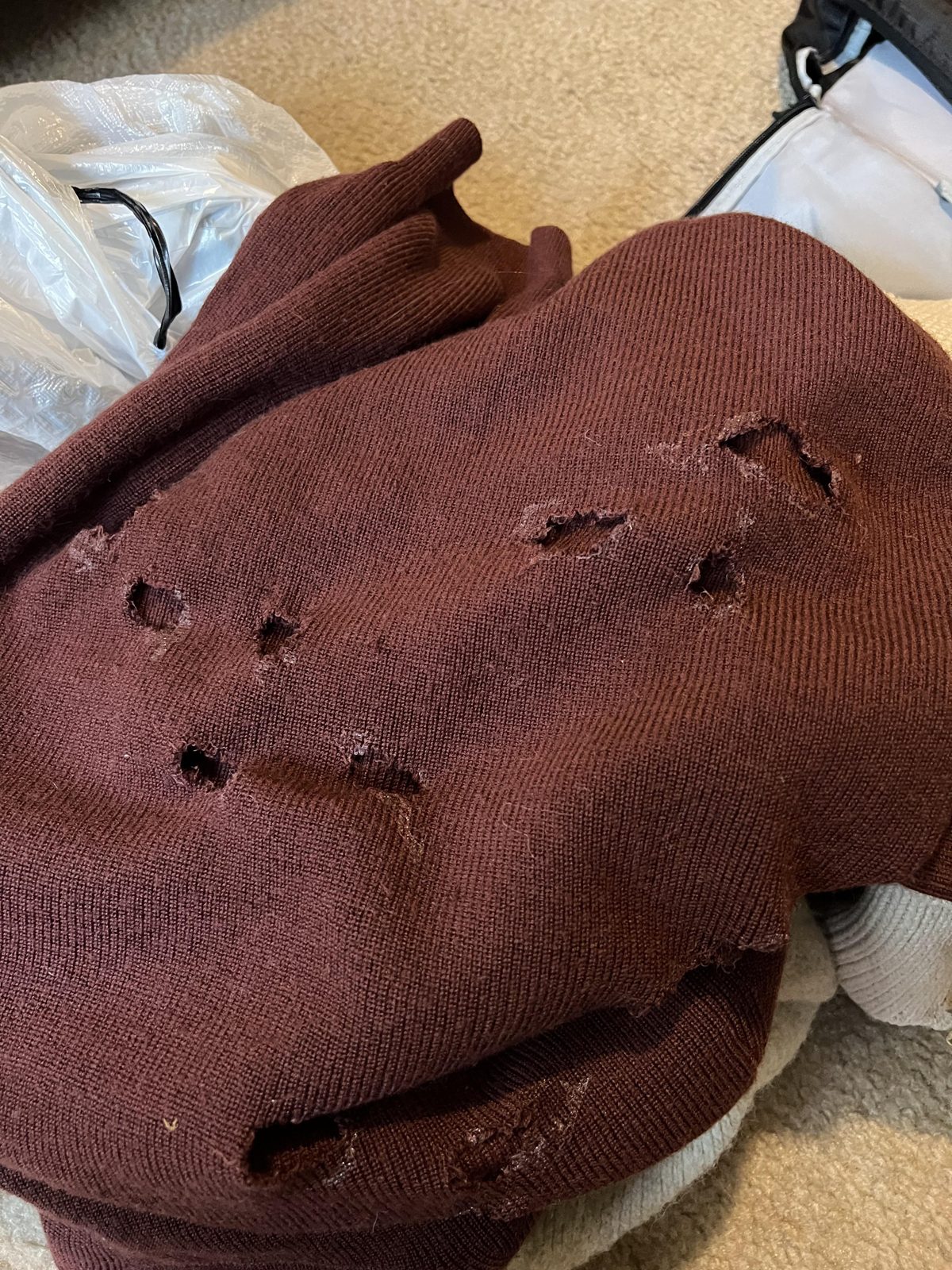
Holes in your sweaters, bare patches on a wool rug, something small crawling along the baseboard — in New York apartments this almost always comes down to one of two culprits: clothes moths or carpet beetles. They cause nearly identical damage, but they are treated differently, so identifying the right insect first saves you weeks of failed DIY. Here is how to tell them apart in minutes.
The 10-second check: webbing or shed skins?
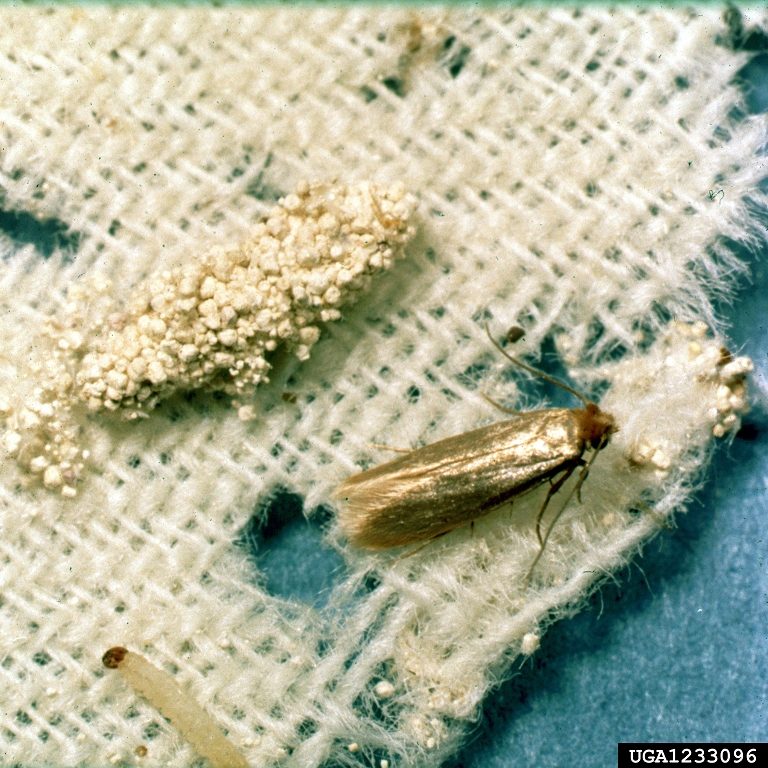
Silky webbing, silk tubes, or rice-like fiber cases on fabric → clothes moths. Moth larvae spin silk as they feed; carpet beetle larvae never do.
Bristly shed skins and no silk → carpet beetles. Beetle larvae molt repeatedly and leave hollow, banded husks that look like living larvae at first glance.
Compare the larvae side by side
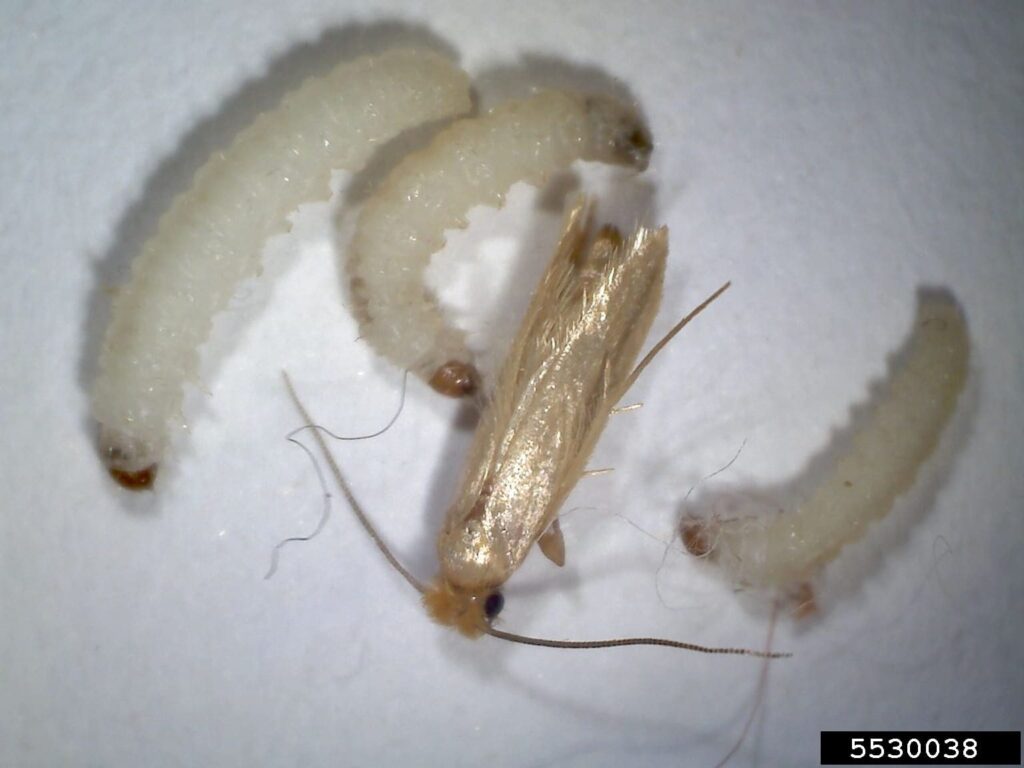
The larvae do all the eating for both pests, and they look nothing alike:
- Clothes moth larvae: smooth, ivory-white caterpillars up to 12 mm with a brown head. No bristles, no banding. Often found inside a silk tube or portable case. Full details in our clothes moth larvae identification guide.
- Carpet beetle larvae: stubby, bristly, and banded in brown and tan — often called woolly bears. Varied carpet beetle larvae are wider at the rear with tufts of dark hairs; black carpet beetle larvae are elongated, golden brown, and hard-shelled with a tail tuft.
Compare the adults
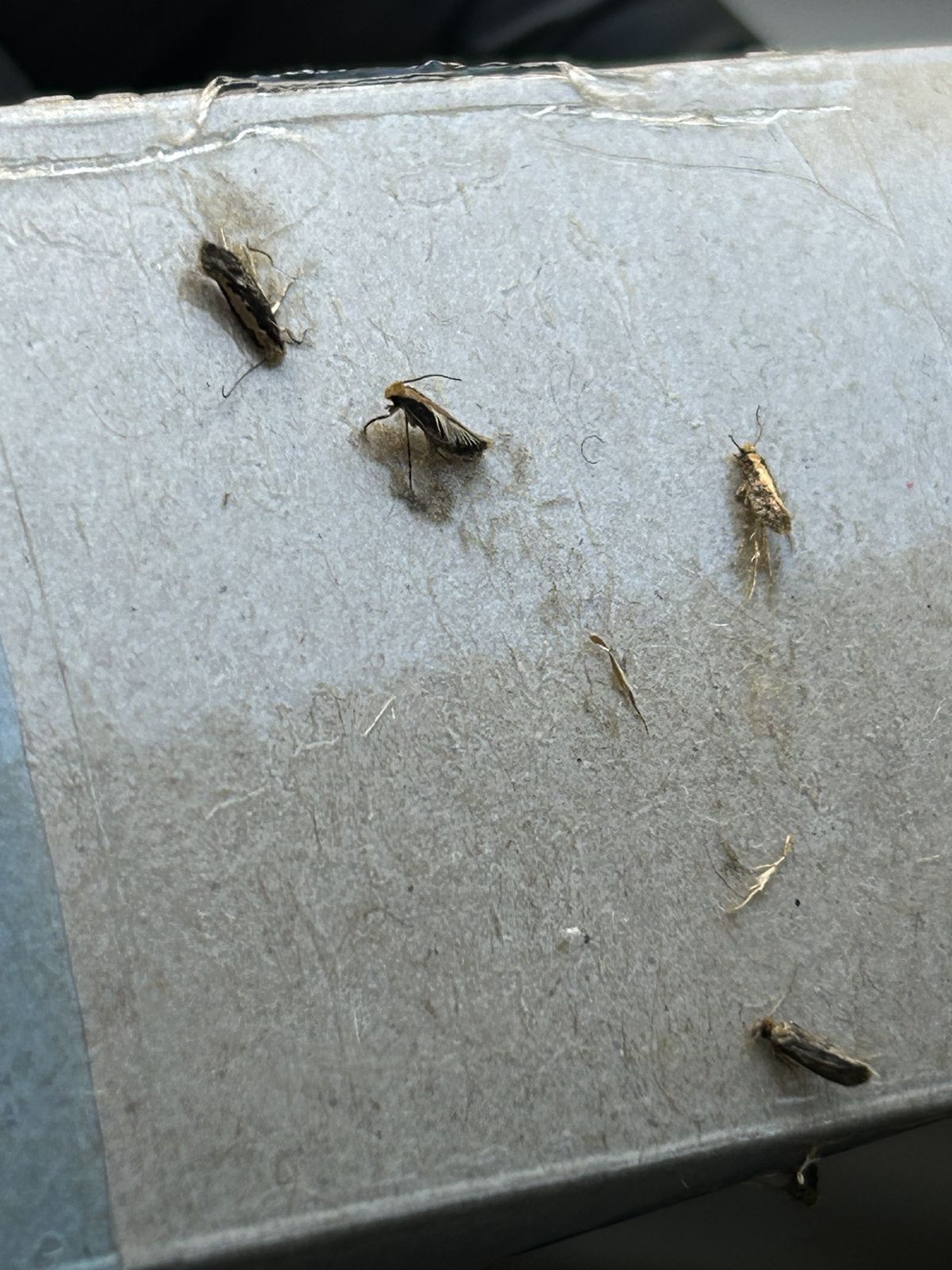
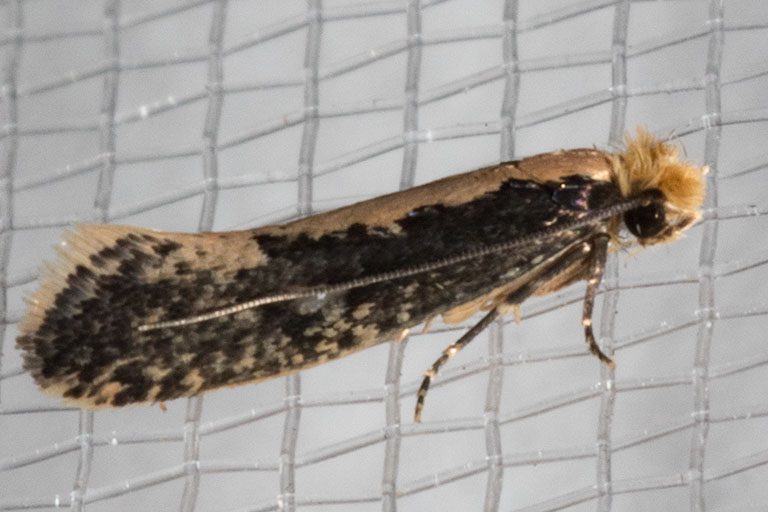
- Adult clothes moths: small golden-buff moths about 6–7 mm, narrow fringed wings. They avoid light and flutter weakly near closets and dark corners — a clothes moth in your kitchen chasing the ceiling light is more likely a pantry moth.
- Adult carpet beetles: small rounded beetles, 2–4 mm, like tiny ladybugs. Varied carpet beetles are mottled white, brown and yellow; black carpet beetles are solid dark. Unlike moths, adult beetles fly toward light and are often found on windowsills in spring.
Damage patterns tell the story too
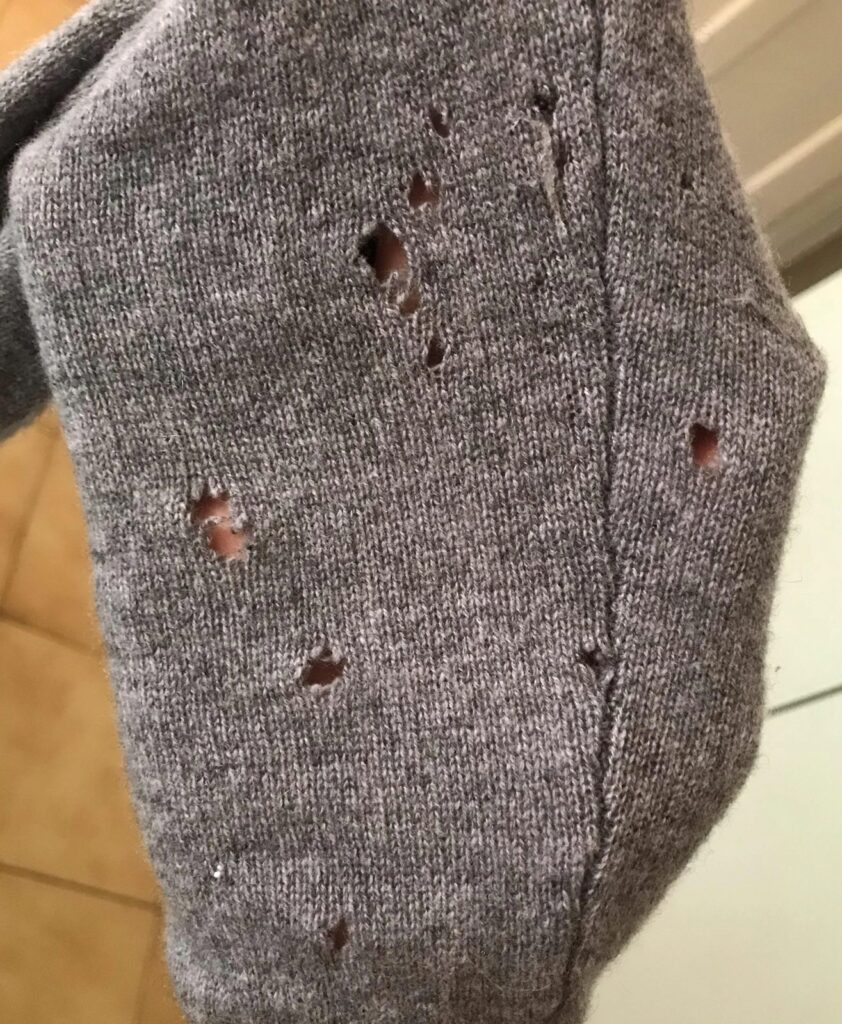
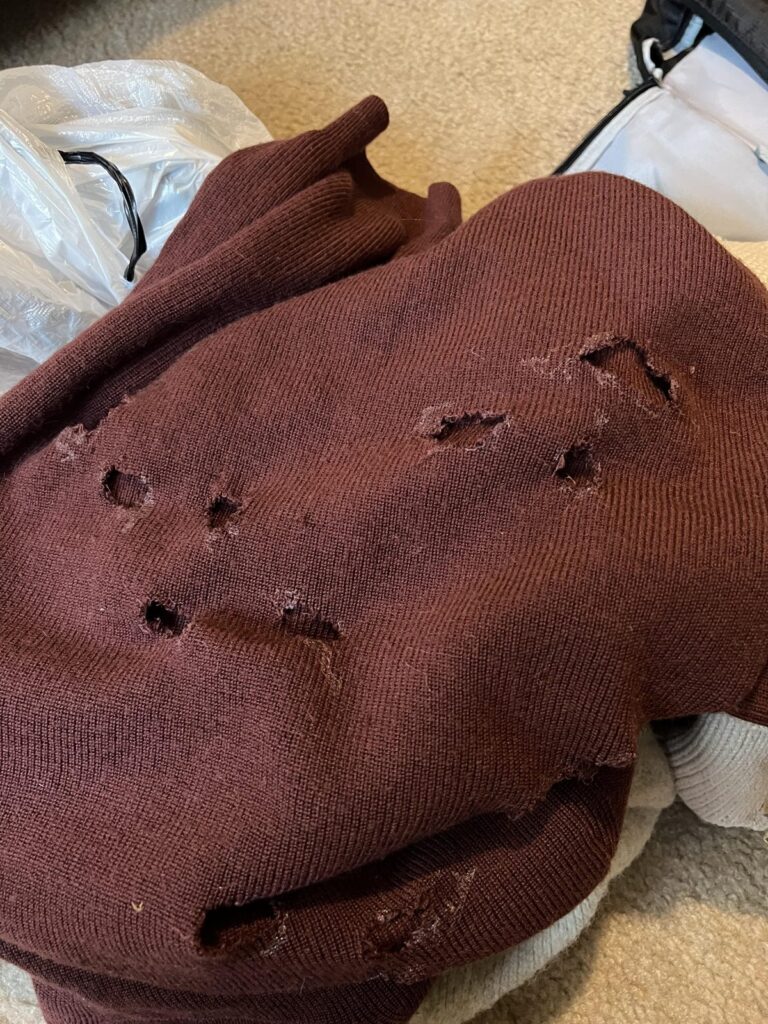
Moth damage is usually concentrated: grazed patches and scattered holes in one garment or one rug area, with silk, frass and sometimes cases present. Carpet beetle damage tends to be a single larger hole or a cleanly sheared area, often along rug edges, under furniture, or in a drawer of stored fabric, with shed skins nearby. Beetles also feed on a wider menu — pet hair, lint, dried food, dead insects in wall voids and vents — so they can thrive in apartments with no wool at all.
Why the distinction changes the treatment
Both pests need the infested textiles themselves treated — heat, laundering or dry cleaning — but the structural side differs. Clothes moth work centers on closets, garment storage and rug undersides, and benefits from pheromone monitoring for webbing clothes moths. Carpet beetle work has to chase the hidden protein sources: lint and pet-hair accumulations, wall voids, vents, abandoned nests and dead insects. Treating a beetle problem as a moth problem (or the reverse) is one of the most common reasons DIY fails and damage continues.
At NYE our ACE-led technicians confirm the species first, then heat-treat infested garments and rugs in dedicated ZappBug chambers and treat the structure accordingly. See our clothes moth and textile pest service, our carpet beetle guide, or call (347) 210-4646.
A Brooklyn-based, NYSDEC-registered company (Reg. #15140) led by Jorge Bedoya, an Associate Certified Entomologist (ACE). For pests in your home or building, NYE provides IPM-based, low-exposure control matched to the exact pest and verified with a follow-up. ACE-led work comes with a client portal of service reports and photos, fully bilingual service, and no long-term contract.
Carpet beetle vs clothes moth FAQ
Can carpet beetles and clothes moths infest the same apartment?
Yes, and in older NYC buildings it is not rare — both exploit the same wool rugs, lint and hair. An inspection that identifies every active species beats guessing from one trapped insect.
Which causes more damage?
Moths usually ruin more clothing because larvae stay and feed on the same garments for weeks. Carpet beetles spread damage more widely around the home because their larvae wander and eat a broader range of materials.
I only see small beetles on my windowsill. Do I have a problem?
A few adults in spring can mean larvae are developing somewhere inside. Check rug edges, under sofas and in closets for shed skins before assuming they wandered in from outside.
Do bites mean it is carpet beetles, not moths?
Neither pest bites. Welts attributed to carpet beetles are usually an allergic reaction to the larvae’s bristles. If you are waking with bites, compare with our carpet beetles vs bed bugs guide.