Straight answers from a licensed New York exterminator and Associate Certified Entomologist (ACE) — serving all five boroughs, in English and Spanish.
Get a Free Estimate →⏱ 7 min read
Why heat, not spray
Clothes moth damage comes from larvae, and every larva starts as an egg glued into a seam, fold or collar. Eggs are the hardest stage to kill and the stage most treatments miss. In the classic study on the common clothes moth, Rawle (1951, Bulletin of Entomological Research) found that four hours at about 106°F (41°C) killed every life stage. Heat reaches eggs inside the fabric. Sprays sit on the surface, can stain or damage fine fabric, and are not something most owners of cashmere and silk want on their clothes. That is why we never spray clothes.
The equipment we use, and why
| Equipment | What it does | Why we use it | Approximate retail cost |
|---|---|---|---|
| ZappBug Room heat chamber | Portable heated room set up inside the client’s home; clothing goes in by batches, usually 3 to 6 for a three-bedroom apartment | Heats whole loads of garments, pillows and soft goods to a lethal core temperature without anything leaving the home | $1,695 (Kirby Allison) |
| Core temperature probe | Sits in the center of each load | The center of a packed load heats last; we time the four hours from the core, not the air | Part of the setup |
| Polti Cimex Eradicator superheated dry steamer | Low-moisture steam, rated by the manufacturer up to 180°C at the nozzle | Treats cashmere, wool, shoe interiors, jacket linings and rugs that should not go in the chamber, with little water so pieces dry fast | About $1,645 (Solutions Stores) |
| HEPA vacuum | Removes larvae, eggs, casings and frass | Rugs, rug edges, closet floors and leather exteriors | Part of the setup |
| Sealed bags and containers with an EPA-registered vapor strip | Closed treatment for items that cannot take heat or steam | Electronics and very sensitive pieces | Per job |
| Deep freezer (add-on) | Freezing cycle for pieces that should not take heat | Some silks, metallic yarns and fused interlinings | About $300+, installed in the client’s home |
Altogether, a full clothes moth program runs on about $4,000 of equipment and a crew of two to three technicians, led by Jorge Bedoya, an Associate Certified Entomologist (ACE). A typical spray-based moth service needs a sprayer and one technician.
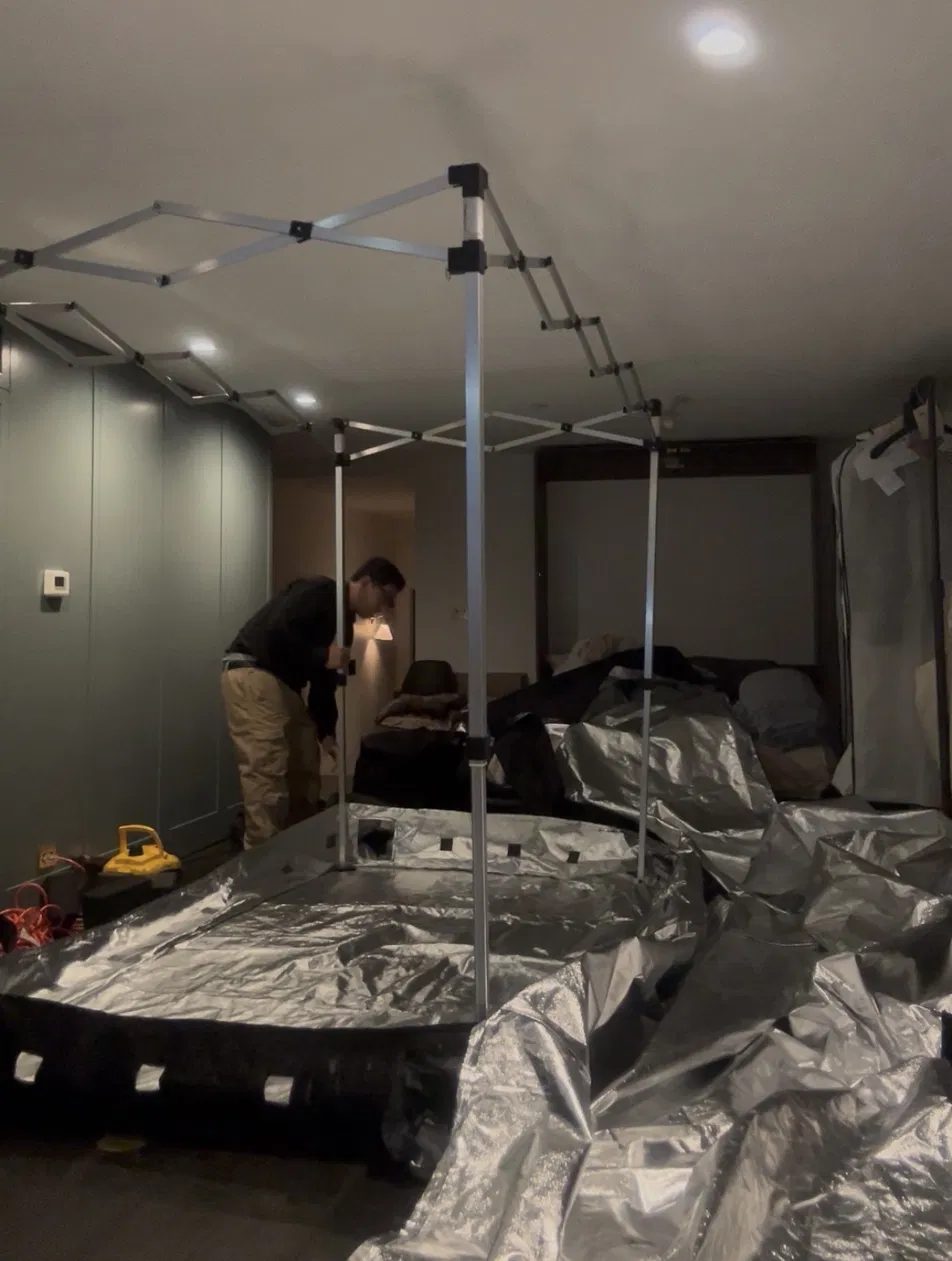
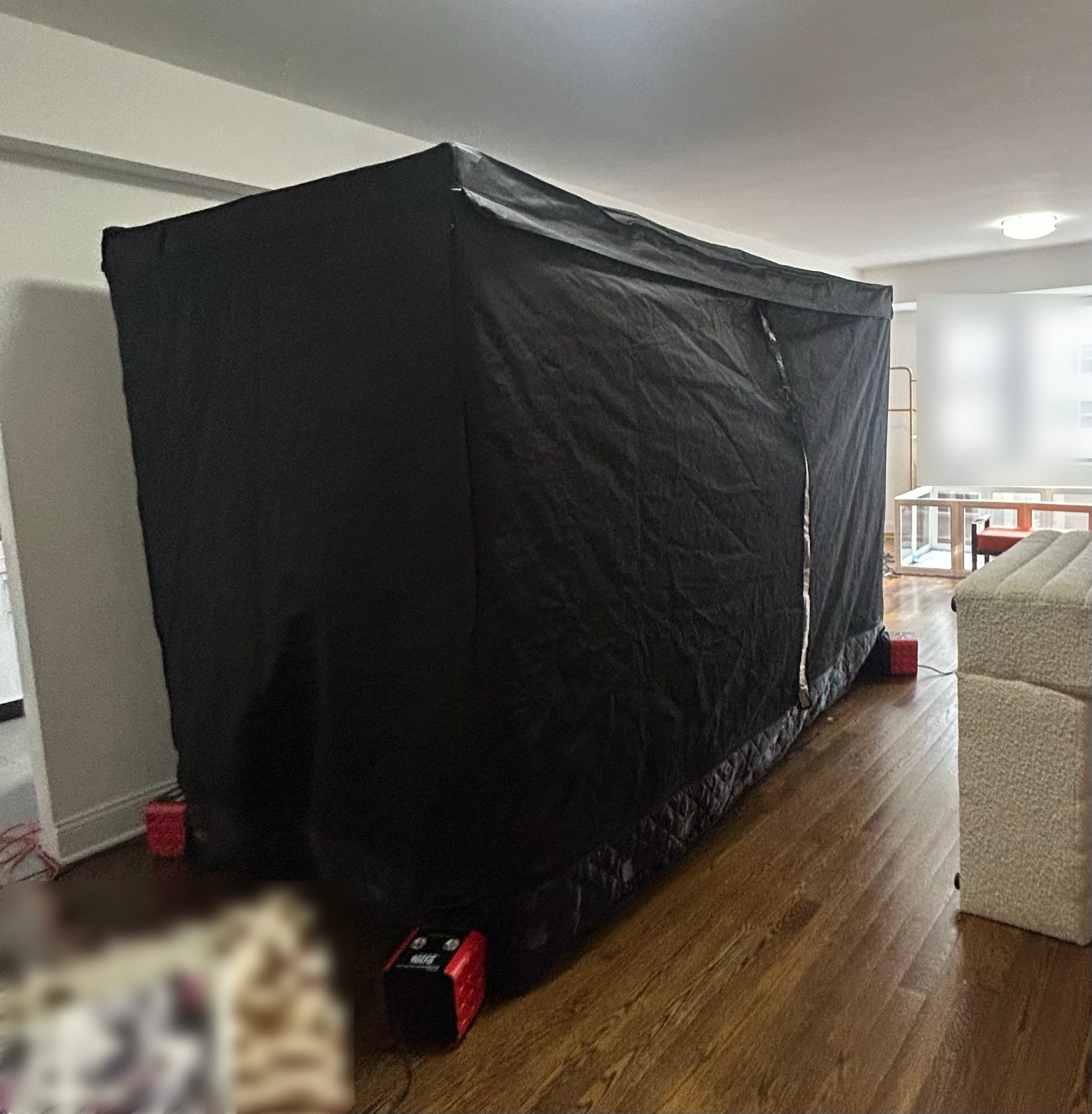
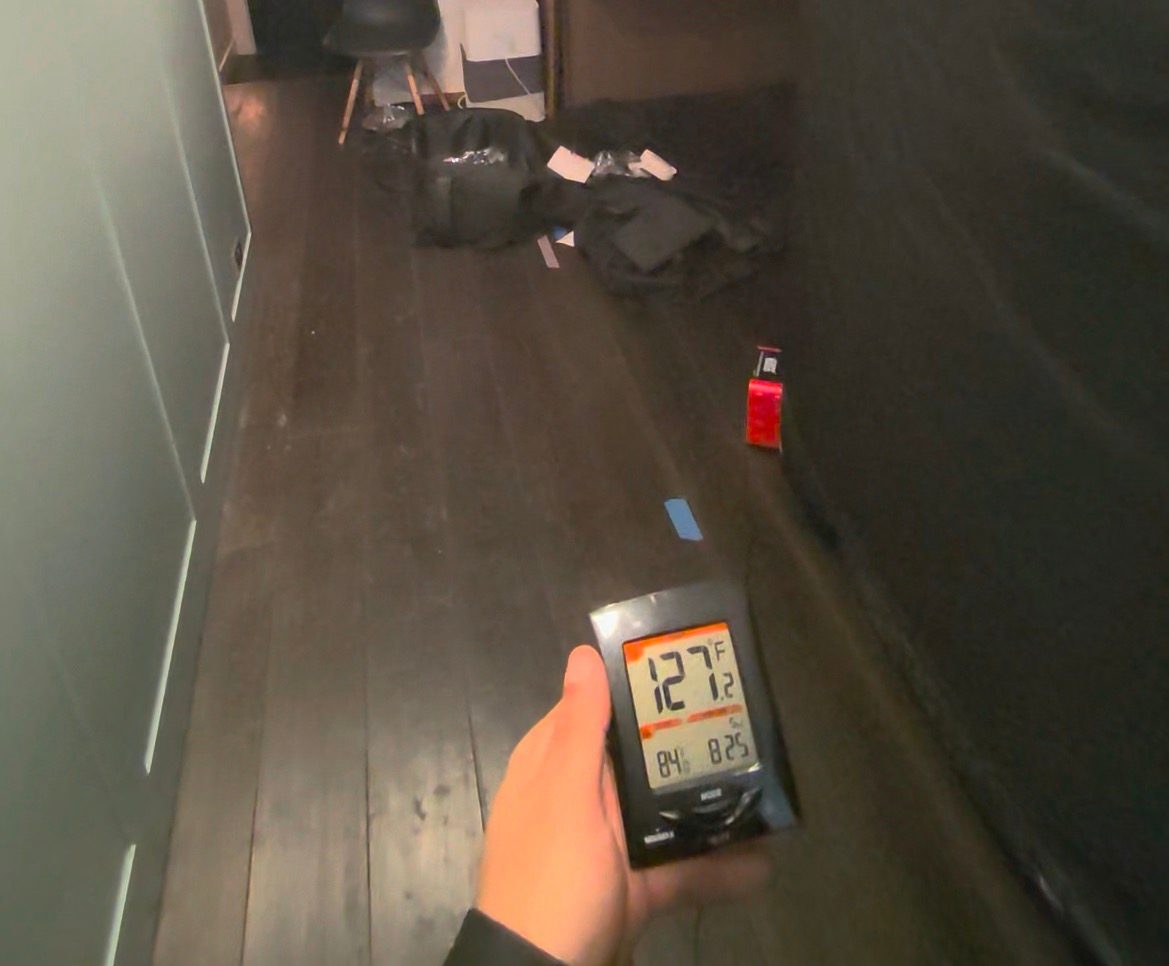
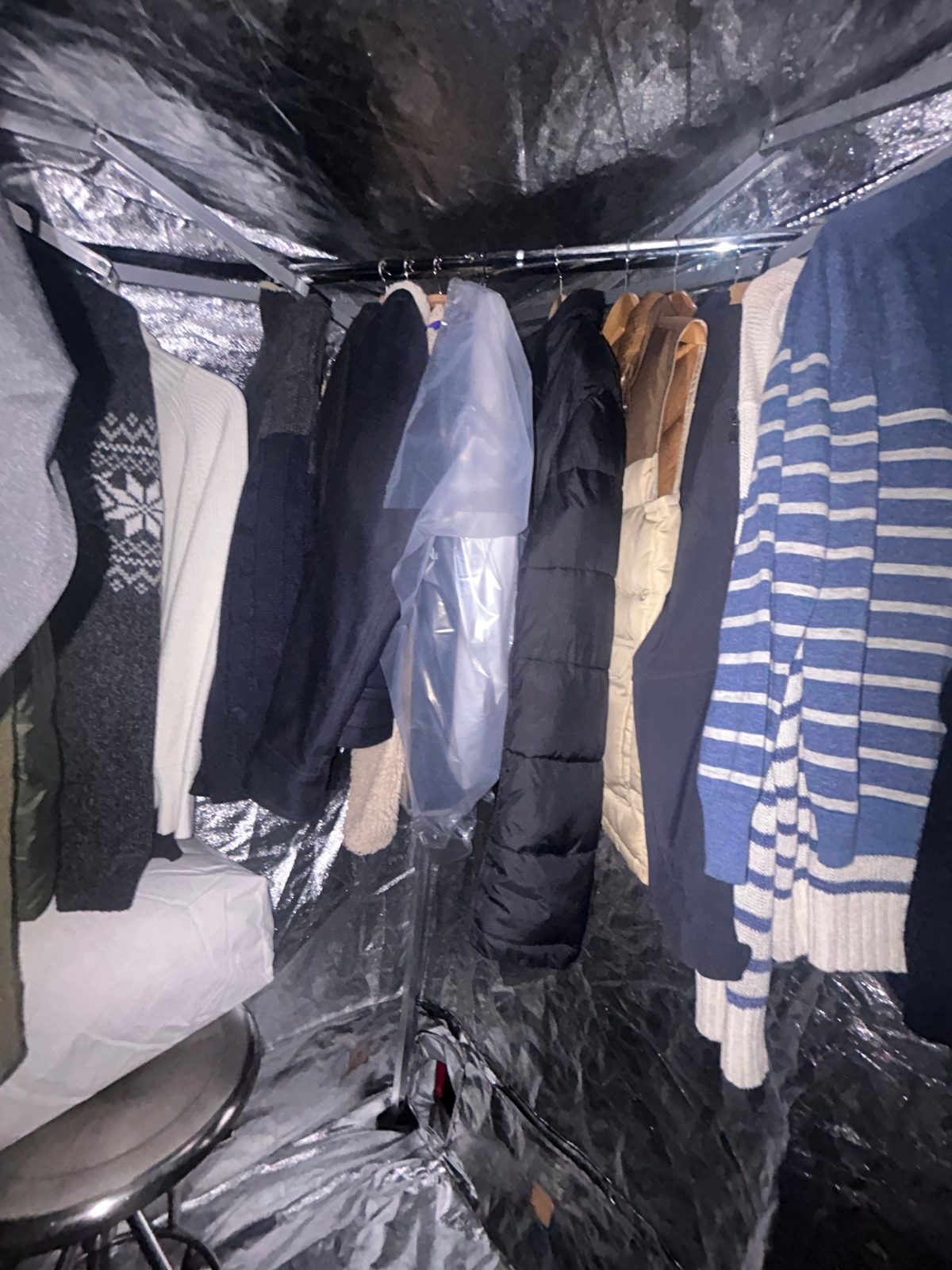
The ZappBug Room on real jobs
These are photos from our own clothes moth treatments, not stock images. The chamber is set up in the client’s home, sealed, loaded in batches and monitored at the core of every load.
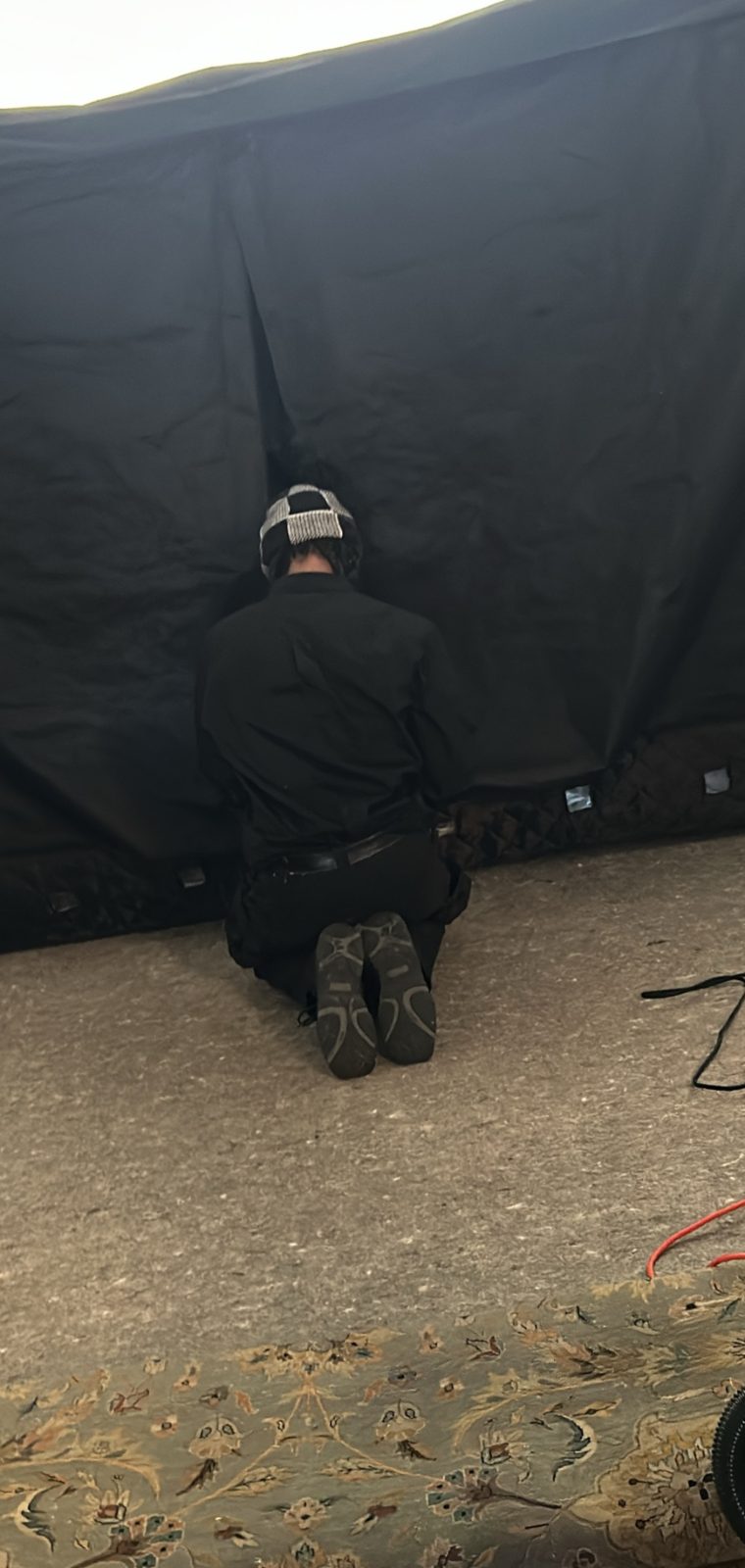
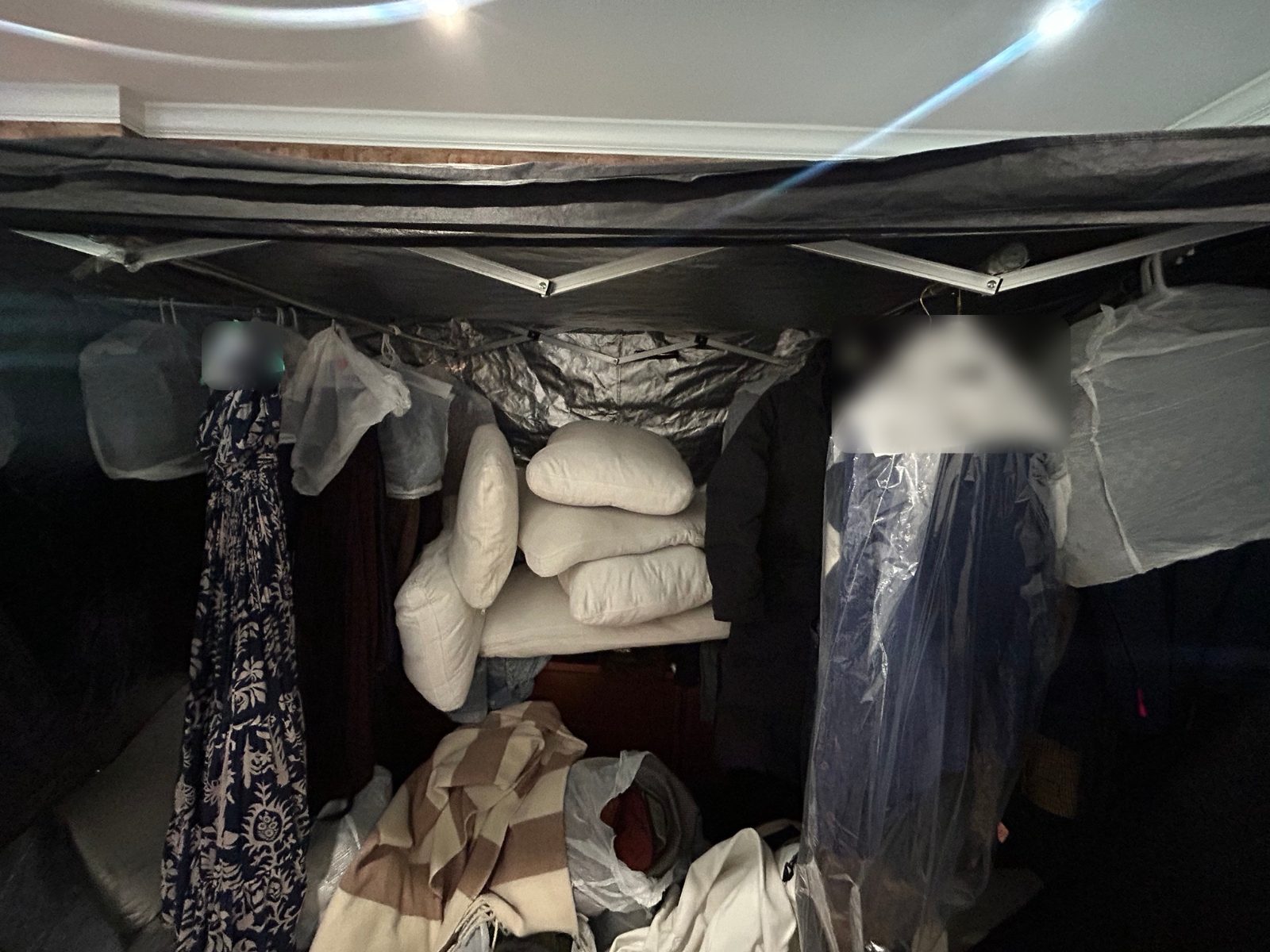
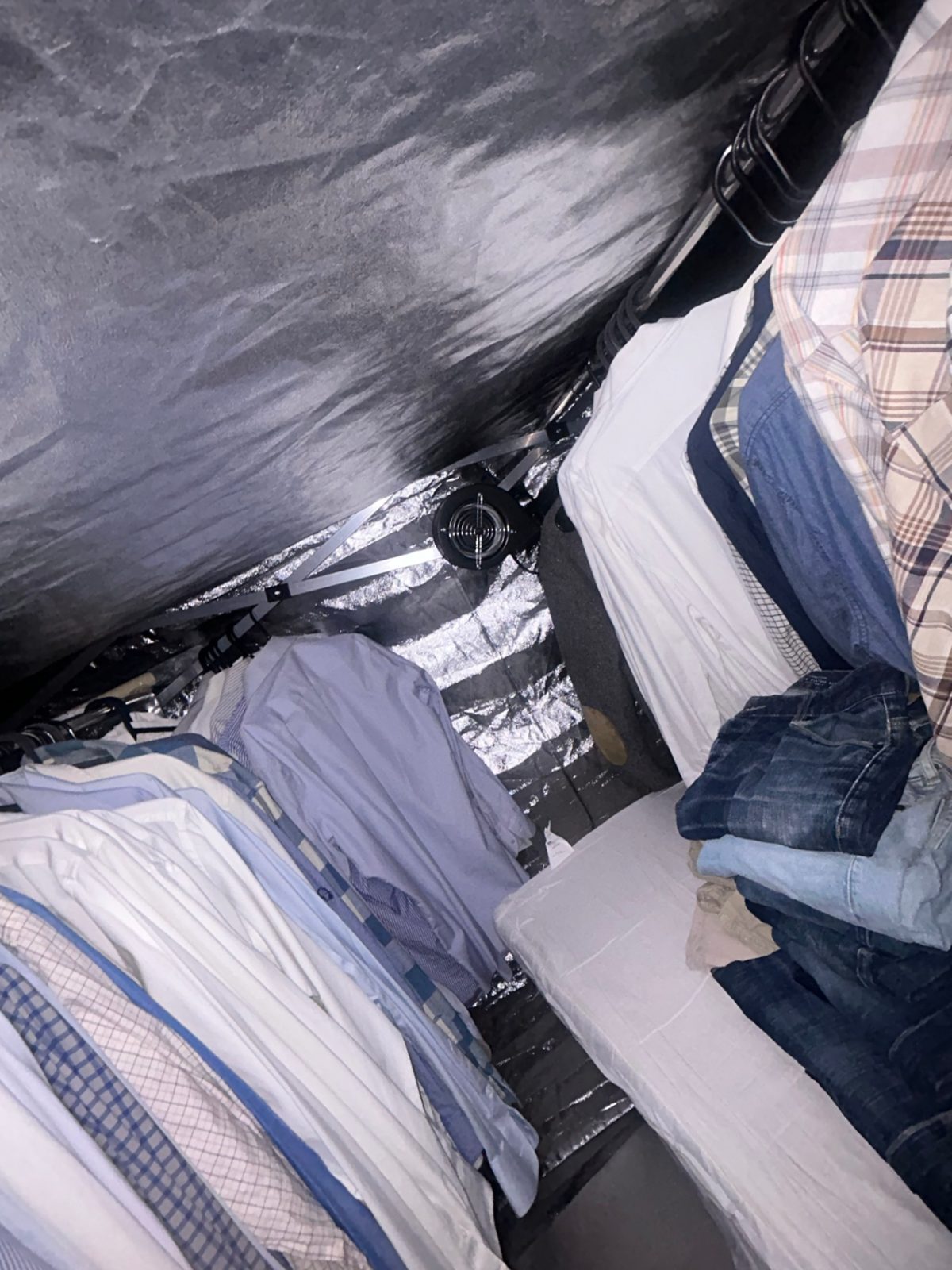
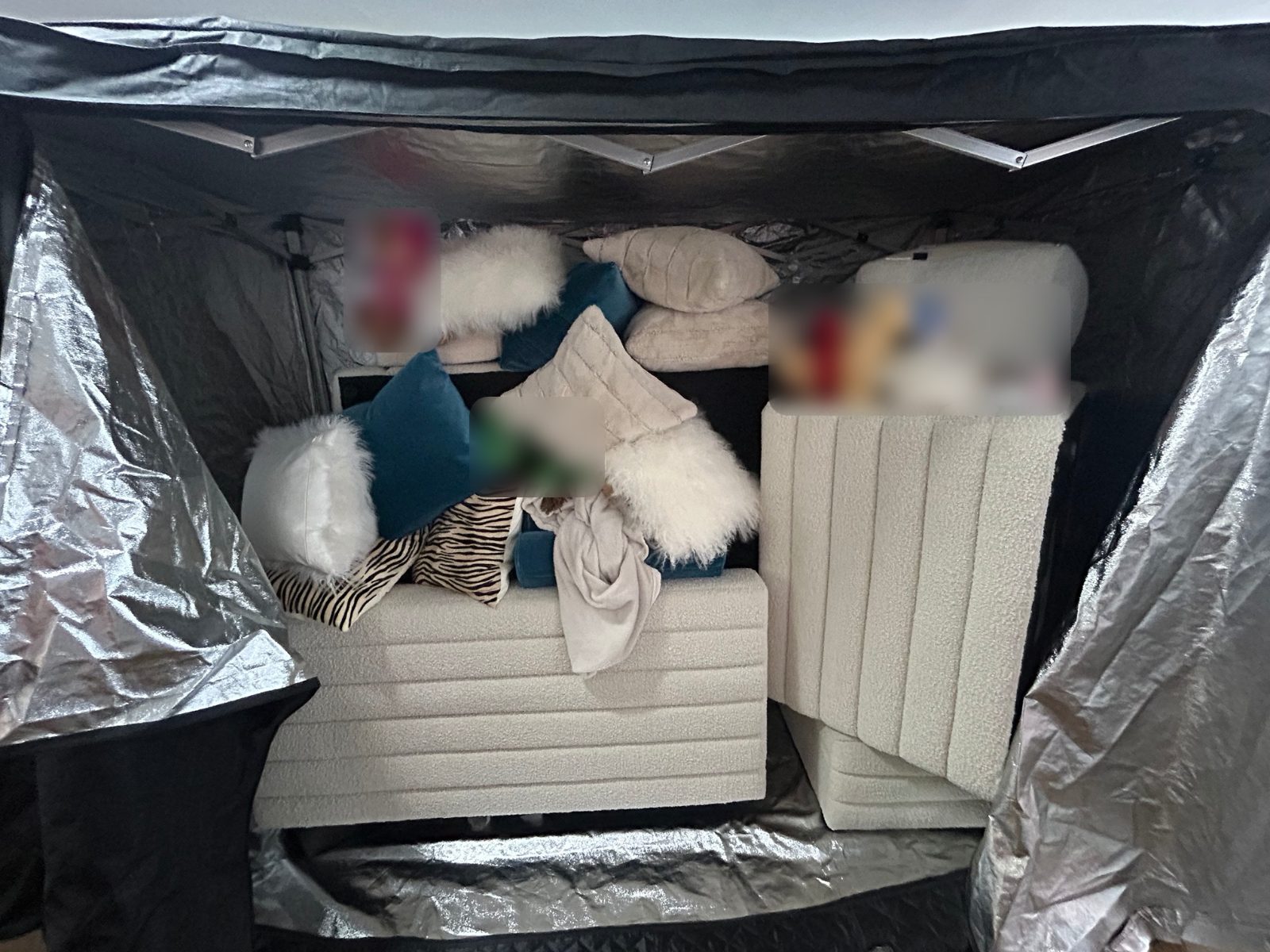
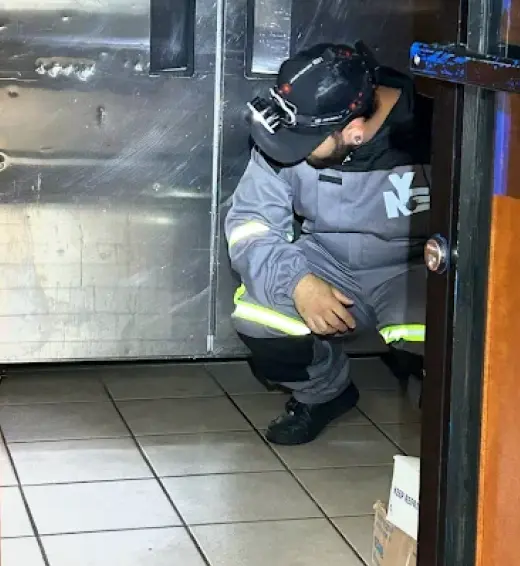
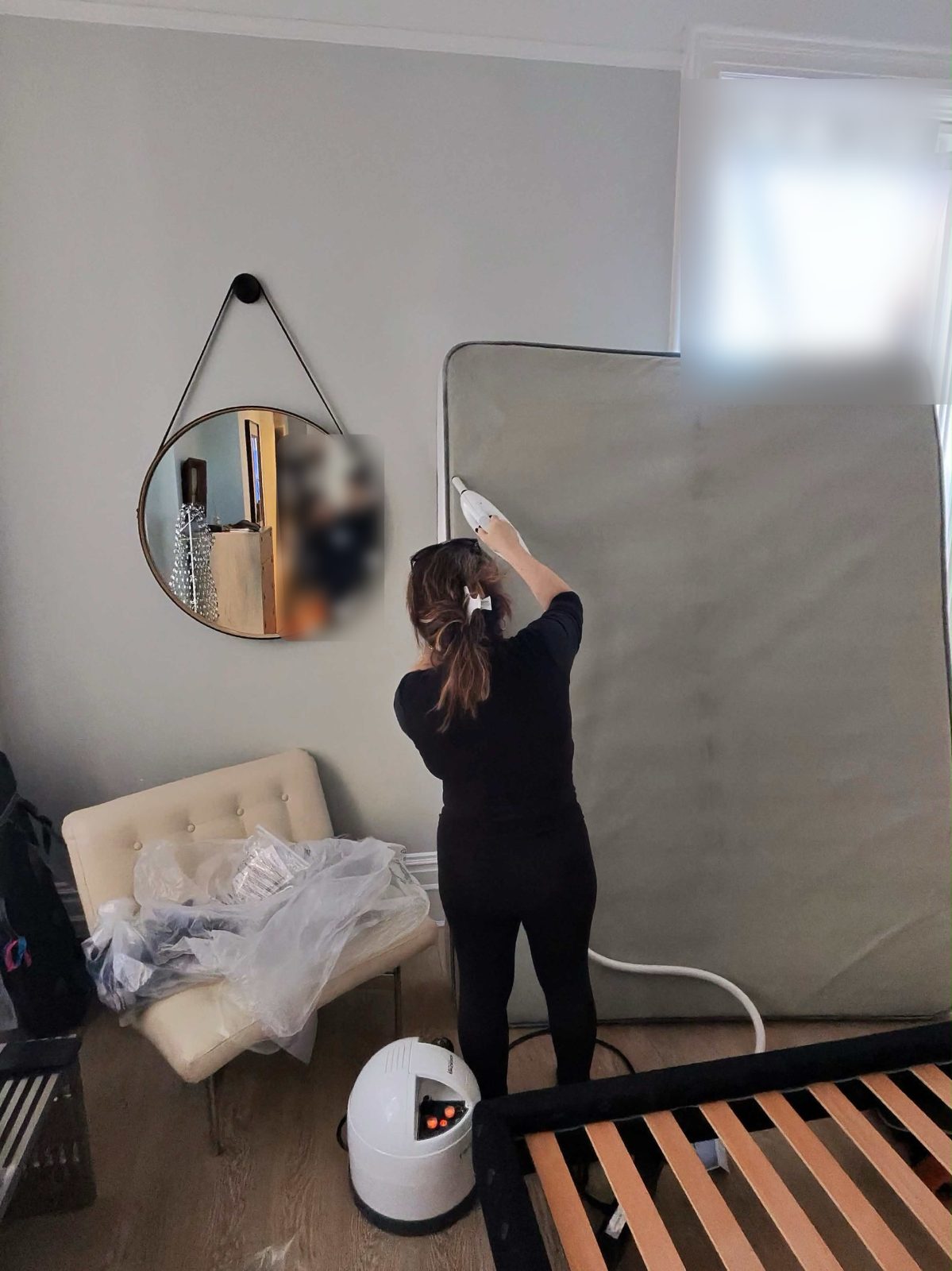
The Polti steamer on real jobs
The Polti Cimex Eradicator handles what the chamber cannot: delicate knits, shoe interiors, jacket linings, rugs and furniture. Its steam carries very little water, so fabric dries fast.
Not our invention: established practice in luxury garment care
Heat treatment for fine clothing is established practice in luxury garment care. Kirby Allison, a well-known expert on caring for fine menswear, sells both the ZappBug oven and the larger ZappBug Room specifically as clothes moth treatments. The ZappBug Room is the same unit we set up inside your home. The difference is everything around it: an ACE-led crew, a probe in the core of every load, hand steaming for the pieces that cannot go in, and treatment of the closets, shoes and rugs where the moths actually live.
What clothes moth treatment costs, compared
| Approach | Typical cost | What it covers |
|---|---|---|
| Typical spray-based moth service (US average) | About $200 to $370 (HomeAdvisor) | Surface treatment of closets and rugs; does not heat eggs inside the fabric |
| Clean everything yourself and hire a sprayer | One New York renter reported about $450 in laundry, $1,200 in rug cleaning, ongoing dry cleaning and over $1,000 in extermination (Apartment Therapy) | Weeks of disruption; everything leaves the home |
| Buy the equipment yourself | About $3,300 for a ZappBug Room and a Polti steamer, plus days of your own time | You load every batch, track core temperatures, steam delicates and still need to treat closets, shoes and rugs |
| NYE clothes moth treatment | $450 to $2,500, quoted after inspection | ACE-led inspection, heat and steam treatment in your home, closets and rugs treated, no dry cleaning needed |
| NYE private whole-wardrobe program | From $3,000; the $750 assessment is credited to the program | Entire wardrobe in 3 to 6 chamber batches, crew of two to three, shoes and rugs, freezing add-on available |
What moves the price: the size of the wardrobe and number of chamber batches, the number of rugs and shoes, whether a freezing add-on is needed, travel to Westchester, Long Island or Connecticut, and whether the client chooses the plant-based option (OMRI Listed pyrethrum and a plant-oil residual). Clothes are never sprayed in any option.
Read more about the clothes moth treatment process, how steam treats cashmere, the private client wardrobe program, and what to do if your dry cleaner refuses infested clothes.
Get a quote for your wardrobe
ACE-led inspection, priced upfront before any work starts.
A Brooklyn-based, NYSDEC-registered company (Reg. #15140) led by Jorge Bedoya, an Associate Certified Entomologist (ACE). For pests in your home or building, NYE provides IPM-based, low-exposure control matched to the exact pest and verified with a follow-up. ACE-led work comes with a client portal of service reports and photos, fully bilingual service, and no long-term contract.
Clothes moth equipment and cost FAQ
What equipment does New York Exterminating use for clothes moths?
A ZappBug Room heat chamber set up inside the client’s home, a core temperature probe in every load, a Polti Cimex Eradicator superheated dry steamer, a HEPA vacuum, sealed containers for items that cannot take heat, and an optional deep freezer. The full setup runs on about $4,000 of equipment.
How much does clothes moth treatment cost in NYC?
At New York Exterminating, clothes moth treatment costs $450 to $2,500, quoted after inspection. Whole-wardrobe private programs start at $3,000, and the $750 assessment is credited to the program.
Why not just buy a ZappBug Room myself?
You can: it retails for about $1,695. But the chamber only treats what goes inside it. You would still need to load every batch, check core temperatures, steam the delicates, and treat the closets, shoes and rugs where eggs and larvae live.
Do you spray clothes?
No. Clothes are treated with heat, steam, sealed containment or freezing. Any residual treatment goes on closet surfaces and baseboards, never on garments.
Will heat or steam damage cashmere and wool?
Pieces that can take sustained heat go in the chamber; delicate knits get low-moisture steam spread wide, with distance set by the fabric. In our field use we have seen no shrinking or texture change, and every piece is assessed before treatment.