Straight answers from a licensed New York exterminator and Associate Certified Entomologist (ACE) — serving all five boroughs, in English and Spanish.
Get a Free Estimate →⏱ 6 min read
Reviewed by Jorge Bedoya, ACE (Associate Certified Entomologist, NYSDEC #15140). Last updated October 2026.
How to identify a brown-banded cockroach
- Size: 10–14 mm (about half an inch) — similar to a German cockroach.
- Markings: two light, cream-to-tan bands across the body: one at the base of the wings, one further back. The bands show most clearly on nymphs and females.
- No head stripes: German cockroaches carry two dark parallel stripes on the pronotum (the shield behind the head). Brown-banded roaches do not.
- Behavior: males fly or glide when disturbed, especially toward warmth; German cockroaches have wings but essentially never fly.
- Where you see them: upper walls, ceilings, behind frames and mirrors, in closets, dressers, bookshelves, cable boxes and the warm cases of TVs and routers.
Brown-banded vs German cockroach: the difference that decides treatment
German cockroaches are moisture-dependent: they concentrate within a few feet of water, which is why the heaviest activity sits in kitchens and bathrooms. Brown-banded cockroaches are the opposite — they tolerate dry conditions and prefer warm, elevated harborage, spreading through bedrooms, living rooms and offices where no one expects roaches. Their egg cases are small (about 5 mm), reddish-brown, and the female glues them to hidden surfaces: under shelves, inside furniture seams, behind drawers, in the corners of closets — unlike the German female, who carries her ootheca until hatch. Compare with our guide to German cockroach egg cases and the full NYC cockroach ID guide.
The practical consequence: a kitchen-focused gel-bait job that would end a German cockroach problem leaves a brown-banded population untouched three rooms away. Species identification first is not a formality — it decides where every placement goes.
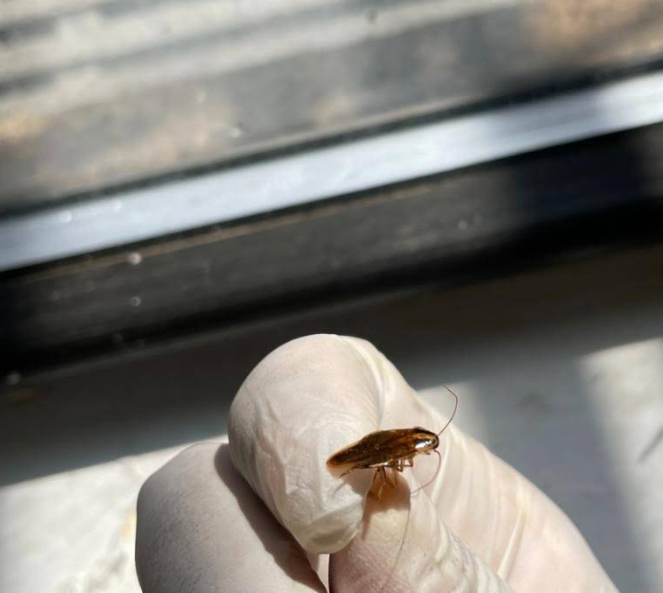
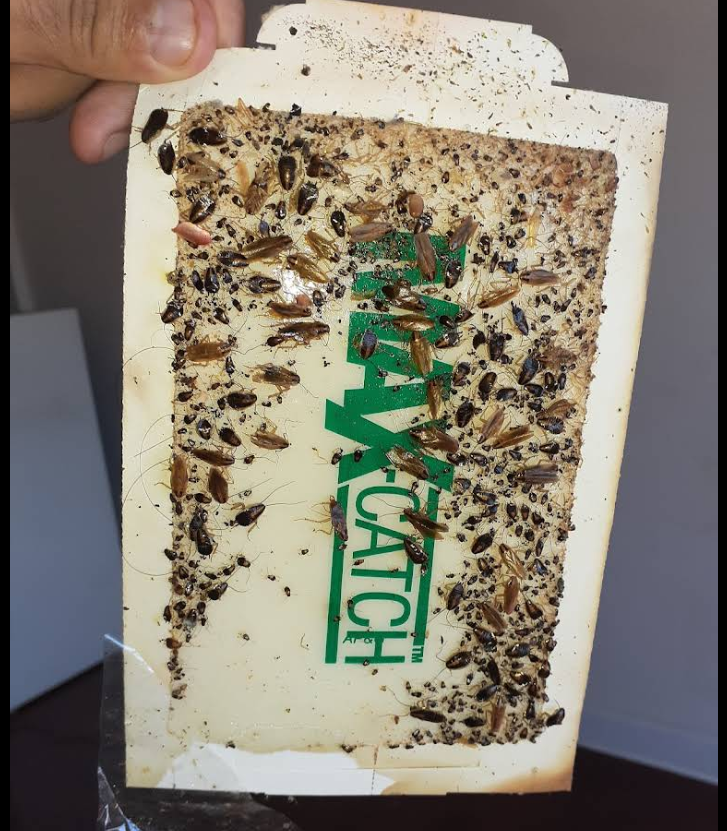
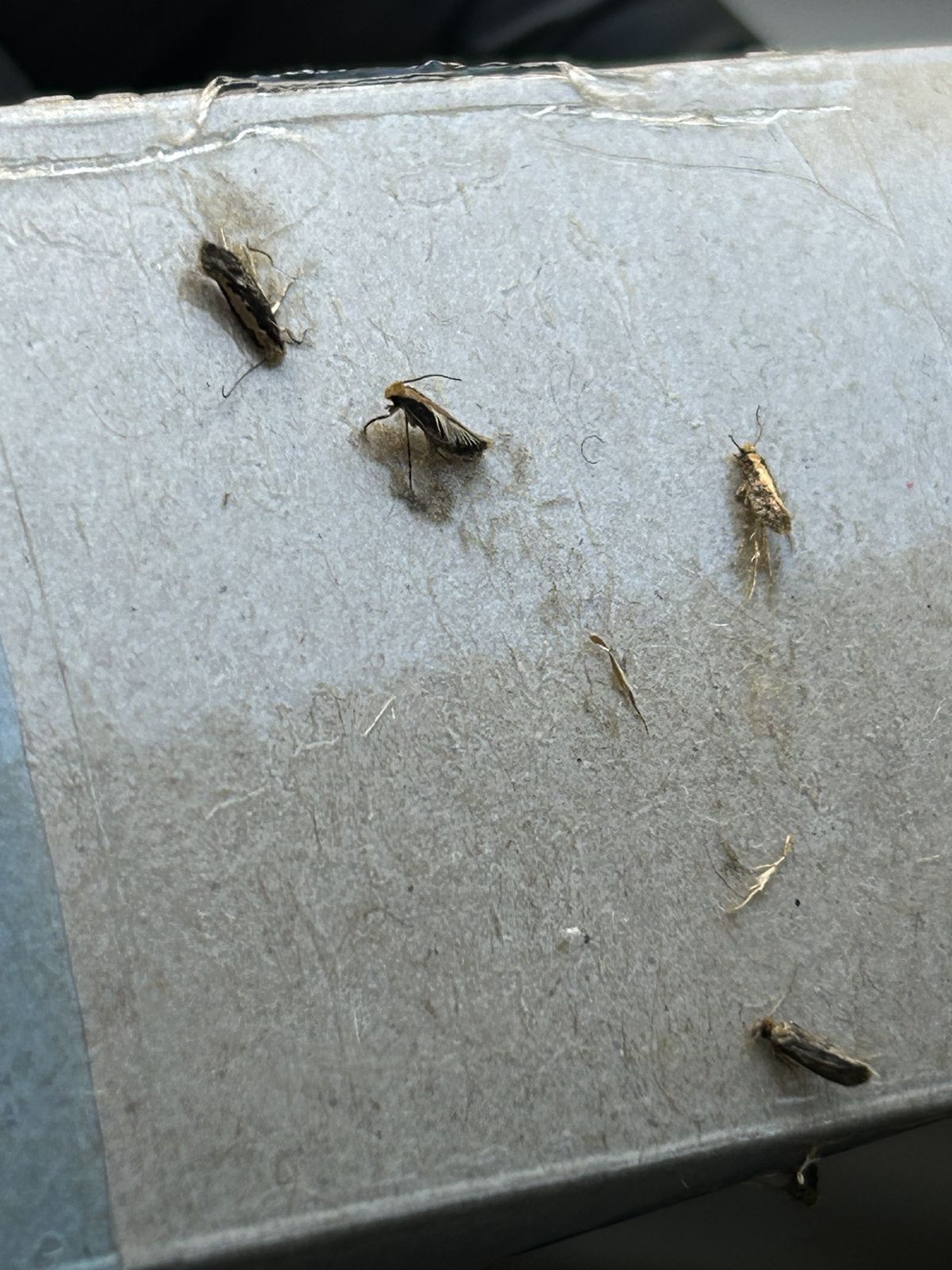
From our case files: 12th floor, Midtown Manhattan. Other exterminators had treated this apartment for German cockroaches, and the roaches kept showing up. On inspection we identified them as brown-banded cockroaches. Once the treatment was built for the right species and the right harborage, the problem was solved.
Look at the area behind the head (the pronotum). A German cockroach has two dark parallel stripes there. These have a dark, unstriped pronotum, which is what sent us looking higher in the apartment, away from the kitchen and bathroom.
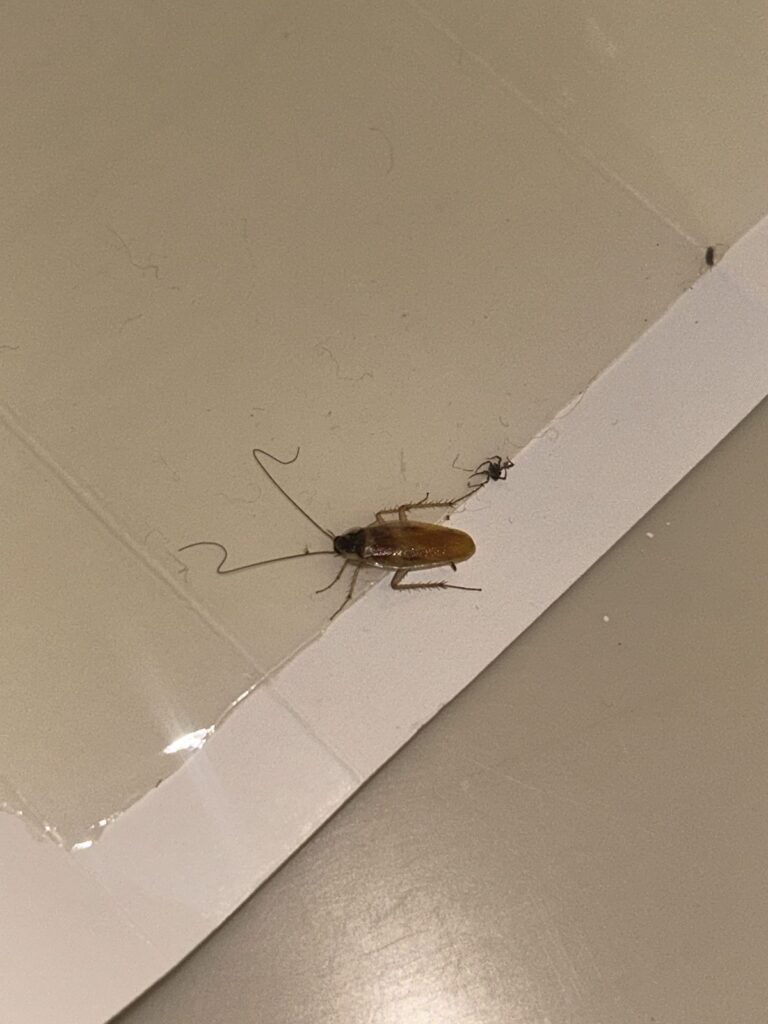
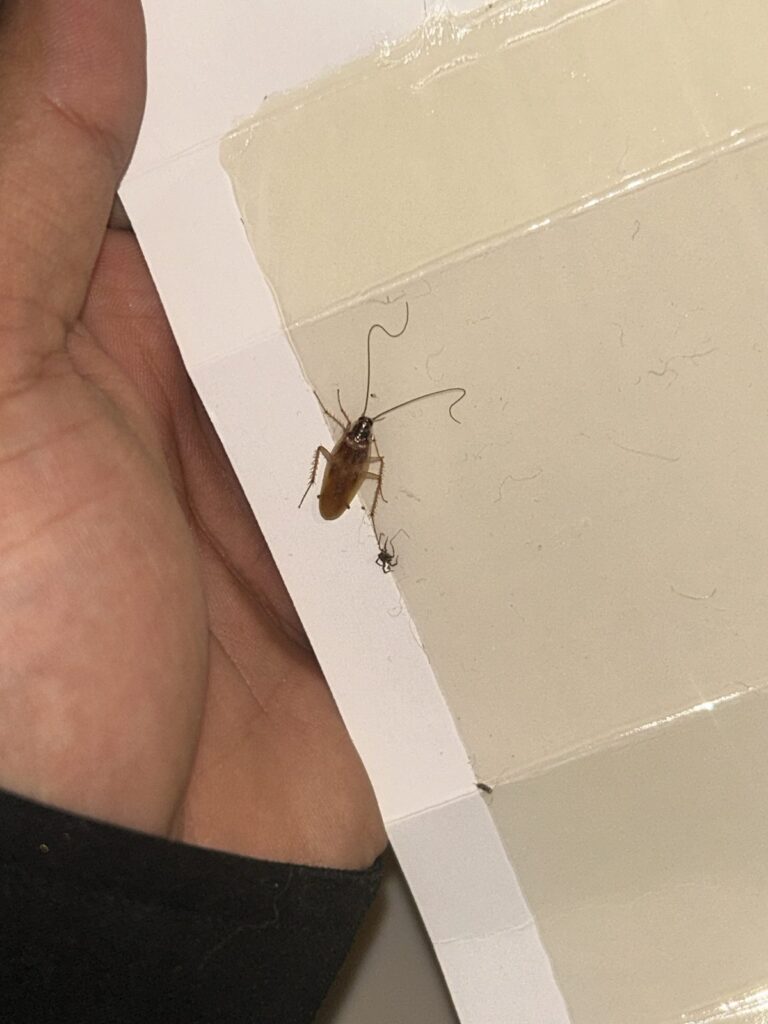
Brown-banded cockroach nymphs
Nymphs are 2–3 mm at hatch and show the two pale bands more boldly than adults — small dark insects with visible light stripes across the back. People often mistake them for German cockroach nymphs, but German nymphs are darker with a single pale stripe running lengthwise down the center of the back, while brown-banded nymphs carry bands running across it. Finding nymphs in a bedroom or living room, away from any water source, points strongly to brown-banded. For the German comparison, see what baby cockroaches look like.

How brown-banded cockroaches get into NYC apartments
They travel in furniture, electronics, picture frames, appliances and secondhand purchases — a used dresser or a thrifted TV stand is a classic source. Steadily heated apartment buildings suit them year-round, and because they wander far from kitchens, they move between rooms (and units) along walls, ceiling lines and electrical penetrations rather than plumbing chases. They are less common in NYC than German cockroaches, but they are the species most often misdiagnosed — and mis-treated — for exactly that reason.
How to get rid of brown-banded cockroaches
The method is bait-led, like German cockroach work, but the placements move up and out of the kitchen: upper cabinet corners, behind wall art and mirrors, inside closet shelving, furniture seams, under desk edges, around warm electronics. Crack-and-crevice treatment follows the same logic, and insect growth regulators matter because glued egg cases survive sprays and hatch weeks later. Store foggers are counterproductive — they scatter roaches deeper into furniture and adjacent rooms.
Our ACE-led team identifies the species before anything else, then adapts the same discipline behind our cockroach control service: targeted baiting matched to brown-banded harborage, IGRs to break the egg-case cycle, treatment of furniture and perimeter rooms, and verification rather than open-ended monthly spraying. Most apartments are resolved in a single visit of 1–1.5 hours. English and Spanish, all five boroughs plus Nassau and Westchester — call (347) 210-4646.
Turned out to be German cockroaches instead? See our German cockroach exterminator service in NYC.
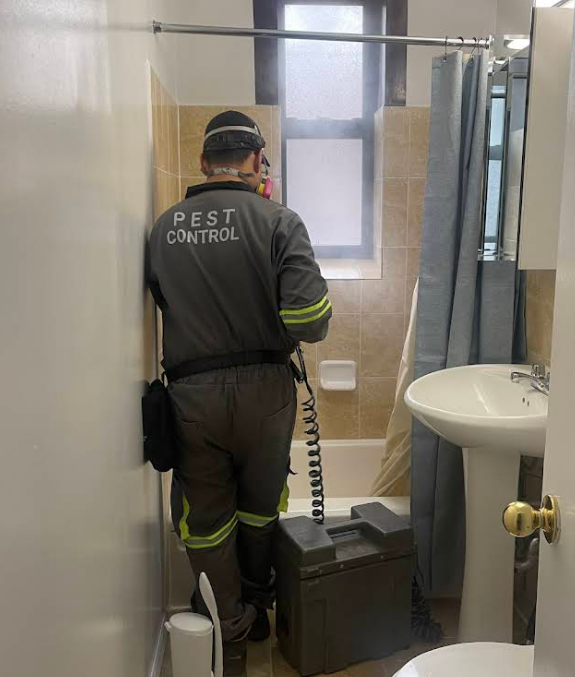
A Brooklyn-based, NYSDEC-registered company (Reg. #15140) led by Jorge Bedoya, an Associate Certified Entomologist (ACE). For cockroaches, NYE provides a non-repellent microinjection protocol for German cockroaches, placed at the harborage, plus a triple-active IGR. ACE-led work comes with a client portal of service reports and photos, fully bilingual service, and no long-term contract.
Brown-banded cockroach FAQ
Are brown-banded cockroaches hard to get rid of?
They are harder than German cockroaches to find, because harborage is scattered through non-kitchen rooms and inside furniture. With correct placement they respond well to baiting plus IGRs; most of the failed DIY we see failed on location, not product.
What attracts brown-banded cockroaches?
Warmth and shelter more than moisture: heated apartments, electronics, upper shelving and furniture. They feed on starches — book bindings, wallpaper paste, boxes — so even a spotless kitchen does not protect the rest of the home.
Do brown-banded cockroaches fly?
Males fly or glide when disturbed, often toward lamps and ceilings. Females have shorter wings and do not fly. A small roach taking flight indoors in NYC is a strong brown-banded clue, since German cockroaches essentially never fly.
Where do brown-banded cockroaches lay their eggs?
Females glue small reddish-brown egg cases (about 5 mm, holding roughly 10–18 eggs) to concealed surfaces: under shelves and drawers, inside furniture joints, behind frames, in closet corners. Check and treat furniture before moving apartments.
Are brown-banded cockroaches common in New York City?
They are a clear second to German cockroaches but appear steadily across the five boroughs, usually arriving in furniture or electronics. Mixed infestations happen — one more reason an inspection that names every species present beats treating from a single sighting.