Straight answers from a licensed New York exterminator and Associate Certified Entomologist (ACE) — serving all five boroughs, in English and Spanish.
Get a Free Estimate →⏱ 7 min read
Why eggs are the stage that matters
The moth you see flying is not the one eating your sweater. The damage comes from larvae, and every larva starts as an egg glued into a seam, a fold or the underside of a collar. Eggs are also the hardest stage to kill with heat. In the classic study on the common clothes moth, Rawle (1951, Bulletin of Entomological Research) found that four hours at 41°C, about 106°F, killed every life stage, while some eggs survived four hours at 40°C, about 104°F. A treatment that skips the eggs gives you a clean closet for three weeks and a new hatch after that.
A garment steamer is not the same tool
A household garment steamer is built to relax wrinkles. It puts out a lot of wet steam at a modest temperature, which is the wrong combination for cashmere: plenty of moisture, not much heat at the fibre. We use Polti superheated dry steam, rated by the manufacturer for steam up to 180°C at the nozzle. Two things are worth saying plainly. First, 180°C is the temperature leaving the machine, not the temperature of the fabric; the surface is cooler, and how much cooler depends on distance and speed. Second, that is exactly why technique matters more than the machine.
How we steam wool and cashmere
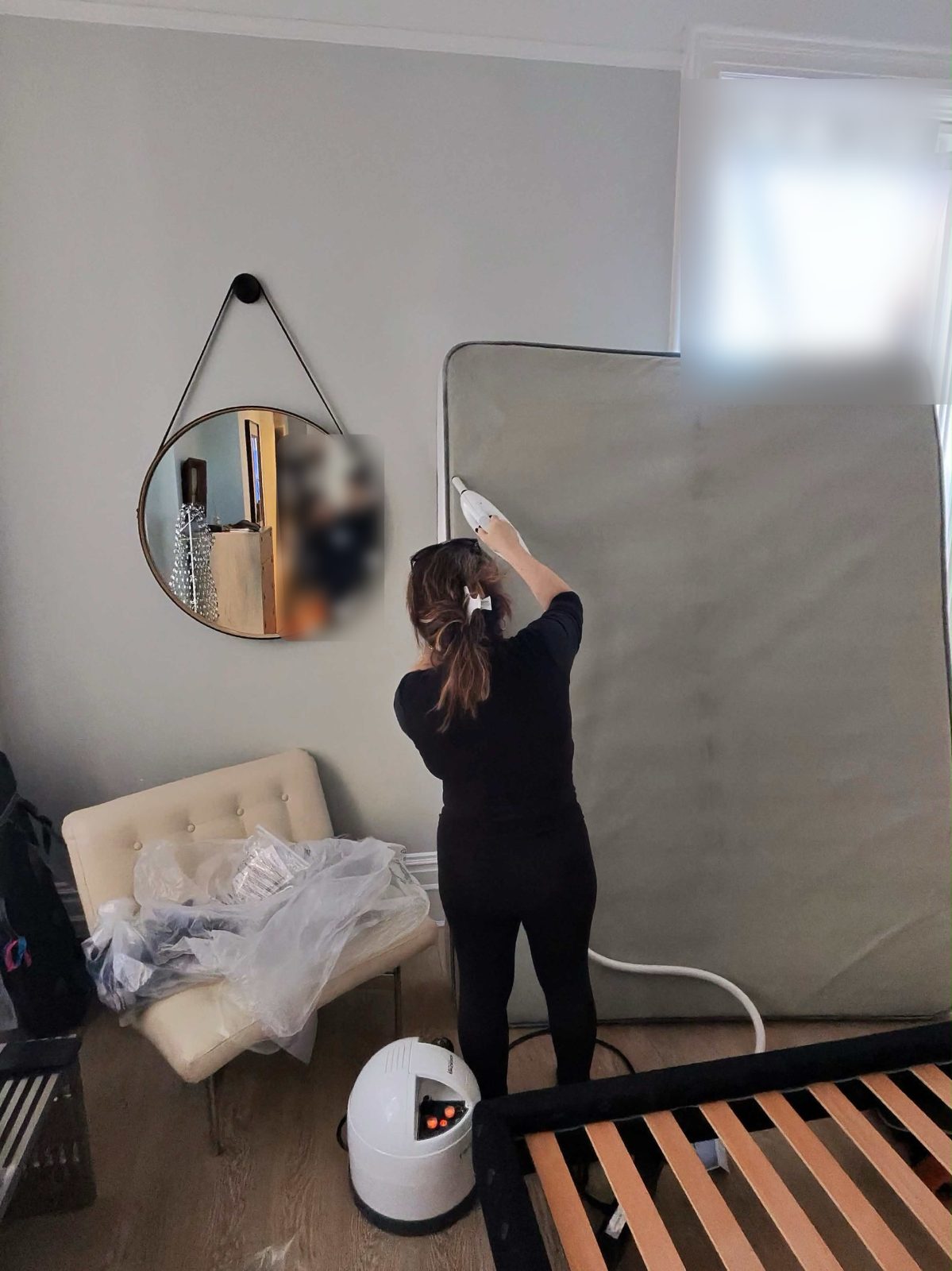
For delicate knits we remove the concentrating nozzle, so the steam spreads wide instead of hitting one point. Distance and movement are set by the fabric, with the most attention on folds, seams, linings and the collar, cuffs and underarms where larvae prefer to feed. No pressure goes on the fibres, and every piece is checked as it dries, which is fast because the steam carries little water. In our own field use on wool and cashmere we have seen no shrinking, distortion or change in texture. That is field experience, not a laboratory test, and it is the reason each piece is assessed before treatment rather than assuming every garment behaves the same way.
What our steam has shown in the field
On bed bug jobs, our team has documented exposed bed bug eggs that failed to hatch after this same wide, nozzle-off steam application. We treat that as evidence that the technique can deliver lethal heat to an exposed egg. We do not present it as proof for clothes moth eggs, which is a different insect, and we do not claim steam alone reaches every egg inside every lining. For that we rely on the heat chamber.
Where the heat chamber takes over
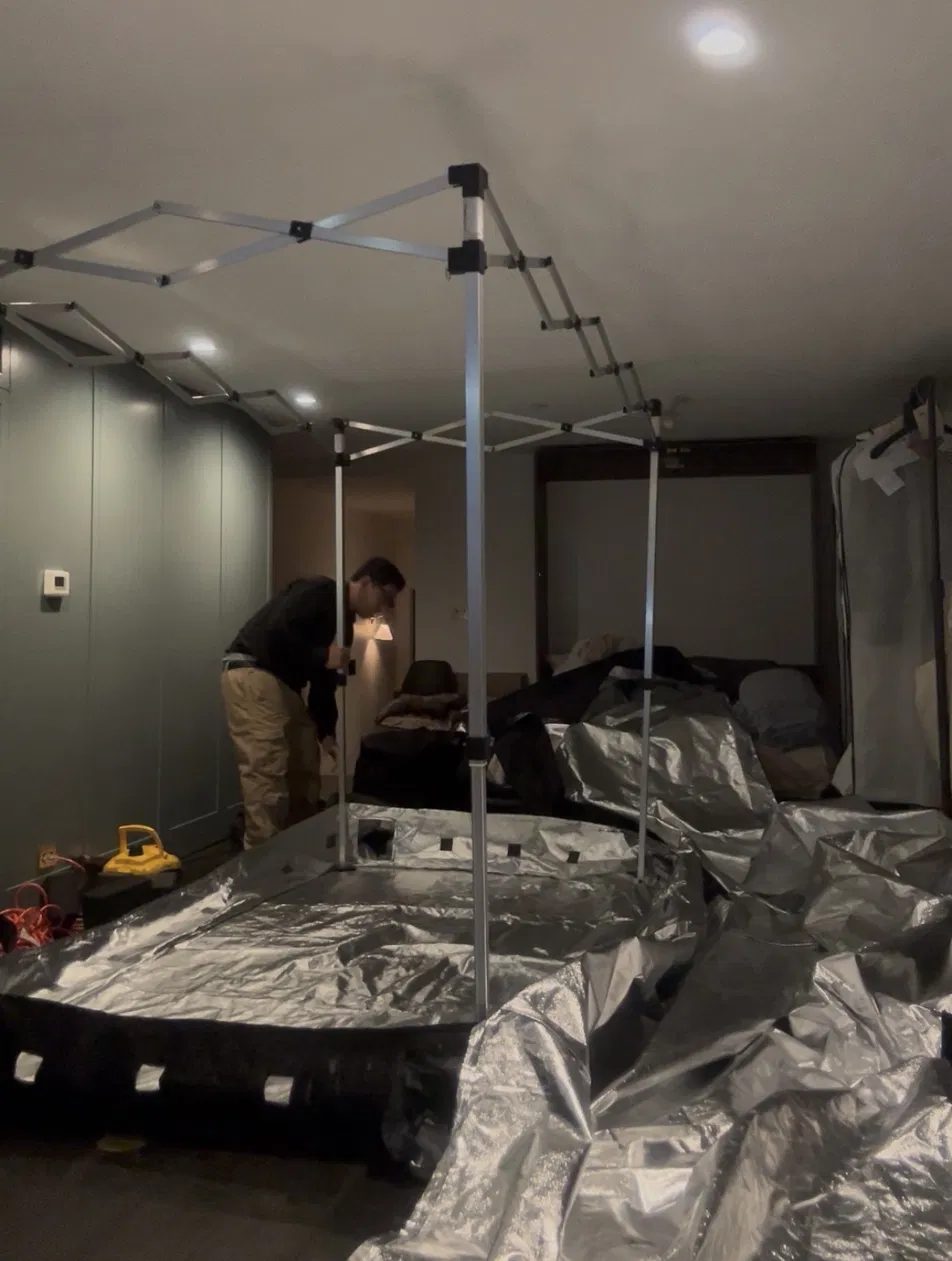
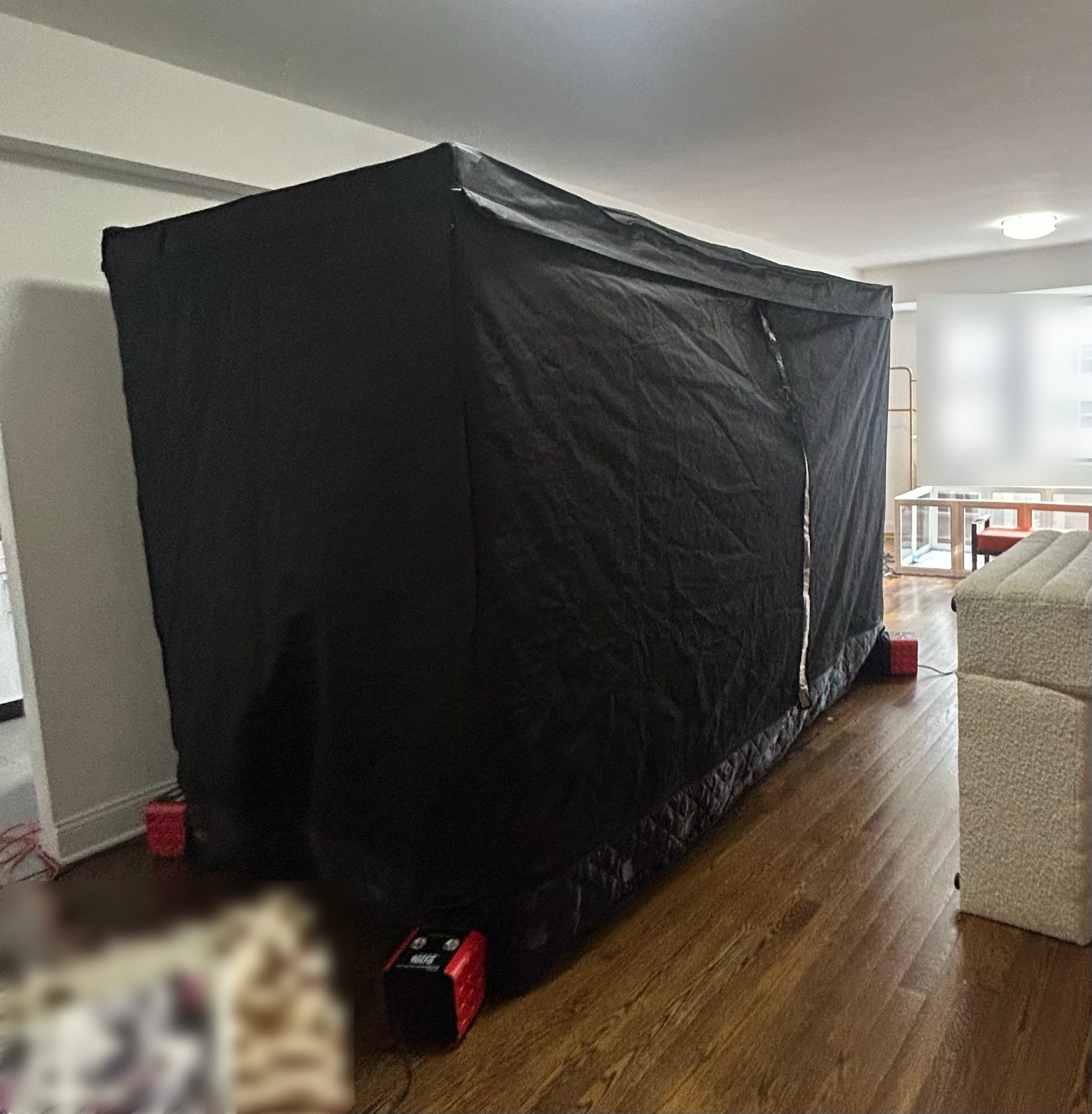
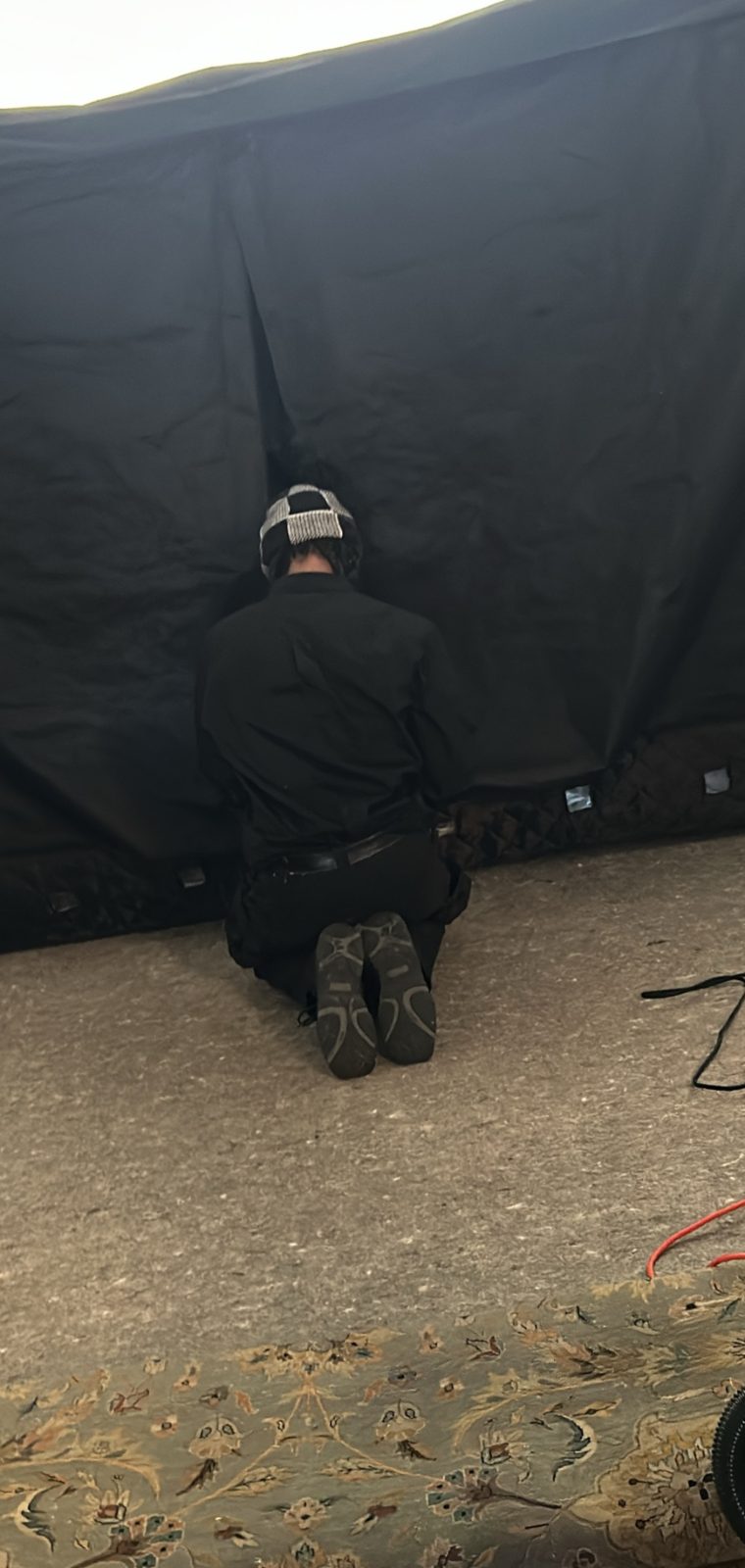
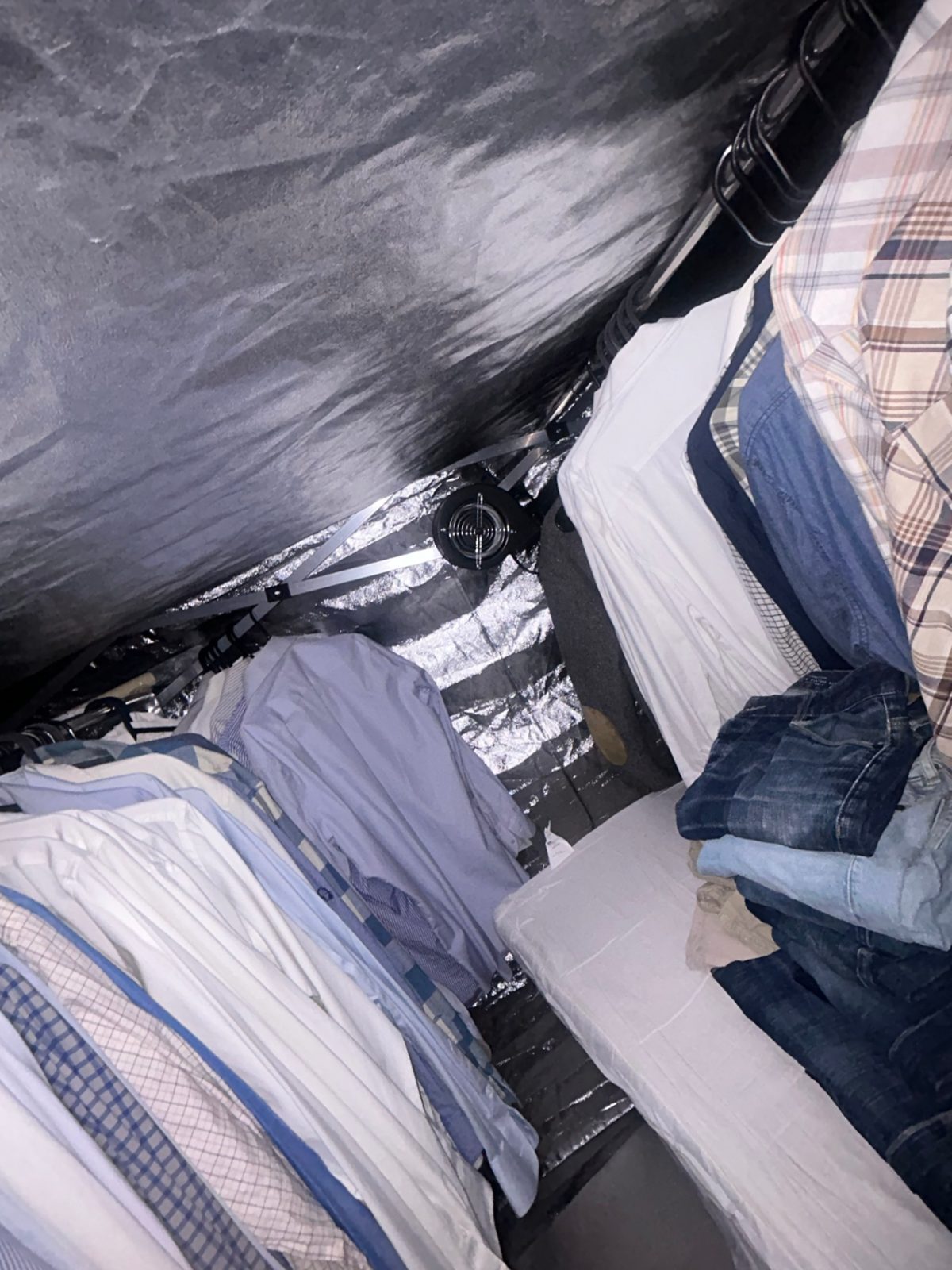
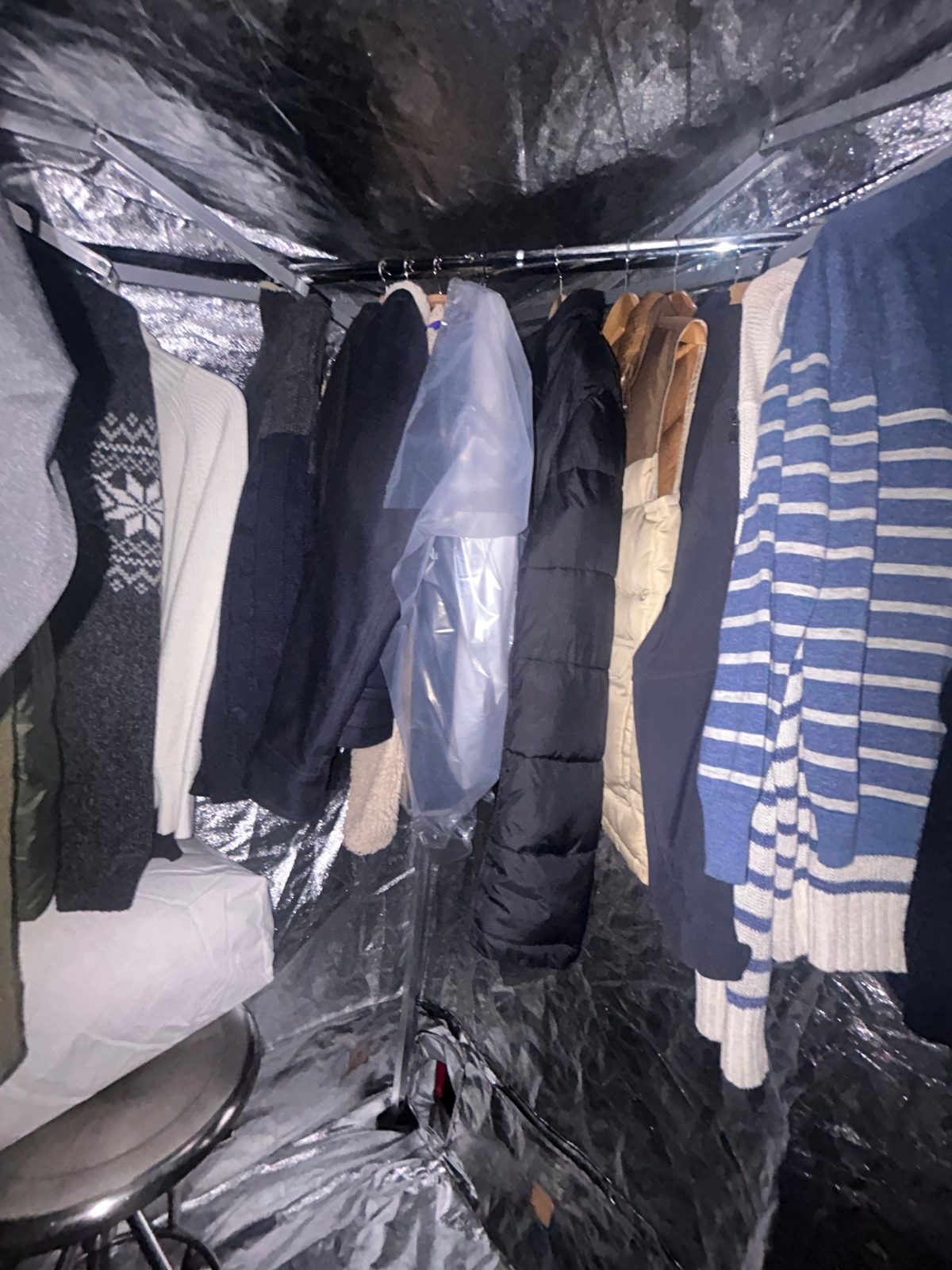
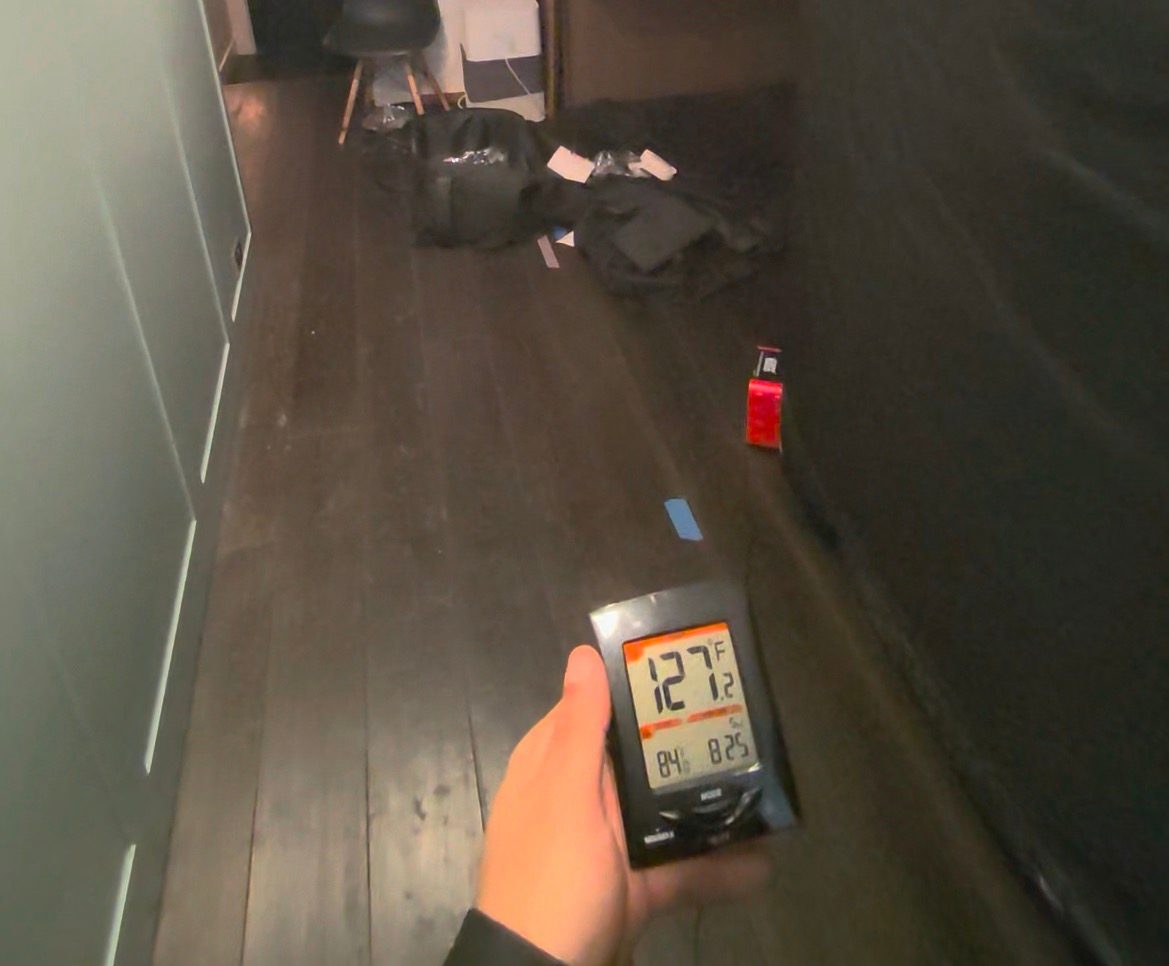
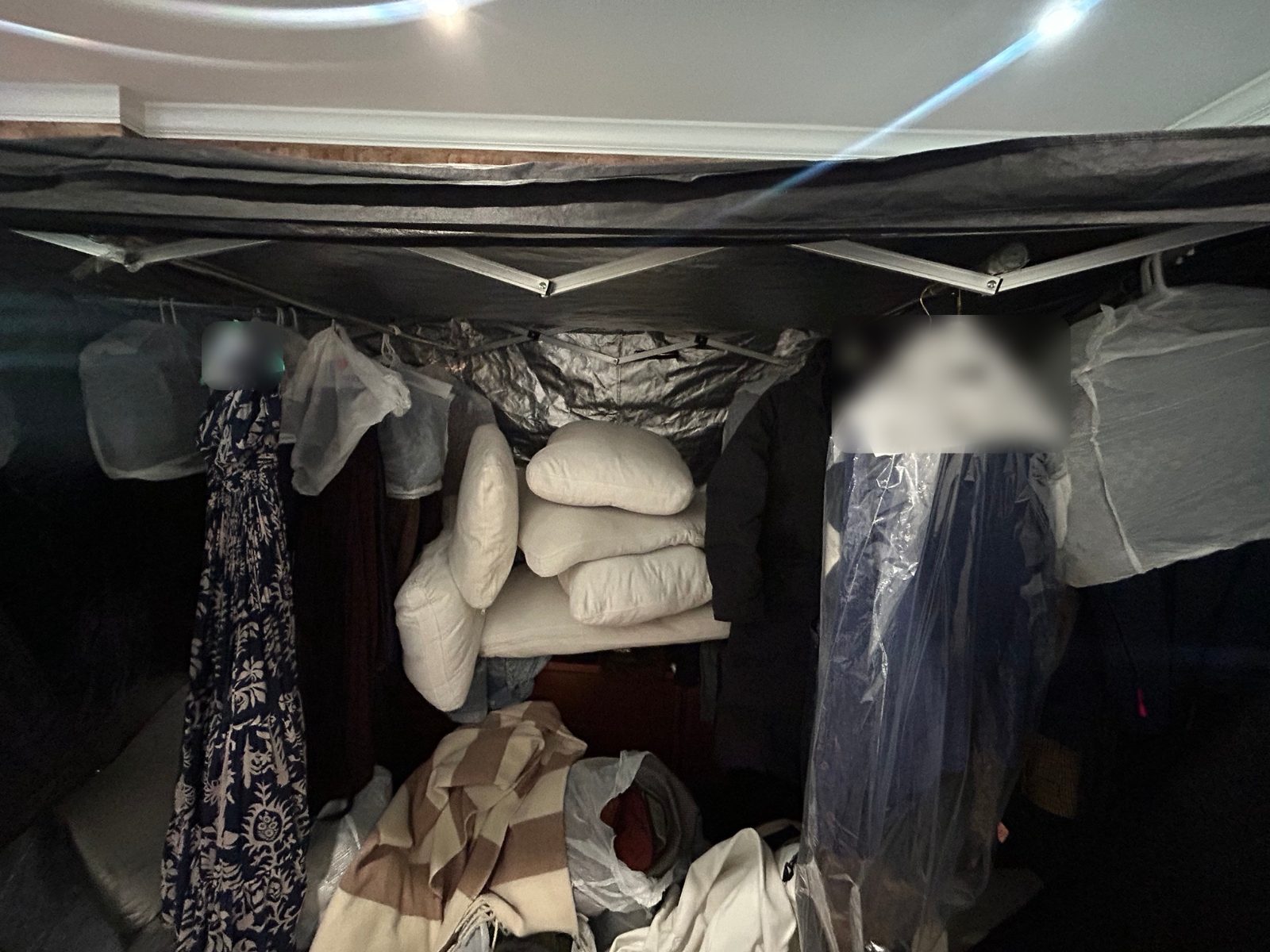
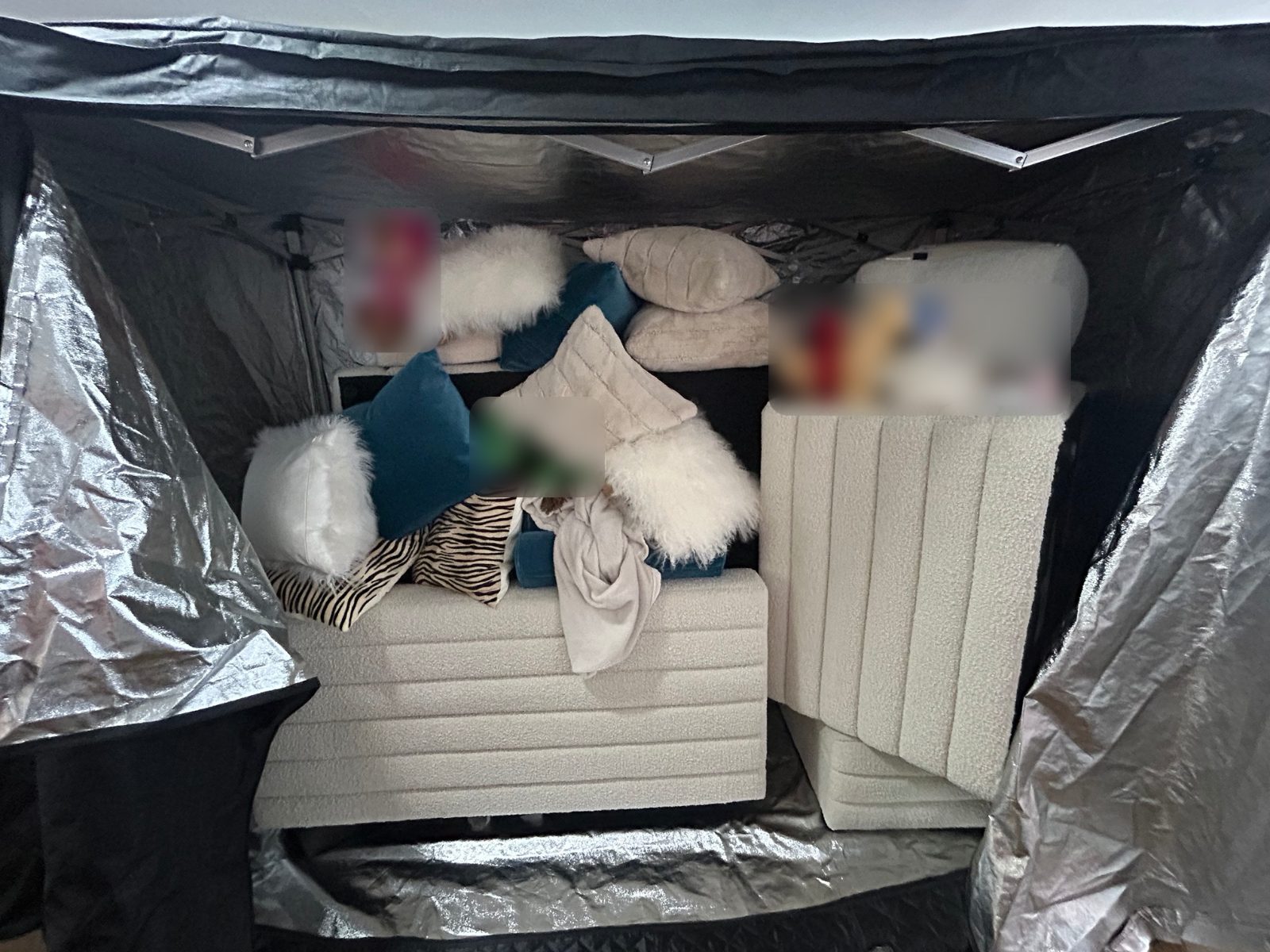
Steam is the right tool for pieces that need a light touch. Everything that can tolerate sustained heat goes into a ZappBug Room set up inside your home, with a probe in the core of the load. We hold that core above 120°F for four hours, well above the 106°F-for-four-hours point in the published research, because the centre of a packed load heats last and real eggs sit deep in seams, not on a lab dish. A typical three-bedroom, 1,500 sq ft apartment runs in three to six batches with a crew of two to three.
Heat treatment for fine clothing is not our invention: it is established practice in luxury garment care. Kirby Allison, a well-known expert on caring for fine menswear, sells both the ZappBug oven and the larger ZappBug Room specifically as clothes moth treatments. The ZappBug Room is the same unit we set up inside your home. The difference is everything around it: an ACE-led crew, a probe in the core of every load, hand steaming for the pieces that cannot go in, and treatment of the closets, shoes and rugs where the moths actually live.
What equipment we use, why, and what it costs: clothes moth treatment equipment and cost
Shoes, leather and the pieces that should not take heat
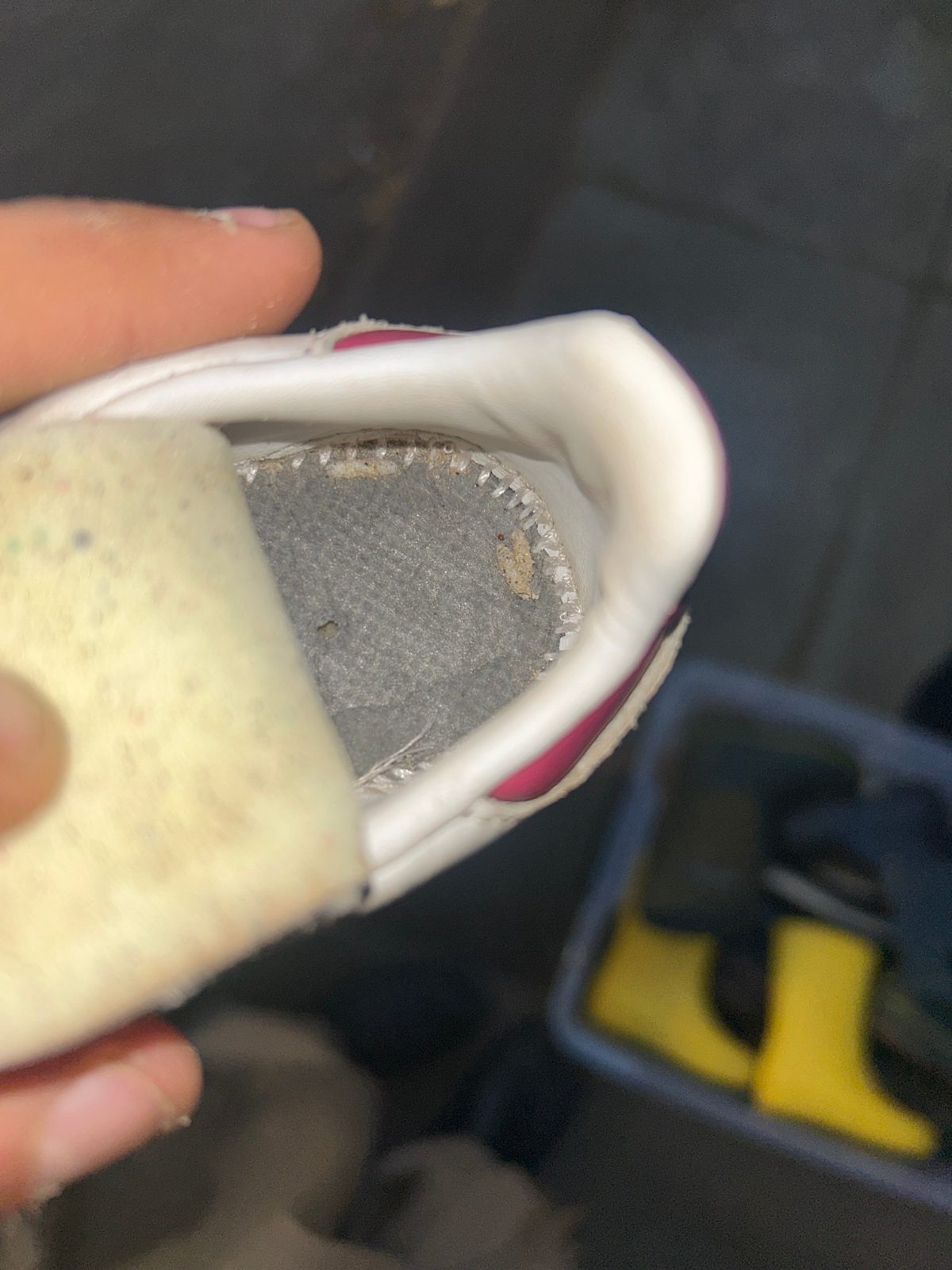
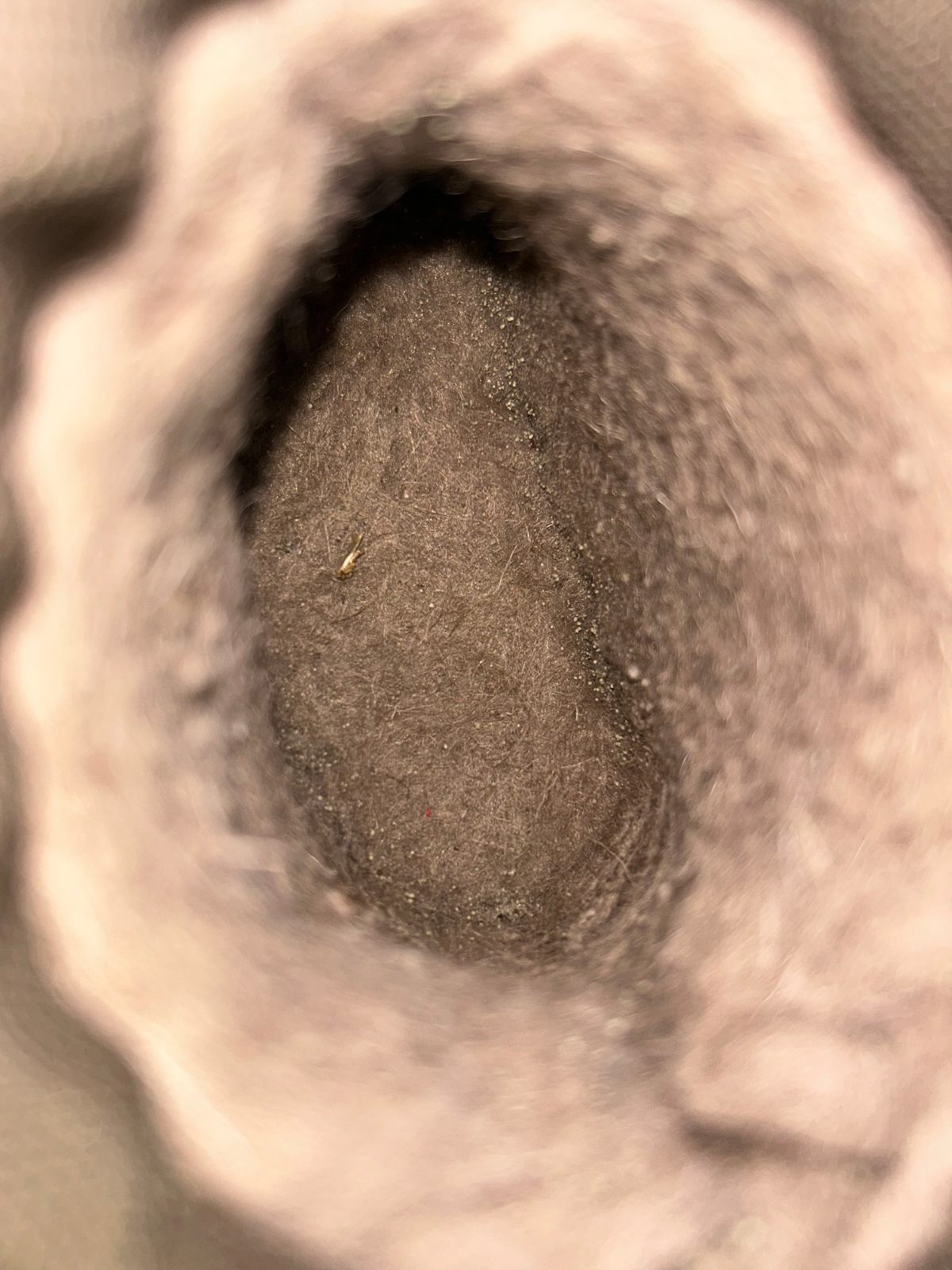
Designer shoes hold heat in the toe box and heel cavity, so steam is directed inside the shoe while exterior finishes stay out of the direct stream, after a check for glued or bonded parts. Leather jackets are HEPA vacuumed on the outside and steamed only on the lining. Some silks, metallic yarns and fused interlinings should not take heat at all; for those, freezing is available as an add-on, with a deep freezer installed in your home.
Do the clothes need dry cleaning afterwards?
No. Heat and steam do the killing, and dead eggs and larvae are harmless. Cleaning is optional, mainly for soiled pieces before storage, because sweat and food stains attract the next generation. Dry cleaning a full closet in Manhattan can cost more than an entire treatment program, and it does nothing for the shelves, rails and rug edges where larvae keep living.
See how the full in-home process works on our clothes moth treatment page and the private client wardrobe program, or read how individual fabrics are handled in the fabric care index. Call (347) 210-4646 to book an assessment.
Dry cleaner refused your clothes because of moths? What to do when your dry cleaner won’t take moth-infested clothes
A Brooklyn-based, NYSDEC-registered company (Reg. #15140) led by Jorge Bedoya, an Associate Certified Entomologist (ACE). For pests in your home or building, NYE provides IPM-based, low-exposure control matched to the exact pest and verified with a follow-up. ACE-led work comes with a client portal of service reports and photos, fully bilingual service, and no long-term contract.
Steam and clothes moth eggs FAQ
Does steam kill clothes moth eggs?
Heat kills clothes moth eggs, and steam is one way to deliver it. Published research found four hours at about 106°F killed every life stage. Steam works on exposed surfaces; for eggs deep inside a garment, we use a heat chamber held above 120°F at the core for four hours.
Can you steam cashmere to kill moths?
Yes, with low-moisture superheated steam spread wide rather than concentrated, and with distance set by the fabric. In our field use on cashmere we have seen no shrinking or texture change, but every piece is assessed first.
Is a regular garment steamer enough?
Usually not. Household steamers put out wet, cooler steam designed for wrinkles, which adds moisture without delivering reliable heat to eggs in seams and folds.
What happens to shoes and leather jackets?
Shoes are steamed inside, where heat collects in the toe and heel. Leather exteriors are vacuumed, not steamed, and only the lining gets steam.
Do my clothes leave the apartment?
No. The chamber, the steamer and the crew come to you, and everything is treated in your home.