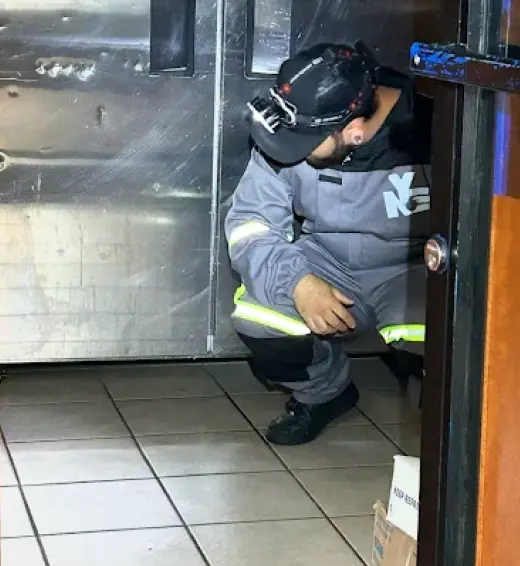
Trusted extermination services to keep your home, business, and customers pest-free
Quick answer
To get rid of ants for good in NYC, you have to eliminate the colony, not just the trail. New York Exterminating uses non-repellent baits that worker ants carry back to the nest and seals the entry points so new colonies can’t return. Ant control is guaranteed, with same-day service and a free estimate across all five boroughs.
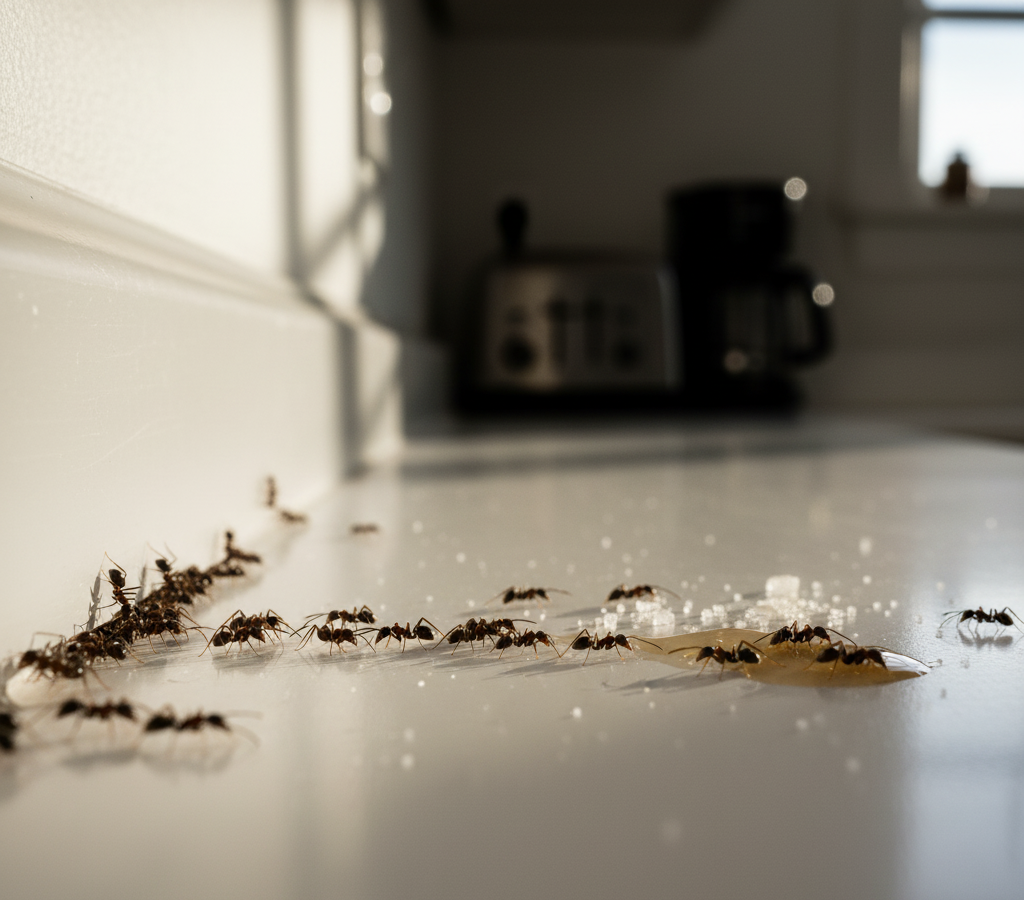
You’ve got a line of ants marching across your kitchen counter. You spray them. They die. Tomorrow, there’s another line in a different spot. Next week, they’re in the bathroom. The month after, they’re in the bedroom.
Here’s why: You’re killing workers, but the colony is still alive somewhere—in your walls, under your foundation, in the yard, maybe even in a neighboring unit. Until the colony is eliminated, ants will keep coming back.
Effective ant control requires species identification (different ants need different treatments), locating the colony, and eliminating it at the source. That’s what we do.
or request service online. We’ll identify the species, locate the colony, and eliminate it for good.
What they look like — Small (1/8 inch), dark brown to black, parallel grooves on head and thorax. These are the most common ants in NYC.
Where they nest — Under pavement, concrete slabs, foundation stones, along sidewalk cracks, in brick mortar, beneath basement floors. They create small dirt mounds at pavement edges and cracks.
Why they’re inside — Foraging for food, especially sweets and greasy foods. They follow chemical trails through cracks in foundations, gaps around pipes, and spaces under doors. Peak activity in spring and early summer.
How we treat them — Perimeter barrier treatments, crack-and-crevice applications at entry points, exterior colony treatments, non-repellent sprays that workers carry back to the colony, exclusion recommendations.
Ant trails in your home? We eliminate the colony — guaranteed.
We find the nest, not just the trail, and seal the entry points. Free estimate, same-day service.
What they look like — Large (¼-½ inch), black or black-and-red, single node on waist. The big ants you see, often at night.
Where they nest — Inside wood—especially moist, damaged, or decaying wood. They excavate galleries in wall voids, structural timbers, hollow doors, window frames, and foam insulation. They don’t eat wood (like termites), but they hollow it out for nesting.
Why they’re inside — Attracted to moisture-damaged wood from roof leaks, plumbing leaks, poor drainage, or condensation. They also forage for food, especially proteins and sweets. Satellite colonies form in dry wood connected to main outdoor colonies.
How we treat them — Locate and treat colonies directly (often requires drilling and void treatments), eliminate moisture sources, remove damaged wood, apply targeted baits and non-repellent sprays, treat outdoor parent colonies if accessible, exclusion work to prevent re-entry.
What they look like — Tiny (1/16 inch), pale yellow to light brown with darker abdomen tip. These are the smallest common indoor ants in NYC.
Where they nest — Exclusively indoors in warm areas—inside wall voids, behind baseboards, inside electrical outlets, beneath floors, in furniture, even inside folded linens. Colonies are huge (thousands to hundreds of thousands) with multiple queens.
Why they’re a nightmare — They’re nearly impossible to eliminate without professional help. Colonies “bud”—when threatened, they split into multiple new colonies. Repellent sprays make infestations worse by causing budding. They contaminate sterile medical supplies and are major pests in hospitals.
How we treat them — Non-repellent baits only (sprays cause budding), multiple bait stations throughout the property, bait rotation to prevent aversion, treatment over 4-8 weeks with follow-ups, coordination with neighbors in multi-unit buildings (they travel through walls).
What they look like — Small (1/8 inch), dark brown to black, emit a rotten coconut smell when crushed (hence the name).
Where they nest — Outdoors under mulch, stones, logs, debris. Indoors near moisture sources—inside wall voids near leaky pipes, under sinks, in crawlspaces, behind dishwashers.
Why they’re inside — Foraging for sweets, especially honeydew from aphids. They move colonies frequently, especially after rain or when disturbed. They form supercolonies with multiple queens and interconnected nests.
How we treat them — Perimeter barrier treatments, locate and treat outdoor nests, moisture elimination, crack-and-crevice applications, non-repellent products (they’re sensitive to repellents and will relocate), exclusion work.
Urban landscaping provides nesting sites — Mulch beds, tree pits, sidewalk cracks, foundation gaps, retaining walls—NYC’s urban landscape creates countless ant nesting sites right against buildings. Pavement ants especially thrive in the concrete jungle.
Moisture issues in older buildings — Carpenter ants are attracted to moisture-damaged wood. Many NYC buildings have chronic roof leaks, plumbing issues, poor drainage, and condensation problems that create perfect carpenter ant habitat.
Connected multi-unit housing — Pharaoh ants and other indoor species travel through shared walls, plumbing chases, and electrical conduits. Treat one apartment, but if neighbors have colonies, ants will reappear. Building-wide coordination is often necessary.
Year-round warmth indoors — Heated buildings keep indoor ant species active year-round. Pharaoh ants especially thrive in constant warmth, breeding continuously without seasonal slowdown.
Abundant food sources everywhere — Restaurants, food vendors, garbage rooms, sidewalk trash—NYC provides unlimited ant food. Even clean homes have accessible food if ants can find entry points.
Spring and summer swarms — Outdoor ant colonies produce winged reproductives (swarmers) in spring and early summer. These can be mistaken for termites. If you see winged ants indoors, there’s likely a colony inside your walls.
Construction disturbs existing colonies — Renovation, excavation, and landscaping work disrupts ant colonies, causing them to relocate into buildings. Construction also creates new entry points and disturbed soil perfect for nest establishment.
We identify which ant species you’re dealing with. This is critical—carpenter ants need wood treatment, pharaoh ants require specialized baiting, pavement ants need exterior control. Wrong identification means wrong treatment.
We locate foraging trails, entry points, nesting areas (if accessible), moisture problems, and food sources. We assess infestation severity and explain what’s causing the problem and where the colony likely is.
Step 2: Customized Treatment Plan — Based on species identification and colony location, we develop a targeted plan:
Step 3: Treatment Application — We apply treatments where ants actually live and travel—not just where you see them.
Most ant problems require follow-up visits. Pharaoh ants need 4-8 weeks of continuous baiting. Carpenter ants often have satellite colonies that appear after initial treatment. Outdoor ants may require seasonal retreatment.
We return to:
Step 5: Long-Term Prevention — Once the colony is eliminated, we help you keep ants from returning:
Timeline depends on species, colony size, accessibility, building conditions, and whether contributing factors (moisture, entry points, neighboring colonies) are addressed.
If you’re seeing these signs, you have an established colony that needs professional treatment.
Wrong product for the species — Over-the-counter ant sprays are repellent products. They work on some ant species but make pharaoh ant infestations worse by causing colony budding. Pavement ants just avoid treated areas and find new entry points.
Killing foragers doesn’t eliminate the colony — The ants you see are foragers—expendable workers collecting food. The queen(s) and thousands more workers remain in the nest, continuing to produce more ants. You’re fighting symptoms, not the source.
Store-bought baits are often ineffective — Consumer baits use outdated formulations. Professional baits are more palatable, use non-repellent actives, and are rotated to prevent bait aversion. Pharaoh ants especially become bait-averse quickly.
Can’t access where ants actually nest — Carpenter ants nest inside walls. Pharaoh ants nest in wall voids and electrical boxes. Pavement ants nest under concrete slabs. You can’t reach these with surface sprays or bait stations placed on counters.
No species identification — Most people can’t identify ant species. You might treat for pavement ants when you actually have carpenter ants damaging your structure. Wrong diagnosis means wrong treatment.
Missing the outdoor source — Many indoor ant problems originate from outdoor colonies. Treating inside without addressing the outdoor colony means ants keep coming back as soon as interior treatments wear off.
In multi-unit buildings, work with neighbors and building management. Your unit can be ant-free, but if colonies exist in neighboring units, eventually they’ll find their way to you.
If you see large black ants and suspect structural damage, you might have carpenter ants. If you see mud tubes or pale insects in damaged wood, you likely have termites. Both require professional treatment, but they’re treated differently.
Here’s the deal: Ants don’t leave on their own. The colony grows larger, produces more workers, and eventually creates satellite colonies throughout your property. What starts as a few ants in the kitchen becomes trails in every room.
Professional ant control targets the colony, not just the workers you see. We identify the species, locate the source, and eliminate it properly.
Call us at +1 (347) 210-4646 — or request service online. We’ll identify your ant species, locate the colony, and start treatment within a week.
1115 E 13th St, Brooklyn, NY 11230
Licensed & Certified Since 2010
Correct ant species identification is what makes a treatment plan stick instead of recurring. Our team is led by Jorge Bedoya, an Associate Certified Entomologist (ACE) credentialed by the Entomological Society of America (ESA) — so the work is done with ACE-level expertise and a formal Code of Ethics behind it, not guesswork.
The most common are pavement ants, odorous house ants, and carpenter ants, plus pharaoh ants in apartment buildings. We identify the species first, because nesting habits and treatment differ — carpenter ants, for example, tunnel into wood and need a different approach.
Killing the ants you see does nothing — the colony and queen stay hidden. We use non-repellent baits the workers carry back to the nest, eliminating the colony at the source, and we seal the entry points so new colonies can’t move in.
DIY sprays kill foragers but not the nest, and can even cause the colony to split and spread. Ants also follow scent trails to food and water. We break the trail, eliminate the colony, and address the moisture and entry points that attract them.
Yes. We use targeted baits and treat cracks, entry points, and exterior perimeters rather than open living areas, following an integrated approach. We’ll give you any short re-entry guidance before we start.
Through tiny gaps around doors, windows, foundations, and where utility lines enter, and along branches or shrubs touching the building. In apartments they travel through wall voids and plumbing. We find and seal these entry points as part of the service.
Carpenter ants don’t eat wood but excavate galleries in it for nests, which can weaken structures over time. Signs include large black ants indoors, sawdust-like shavings, and faint rustling in walls. We confirm the species and locate the nest.
With baiting you may see more ants briefly as they carry bait back, then a steep decline within one to two weeks as the colony collapses. Heavier or multi-colony infestations may need a follow-up visit.
No. Ant control is performed at entry points, trails, and the exterior perimeter, so you can stay home. We’ll note any area to avoid briefly if needed.
Yes. Our ant service is guaranteed — if ants return between scheduled visits, we come back and re-treat at no extra charge. We are a licensed, ACE-certified company serving all five boroughs.
See how homeowners and businesses rate our pest control services across New York.
Posted onTrustindex verifies that the original source of the review is Google. So let’s start with professionalism, great! Communication, great! Results, great!!! I was recommended to this company by a friend who experienced great results and i decided to give them a try. Everything there after exceeded my expectations. They have officially become my annual exterminator by choice.Posted onTrustindex verifies that the original source of the review is Google. Estoy muy satisfecha , un trabajo muy profesional , dedico mucho tiempo y es una persona muy pasientePosted onTrustindex verifies that the original source of the review is Google. Gorge did what he is supposed to do exterminated the rodents. Not only does he possess the skills necessary to get the job done but he has the needed customer service skills of Courtesy, Professional, and Respect. Muchas gracias for a job well done.Posted onTrustindex verifies that the original source of the review is Google. Jorge is sweet, patient, communicative and honest. Had a company try to quote me $2500 for a job, luckily I contacted Jorge right in time and he did the same job for me for $220. HIGHLY recommend.Posted onTrustindex verifies that the original source of the review is Google. Showed up on short notice, found the problem and provided guidance to assist with resolving our issue. Thank you!!Posted onTrustindex verifies that the original source of the review is Google. Jorge was really thorough and did an excellent job. Thank you 🙏Posted onTrustindex verifies that the original source of the review is Google. Today I had an appointment with Jorge. He was on time. Explained me everything. Perfectly did his work. Very nice and knowledgeable man. I can highly recommend him if you need an exterminator.Posted onTrustindex verifies that the original source of the review is Google. George is outstanding! He came out in the middle of the night when we had an urgent issue and handled everything with professionalism and care. He was patient, thorough, and fully committed to solving the problem, taking the time to explain what he was doing and making sure the job was done right. It’s rare to find someone so dependable and dedicated—George is the person you want to call if you need an exterminator you can trust.Posted onTrustindex verifies that the original source of the review is Google. Jorge was fast, responsive, and knowledgable. I recommend him.

Our expertise goes beyond simple extermination. Backed by certified specialists and proven methods, we combine science, precision, and care to deliver pest solutions that last. Every treatment is designed with your safety, comfort, and environment in mind.
Many of our clients have remained with us since 2010, demonstrating strong trust and long-term satisfaction.


Licensed by NYSDEC – Reg. #15140
Serving property managers, senior facilities, shelters, affordable-housing programs, and businesses across NYC since 2010 — many long-term clients trust our work.
Botanical/organic options, German-cockroach elimination and rodent-exclusion programs, full bilingual support (EN/ES), plus a client portal with reports, photos, and chemical logs for total transparency.
NYSDEC Registered — Reg. #15140 — with fully licensed technicians (Jorge Bedoya, Tomas Cusati, Jason Mendoza). We follow all regulations for safe, legal treatments.
Led by an Associate Certified Entomologist (Jorge Bedoya) and technicians trained in urban entomology, we use IPM and proven methods for lasting results.
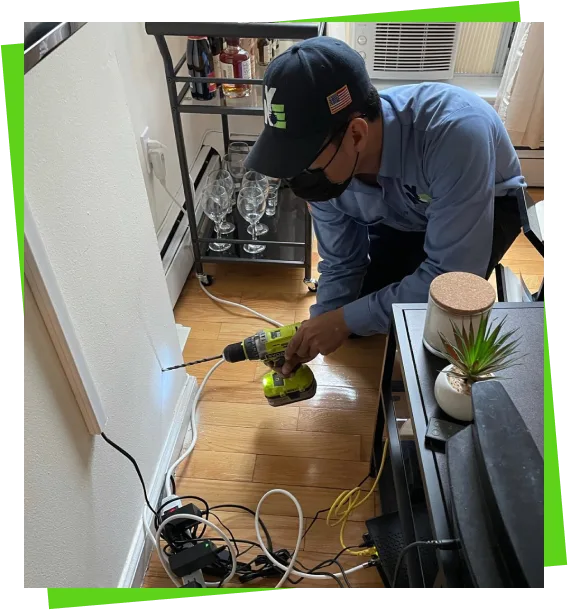
From first inspection to final follow-up, our science-based process ensures every pest problem is solved with precision, safety, and lasting protection
Find quick answers to common questions about our services, safety practices, and customer support
Yes. We use eco-friendly and low-toxicity treatments designed to protect your family, pets, and the environment.
Yes. We offer bilingual services in English and Spanish to ensure clear communication and support for all our clients across New York City.
We proudly serve all five boroughs of New York City — Brooklyn, Queens, Manhattan, the Bronx, and Staten Island — as well as surrounding areas.
You can access all your service reports, invoices, and treatment details through our secure online Client Portal. Simply log in anytime to view records, photos, and chemical logs for full transparenc
We specialize in removing rodents, insects, raccoons, and other common pests, providing thorough inspections and effective solutions to keep your home or business pest-free.
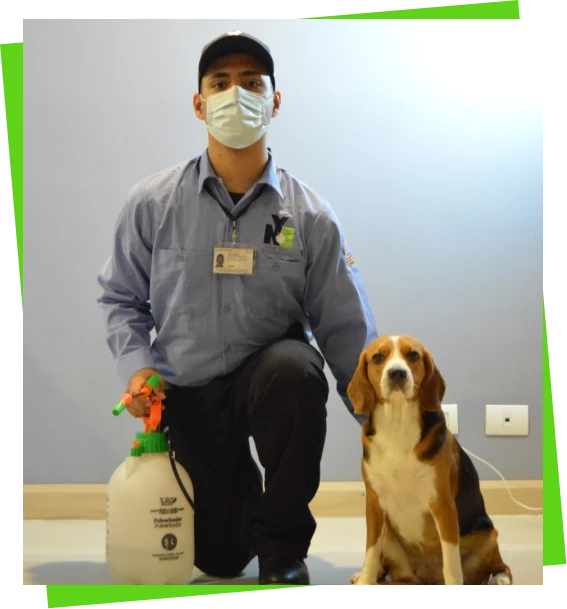
We proudly serve residential, commercial, and institutional clients throughout:
Providing reliable pest control solutions for homes, businesses, and institutions across the NYC metro area


Designed & Managed with 💛 By
Targeted ant control for NYC homes and businesses — we find the colony, not just the trail, and seal the entry points. Results guaranteed.