NYE Private Client · By appointment only
Clothes Moth Treatment in New Jersey: Alpine, Saddle River, Short Hills, Summit, the Somerset Hills, Rumson and the Shore
Across the river, the same wardrobes.The same program, the same report.
An Associate Certified Entomologist assesses every garment, rug and closet in your New Jersey home and processes the wardrobe on site with heat, freezing, steam and HEPA vacuuming. Nothing leaves the property, and any product application to the structure is carried out by a New Jersey-licensed pest control company we coordinate.
 Jorge Bedoya, ACEUpdated November 1, 202610 min read
New Jersey: four wardrobes, four kinds of house
Alpine (07620) is the most expensive ZIP code in New Jersey and, by PropertyShark’s 2025 data, among the most expensive in the country at a $4.35 million median sale price; Short Hills (07078) is at $2.42 million, Rumson (07760) at $1.95 million and Englewood Cliffs (07632) at $1.75 million, with Deal and Allenhurst at $3.55 million and $2.15 million on the Shore. Behind those ZIPs sit the towns the lists under-report because few houses trade in a year: Saddle River, Franklin Lakes and Ho-Ho-Kus in Bergen; Essex Fells, Summit and Chatham west of the Oranges; Far Hills, Peapack-Gladstone, Bernardsville, Mendham and Harding in the Somerset Hills; Spring Lake and Mantoloking on the water. Short Hills and Ho-Ho-Kus rank in the top hundred ZIPs nationally by per-capita income.
They are four different houses. Bergen County is the Palisades estate: a gated drive off Route 9W or Chestnut Ridge, a 1990s or 2000s house of fifteen thousand square feet with a dressing room the size of a Manhattan apartment, a cedar room, a wine cellar, a staff apartment and a garage that holds the overflow. Essex, Union and Morris are the 1920s Tudors and Georgians of the Midtown Direct line: built-in cedar closets, slate roofs, walk-up attics, the wool wall-to-wall that nobody has lifted since the previous owners. The Somerset Hills are horse country: eighteenth-century farmhouses rebuilt around the hunt, a barn, a tack room, a trophy room with mounts, a guest cottage and fifty acres between you and the neighbor. The Shore is the summer house, closed from September to May with a closet of wool inside it, which is the same problem we solve in the Hamptons.
What all four share with our Westchester and Long Island clients is the city. The wardrobe moves between a Manhattan apartment and the New Jersey house on the train, the ferry or Route 4, and a program that treats one and ignores the other is half a program. When the assessment finds activity we treat the city residence under the same report within two weeks, and in New York the whole program, including any structural work, is performed by New York Exterminating under its own license.
Four regions, one program.
The Palisades to the Shore.
Nothing leaves your home.
Here is exactly what happens on the day.
The usual moth job sends your clothes to a cleaner, your rugs to a restorer and your closets to an exterminator, and you live out of bags for two weeks while the three of them fail to coordinate. We do all of it in your house, in one visit, with the same two people from start to finish. In New Jersey, the one step that needs a pesticide label is performed by a New Jersey-licensed company we schedule into the same day.
Private assessment
Jorge Bedoya, ACE, walks every closet, dressing room, cedar room, attic, barn and rug with a headlamp and a hand lens. Each garment is checked for casings, grazing and frass and logged as clear, at risk or infested, with a photo, and rated against our Fabric and Brand Care Index. You receive the inventory and a fixed program price. The assessment is $750 and is credited to a program booked within 30 days.
Set-up and separation
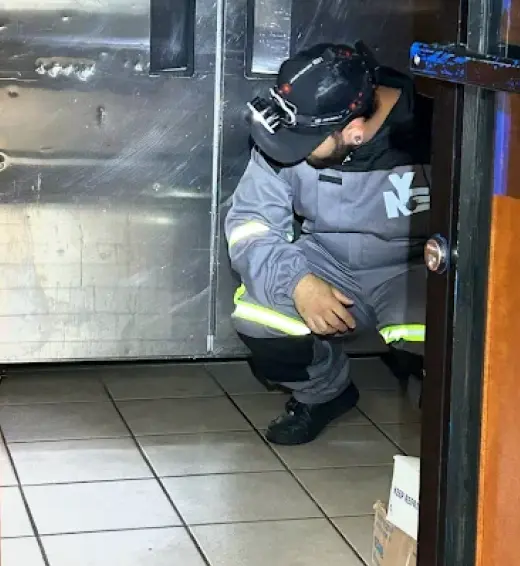
Two technicians arrive in an unmarked vehicle. Garments are sorted by the care rating from the assessment: heat-safe, freeze-only, or specialist-only. Hangers are kept with their garments and closet order is photographed so everything goes back where it was.
Heat chamber, probe verified
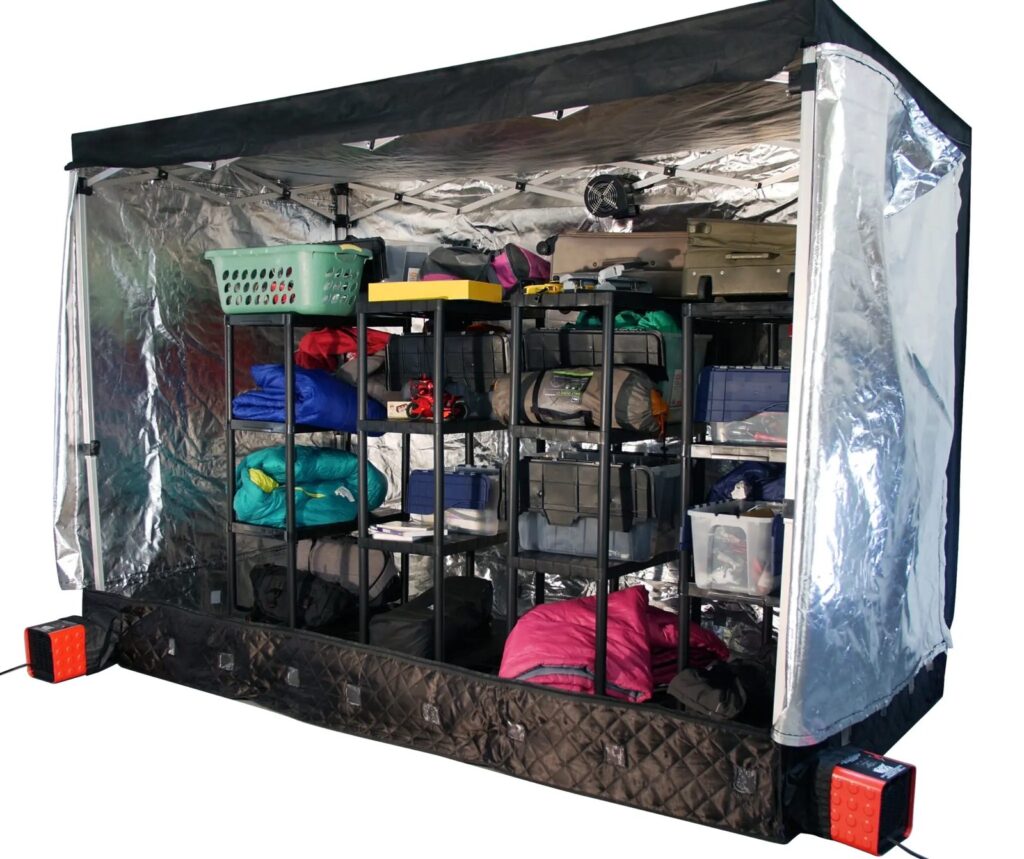
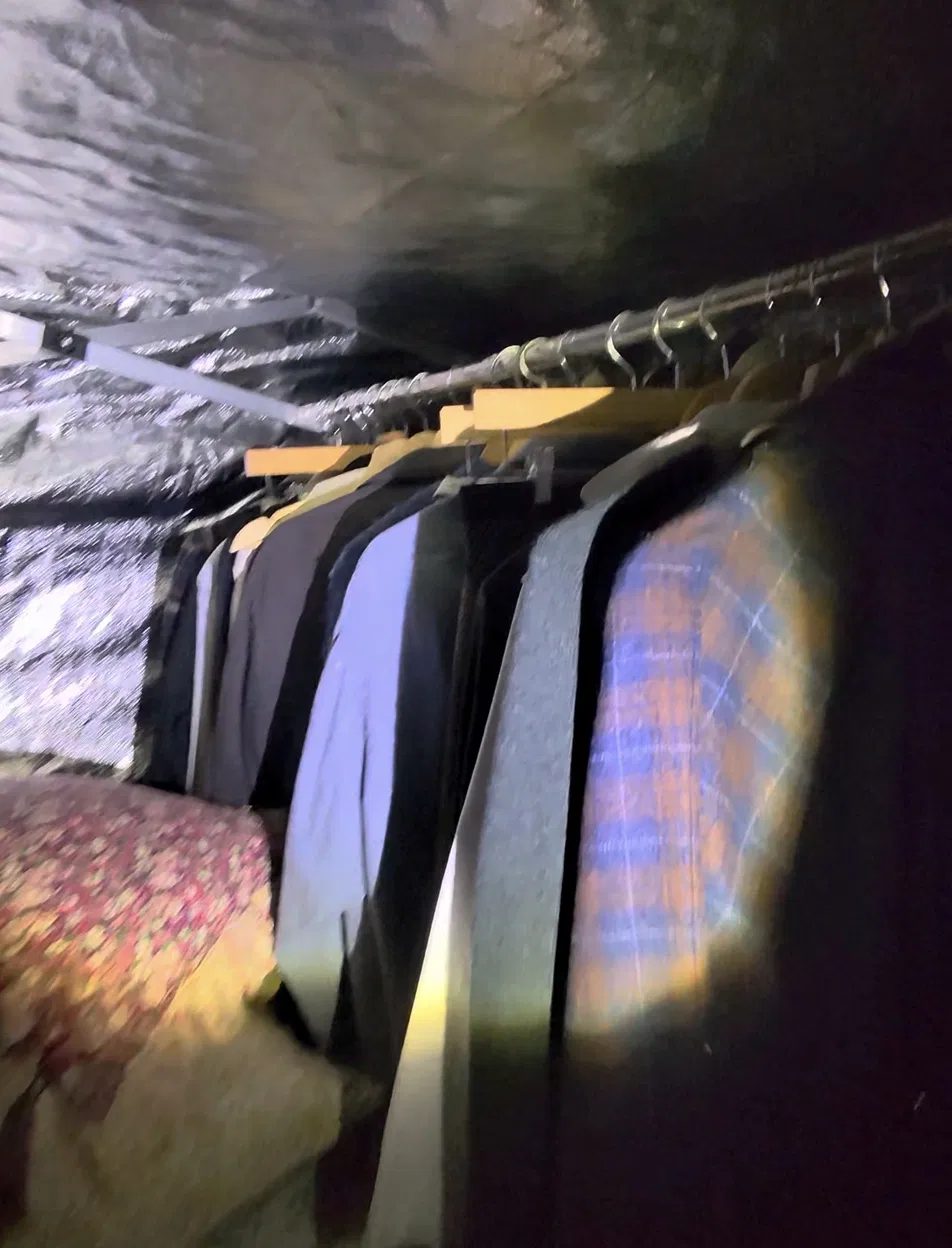
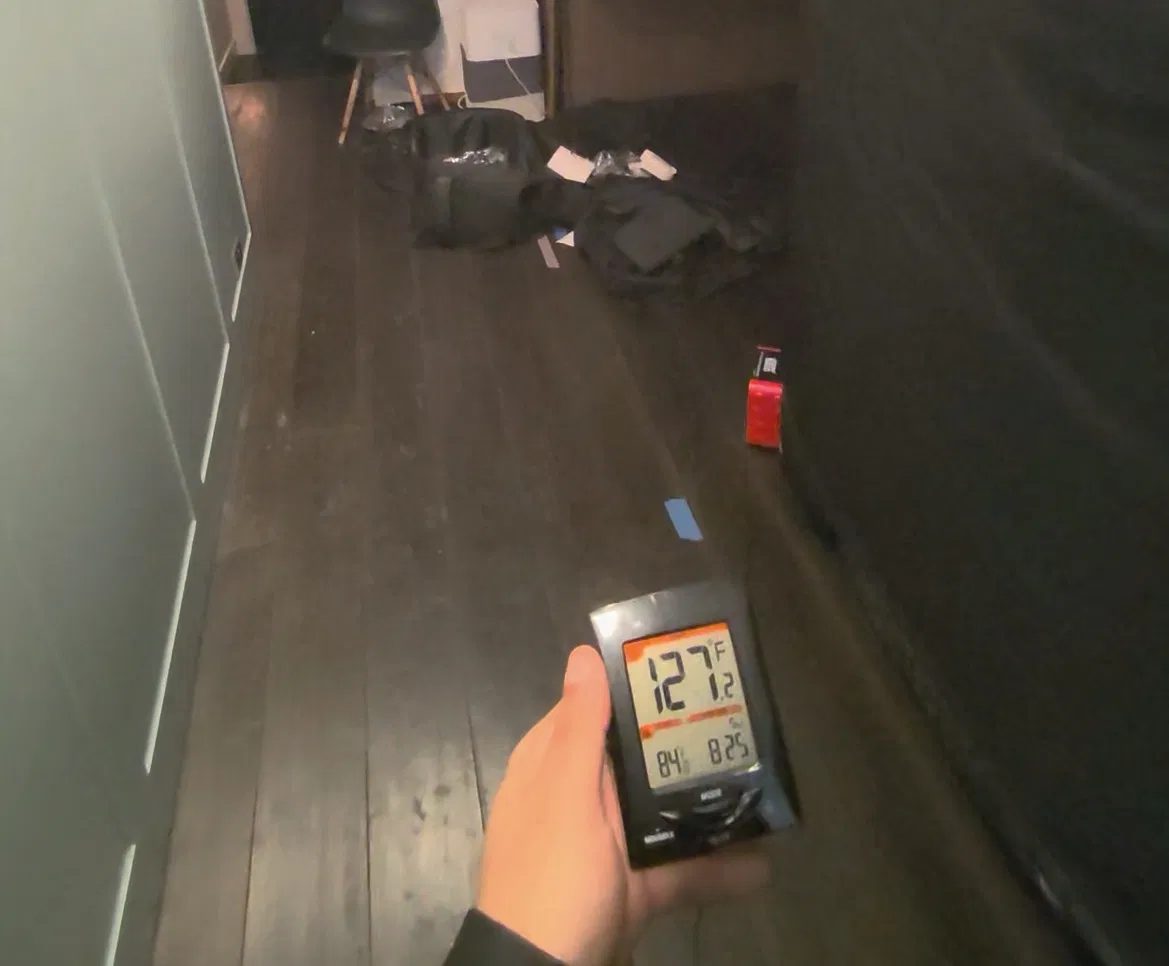
Heat-safe garments go into our ZappBug chamber in spaced rows, set up in your dressing room or garage. A probe thermometer sits in the most insulated spot of the load and the hold is logged until the core reaches lethal temperature for every life stage. The reading goes in your report.
Freezing for the delicate pieces
Cashmere, vicuña, silk, bouclé and anything with glue, beads or fur trim is sealed in archival bags and frozen in our portable chest freezers, then thawed slowly. Couture that needs a conservator is set aside and we coordinate the hand-off with your specialist.
Closets, rugs and rooms
Empty closets are steamed and HEPA-vacuumed shelf by shelf, including rails, baseboards and the carpet edge under the kick plate. Rugs are inspected on both sides, fringe and edges vacuumed, and treated or frozen according to size. Where the structure itself needs a residual crack-and-crevice treatment, the New Jersey-licensed partner applies it under its own New Jersey license, never onto clothing, and its service record is attached to your report.
Reset, protect, verify
Garments return to the closet in their original order. Where a vapor strip is appropriate and the label allows, the partner company places it on the closet rail, clear of all fabric, with the door closed. Pheromone monitors go into every treated room and we return at 30, 60 and 90 days to read them. Those visits are verification only.
An hour to Alpine and Englewood Cliffs via the George Washington Bridge, seventy-five minutes to Short Hills and Summit via the Goethals and I-78, ninety minutes to the Somerset Hills, and seventy-five to ninety minutes to Rumson and the Shore via the Outerbridge and the Parkway. Bergen, Essex and Union programs are one day; Somerset Hills estates with a barn and guest cottage are usually the two-day Plus program; Shore houses are timed to opening and closing. Booked Tuesday to Thursday.
What we do ourselves,
and what a New Jersey-licensed company does.
New York Exterminating holds its pesticide business registration and applicator certification in New York State (NYSDEC #15140). In New Jersey, the work we perform ourselves is the work that needs an Associate Certified Entomologist and a chamber, not a pesticide label.
Performed by NYE Private Client
- The assessment: every garment, rug, closet, attic and barn inspected and rated by Jorge Bedoya, ACE, with the photographed inventory and the written report.
- Heat chamber processing on site, probe-verified, logged.
- Freezing of cashmere, vicuña, silk, bouclé and anything heat-sensitive, in sealed archival bags.
- Steam and HEPA vacuuming of closets, shelving, carpet edges and both sides of every rug.
- Monitor placement and the 30, 60 and 90-day readings.
- Coordination with your furrier, conservator, rug restorer and house manager.
Performed by a New Jersey-licensed partner
- Any pesticide application to the structure, under the partner company’s own New Jersey pesticide business license and licensed commercial applicator.
- Scheduled by us for the same day where possible, so you deal with one calendar and one point of contact.
- Documented in their service record, which is attached to your Private Client Report.
- Not every house needs this step. When the assessment finds the source in the wardrobe and the rugs rather than the structure, the program is complete without it.
The same arrangement applies to your Manhattan residence in reverse: there, New York Exterminating performs the whole program under its own license.
The Private Client Report.
Proof, not reassurance.
Every program ends with a document, because a wardrobe of this value deserves a record and because you may need to show someone what was done. The report is written for three readers: you, your insurer and whoever cares for the clothes after us.
Findings
Where larvae, casings and grazing were found, room by room, with photographs. The likely source and how long it has probably been active.
Garment inventory
Every item assessed, its care rating, what was done to it and its condition after. Damaged pieces are listed separately with photos for an insurance claim or a tailor.
Treatment log
Chamber probe readings and hold times for each load. Freezer temperatures and durations. Any product applied to the structure by the New Jersey-licensed partner, with EPA registration numbers and the partner’s own service record attached.
Monitoring and next steps
Trap counts at 30, 60 and 90 days, storage recommendations by garment type, and a seasonal check schedule for second homes and houses closed for the winter.
What we expect to rate most often in New Jersey houses:
| Garment | Why moths want it | Rating | How we handle it |
|---|---|---|---|
| Cashmere and camel coats that ride NJ Transit and the ferry | Worn daily, soiled at the collar, hung in two closets | Freeze | Frozen on site; the city closet is checked under the same report. |
| Hunt coats, breeches, tack-room wool and coolers | Horsehair and sweat-soaked wool stored in a barn | Heat, probed | Chamber with a core probe; the barn is walked as a source. |
| Furs and shearling in the Palisades dressing rooms | Hair on hide, stored at home instead of a vault | Specialist | Inspected, bagged and routed to a furrier’s cold vault; never in a chamber or freezer. |
| Beach-house wool in Deal, Spring Lake and Mantoloking | Damp, closed houses from September to May | Heat, probed | Chamber load; closets steamed and vacuumed before closing or at opening. |
| Antique rugs in pre-war Tudors and Georgians | Wool pile under furniture that has not moved in years | Case by case | Both sides inspected; steamed and vacuumed in place, or frozen by size. Antique and silk rugs to your restorer. |
Brand names describe fibre, construction and care only. New York Exterminating is not affiliated with any maker named. The full Luxury Fabric and Brand Care Index, sixty entries from vicuña to piano felt, is the reference behind every rating on this page.
Moths or carpet beetles?
The assessment answers it before anything is treated.
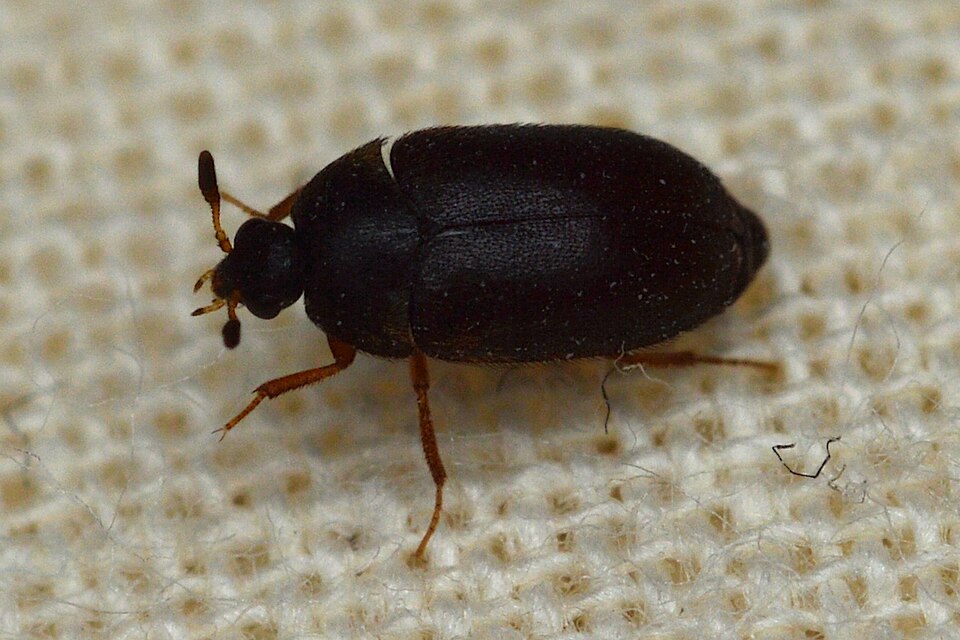
A wardrobe described as a moth problem often turns out to show the signs of carpet beetles instead, or as well. The two are processed the same way on the day, heat, freezing, steam and HEPA, but they live in different places, and a program written for the wrong one leaves the colony where it was.
Silk webbing and rice-grain casings
Webbing clothes moth larvae spin silk tubes and leave a scatter of frass the colour of the garment. Damage is in the closet, on worn collars and cuffs, under folds. Small gold moths that flutter rather than fly to light.
Shed skins and bare patches
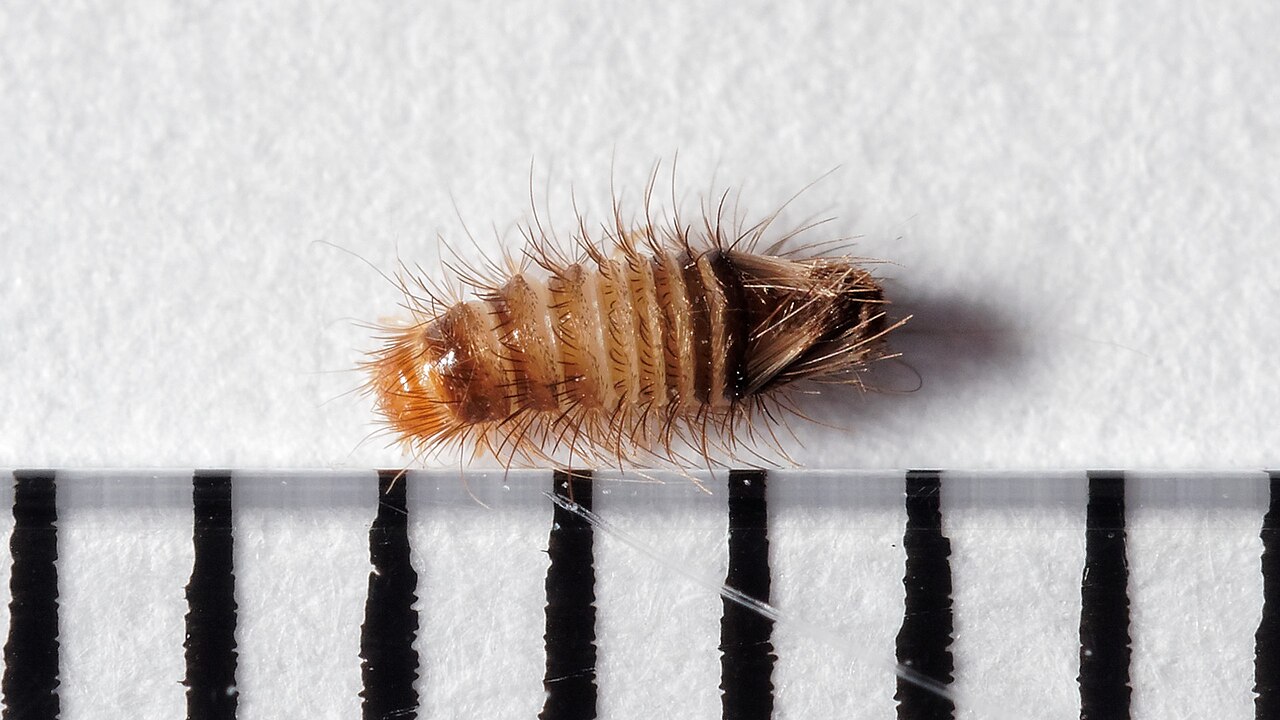
Carpet beetle larvae are bristled and leave papery, striped shed skins behind, with no webbing. Damage is a clean bald patch on a rug or a sweater fold. The source is usually outside the wardrobe: a bird’s nest, carpet padding, a dead rodent, horsehair upholstery.
One house, two sources
Moths in the dressing room and beetles under the library rug is a single program with two sources, and the report says which was which. In New Jersey it is handled on the same day, under the same price.
Full detail, species by species, on our Carpet beetle treatment for New Jersey estates page, and a plain-English comparison in carpet beetle vs clothes moth.
Three ways to engage us.
Prices are fixed at the assessment.
Wardrobe Assessment
Estate Wardrobe Program
Estate Wardrobe Program Plus
A partner company’s structural application, when one is needed, is quoted by them and shown as a separate line, so you can see exactly what you are paying each party for. Any repeat service within six months of a program is 50% of the original price. Payment plans are available. Apartments in the city are covered by our standard clothes moth service.
Discretion is the baseline,
not a feature we charge for.
A pest company in the driveway tells the street something. We assume you would rather it did not.
A spray in the closet and this
are not the same service.
The usual moth job
- Technician sprays the closet in twenty minutes and tells you to dry clean everything
- Clothes go to a cleaner, rugs to a restorer, and nobody coordinates the three
- Two weeks living out of bags while loads come and go
- No one knows which coat will delaminate or which jacket has canvas inside
- Nobody looks at the rugs, the attic or the barn, where the colony usually is
- A van with a cockroach on the side in your driveway
- “Call us if they come back”
NYE Private Client in New Jersey
- An Associate Certified Entomologist assesses every garment, rug and room before a price is set
- Heat, freezing, steam, closets and rugs all handled on site, in one visit, by the same two people
- Nothing leaves your home
- Each piece rated against a brand and fabric care index before it is touched
- Any product applied to the structure is applied by a New Jersey-licensed company, scheduled by us and documented in your report
- Unmarked vehicle, one contact, paperwork sent ahead
- Monitors read at 30, 60 and 90 days, and a written report you keep
You will be the one who found us.
We make sure that reflects well on you.
Private Client work in a house of this size is usually booked by the person who runs the house, not the person who owns it. We work the way you need a vendor to work.
Vendor packet in one email
COI naming the property, W-9, our NYSDEC license, the New Jersey license of the partner company that performs any product application, protocol summary and a sample report. Send it up the chain without a second request.
No surprises on the day
Arrival window confirmed the day before. Fixed price. Two named technicians. The partner company’s visit on the same calendar. Nothing added without your sign-off.
A report you can file
The Private Client Report goes to you first. You decide who else sees it. Monitoring dates go on your calendar, not ours.
Carpet beetles are covered under the same program and the same report; the assessment identifies which of the two is eating the wardrobe, and often it is both. See Carpet beetle treatment for New Jersey estates. For your Manhattan or Westchester residence, New York Exterminating performs the whole program, and the rest of the house, under its own license.
The same program,
on every side of the city.
“I do the assessment myself because the assessment is the job. Anyone can run a heat chamber. Knowing which jacket has horsehair canvas inside it, which coat will delaminate at 120 degrees and which rug is the actual source is what you are paying for. If I would not put a garment of my own through a step, it does not go through that step.”
Environmental scientist by training. NYSDEC #15140. What an ACE is · About Jorge
Request a private assessment in New Jersey.
Tell us the town, the size of the wardrobe, whether there is a barn or a shore house, and what you have seen. We reply the same business day with the next available dates.
New York Exterminating, Inc. · 1115 E 13th St, Brooklyn, NY 11230 · NYSDEC #15140 · 4.9 stars from 82 Google reviews · English and Spanish
Luxury Fabric and Brand Care IndexSixty entries: cashmere, vicuña, tailoring, fur, rugs, and how each is treated
The Complete Guide to Treating Clothes Moths ProperlyMethod, chamber, screening rules and service day
Clothes moth larvae: identificationCasings, webbing and grazing on wool and silk
Clothes moths in New Jersey: FAQ
Is New York Exterminating licensed in New Jersey?
Our pesticide business registration and applicator certification are in New York State. In New Jersey we perform the assessment, the on-site heat, freezing, steam and HEPA processing, the monitoring and the report, none of which is a pesticide application. When the structure needs a product applied, a New Jersey-licensed pest control company performs it under its own pesticide business license, and we coordinate the scheduling and attach their documentation to your report.
Does every New Jersey program need the partner company?
No. In most estate wardrobes the source is a rug, a stored trunk or a closet of untouched wool, and heat, freezing, steam and vacuuming resolve it. The assessment tells you before anything is booked whether a structural application is warranted, and if it is, who performs it and what it costs.
Can you treat our Manhattan apartment at the same time?
Yes. When the assessment finds activity, we treat the city residence under the same program and report, within the same two weeks, so garments stop carrying larvae across the river. In New York the whole program, including any structural work, is performed by us.
Do you cover Princeton, Colts Neck and Holmdel?
Yes, quoted on the same terms. Princeton is about ninety minutes and runs as a one-day program or a Plus program for a large house; Colts Neck and Holmdel are booked with the Rumson and Shore programs.
How far ahead do we need to book?
Twelve days, and we accept no more than ten Private Client programs a month across New York, Connecticut and New Jersey. Bergen, Essex and Union are usually booked Tuesday to Thursday; Shore houses to the opening and closing calendar.