Straight answers from a licensed New York exterminator and Associate Certified Entomologist (ACE) — serving all five boroughs, in English and Spanish.
Get a Free Estimate →⏱ 10 min read
Quick answer: Clothes moth larvae eat keratin, and cat hair is keratin. In a clean apartment with two cats and a robot vacuum, the vacuum collects all of that hair into one dark bag, which can feed moths even when there is little wool in the closet. New York Exterminating treats the vacuum, the cat items, the closets and the wardrobe together, mostly with heat, steam and HEPA vacuuming, and the full program carries a one-year service guarantee.
This is a real case from this month, shared with the client’s details removed. I am writing it up because it did not look like a moth job at first, and because the answer was sitting on the floor the whole time.
What we walked into
A well-kept duplex apartment. Very clean. The client has two cats. There was no moth activity on the second floor at all. Downstairs, three things did not add up:
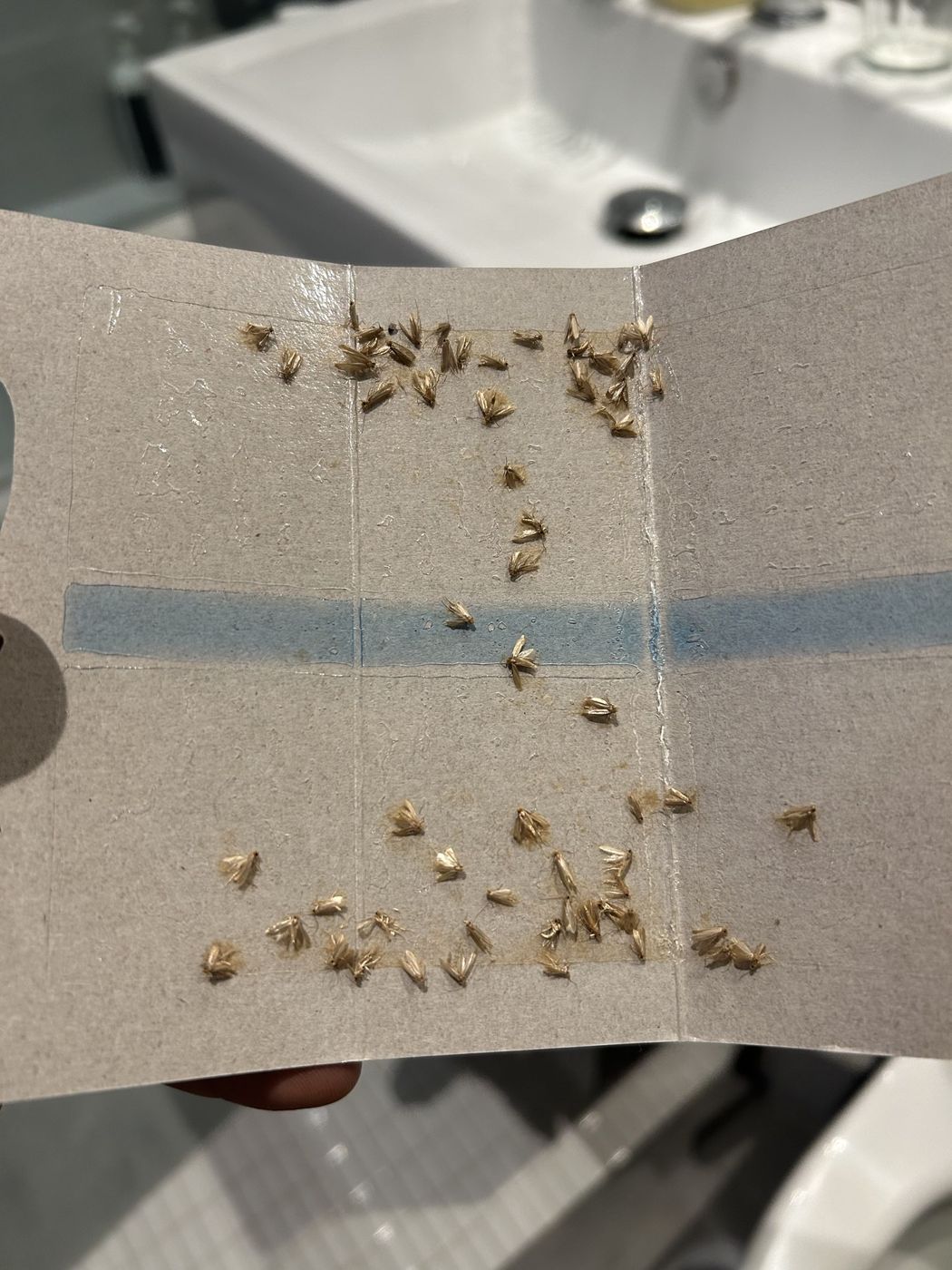
- A pheromone trap in one closet had caught dozens of male moths.
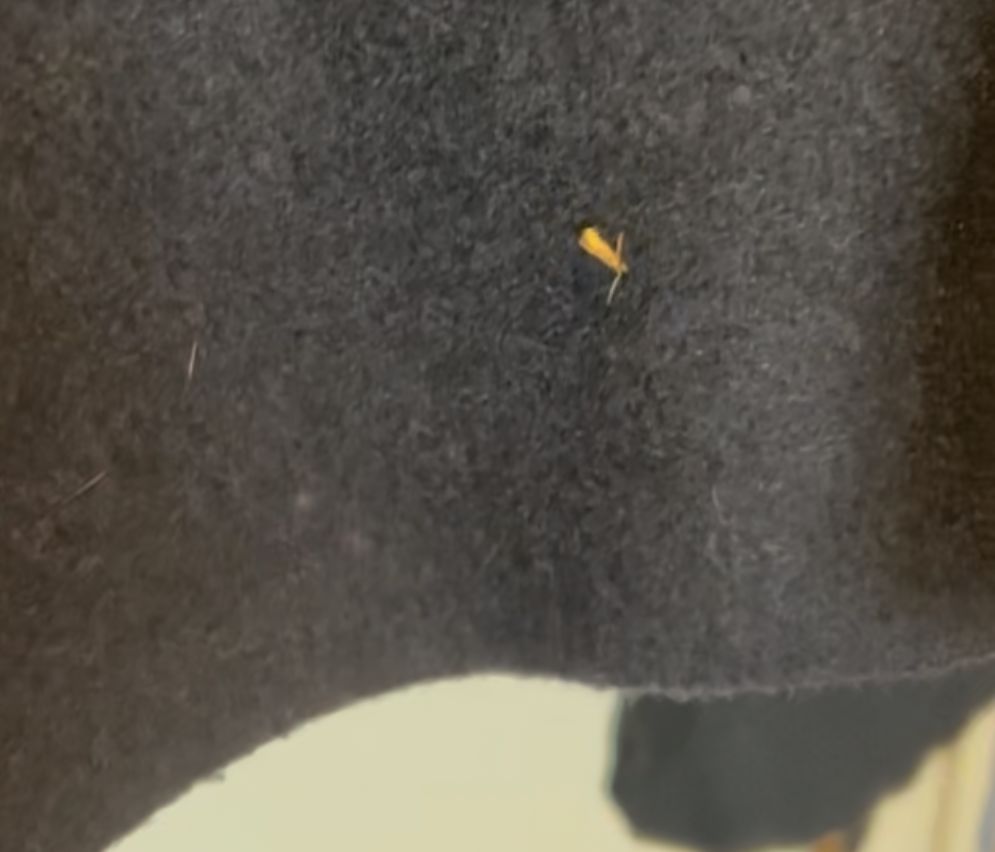
- Female moths were crawling on coats in that closet, and those coats were not wool or cashmere.
- The vacuum was full of moths.
Where the moths were coming from
The dust port of the robot vacuum’s self-emptying dock was packed with adult moths, with more in the tray underneath.
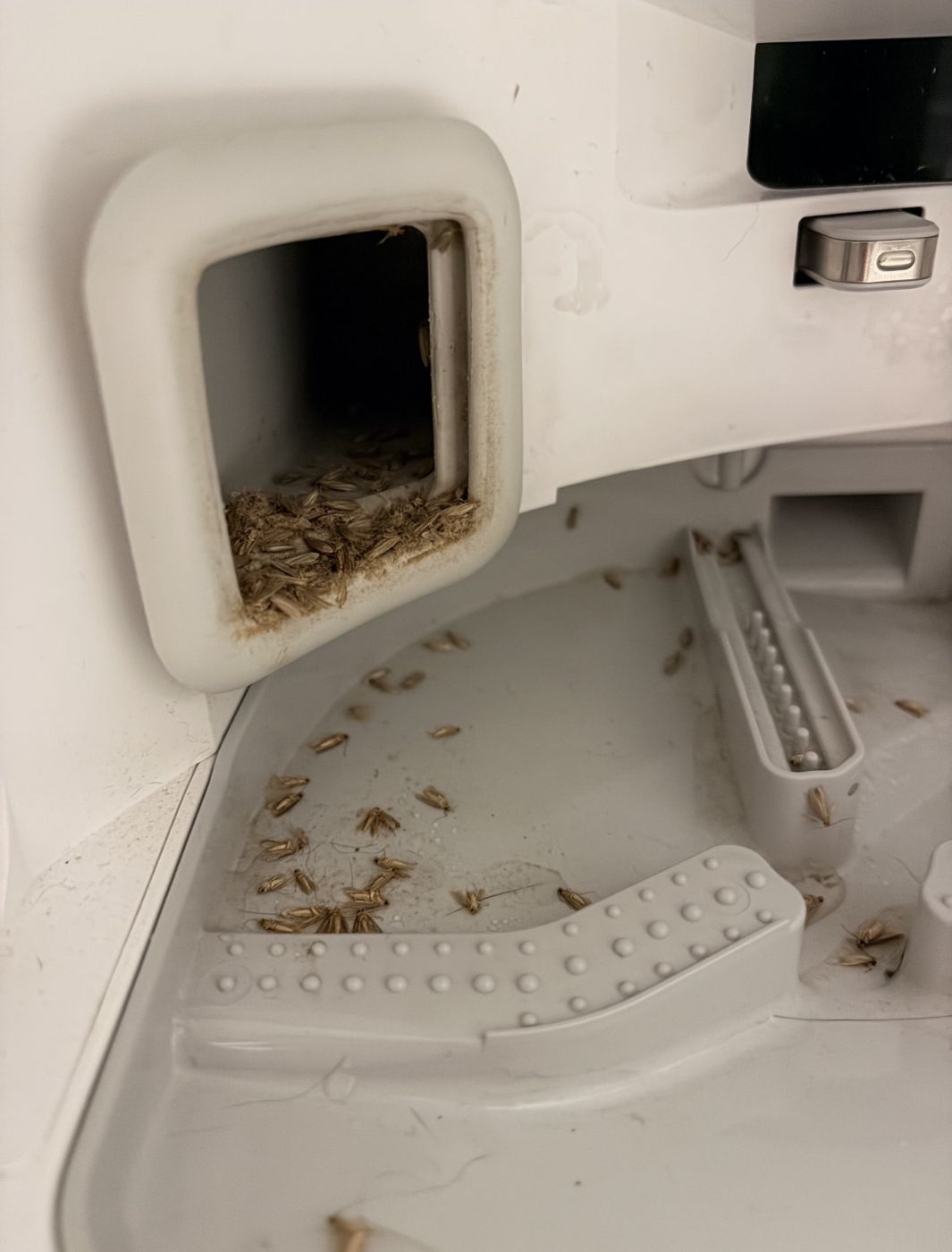
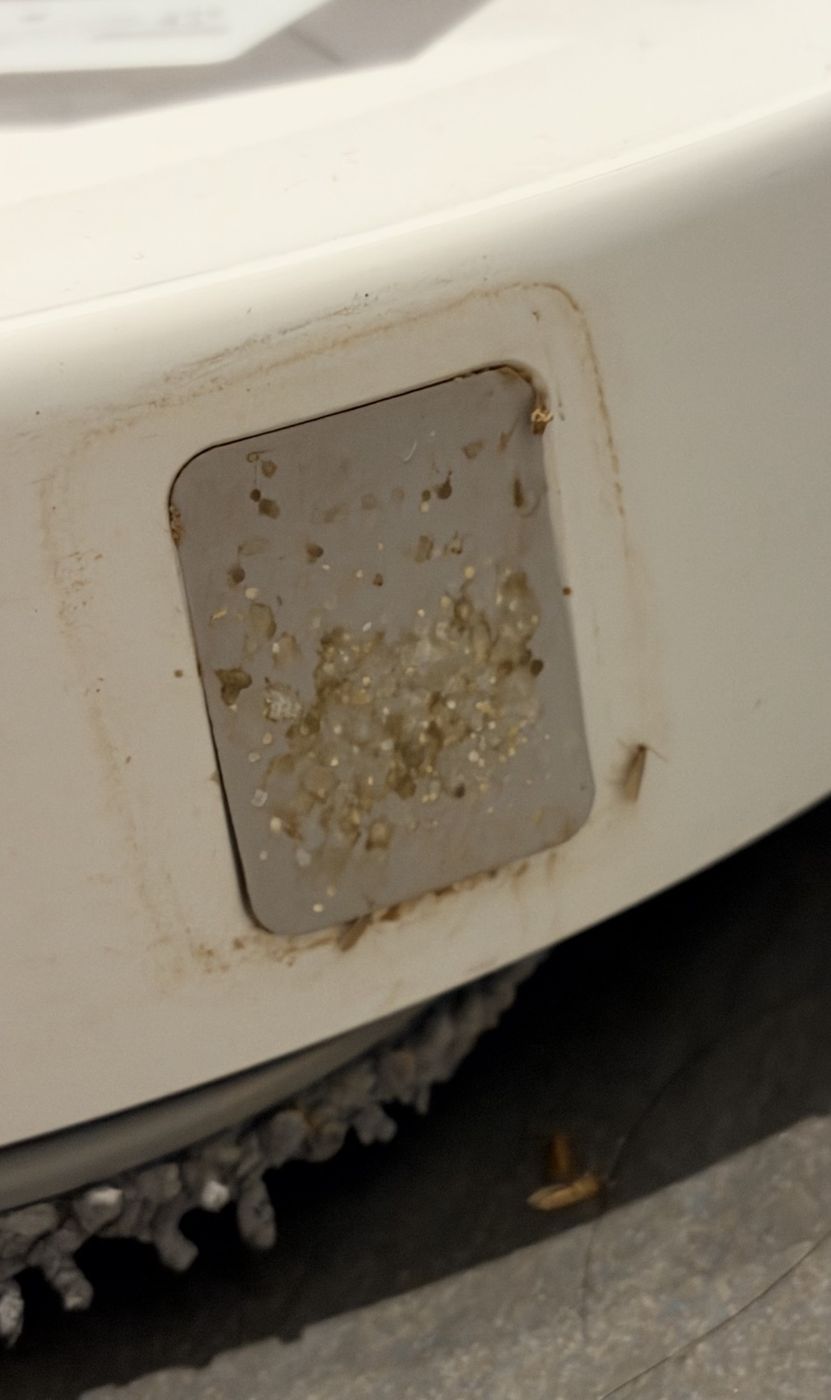
A self-emptying dock is close to ideal habitat for the webbing clothes moth. The bag holds weeks of cat hair, human hair, lint and wool fibre. It is dark, it is warm from the motor, and nobody opens it until it is full. University of California IPM advises emptying a vacuum promptly for this reason: the contents can include eggs, larvae or adult moths.
There are two ways moths end up in a vacuum, and the bag tells you which one you have:
- Breeding inside it. The bag or duct holds larvae, silk webbing, gritty droppings and empty pupal cases.
- Collected from the floor. Only adults are present. That means the source is somewhere on the vacuum’s route: a wool rug, a carpet edge, or under furniture it bumps against.
Either way, the vacuum’s route is the inspection map. In this home the robot only ran downstairs, and downstairs is the only floor with moths.
Why a clean home with cats gets this
People apologize to us for moths. They should not. Clothes moths follow keratin, not dirt. A home that is vacuumed every day by a robot is a home where every shed hair ends up in one place. The cleaning routine built the food source.
Cats add a second supply of keratin beyond the wardrobe. These are the places we add to the inspection when there are cats in the home:
- The vacuum, its bin, its filter, its brush roll and the dock bag
- Cat trees and scratching posts, especially carpeted platforms and the joints where hair packs in
- Cat beds, blankets and carriers
- Toys with feathers, fur or wool felt
- Grooming brushes
- Closet floors, because cats sleep in closets
- Under and behind furniture the vacuum cannot reach
As for the coats: female moths crawl more than they fly, so they show up on whatever is nearest. It is still worth checking those coats for down or feather fill, wool or horsehair interlining, felt under the collar and fur trim. All of those are keratin, whatever the outer label says.
What to do first if this looks like your home
- Do not open the vacuum bag indoors. Seal it in a plastic bag and take it out of the building.
- Replace the filter and wash the vacuum’s onboard bin.
- Wash cat bedding hot and dry it on high heat.
- Skip the mothballs. They contain naphthalene or paradichlorobenzene, and veterinary sources such as VCA Animal Hospitals list both as poisonous to cats.
- Keep the traps, but read them correctly. A trap tells you where the males are flying. It does not remove females, eggs or larvae. More on that here: what a full trap really means.
Those steps remove one food source. They do not treat the eggs already laid in the closet, on the rug or in the cat tree, which is where a full treatment comes in.
How we treat it, and why it suits a home with cats
Our program does most of its work with heat, steam and vacuuming, which leave nothing behind for a cat to walk through or groom off its coat.
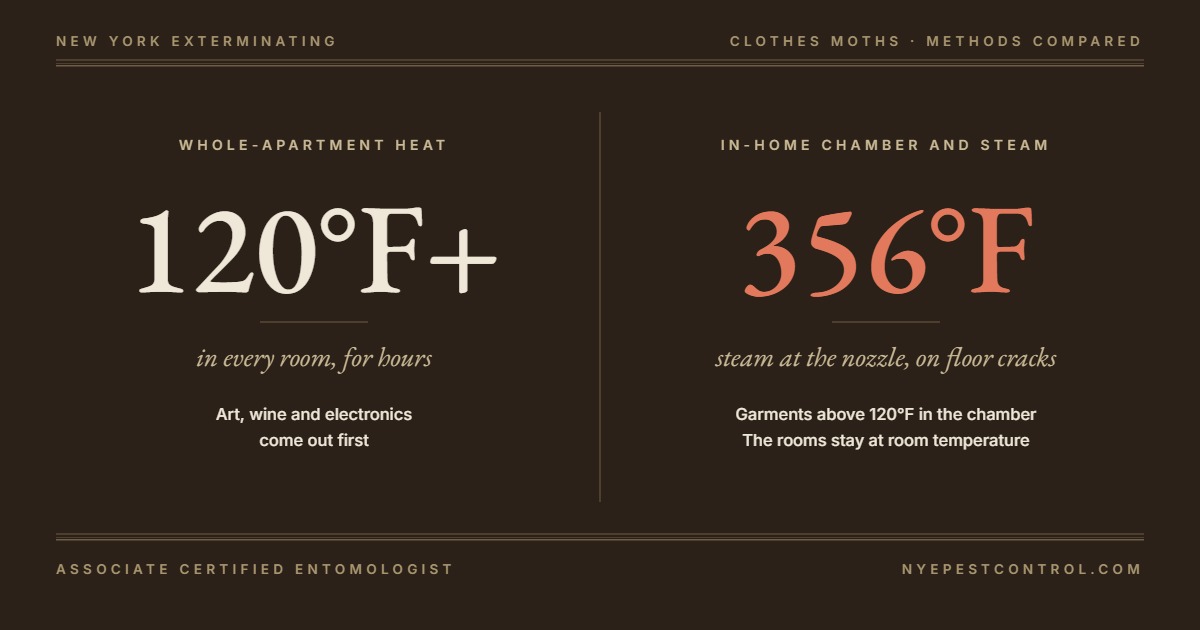
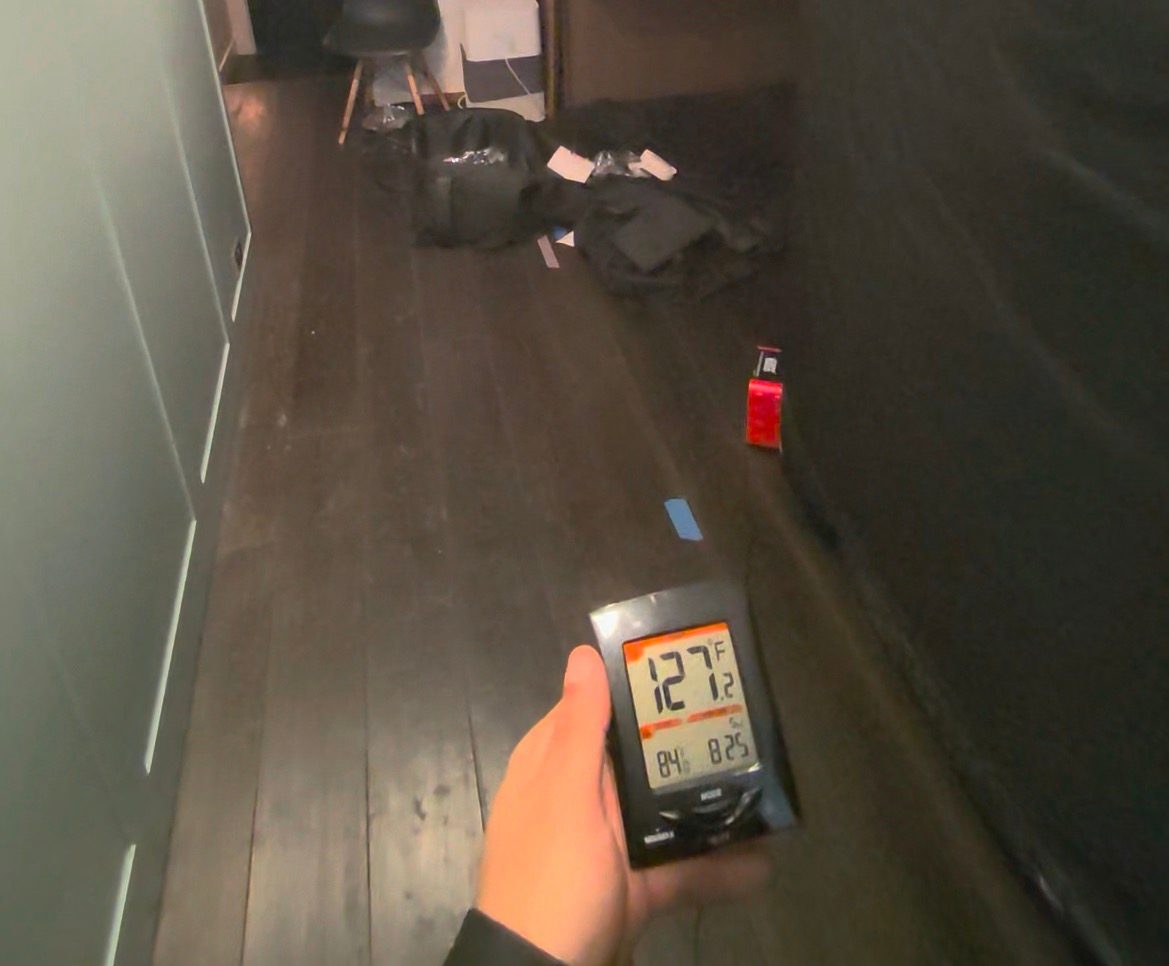
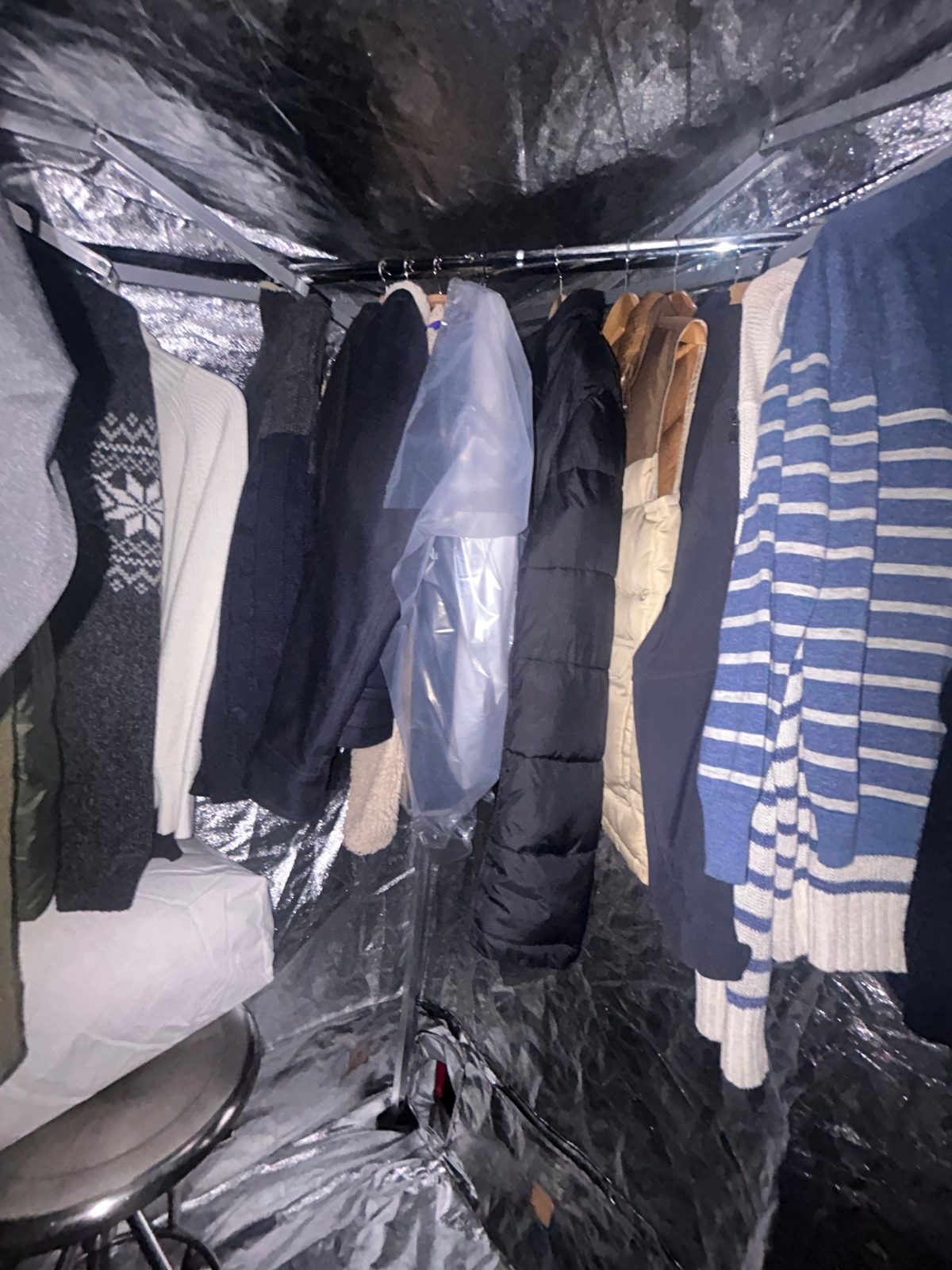
- Heat chamber in your home. Clothing, cat beds, blankets and soft toys go into a ZappBug Room set up on site, held above 120°F at the core for four hours. Published research puts complete kill of every life stage at about 106°F for four hours.
- Superheated dry steam. For the cat tree, floor cracks, baseboards, closet corners, shoe interiors and delicate garments.
- HEPA vacuuming. Both sides of every rug, room edges, under furniture, and the vacuum and dock themselves. The robot does not go in the chamber because of its battery.
- The vacuum and dock. Bag removed sealed, filter replaced, bin washed, brush roll stripped, plastic duct and tray steamed.
- Targeted product, only in closet structure. Never on clothing. Cats are more sensitive than dogs or people to pyrethrins and pyrethroids, and several plant oils are a problem for them too, so product choice is made label by label with the cats in mind. Cats stay out of treated rooms until everything is dry.
- Vapor strips only inside sealed bags or bins, never on an open closet rail a cat can reach.
Compare that with the usual options. A spray-only service treats the closet baseboards and leaves the vacuum bag and the cat tree exactly as they were. Whole-apartment heat works, but people, pets, plants, wine and art all have to leave first: whole-apartment heat vs. an in-home chamber. Dry cleaning the wardrobe does nothing for the floor, the rug or the dock: when the dry cleaner will not take the clothes.
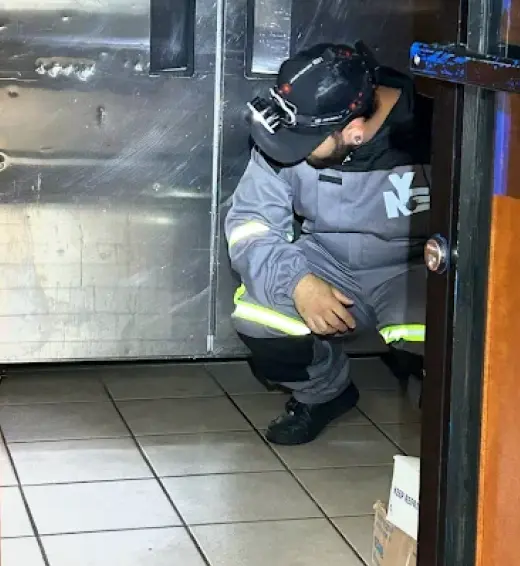
There is nothing for you to prepare. A licensed technician and a trained assistant handle the garments from the first closet to the last. See the full program and photos from real jobs.
Our one-year service guarantee
The full clothes moth and carpet beetle program is the only service we back with a guarantee. For one year after we finish, call us at any sign of activity. We reinspect your clothing and the area of concern at no additional charge, and if we find activity in an area we treated, we treat it again at no additional charge.
It applies to the full program only. A case like this one shows why: if we had treated the closet and left the vacuum, the moths would have been back within weeks and no guarantee would have been honest. We can only stand behind the work when we are allowed to do all of it.
What keeps it from coming back
- Change the dock bag monthly, not when it is full.
- Wash cat bedding hot every few weeks.
- Vacuum closet floors and under furniture by hand now and then, since the robot misses them.
- Store off-season wool and cashmere clean, in closed containers.
Written by Jorge Bedoya, ACE. Related: what clothes moth larvae look like and carpet beetle or clothes moth.
Not sure what you are dealing with? Text a photo to (347) 210-4646. An Associate Certified Entomologist (ACE) will identify it at no cost.
A Brooklyn-based, NYSDEC-registered company (Reg. #15140) led by Jorge Bedoya, an Associate Certified Entomologist (ACE). For pests in your home or building, NYE provides IPM-based, low-exposure control matched to the exact pest and verified with a follow-up. ACE-led work comes with a client portal of service reports and photos, fully bilingual service, and no long-term contract.
Clothes moths, cats and vacuums: FAQ
Can clothes moths live in a vacuum cleaner?
Yes. Clothes moth larvae feed on keratin, which includes hair, pet fur and wool lint. A vacuum bag or a robot vacuum dock collects exactly that material in a dark place that is rarely disturbed. University of California IPM advises emptying the vacuum promptly after use because the contents can include eggs, larvae or adult moths.
Do cats cause clothes moths?
No. Cats do not bring clothes moths in, and a home with cats is not a dirty home. Shed cat hair is keratin, though, so it gives larvae a second food source beyond wool and cashmere. Where the hair collects is where we look: the vacuum, cat trees, cat beds, closet floors and under furniture.
Why were there moths on coats that are not wool?
Female clothes moths crawl more than they fly, so they turn up on whatever is close to where they emerged. A coat can also hold keratin the label does not mention: down or feather fill, wool or horsehair interlining, felt under the collar, or fur trim.
Are mothballs a good idea in a home with cats?
No. Mothballs contain naphthalene or paradichlorobenzene, and veterinary sources list both as poisonous to cats and dogs. They are also only effective inside a sealed container, which is not how most people use them.
How does New York Exterminating treat clothes moths in a home with cats?
Most of the work is done with heat, steam and HEPA vacuuming, which leave no residue. Clothing, cat bedding and soft toys go into a heat chamber set up in the home and held above 120°F at the core for four hours. Any product use is limited to closet structure and chosen with the cats in mind, and the cats stay out of treated rooms until everything is dry, as the label directs.
Is the work guaranteed?
The full clothes moth and carpet beetle program carries a one-year service guarantee. If activity returns in an area we treated within a year, we reinspect and treat that area again at no additional charge. The guarantee applies to the full program only, because we cannot stand behind areas we were not asked to treat.