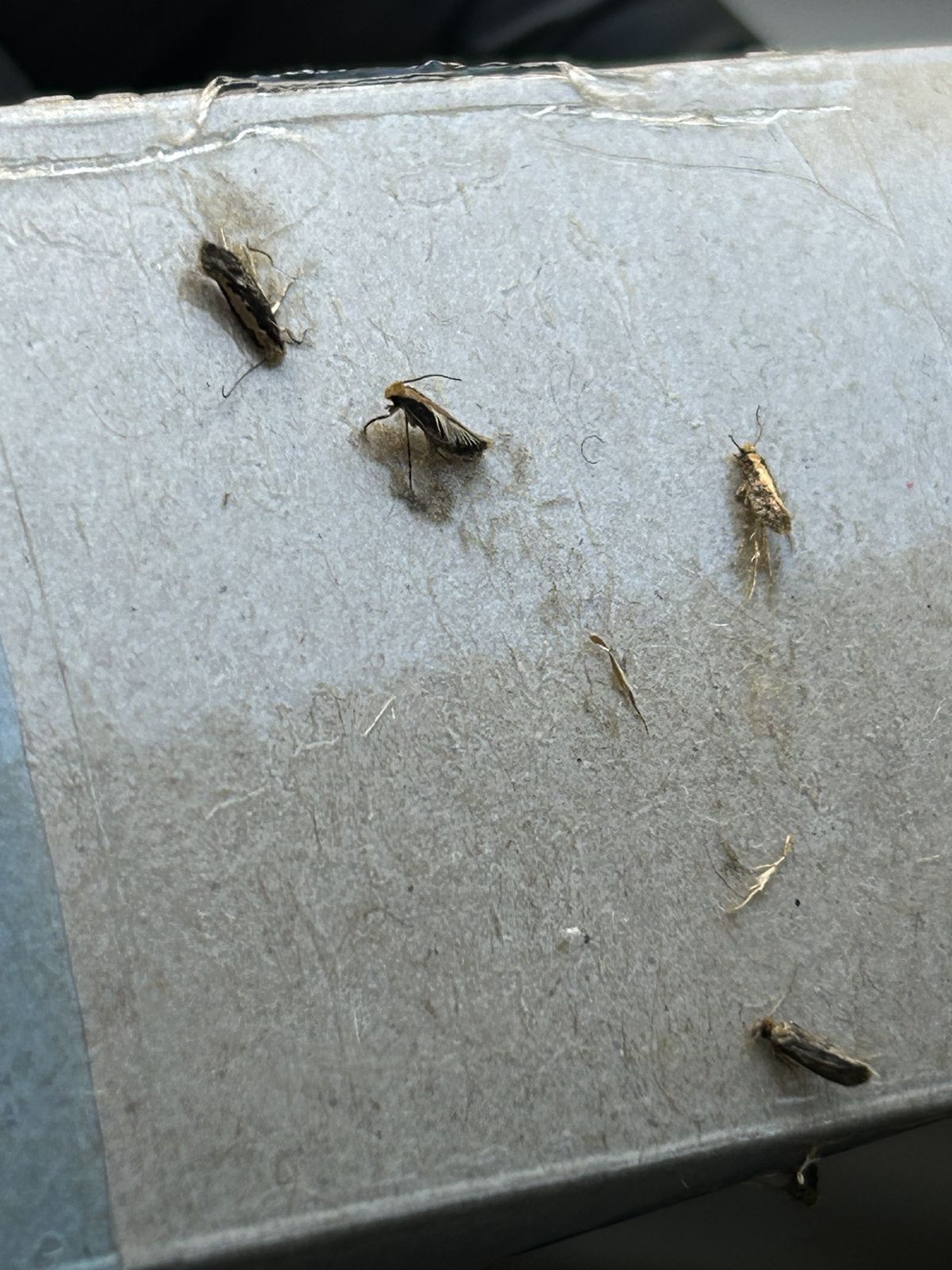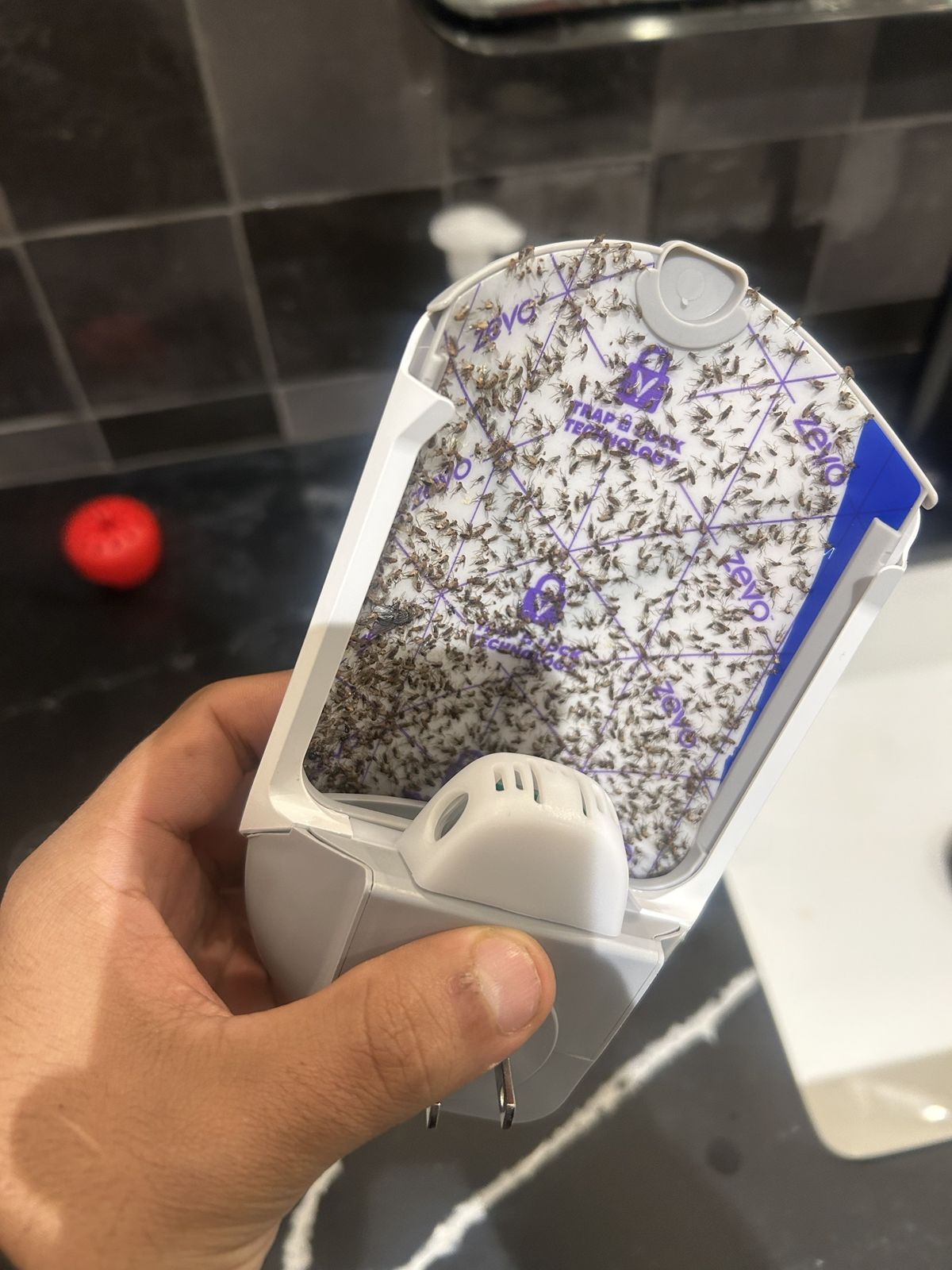
Quick answer
To get rid of German cockroaches in an NYC apartment, use a sequence, not a single spray: prep the kitchen and vacuum, put on gloves, an N95 mask and goggles, then apply an insect growth regulator (IGR) foam into the voids, a non-repellent aerosol into the cracks and small dots of gel bait, and set monitor traps to check at two weeks and two months. The IGR comes first in the plan because it stops the next generation from breeding. Roaches are common here: 30.6% of NYC homes reported cockroaches in 2023, according to the NYC Health Department’s Environment & Health Data Portal.
Need this handled, not just explained? See the German cockroach Trio Protocol — oil-based microinjection, non-repellent + IGRs and targeted gel baiting in a single visit. $299–$699, most cases resolved in one visit.
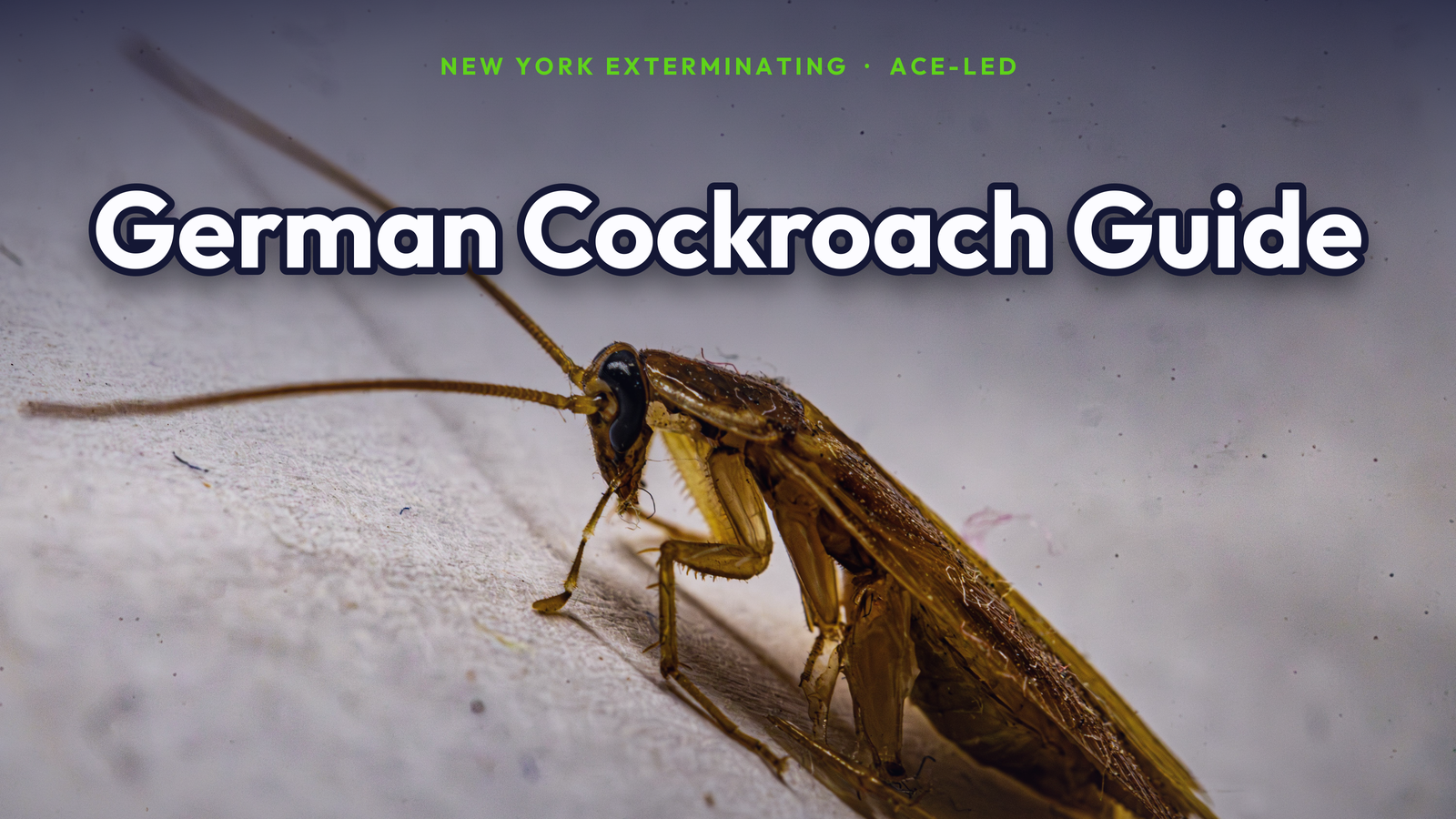
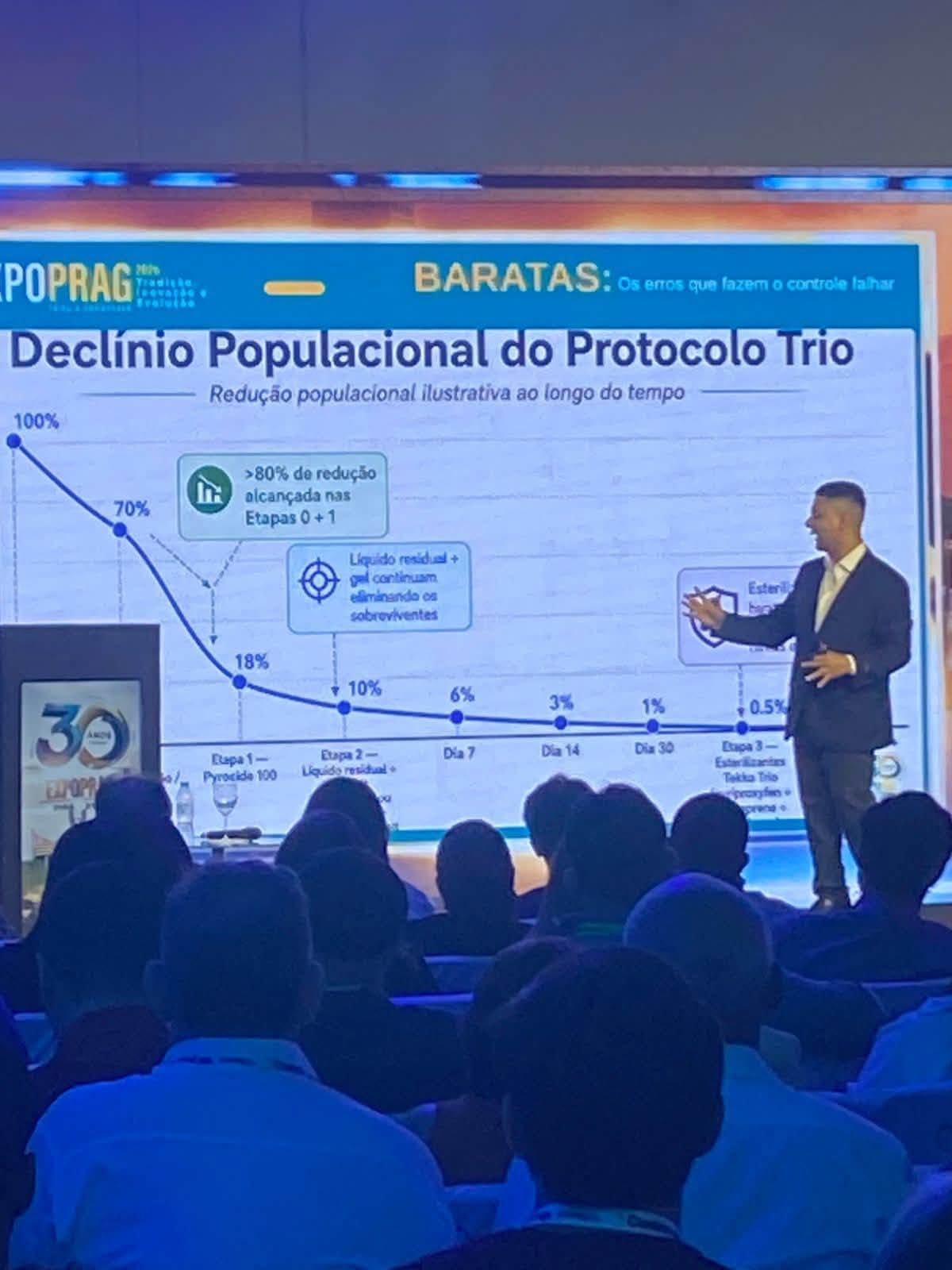
If you’ve found small, light-brown cockroaches in your kitchen or bathroom — and especially if you’re seeing them during the day — you’re dealing with German cockroaches (Blattella germanica), the most common and most stubborn roach in New York City apartments. This is the guide I wish every New Yorker had before they wasted money on sprays that make the problem worse. I’m Jorge Bedoya, an Associate Certified Entomologist (ACE), and German cockroach elimination is the subject I speak on at international pest conferences. Let’s get into it.
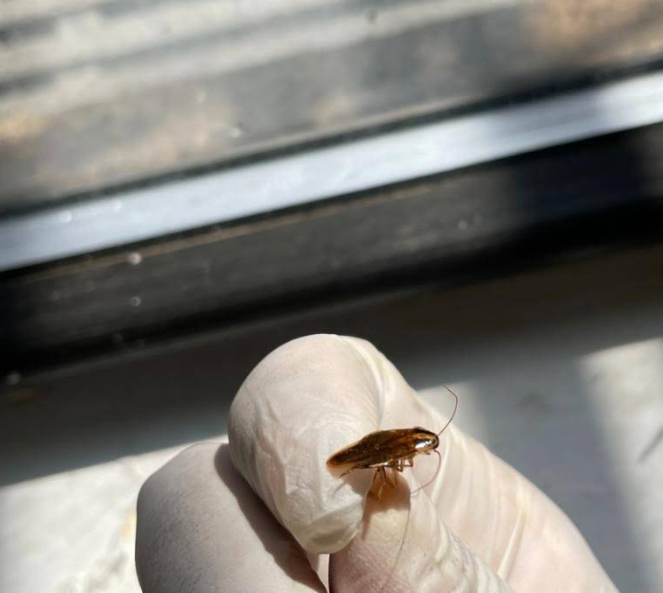
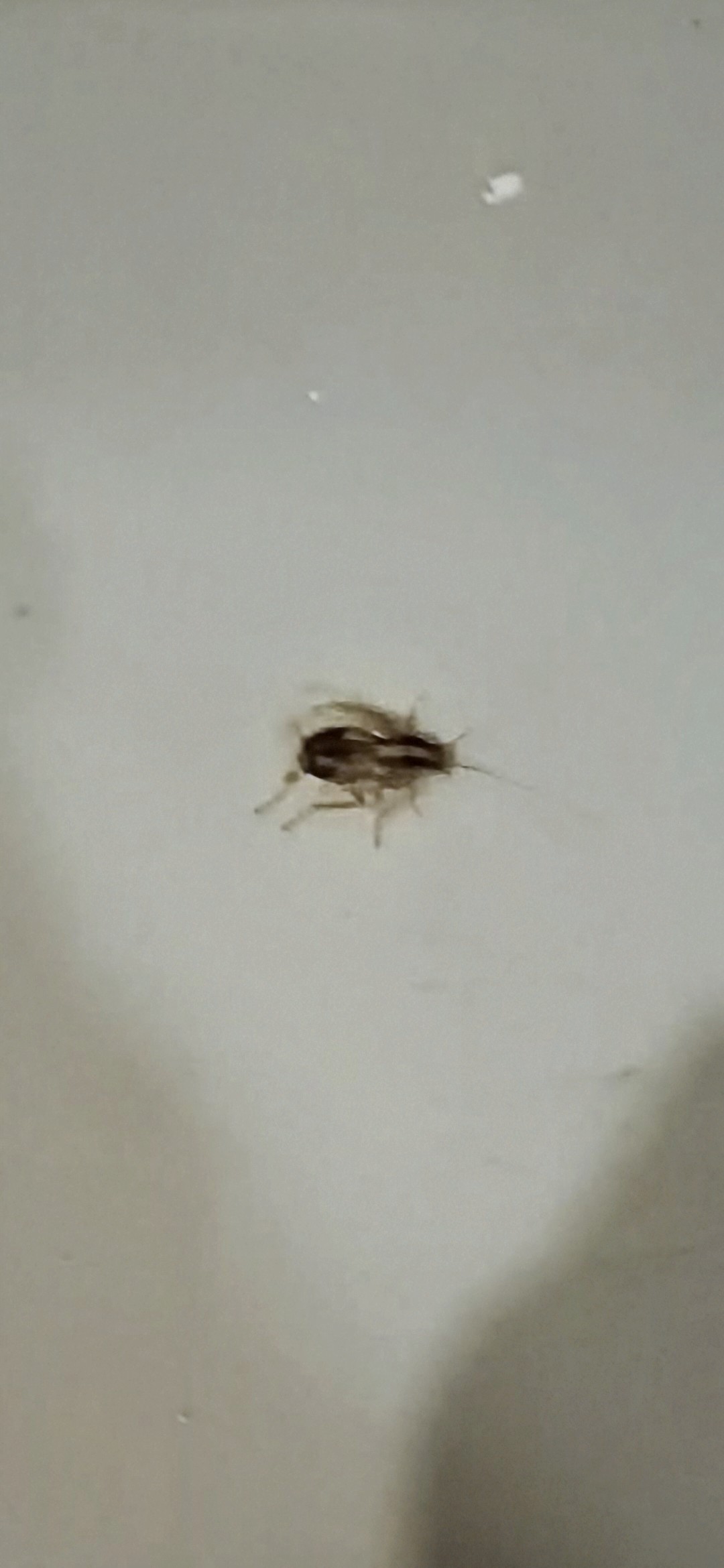
- Adults are small — about ½ inch — light brown, with two dark stripes behind the head.
- One female + her offspring can produce 30,000+ roaches in a year.
- Each egg case (ootheca) holds 30–48 eggs; nymphs reach breeding age in 6–8 weeks.
- They’re a leading trigger of asthma and allergies, especially in children.
- Seeing them in daylight means a large hidden population — you’re seeing the overflow.
Know the German cockroach: why it takes a detailed plan
Before you buy or apply anything, make sure the roach you are seeing is the German cockroach (Blattella germanica), and understand why a single spray almost never works against it.
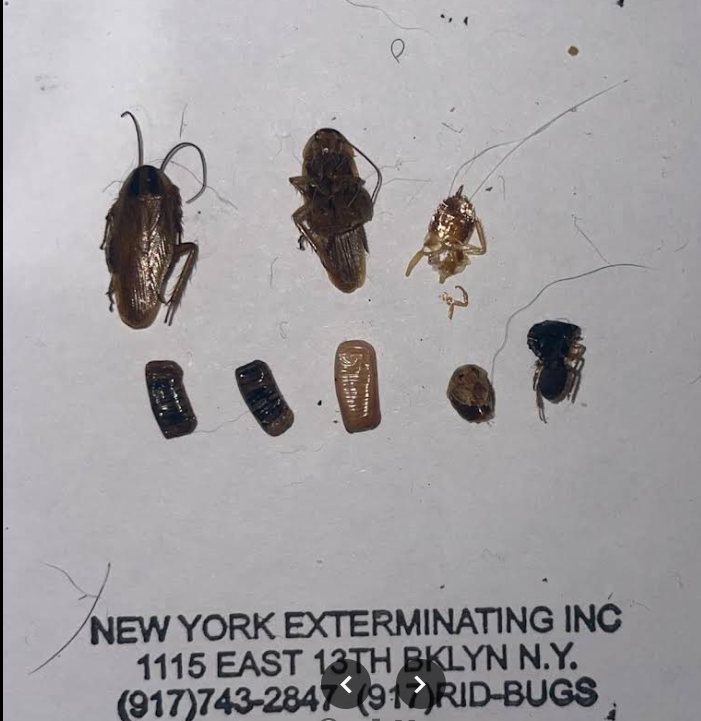
Why a single spray fails
That is why this guide uses several products with different modes of action, puts insect growth regulators at the core so the next generation cannot breed, keeps repellents out of the plan, and checks results with traps instead of guessing.
The DIY protocol at a glance
1. Preparation
More do-it-yourself treatments fail at this stage than at any other. Product placed into a full, greasy cabinet lands on dishes and boxes instead of in the cracks where roaches live, and a kitchen full of crumbs gives roaches something to eat besides the bait. Plan two to three hours, and do all of it before any product is opened.
Empty every cabinet and drawer in the treatment area
- Empty all kitchen upper and lower cabinets, the under-sink cabinet and the drawers, and the bathroom vanity. Every shelf should be bare so you can reach the corners, hinges and back edges.
- Put dishes, food and utensils in sealed plastic bins or bags in another room. Keep them out until treatment is dry.
- Take everything off the counters: small appliances, dish racks, bottles, sponges.
- Throw out cardboard boxes and paper bags. Roaches hide and lay egg cases in corrugated cardboard.
- Remove shelf liner and contact paper if you can; roaches hide under the edges.
Clean what you exposed
- Wipe shelves, hinges, cabinet floors and the inside edges of doors with warm soapy water to remove grease and droppings (the small black specks and smears are roach fecal spotting, which also carries aggregation scent that draws roaches back).
- Degrease the stove top, range hood filter, and the floor and wall behind the stove and refrigerator.
- Pull the stove and refrigerator out if you can safely do so, and clean the floor and the back panels. Unplug appliances before cleaning around them.
- Let everything dry completely. Gel bait and foam do not belong on wet or soapy surfaces.
Take away water and food
- Fix dripping faucets and leaking traps under the sink; German cockroaches need water daily.
- Leave no dishes in the sink overnight, no pet food out overnight, and no open trash. Use a lidded trash can and take it out every night.
- Store food, including pet food and bread, in sealed hard containers.
Vacuum (the first vacuum)
Once cabinets are empty and clean, vacuum the cabinet floors, hinge corners, baseboards, the gap under the stove and refrigerator, and any crack you can reach with a crevice tool. This removes live roaches, egg cases, shed skins and droppings before any product goes down. Seal the bag and take it to the outside trash the same day. Section 5 covers vacuuming in detail.
Do not seal cracks yet
Prepare the household
- Plan for children, pets and anyone with asthma to be out of the treated rooms during application and until surfaces are dry and the room is aired out.
- Remove pet bowls and bedding from the area; cover aquariums and turn off their pumps; take birds out of the home or to a closed room far away.
- Open windows or run the range hood for ventilation.
- Tell your landlord or building manager if you rent. Roaches move between apartments through plumbing and wall voids.
2. Protective equipment
Put these on before you open any product and keep them on until you finish and wash up.
Put it on in this order
Take it off in this order
When you finish: take gloves off inside out, wash hands and forearms with soap and water before eating, drinking or using the bathroom (the Doxem NXT label requires this), and wash the clothes you wore separately.
3. Application, product by product, in order
Read the current label of each product before you start. The order matters: the optional flush goes first and away from everything else; everything after it is non-repellent and long-lasting, so roaches keep walking through it and eating it. Neither label reviewed for Tekko Trio Foam or Doxem NXT prohibits using both in the same visit, and each has its own frequency limit.
Where German cockroaches hide: your treatment map
| Area | IGR foam (voids) | Aerosol (cracks) | Gel bait (dots) |
|---|---|---|---|
| Under the kitchen sink | Around pipe holes in the back wall and floor | Cabinet corners, seams, hinge gaps | Upper inside corners, hinge side |
| Stove | Wall void behind, gap under | Side trim gaps, baseboard behind | Cabinet edges beside it, not on hot parts |
| Refrigerator | Gap under the kick plate area | Baseboard behind | Floor edge behind, away from the motor |
| Dishwasher | Void behind the kick plate | Cabinet seam beside it | Not on the dishwasher (heat) |
| Upper cabinets | Where cabinets meet the wall | Hinge gaps, shelf-peg holes | Top inside corners |
| Bathroom vanity | Pipe holes | Corners and seams | Inside corners |
| Outlets and switches | Do not treat. The Doxem NXT label prohibits use in electrical equipment. Ask an electrician or a licensed applicator. | ||
Step 3a (optional): Flush for a count, PT 565 Plus XLO
Why use it: a short burst into a few voids shows you how many roaches are living there. It is a contact-only flushing agent with no residual: it irritates roaches out of hiding and leaves nothing active once dry. Use it first, once, and keep it off bait and freshly foamed voids.
How: with PPE on, give one or two short bursts into the void behind the stove and under the sink. Wait for roaches to come out, count them, let the area dry, then vacuum them up and discard the bag outside. Read the full label for use sites and limits before use.
See PT 565 Plus XLO on DoMyOwn · Label summary
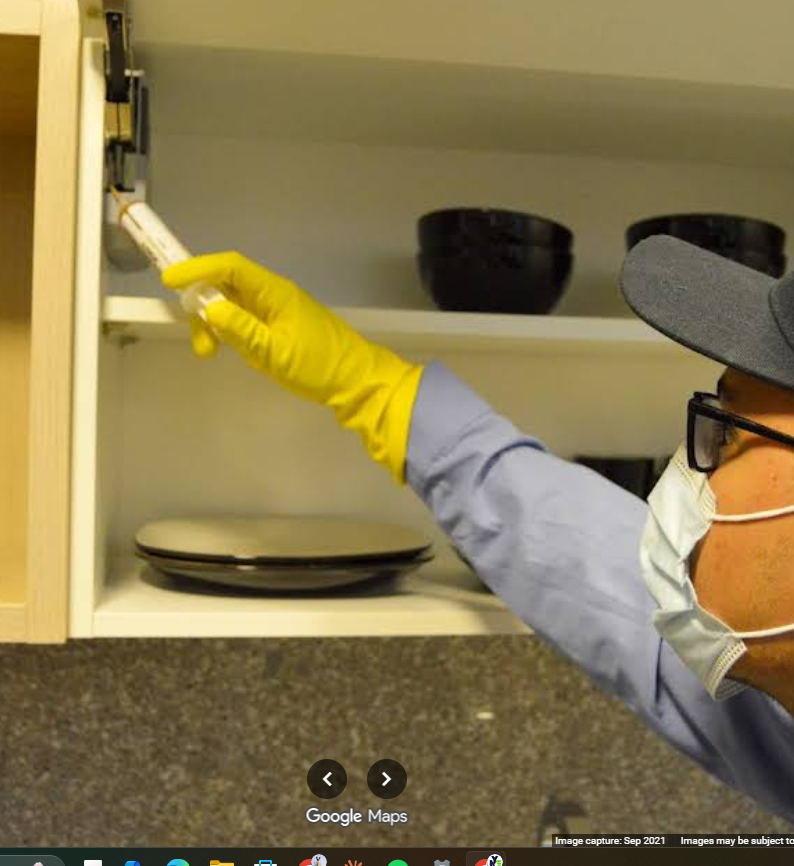
Step 3b: IGR foam into the voids, Tekko Trio Foam
Why foam: foam expands into hollow spaces that sprays and baits never reach, carrying the IGRs to roaches that do not come out to feed.
How:
- Shake the can well. Attach the fold-up extension tube.
- Insert the tube into a void: the gap around a pipe hole under the sink, the space behind the dishwasher kick plate, the gap behind the stove, where cabinets meet the wall.
- Press in short bursts until you see foam at the opening, then move to the next void.
- For surface or spot use, the label directs holding the can 10 to 12 inches away with a sweeping motion; this guide uses the tube for voids.
- Do not apply to linens or mattresses, to food, or to food-handling surfaces. Cover or remove food first.
How often: the label says once a month, or more often if conditions warrant.
See Tekko Trio Foam at DIY Pest Control · Label
Step 3c: Non-repellent aerosol into cracks, Doxem NXT
How:
- Use the supplied injector tip. Put the tip into a crack: cabinet corners and seams, hinge gaps, the baseboard behind the stove and refrigerator, shelf-peg holes.
- Release about one second of spray per injection. The label directs injections about 12 inches apart for heavy infestations and about three feet apart for light ones.
- For long cracks, the label directs moving the tip along at about three feet per second (one foot per second for heavy infestations).
- Spot treatments, if you use them, must not exceed 2 square feet each.
- Do not apply where food, utensils or food-prep surfaces can be contaminated, and not into drains.
How often: not more than once every 7 days.
See Doxem NXT on DoMyOwn · Label
Step 3d: Gel bait, Advion Trio
How:
- Wait until the foam and aerosol are dry. The label says not to apply bait to surfaces recently treated with repellent sprays.
- Place dots about the size of a small pea (about 1/4 inch, about 0.5 gram).
- The label rate is 1 to 3 dots per 10 linear feet for light to moderate infestations and 3 to 5 dots for heavy ones. Many small dots work better than a few large ones.
- Place them in hinge corners, the top inside corners of cabinets, along cabinet edges beside appliances, and at the edge of cracks you treated, out of reach of children and pets.
- Do not place bait on surfaces above 120 to 130 degrees Fahrenheit (stoves, dishwashers, hot water pipes) or on food-prep surfaces.
- Do not spray anything on the bait afterwards and do not wipe it with cleaners.
How often: check at each monitor count; replace dots that are eaten or dried out.
See Advion Trio on DoMyOwn · Label and SDS
Step 3e: Put the kitchen back together
- Once everything is dry, air out the room, then return dishes and food in sealed containers. Keep bait dots undisturbed.
- Now seal what can be sealed: caulk gaps around pipes and along backsplashes that are not treatment points.
- Wash your gloves off or discard them, wash up, and change clothes.
4. Monitoring with traps
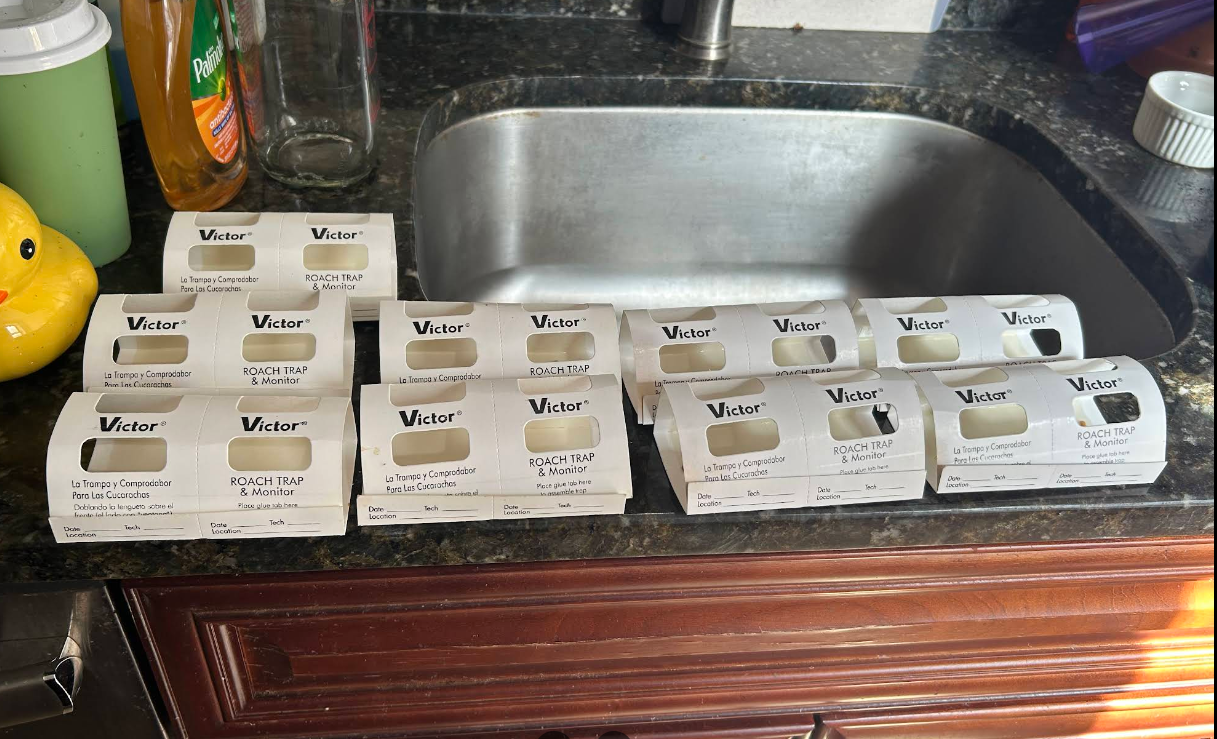
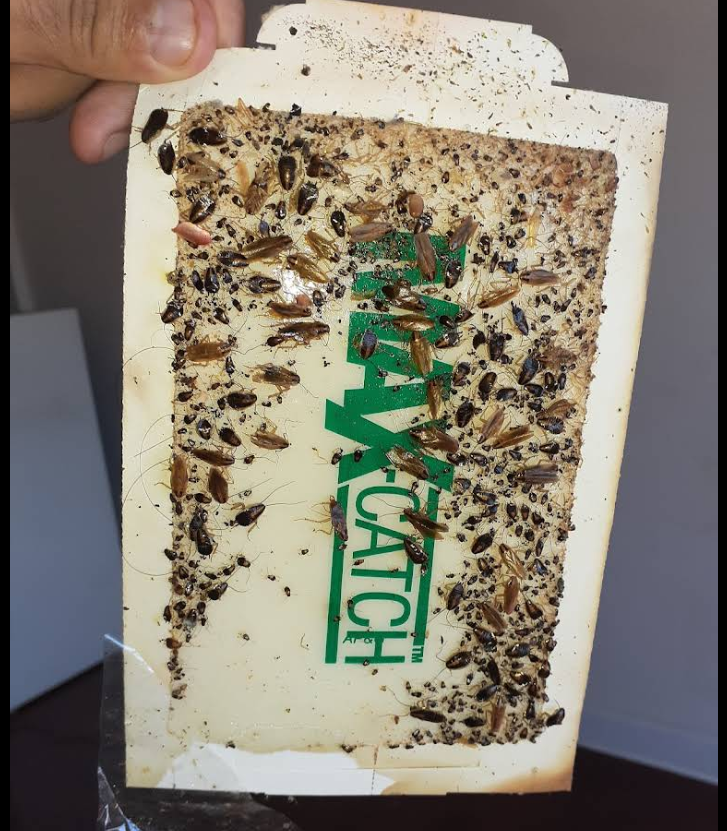
Monitor traps (glue boards) do not control an infestation; they tell you whether the treatment is working and where roaches are still living. Set them after treatment, once the kitchen is back together.
Where to put them
- 6 to 10 traps: under the kitchen sink, beside the stove, beside or behind the refrigerator, next to the dishwasher, in a lower cabinet corner, under the bathroom vanity, near the trash.
- Flat on the floor or shelf, open side along the wall or cabinet edge. Roaches run along edges, not across open floor.
- Write the date and location on each trap.
How to read them
| What you see | What it means |
|---|---|
| Small nymphs | A breeding population within a few feet of that trap |
| Adults only, few | Roaches moving in from elsewhere, or survivors |
| Twisted-wing adults | The IGRs reached the population (section 10) |
| Many catches on many traps in a day | Heavy infestation; consider a licensed applicator |
| Zero on all traps for several weeks | Activity is very low; keep one or two traps as an early warning |
When to check
Count and replace traps at 2 weeks, 4 weeks and about 8 weeks. Write the counts down. The trend matters more than any single number.
5. Vacuuming, first and last
Vacuuming is not on the product labels, so treat it as good practice, not label text. It removes roaches, egg cases and debris immediately without adding any pesticide.
- First, during preparation: vacuum cabinet floors, hinge corners, baseboards and reachable cracks with a crevice tool. A vacuum with a HEPA filter is preferable, because cockroach droppings and shed skins are a recognized asthma trigger. Wear your N95.
- After a flush: vacuum the roaches that come out so they cannot return to hiding.
- Last, at every check: vacuum dead roaches and twisted-wing adults so new catches are easy to count.
- Never vacuum bait dots or fresh foam. Work around them.
- Disposal: seal the bag, or empty the canister into a bag and tie it, and take it to the outside trash the same day.
6. What to expect
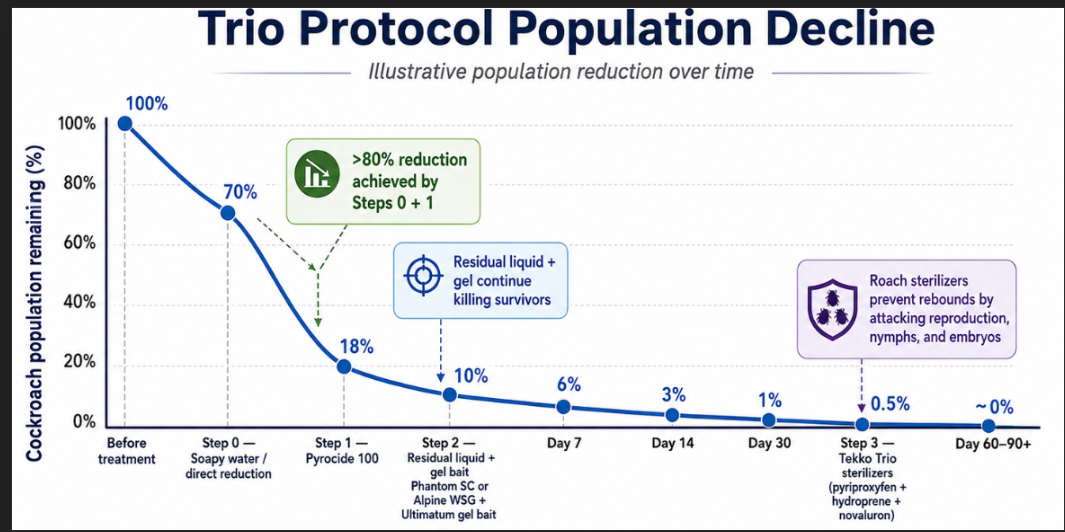
How the population should fall (illustrative)
Time frames vary with the size of the infestation, how well the kitchen was prepared, and whether neighbors are infested.
When to stop and call a licensed applicator
- Adults and nymphs are still on the traps after two weeks of correct treatment.
- You see roaches in daylight, or traps fill in a day.
- Neighboring units are infested.
- Roaches are in electronics or electrical boxes.
- Anyone in the home has asthma, or there are infants or free-roaming pets that cannot be kept away from treated areas.
7. Troubleshooting
Roaches are not eating the bait
Common causes: a repellent spray or cleaner touched the bait; competing food is available; the bait dried out; or the population avoids that bait. Replace the dots, remove other food, keep sprays away, and if consumption still falls, rotate to a bait with a different active ingredient. The Advion Trio label asks users to rotate insecticide groups for resistance management.
They keep coming back after a few weeks
Usually one of three things: egg cases hatched after the first treatment (re-apply foam at the monthly interval), the IGR did not reach the voids where they live (treat pipe holes and appliance voids more thoroughly), or they are coming from a neighboring unit (involve the landlord).
Roaches in the dishwasher
They live in the void behind the kick plate, around the motor and door gasket, and at the plumbing penetration, not in the wash cavity. Foam the void behind the kick plate as the label allows. Do not place bait on hot dishwasher parts and do not treat food-contact surfaces. Run an empty hot cycle and clean the filter and gasket.
Roaches in the microwave, toaster or coffee maker
Unplug the appliance, take it outside or into a bag, shake and clean it, and keep it sealed in a bag for a few days. Do not spray inside appliances or electrical equipment.
Roaches in the bathroom
Treat the vanity pipe holes with foam and the vanity corners with aerosol, fix leaks, and place traps under the vanity.
Roaches scatter when the light turns on
German cockroaches are active at night and avoid light, retreating into gaps as narrow as about 1/16 inch. A flashlight check an hour or two after dark shows where they are coming from; treat those spots.
8. Mistakes that make it worse
- Bug bombs (total-release foggers). They coat open surfaces and do not reach roaches inside voids. Research at North Carolina State University found total-release foggers did little to reduce German cockroach populations in apartments, and they leave residue on exposed surfaces.
- Store-bought repellent sprays. They push roaches deeper into walls and into neighbors, and roaches avoid bait that has been sprayed.
- Big blobs of bait. Large blobs dry out and waste product; many small dots work better.
- Cleaning over the bait. Bleach and degreasers on bait dots ruin them.
- Sealing before treating. It traps product outside and roaches inside.
- Stopping at week two. Egg cases keep hatching. The IGR effect shows over about two months.
- Treating only the kitchen. Check the bathroom and any room with water.
9. How German cockroaches live
The German cockroach (Blattella germanica) is a small, light-brown cockroach with two dark stripes behind the head. It lives almost entirely indoors, in kitchens and bathrooms, close to food, water and warmth.
- They live in gaps. Adults and nymphs hide in cracks as narrow as about 1/16 inch: hinge corners, appliance voids, plumbing holes. Most of the population is out of sight.
- The female carries her egg case. A German female keeps her egg case (ootheca), which commonly holds about 30 to 40 eggs, attached until shortly before hatching, which protects the eggs from sprays.
- They breed quickly. At typical indoor temperatures a nymph can reach adulthood in roughly two months, and each female can produce several egg cases in her life.
- They avoid repellents. Repellent sprays scatter them and make them avoid treated areas and bait.
More detail: German cockroaches: the complete guide, nymph stages, egg cases, droppings.
10. Why IGRs are the core
An insect growth regulator does not need to kill an adult to change the outcome. It stops the population from replacing itself.
- Hydroprene and pyriproxyfen mimic juvenile hormone, so nymphs cannot mature into normal breeding adults.
- Novaluron blocks chitin, the material of the exoskeleton, so nymphs fail when they molt.
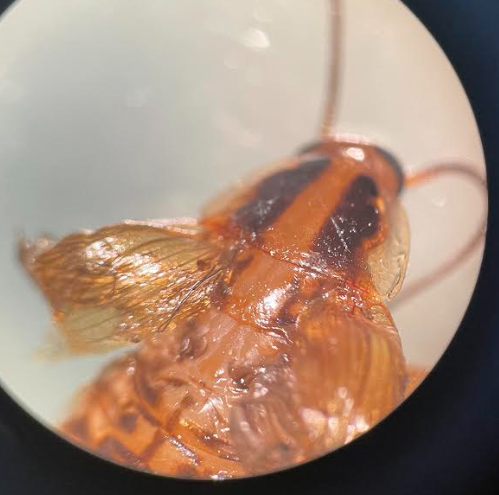
The visible sign that the IGRs are working is the twisted-wing adult (adultoid): an adult with crumpled wings that cannot breed. Seeing them on your traps around week 8 means the IGRs reached the population. The adulticides in Doxem NXT and Advion Trio reduce the roaches alive now; the IGRs decide what the next generation looks like. In this guide, all three products carry IGRs so that roaches get them from more than one source.
11. Products and label limits
| Step | Product (EPA Reg. No.) | Key label points |
|---|---|---|
| Flush (optional) | PT 565 Plus XLO (499-290) | Pyrethrins 0.5%, PBO 1%, MGK-264 1%. Contact-only flushing agent, no residual. Read the full label for use sites. |
| IGR foam in voids | Tekko Trio Foam (53883-475) | Indoor only. Extension tube for voids. Once a month or more often if conditions warrant. Not on linens, mattresses, food or food-handling surfaces. |
| Aerosol in cracks | Doxem NXT (53883-455) | About one second per injection. Not more than once every 7 days. Spot treatments no larger than 2 sq ft. Extremely flammable. Not in electrical equipment. Some states restrict sale. |
| Gel bait | Advion Trio (100-1679) | 1 to 3 dots per 10 linear ft (light to moderate), 3 to 5 (heavy). Not above 120 to 130 F. Not on recently repellent-treated surfaces. Not within reach of children or pets. |
| Monitoring | Glue-board roach traps | Detection only. |
These are the author's own working choices, listed for information. The guide does not urge anyone to buy a particular product; an equivalent labeled product may fit your situation. Terro Drain Insect Killer contains the same three IGRs as Tekko Trio Foam, but its maker directs it into drains and states it has not tested it in wall voids or cracks, so it is not a void treatment.
12. Precautions
- It is a violation of federal law to use a pesticide in a manner inconsistent with its label. Read the current label before every use.
- Wear long sleeves, nitrile gloves, an N95 mask and goggles throughout.
- Keep children, pets and anyone with asthma out of treated rooms until dry and aired out.
- Foam and aerosol go into cracks and voids, not onto open surfaces, food-contact surfaces or food.
- No flame, pilot light or heat near aerosols; nothing in electrical equipment.
- Do not let product enter drains or waterways; the Advion Trio and Doxem NXT labels warn these products are toxic to fish and aquatic invertebrates.
- Store products upright, closed, at room temperature, out of reach of children and pets.
- Check that each product is registered in your state.
Dish soap spray for roaches you can see
A 2 percent dish-soap-in-water solution in a spray bottle can be used in sensitive areas, such as food-prep zones, to immobilize roaches you can see, after which you wipe them up and discard them. Treat it as a cleaning and containment step only. It does not reach hidden roaches or eggs, and dish soap is not a registered pesticide. Rinse and dry the surface before placing gel bait nearby.
13. Budget
Product prices observed in September 2026 (retail prices vary and change): Tekko Trio Foam 15 oz $24.87, Doxem NXT 15 oz $25.61, PT 565 Plus XLO 14 oz about $30 to $36. Advion Trio is not included because a current price was not confirmed. Monitor traps, nitrile gloves, N95 masks, goggles and caulk are extra.
| Scenario | Cans (foam, aerosol, flush) | Product subtotal |
|---|---|---|
| Light: one kitchen | 1, 1, 1 | About $80 to $87 |
| Moderate: kitchen, bathroom, adjacent room | 2, 2, 1 | About $131 to $137 |
| Heavy: whole unit | 3, 3, 2 | About $211 to $223 |
A month-two re-application of foam and aerosol adds roughly $50. Heavy infestations often cost more in repeat cans and time than they save.
14. Label library
Read the label of any product before you use it:
- Tekko Trio Foam label (Control Solutions, EPA Reg. No. 53883-475)
- Doxem NXT label (Control Solutions, EPA Reg. No. 53883-455)
- Advion Trio Cockroach Gel Bait label and SDS (Syngenta, EPA Reg. No. 100-1679)
- PT 565 Plus XLO product summary (BASF, EPA Reg. No. 499-290)
- Terro Drain Insect Killer T590 product page (Woodstream)
Labels change. The manufacturer's current label controls over anything on this page.
15. Disclaimer
DIY vs. professional methods compared
The same two questions decide every method: does it reach the harborage, and does it break the breeding cycle?
| Method | Reaches the harborage? | Breaks the breeding cycle? | Typical result |
|---|---|---|---|
| DIY IGR-first protocol (this guide) | Partly — IGR foam reaches the voids you can get to | Yes — the IGR stops survivors from reproducing | Can work in a single unit with a light or moderate infestation; slower, and depends on prep and on neighboring units |
| Trio Protocol — non-repellent microinjection + IGR | Yes — material is injected into voids and harborages | Yes — IGR stops survivors from reproducing | Colony collapses; most cases controlled in one visit, callback under 1% |
| Gel bait only | Partly — only where roaches forage | No dedicated growth regulator | Can work in light cases; often slowed by bait aversion or resistance |
| Spray / fogging | No — treats surfaces, not voids | No | Kills what is visible, scatters the colony, rebounds in weeks |
| Bait stations (store-bought) | No — passive and slow | No | Minor knockdown at best for an active infestation |
| DIY store products (sprays, bombs, powders) | No | No | Temporary drop, then return; foggers can push roaches into neighboring units |
When gel bait alone can be enough
Not every German cockroach situation needs professional injection. If you catch it early (a handful of roaches, recently brought in on a cardboard box or a secondhand appliance, no signs of an established harborage), a good-quality gel bait applied carefully and rotated can knock it out. Place tiny dabs at hinges and cracks rather than spraying, keep the kitchen clean so the bait is the most attractive food, and rotate products so the colony does not develop aversion.
Where gel alone tends to fail is the case most New Yorkers actually have: a building with a chronic source unit, a heavy or long-standing infestation, or roaches that return after every DIY round. At that point the population is entrenched in voids and protected egg cases, and harborage-directed treatment with an IGR is what collapses it.
Why most DIY roach control fails
Most failed German cockroach jobs, DIY or professional, come down to the same errors: using repellent products that scatter the population, relying on a single bait the roaches have learned to avoid, never reaching the true harborage, and expecting the tenant to clean their way out of an infestation.
You are treating where they aren’t
German cockroaches spend most of their lives inside protected harborage: refrigerator and stove motor housings, the cavity behind a dishwasher, microwave voids, cabinet joints, hollow door frames and gaps around plumbing. A spray on a countertop or baseboard reaches only the few that happened to be out. The colony and its egg cases, each carrying roughly 30 to 40 nymphs, are untouched, which is why the problem returns two to three weeks after it looked solved.
Store sprays are repellent, and city roaches resist them
Consumer sprays are mostly pyrethroids or pyrethrins. They are repellent, so roaches leave instead of picking up a lethal dose, pushing deeper into wall voids and into rooms or neighboring apartments that were clean. German cockroaches are also among the most resistance-prone urban pests, and pyrethroid resistance in dense multi-unit housing is well documented, so the chemistry sold over the counter is the chemistry NYC populations have adapted to most. Many retail liquids also use oil or solvent carriers that soak into porous wood, grout and drywall, leaving little active ingredient on the surface.
Retail bait dries out and gets placed in the open
Baiting is the right idea, because the roach comes to it. But a bait’s food matrix has to stay soft and attractive, and in a warm NYC kitchen a low-cost matrix can crust over within weeks while the station looks unchanged. Stations also get set out in the open instead of at the harborage, and some German cockroach populations avoid sugar-based baits altogether.
Spraying near your own bait cancels it
People usually use bait and a spray together on the theory that more is better. A repellent spray on or near bait contaminates the matrix and makes the area something roaches avoid, so the spray wins and the bait, the part that would have worked, is neutralized.
Foggers, boric acid and dust
Total-release foggers (bug bombs) settle on open surfaces and do not reach the voids where roaches live; mostly they push the population deeper into the building, and they carry fire and inhalation risks when overused. Boric acid and diatomaceous earth can work, but only as a barely visible film inside voids. Piled in drifts along baseboards, they are simply walked around.
The next generation is already coming
Even a well-executed consumer program only addresses the roaches alive today. Egg cases already laid keep hatching, which is why the IGR step in the protocol above matters: it stops the nymphs that survive from becoming breeding adults.
The NYC apartment problem: shared walls
In a multi-unit building, German cockroaches move between apartments through shared walls, plumbing chases, and pipe penetrations. Treating only your unit usually fails, because the source may be next door or below you. The durable fix is to treat the source and seal the connecting pathways — ideally coordinated across the affected units — and to document the work for your landlord or managing agent. We handle that across all five boroughs.
The tenant playbook: what you can do this week
- Cut off food and water. Roaches can live on crumbs and grease. Wipe counters and the stovetop nightly, store food and pet food sealed, take out trash daily, and fix drips — German roaches are drawn to moisture under the sink and behind the fridge.
- Declutter harborage. Cardboard, paper bags, and clutter under the sink are prime nesting spots. Recycle cardboard promptly; it’s a favorite hiding and egg-laying material.
- Seal the highways. Caulk gaps around pipes under the sink, behind the stove, and along baseboards. Add foam gaskets behind outlet and switch plates on shared walls. This slows the roaches commuting from adjacent units.
- Use gel bait, not spray. If you DIY, place small dabs of a roach gel bait in cabinet corners, behind appliances, and near plumbing — and do not spray over your bait, which repels roaches away from it.
- Watch where they concentrate. Note the room and the exact spots (usually the kitchen and bathroom). That map tells a professional — and your building — where the source likely is.
Get the source unit treated — and know your rights
Because German roaches spread between units, treating only your apartment is often a losing battle. In New York City, pest control in a rental is generally the landlord’s responsibility — the NYC Housing Maintenance Code requires owners to keep units free of pests and to address infestations, with specific rules requiring landlords to provide information about and remediate infestations. Practically, that means you can (and should) report the problem in writing to your landlord or managing agent and ask for building-level treatment, especially of adjacent units, not just yours. If nothing is done, call 311 to file a complaint with the Department of Housing Preservation and Development (HPD). A serious building treats the block of units around the infestation, not a single apartment.
If you’re a landlord or managing agent reading this: treating one complaining unit at a time is why roaches never leave your building. Coordinated, source-focused treatment is cheaper over a year than repeat single-unit visits.
The health stakes
This isn’t only about comfort. German cockroach allergens (from droppings and shed skins) are a documented trigger of asthma and allergic reactions, with the heaviest burden on children in dense housing. Eliminating an infestation is a genuine health improvement, not just a cosmetic one.
Get a single-visit, ACE-certified solution — same-day appointments across NYC.
When to call a pro
Stop the DIY plan and call a professional when adults and nymphs are still on your traps after two weeks of correct treatment, when you see roaches in daylight or in several rooms, when you find egg cases or notice a musty odor, when neighboring units are infested, when roaches are inside electronics, or when someone at home has asthma or cannot be kept away from treated areas.
New York Exterminating runs the same logic as this guide with professional equipment in our Trio Protocol: oil-based microinjection into the voids, a water-based non-repellent with IGRs (hydroprene, novaluron, pyriproxyfen) and targeted gel bait, with two built-in checks, the day-one flush-out and the roughly two-month adultoid check. Most cases are resolved in one visit, and German cockroach service runs $299 to $699. To book, see our German cockroach exterminator in NYC page. Based in Midwood, we are exterminators in Brooklyn, NY serving all five boroughs.
What a professional does differently
Here is the professional, non-repellent protocol I use. Every step targets the hidden population, not the few you happen to see:
- Inspection & harborage mapping. Find where they actually live — appliances, voids, plumbing — using a flashlight, monitors, and experience. You can’t treat what you haven’t found.
- HEPA vacuuming of heavy harborages. Physically remove adults, nymphs, and egg cases for an instant knockdown before any product goes down.
- Rotated gel baits across active ingredients. The right bait in the right places, rotated to defeat aversion and resistance — the opposite of the one-tube-of-store-gel approach.
- Insect growth regulator (IGR). Sterilizes the population and collapses the breeding cycle so the survivors can’t rebuild.
- Desiccant / boric dusts in voids. A long-lasting, low-toxicity residual placed inside the walls and motor housings where they hide.
- Crack-and-crevice precision + monitoring. Treat the exact harborage points and leave monitors to verify the result.
Because this hits the whole population at the source, in most apartments it eliminates the active infestation in a single visit, often within the first hour — with products that are less toxic than the industry average yet more lethal to roaches on contact, and with no reliance on the occupant’s cleaning. See our German cockroach extermination service for how we deliver it.
Watch Jorge break down the German cockroach strategy:
Why New Yorkers choose NYE
Led by an ACE
Every job is overseen by Jorge Bedoya, an Associate Certified Entomologist (ESA) — not a call center.
No contracts
One thorough treatment with an optional 50%-off verification visit. No auto-renewal, no lock-in.
Elimination, not spraying
Resistance-aware methods — including our signature microinjection — that target the source, with documentation.
Licensed & local
NYSDEC Reg. #15140, serving all five boroughs since 2010. Fully bilingual (EN/ES).
Backed by science, not guesswork. Your treatment is led by Jorge Bedoya, an Associate Certified Entomologist (ACE) credentialed by the Entomological Society of America — correct pest ID, resistance-aware products, and a documented plan.
What happens after you call
- Fast response. Call (347) 210-4646 — same-day appointments are often available, including after-hours emergencies.
- Inspection & ID. We confirm the pest and find the source, not just where you saw it.
- Targeted treatment. A resistance-aware plan matched to the pest, explained before we start.
- Verification & prevention. Optional follow-up to confirm zero activity, plus reports and photos in your client portal.
Dealing with this pest now? See our cockroach control — ACE-led, no contracts, all five boroughs. Call (347) 210-4646 for a free estimate.
nye-author-box” style=”border:1px solid #e1e7f2;border-radius:12px;background:#f3f6fc;padding:20px 24px;margin:36px 0;color:#15183a;”>
About the author — Jorge Bedoya, ACE
Jorge Bedoya is an Associate Certified Entomologist (ACE) and PCQI, the specialist behind New York Exterminating, and an international speaker on German cockroach elimination at the PERUPLAGAS convention. Meet Jorge »