Reviewed by Jorge Bedoya, ACE (Associate Certified Entomologist, NYSDEC #15140). Last updated September 2026.
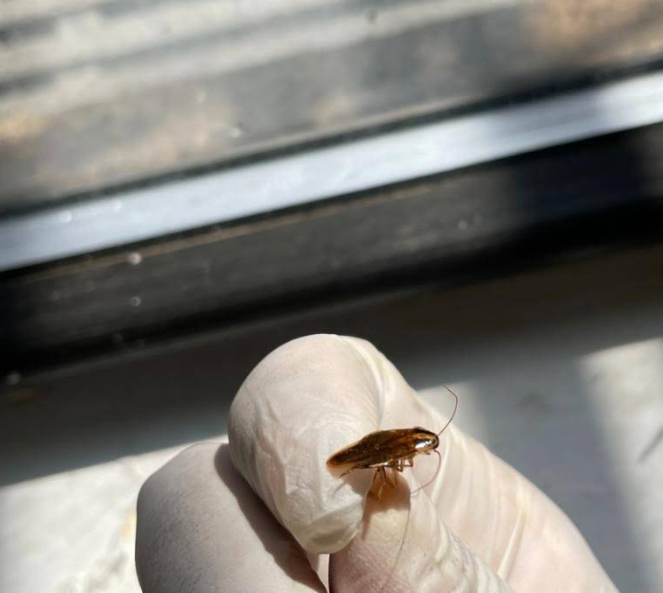
“How bad is it?” is the first question most people ask after seeing a German cockroach, and the honest answer depends on evidence you can collect in one evening. This guide, reviewed by Jorge Bedoya, ACE, gives a four-level severity scale, a 24-hour monitor test, and what each level means for treatment in an NYC apartment.
The German cockroach severity scale
| Level | What you see | What it usually means |
|---|---|---|
| 1. Early | A roach or two at night in the kitchen; a few adults or nymphs on a monitor; little or no droppings | A young or newly arrived population, possibly from a neighbor, a delivery or a used appliance |
| 2. Established | Nightly sightings; droppings in one or two rooms; nymphs of several sizes; a monitor that keeps filling | A breeding colony with multiple generations sheltering in the kitchen and bathroom |
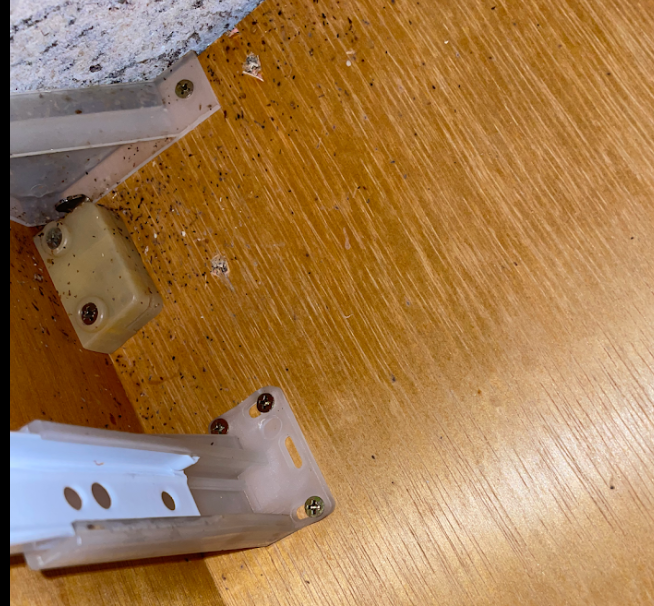
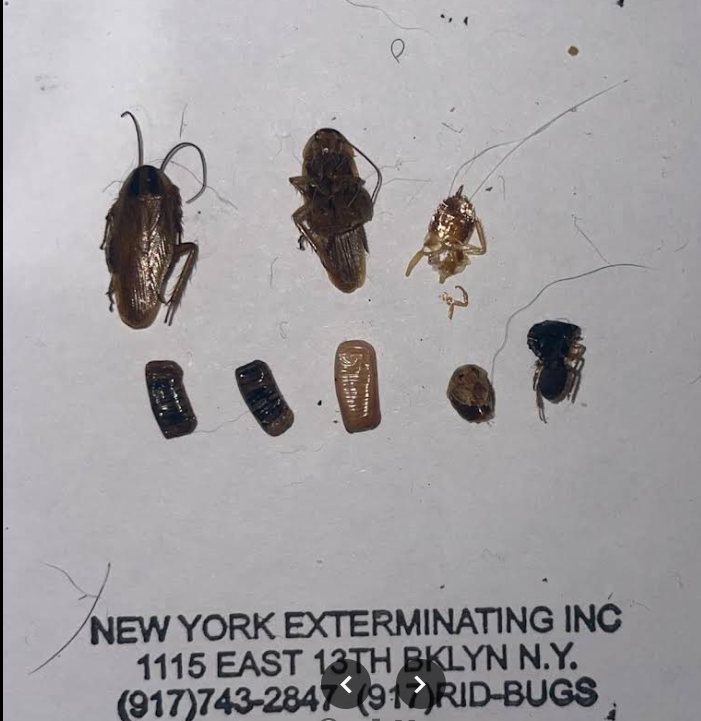
| 3. Heavy | Daytime sightings; many nymphs; egg cases; smears near hinges; a musty, oily odor | Crowded hiding places; roaches are being pushed into the open, and rooms beyond the kitchen are involved |
| 4. Building-wide | Roaches in more than one unit; activity in appliances, electronics, bedrooms, or hallways; repeated reinfestation after treatment | A source outside your apartment, usually shared walls, risers or a neighboring unit or commercial kitchen |
The 24-hour monitor test you can do tonight
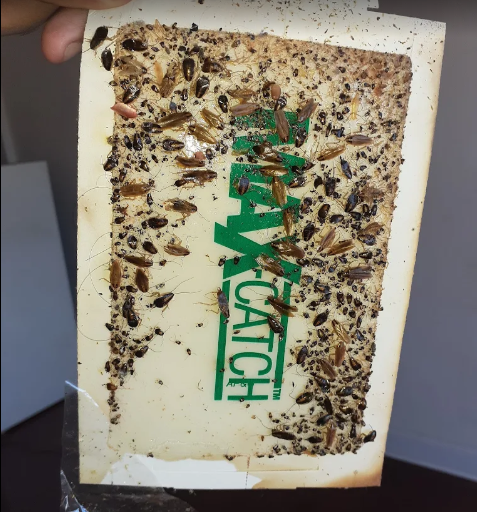
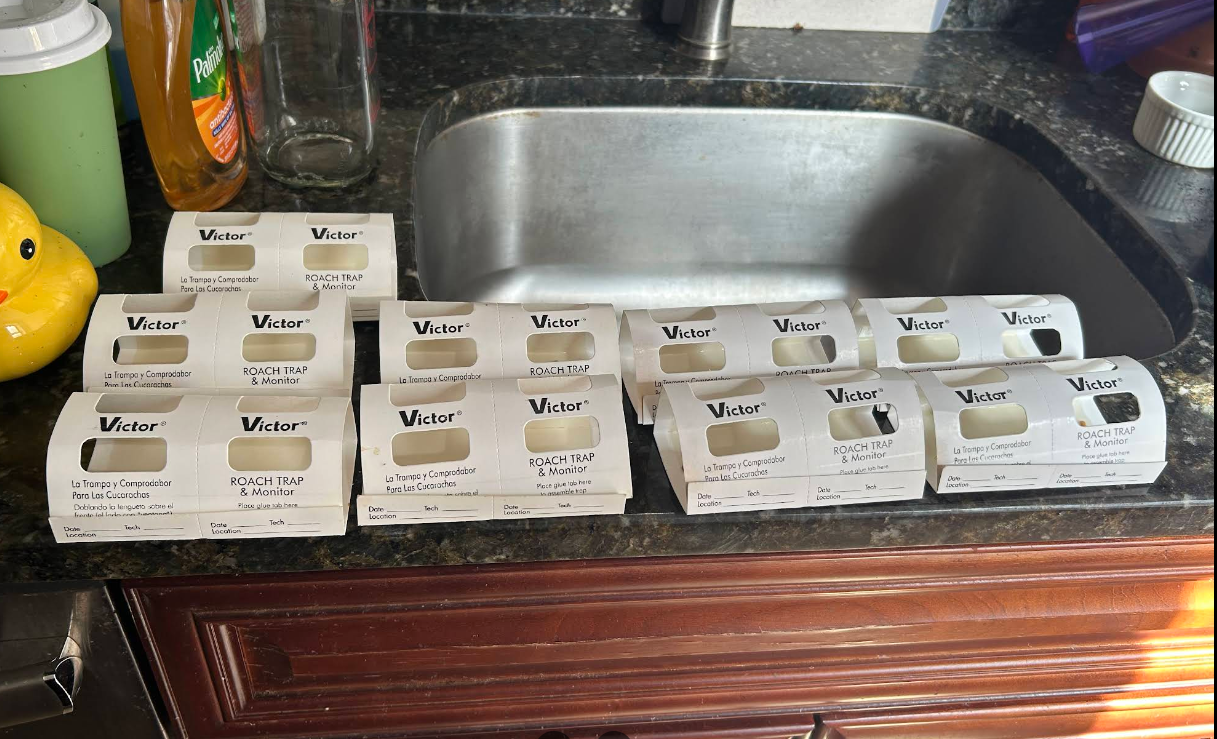
- Place five or six glue monitors flat against walls: by the stove, under the sink, beside the refrigerator, in the bathroom, and one in a bedroom closet or hallway.
- Leave them 24 to 48 hours and write down the location of each.
- Count adults and nymphs separately. Mostly adults suggests an older, established population. Many small nymphs points to active breeding.
- Compare rooms. A full monitor in the bathroom or bedroom means the infestation has moved beyond the kitchen.
Photograph the monitors and bring the counts to the inspection: this evidence turns a quote into a plan. To identify what is on the board, see German cockroach nymph stages, German cockroach eggs and cockroach droppings.
What each level means for treatment
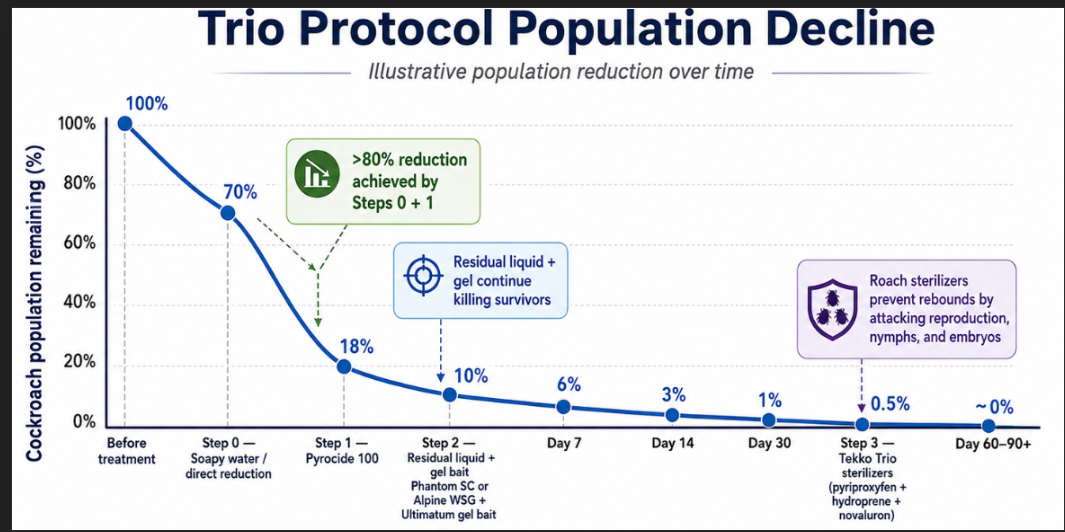
- Levels 1 and 2: a full Trio Protocol visit is usually enough: oil-based microinjection into voids, a non-repellent residual with insect growth regulators (IGRs), and targeted gel bait, designed to resolve most cases in a single visit.
- Level 3: the same protocol with more time in the wall voids and more monitors, and a plan to verify the result at the follow-up. Cleanup and sanitation help, but they do not remove the colony.
- Level 4: the apartment cannot be fixed alone. We map the routes between units and coordinate with management for adjacent apartments, risers and shared spaces. See why a clean apartment still has cockroaches.
The day-one flush-out and the built-in checks
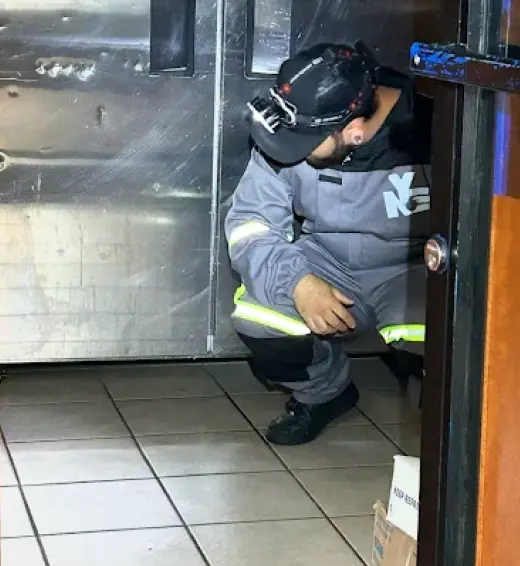
Our Trio Protocol has two built-in diagnostics. On the first visit, a flush-out drives roaches out of hiding so we can read how many there are, in which life stages, and where they were sheltering. About two months later, twisted-wing adultoids — IGR-affected roaches that cannot reproduce — confirm the growth regulator reached the colony. Between the two, the monitors we place show whether numbers keep falling. See the full German cockroach treatment page.
Do not wait to see how it develops. Each egg case releases 30 to 40 nymphs, and a Level 2 colony can become Level 3 in weeks. Avoid bug bombs and store-bought sprays: a 2019 NC State University study found foggers did not reduce German cockroach populations, and sprays scatter roaches into neighboring units. Pricing details are in our cockroach exterminator cost guide.
Why New York Exterminating for German cockroaches
New York Exterminating is an ACE-led, Midwood-based company (1115 E 13th St, Brooklyn, NY 11230) that specializes in German cockroaches. Our Trio Protocol is designed to resolve most infestations in a single visit, we do not put you on a monthly spray contract, the same technician handles your home on every visit, and our callback rate is under 1%. We never blame your housekeeping, because in multi-unit NYC buildings the source is usually the building, not your kitchen. Prices run $299 to $699 for German cockroach treatment, quoted after a free inspection. Rated 4.9 from 82 Google reviews. Call (347) 210-4646.
German Cockroach Infestation Severity FAQ
How do I know how bad my German cockroach infestation is?
Check four things: whether you see roaches in daylight, how many rooms have droppings, how many egg cases and nymphs of different sizes you find, and how many roaches land on glue monitors left overnight. Daytime sightings, several rooms and many small nymphs point to a heavier infestation.
Does seeing roaches during the day mean it is severe?
Usually it means the hiding places are crowded. German cockroaches are nocturnal, so daytime activity, especially of nymphs, suggests a larger population than the one you see.
How many glue monitors should I use, and for how long?
Five or six monitors placed along walls near the stove, sink, refrigerator, bathroom and a bedroom for 24 to 48 hours is enough to compare rooms. Keep the counts by location and bring them to the inspection.
Is a light infestation cheaper to treat?
Price depends on the unit size, how many areas need work and how established the colony is, and it is quoted after a free inspection. German cockroach treatment runs $299 to $699, and most jobs are designed to resolve in a single visit.
Can a light infestation get worse before I can book treatment?
Yes. Each egg case releases 30 to 40 nymphs, and nymphs mature in roughly six to twelve weeks, so a small problem can multiply. Book inspection early, and avoid bombs and sprays that scatter roaches.
My apartment is clean. Why is the infestation heavy?
Severity often reflects the building, not your kitchen. In multi-unit NYC buildings roaches travel through shared walls and pipe chases, so a neighboring unit can keep reseeding yours. Treating the source and the routes matters more than cleaning.
What does the day-one flush-out show?
It brings roaches out of hiding so we can see how many there are, in which life stages, and where they were sheltering. It gives us a severity read on the first visit and shapes where the microinjection and gel bait go.