Reviewed by Jorge Bedoya, ACE (Associate Certified Entomologist, NYSDEC #15140). Last updated September 2026.
Most people search for German cockroach eggs after finding a small brown capsule in a cabinet or drawer. This guide, reviewed by Jorge Bedoya, ACE, explains what the egg case looks like, how many eggs it holds, how fast they hatch, and why sprays fail against them.
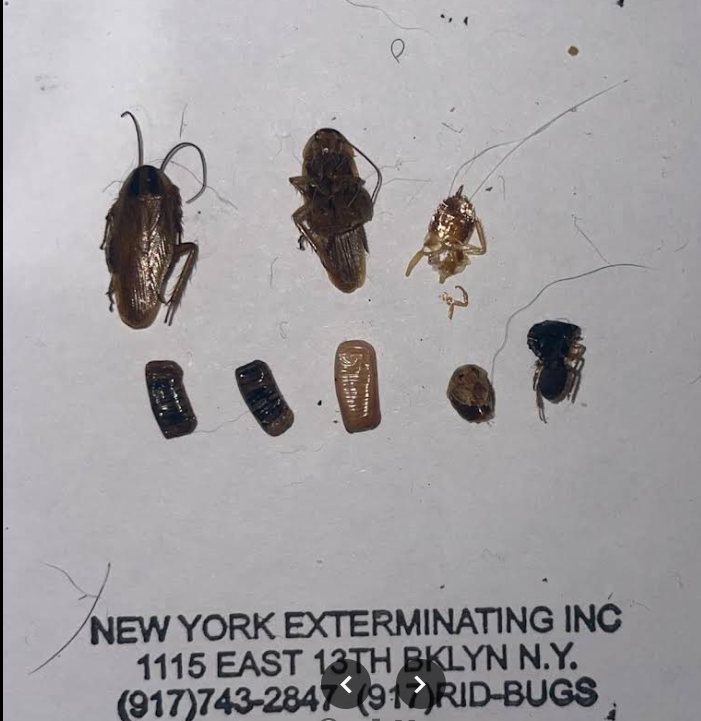
What a German cockroach egg case looks like
- Size: about 6 to 9 mm long, roughly the size of a grain of rice or a small bean.
- Shape: narrow and rounded, like a tiny purse or capsule, with a visible seam and evenly spaced ridges along one side where the eggs sit.
- Color: light tan when fresh, darkening to brown; a hatched case is paler, split open along the seam and empty.
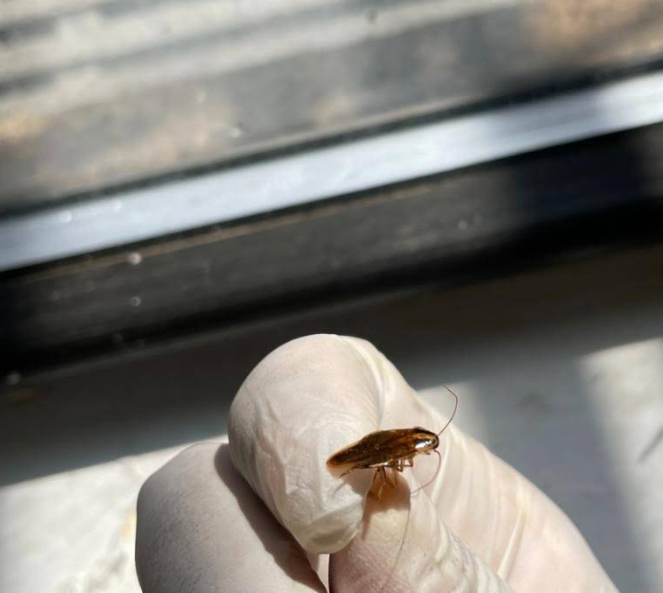
- Where the female keeps it: attached to the rear of her abdomen. Unlike most roaches, she does not glue it to a surface.
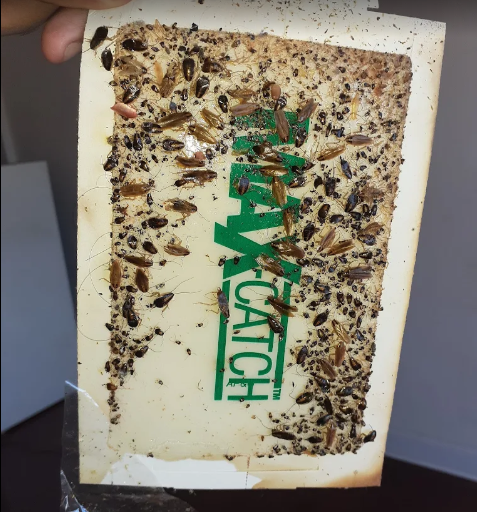
How many eggs, and how fast they hatch
| Question | Answer |
|---|---|
| Eggs per case | About 30 to 40 |
| Cases per female | Several over her lifetime, so well over a hundred offspring from one female |
| Incubation | Roughly three to four weeks, mostly while the female carries the case |
| Case dropped | Shortly before hatching, which is why loose cases are usually empty |
| Newborn nymph size | About 3 mm, dark, wingless |
| Egg to adult | Roughly two to three months in a warm kitchen (see nymph stages) |
Because the female protects the case until the last moment, the eggs are safe from most surface treatments, and a female that is fed and warm keeps producing cases. That is why a single fertilized female can rebuild a colony after a spray.
Where German cockroach egg cases are found in a kitchen
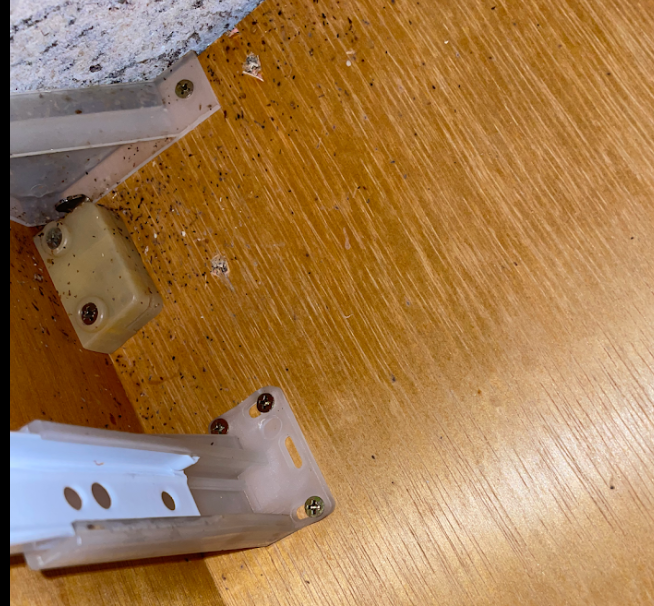
- Cabinet corners, hinges and the undersides of shelves
- Under and behind the sink, around pipe penetrations
- Dishwasher edges, refrigerator gaskets and motor housings
- Drawer slides, the backs of drawers and appliance seams
- Cardboard, paper bags and stored packaging
Empty cases often turn up with droppings that look like ground pepper or coffee grounds, and smears on vertical surfaces. See what German cockroach activity looks like for the full sign list.
Egg cases that get mistaken for German cockroach eggs
| Egg case | Size and look | Where found |
|---|---|---|
| German cockroach | 6 to 9 mm, light tan to brown, ridged, carried by the female | Kitchens and bathrooms, usually attached to a female |
| Brown-banded cockroach | About 5 mm, small and purse-shaped, glued down | Ceilings, furniture, closets, dry high spots |
| American cockroach | About 8 mm, dark brown, glued to a hidden surface | Basements, boiler rooms, drains |
| Oriental cockroach | About 10 mm, dark, glossy, purse-shaped | Damp basements and drains |
| Not a roach | Seeds, mouse droppings, dried food or insect casings | Cabinets and pantries |
Can you kill the eggs? What actually works
The case is the reason one spray fails. Effective German cockroach control does not aim at the case itself; it aims at the females carrying them and at everything that hatches afterward.
- Gel bait is eaten by females and nymphs, and the bait is spread through the colony by feces and dead roaches.
- Insect growth regulators (IGRs) disrupt development and reproduction so nymphs that do hatch cannot mature into breeding adults.
- Microinjection into wall voids reaches the places where females hide while carrying cases, which surface sprays never touch.
Bug bombs and store-bought sprays are not the answer: a 2019 NC State University study found foggers did not reduce German cockroach populations, and sprays scatter roaches into neighboring units. Read why DIY cockroach control fails in NYC.
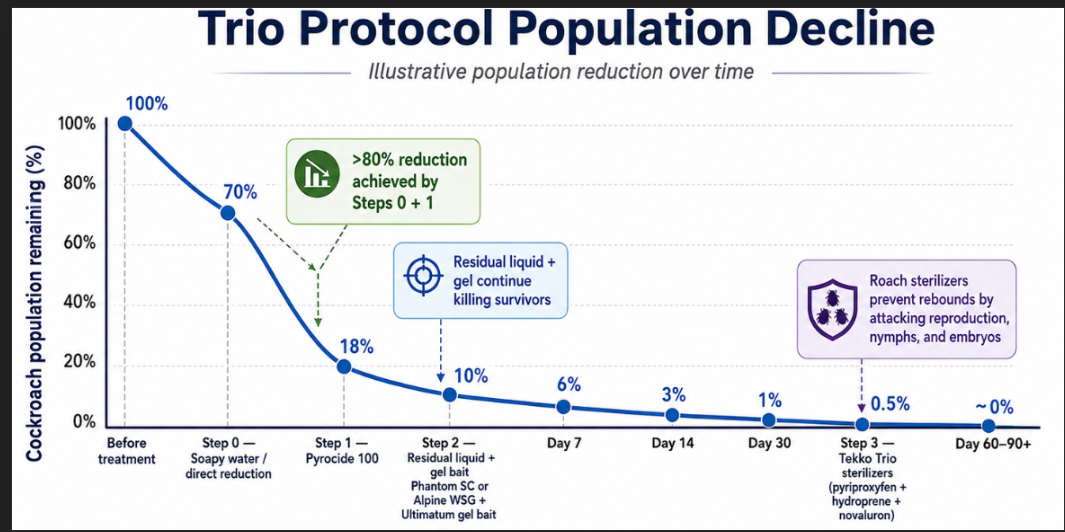
What the Trio Protocol does about eggs
Our Trio Protocol combines oil-based microinjection into voids, a water-based non-repellent residual with IGRs (hydroprene, novaluron and pyriproxyfen), and targeted gel bait. Two built-in checks tell us it is working: a day-one flush-out that shows how heavy the population is, and, about two months later, twisted-wing adultoids, which are IGR-affected roaches that cannot reproduce. Details on the German cockroach treatment page and in IGR adultoids.
Why New York Exterminating for German cockroaches
New York Exterminating is an ACE-led, Midwood-based company (1115 E 13th St, Brooklyn, NY 11230) that specializes in German cockroaches. Our Trio Protocol is designed to resolve most infestations in a single visit, we do not put you on a monthly spray contract, the same technician handles your home on every visit, and our callback rate is under 1%. We never blame your housekeeping, because in multi-unit NYC buildings the source is usually the building, not your kitchen. Prices run $299 to $699 for German cockroach treatment, quoted after a free inspection. Rated 4.9 from 82 Google reviews. Call (347) 210-4646.
German Cockroach Eggs FAQ
What do German cockroach eggs look like?
German cockroach eggs are enclosed in a capsule called an ootheca: a light tan to brown, bean-shaped case about 6 to 9 mm (roughly 1/4 inch) long with a ridged, segmented side. You will not normally see the individual eggs.
How many eggs are in a German cockroach egg case?
About 30 to 40 eggs per case. A female produces several cases over her life, so one breeding female can leave well over a hundred offspring.
How long do German cockroach eggs take to hatch?
Roughly three to four weeks. The female carries the case sticking out of her abdomen and drops it shortly before the nymphs emerge, which is why loose cases are usually empty.
I found an egg case in my kitchen. Do I have an infestation?
A single empty case on a floor or shelf means a female was carrying it nearby, so treat it as a sign of activity. Check cabinet corners, under the sink, dishwasher edges and behind the refrigerator for droppings and live roaches at night.
Can I kill German cockroach eggs with a spray or a vacuum?
Not reliably. The case shields the eggs from most sprays, and vacuuming misses cases inside walls and appliances. Effective control targets the females carrying cases with bait and stops the next generation with insect growth regulators (IGRs).
Do eggs hatch after a professional treatment?
Cases already carried by females or hidden in the walls can still hatch after a visit. The nymphs then meet gel bait and the IGR residual, which is why most jobs are designed to resolve in one visit and why any follow-up is for verification.
I rent in NYC and found egg cases. What should I do?
Photograph the cases and the roaches, notify management in writing, and keep dates. In NYC, owners of multiple dwellings are responsible for pest control, and unresolved problems can be reported to 311. Eggs usually mean a building-level source, so ask that neighboring units be inspected.