Reviewed by Jorge Bedoya, ACE (Associate Certified Entomologist, NYSDEC #15140). Last updated September 2026.
Baby cockroaches are the clearest sign of an infestation, because nymphs only exist where adults are reproducing. This guide, reviewed by Jorge Bedoya, ACE, shows what German cockroach nymphs look like at each stage, how long they take to mature, and what their presence means for an NYC apartment.
What a German cockroach nymph looks like

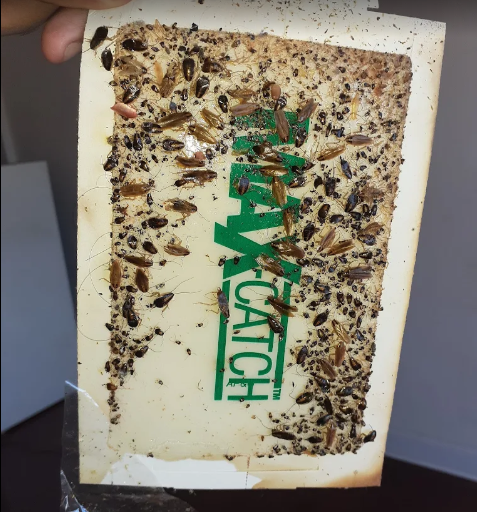
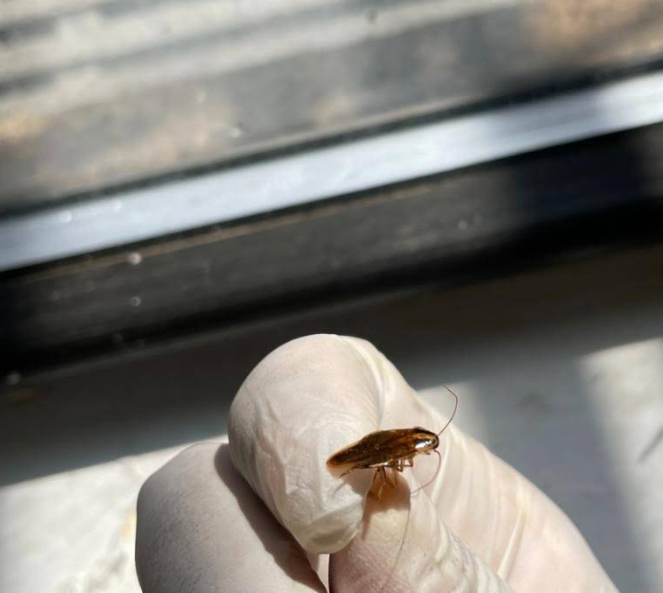
- No wings. Nymphs never have wings; small wing pads appear only in the last stages.
- Dark color with a pale band. Young nymphs are dark brown to black. Later stages show a lighter tan stripe across the middle of the back, which is the fastest field mark.
- Long antennae and fast movement. Nymphs are quick and drop into cracks the moment light hits them.
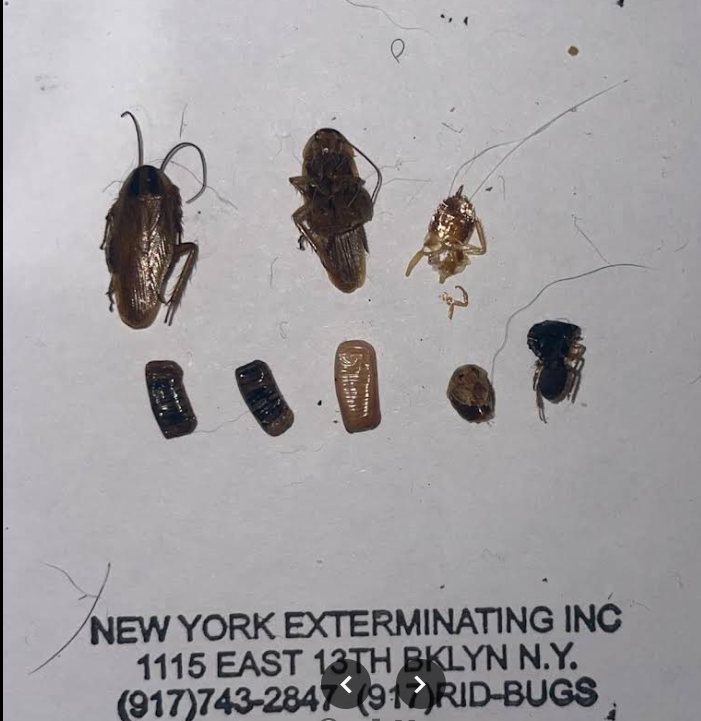
- White after molting. Right after a molt a nymph is pale, almost white, for a few hours before it darkens. People often report these as “albino roaches”; they are normal nymphs that just molted.
The six nymph stages: a size guide
Sizes below are approximate and vary with food and temperature.
| Stage (instar) | Approximate length | What you notice |
|---|---|---|
| 1st | About 3 mm (1/8 in) | Dark, seed-sized, often clustered near where the egg case hatched |
| 2nd | About 4 mm | Still dark and wingless, starting to spread from the hatch site |
| 3rd | About 5 to 6 mm | Pale tan band across the back becomes visible |
| 4th | About 7 mm | Looks like a small adult without wings, moves between rooms |
| 5th | About 8 to 9 mm | Noticeably larger, wing pads begin to show |
| 6th | About 10 to 11 mm | Wing pads clear; one molt from a winged adult of 13 to 16 mm |
How long the nymph stage lasts
In a warm, humid NYC kitchen with steady food and water, a German cockroach nymph takes roughly six to twelve weeks to reach adulthood, molting about six times. Cooler, drier or food-poor conditions stretch that out. Because a single egg case releases 30 to 40 nymphs (see our guide to German cockroach eggs), the nymph population grows faster than it seems, and a colony that started with one pregnant female can show dozens of nymphs within weeks.
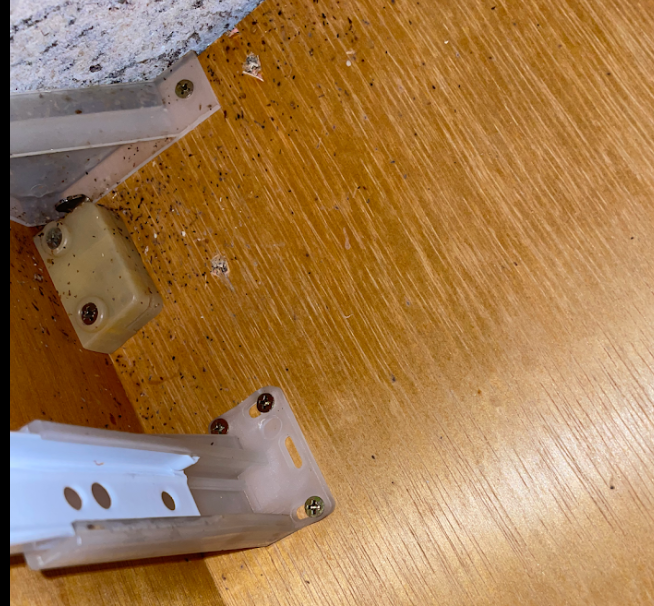
German cockroaches are nocturnal. When nymphs show up in daylight, it usually means the hiding places are crowded and the youngest roaches are being pushed out, which points to a larger population than the one you see. For the other signs, see what German cockroach activity looks like.
How nymphs are told apart from other small bugs
- Asian and brown-banded cockroach nymphs: brown-banded nymphs show two pale bands and favor higher, drier spots; German nymphs cluster low around water and food.
- American cockroach nymphs: reddish and larger, and found near drains and basements; compare in American vs German cockroach.
- Beetles, crickets and bed bug nymphs: beetles have hard wing covers, crickets jump, and baby bed bugs are pale, round and stay near beds. Our baby cockroach ID guide covers the look-alikes.
What nymphs tell a technician
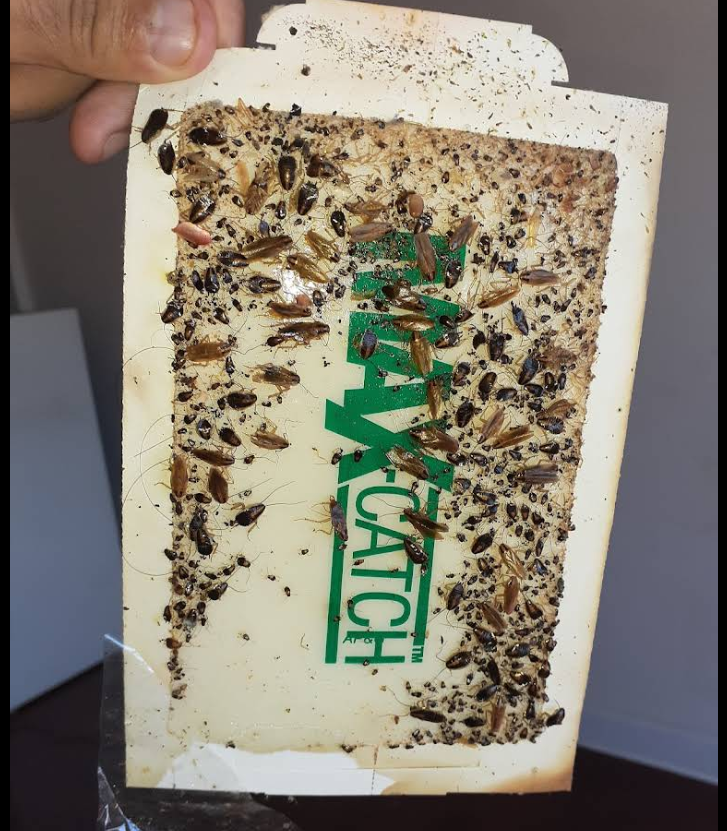
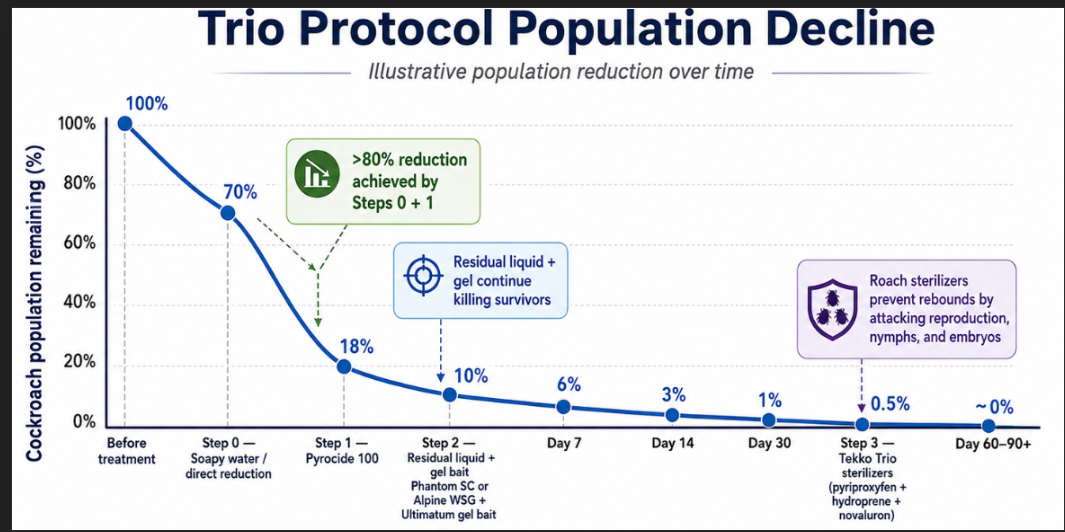
The mix of nymph sizes on a monitor is a diagnostic. Many tiny first- and second-stage nymphs point to recent hatching and active egg cases; a wide spread of stages means a mature colony with several generations living together. In our Trio Protocol, oil-based microinjection reaches the wall voids where nymphs shelter, a non-repellent residual carries insect growth regulators (hydroprene, novaluron and pyriproxyfen), and targeted gel bait reaches the rest. The first visit includes a day-one flush-out that gives us a severity read.
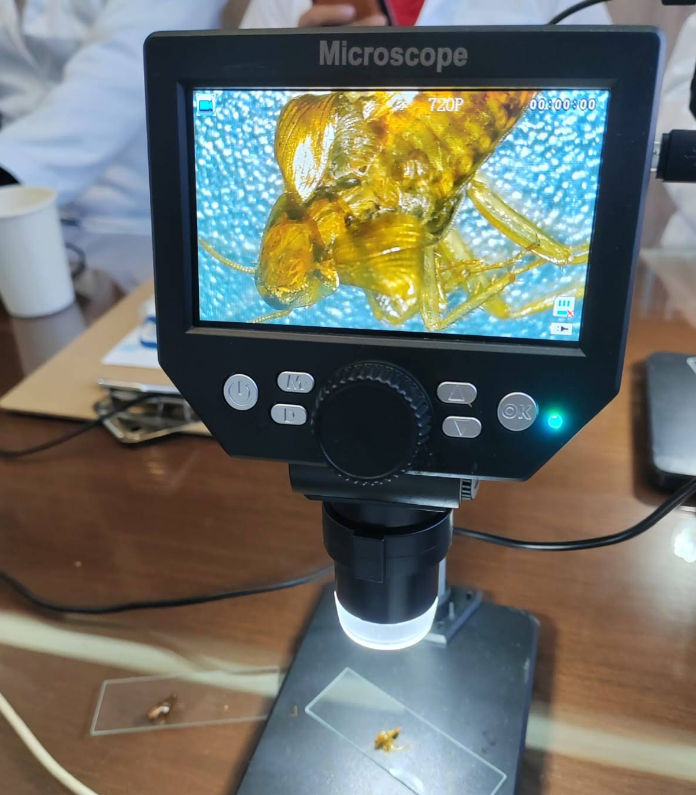
IGRs stop nymphs from becoming reproducing adults. Nymphs exposed to hydroprene often molt into deformed adults with twisted wings, called adultoids, which cannot reproduce. About two months after treatment, finding a few twisted-wing adultoids is one of our built-in checks that the IGR reached the colony. See the microscope view below and our page on IGR adultoids.
If you are still seeing nymphs after a treatment
Some nymphs after a visit are expected, since egg cases already in the walls keep hatching. What matters is whether they keep appearing after gel bait and IGR residual have been in place for a few weeks. Dead nymphs on the floor are a normal sign of bait working. Do not use bug bombs or over-the-counter sprays in the meantime: a 2019 NC State University study found foggers did not reduce German cockroach populations, and sprays can scatter roaches into neighboring units. Read why DIY cockroach control fails in NYC.
Why New York Exterminating for German cockroaches
New York Exterminating is an ACE-led, Midwood-based company (1115 E 13th St, Brooklyn, NY 11230) that specializes in German cockroaches. Our Trio Protocol is designed to resolve most infestations in a single visit, we do not put you on a monthly spray contract, the same technician handles your home on every visit, and our callback rate is under 1%. We never blame your housekeeping, because in multi-unit NYC buildings the source is usually the building, not your kitchen. Prices run $299 to $699 for German cockroach treatment, quoted after a free inspection. Rated 4.9 from 82 Google reviews. Call (347) 210-4646.
German Cockroach Nymph FAQ
How big is a newborn German cockroach nymph?
A newly hatched nymph is about 3 mm, roughly 1/8 inch, dark brown to black, and easy to mistake for a small beetle or a seed. Nymphs hatch in a group of 30 to 40 from a single egg case.
How many stages does a German cockroach nymph go through?
Typically six nymph stages, called instars, though five to seven can occur. The nymph molts between each stage and becomes a winged adult after the last molt.
How long does it take a German cockroach nymph to become an adult?
Roughly six to twelve weeks in a warm apartment with food and water. Cooler temperatures and limited food slow development, and a heated NYC kitchen is close to ideal conditions.
Why do I see mostly nymphs and very few adults?
Because most of a growing colony is young. Each egg case releases 30 to 40 nymphs, and the nymph stage lasts weeks, so nymphs usually outnumber adults. Seeing nymphs in daylight often means the hiding places are crowded.
Do German cockroach nymphs bite?
Bites are rare. Nymphs feed on food residue and grease, and skin contact is uncommon. The larger health concern is allergens from shed skins and droppings, which can aggravate asthma.
Are nymphs in my NYC kitchen a sign the roaches came from a neighbor?
Often, yes. In attached NYC buildings, nymphs move through shared walls, pipe chases and risers, and a building can reseed a treated apartment. Finding nymphs does confirm a breeding population nearby, so treat the source and the routes, not only your kitchen.
Do nymphs need different treatment than adults?
Yes. Adults and nymphs eat bait, but nymphs also have to be stopped from maturing. Our Trio Protocol pairs bait with insect growth regulators (IGRs) that block molting into reproducing adults.