Premium pest control, made affordable. Finance your treatment with Klarna, Affirm, or Afterpay and pay over time.
Finance with Klarna, Affirm, or Afterpay. Checking your rate is a soft check — no credit impact.
Example at 14.9% APR; 0% APR plans may be available. Actual rate shown when you prequalify. New York Exterminating is not a lender.
German cockroaches (Blattella germanica) are the species behind most NYC apartment and kitchen infestations. They breed fast and hide in tight, warm spaces, so by the time you see one in daylight there are usually many more out of sight. Knowing what their activity actually looks like helps you catch it early — and explains why treatment has to target the whole life cycle.
1. The adults

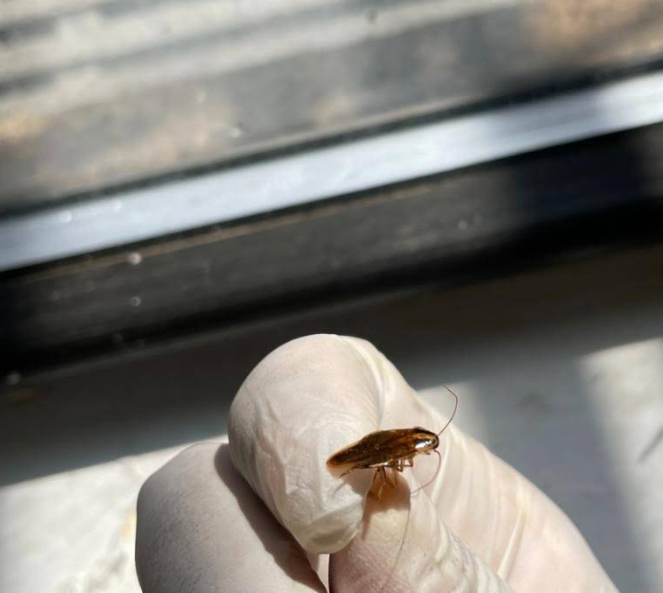
Adult German cockroaches are light tan to brown, roughly 1.1–1.6 cm long, with two dark parallel stripes running behind the head (the pronotum). They’re strong runners and rarely fly. Seeing one in the open — especially in daylight — usually signals a larger hidden population.
2. The droppings
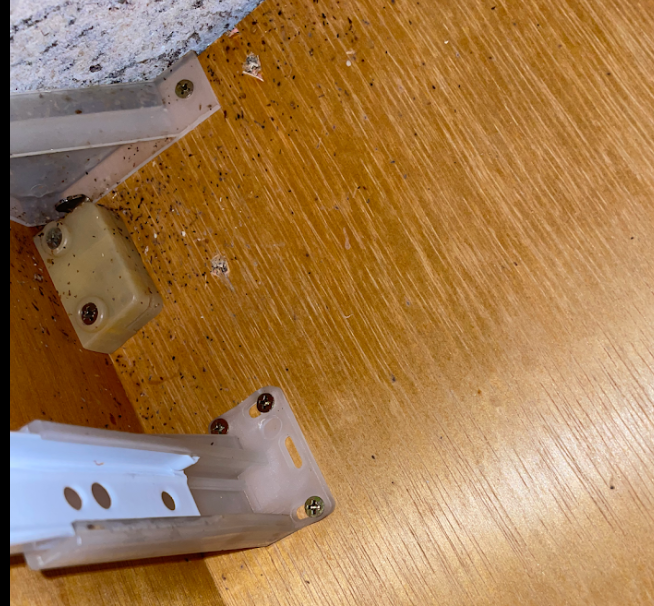
German cockroach droppings look like fine black pepper, ground coffee, or tiny dark specks and smears. You’ll find them concentrated where the roaches harbor: inside cabinet corners, along drawer slides, behind hinges, and near the tops of walls. Heavy speckling is a strong sign of an established population.
3. A full range of life stages
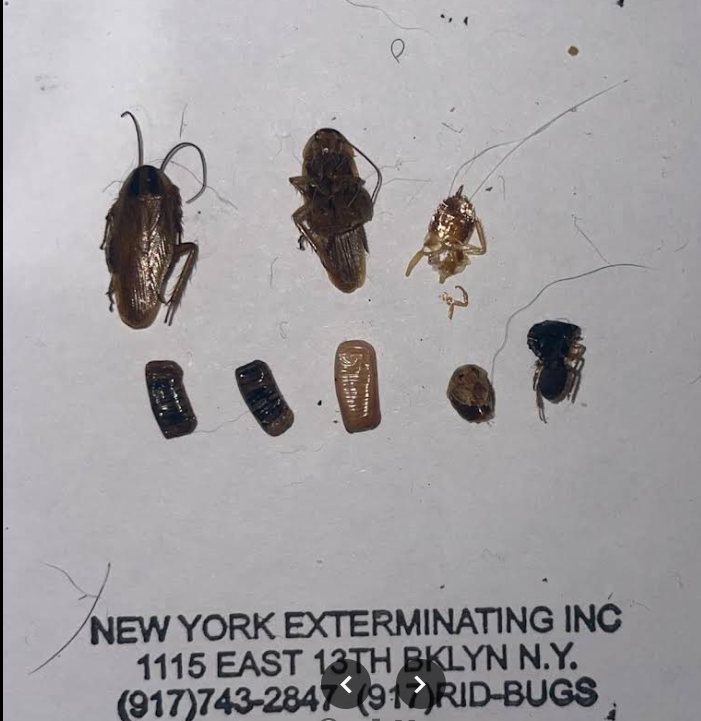
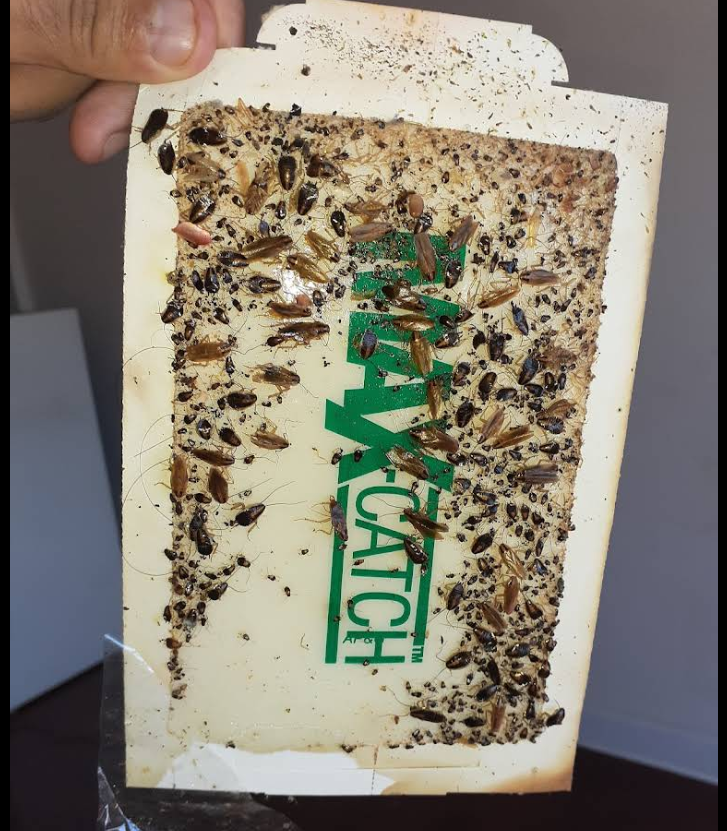
This is the sign that matters most. A monitor or harborage showing everything from first‑instar nymphs to adults means the roaches are reproducing on site. Egg cases (oothecae) each carry dozens of eggs, which is why numbers climb so quickly and why removing only the adults you can see never works.
The science behind controlling the cycle
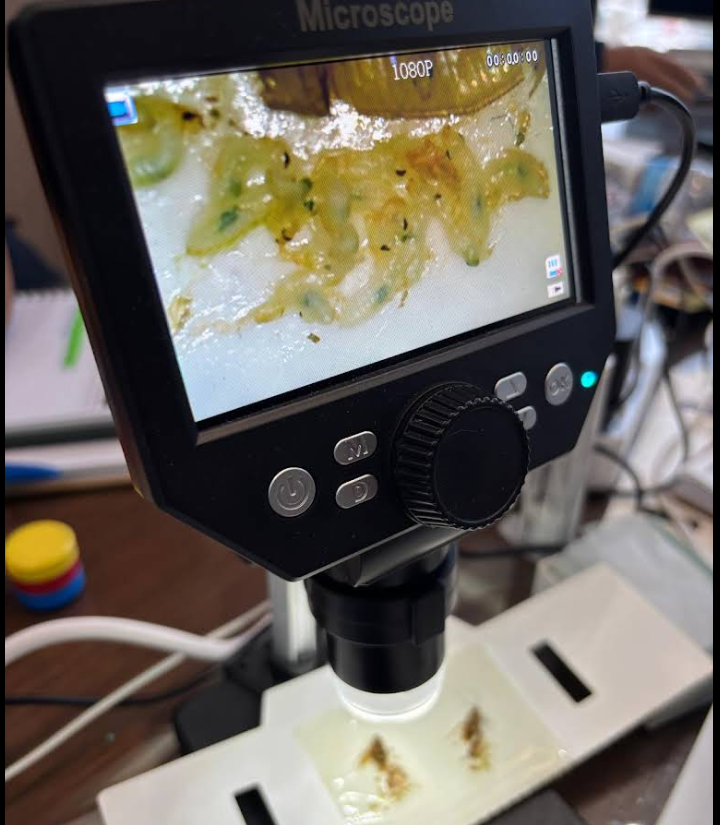
Because the population is defined by breeding, lasting control has to interrupt reproduction — not just knock down adults. Our work is led by an Associate Certified Entomologist (ACE) who teaches this biology to other professionals. Under the microscope you can read German cockroach egg development directly: the green coloration in the egg case signals embryos close to hatching.
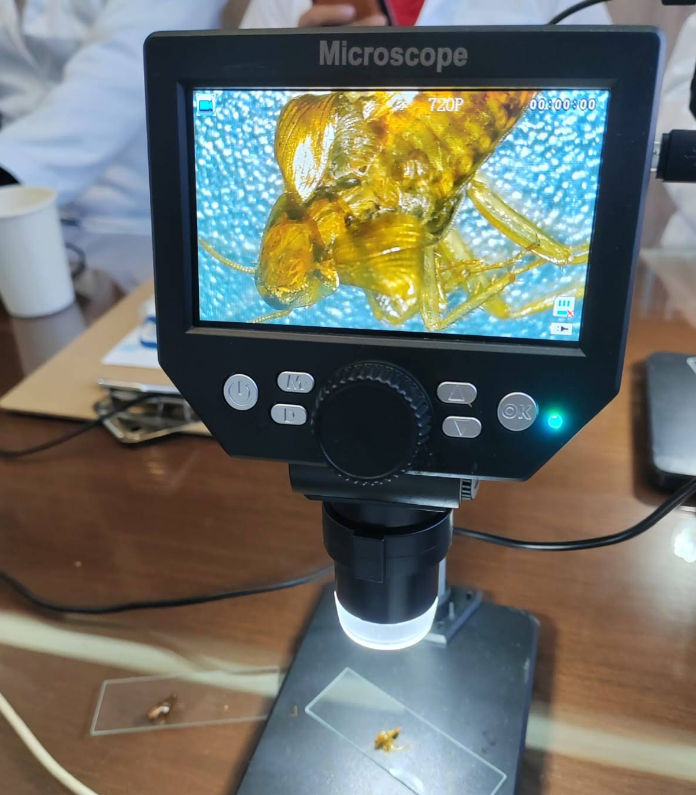
That understanding guides how we use insect growth regulators (IGRs): they sterilize the cockroaches and disrupt the breeding cycle, producing malformed “adultoid” insects that can’t reproduce normally. The difference shows under magnification — and on the floor, weeks later.
Want to compare species? See our NYC cockroach ID guide (German vs American vs Oriental), or learn how we treat them on the German cockroach extermination page.
The German cockroach severity scale
| Level | What you see | What it usually means |
|---|---|---|
| 1. Early | A roach or two at night in the kitchen; a few adults or nymphs on a monitor; little or no droppings | A young or newly arrived population, possibly from a neighbor, a delivery or a used appliance |
| 2. Established | Nightly sightings; droppings in one or two rooms; nymphs of several sizes; a monitor that keeps filling | A breeding colony with multiple generations sheltering in the kitchen and bathroom |
| 3. Heavy | Daytime sightings; many nymphs; egg cases; smears near hinges; a musty, oily odor | Crowded hiding places; roaches are being pushed into the open, and rooms beyond the kitchen are involved |
| 4. Building-wide | Roaches in more than one unit; activity in appliances, electronics, bedrooms, or hallways; repeated reinfestation after treatment | A source outside your apartment, usually shared walls, risers or a neighboring unit or commercial kitchen |
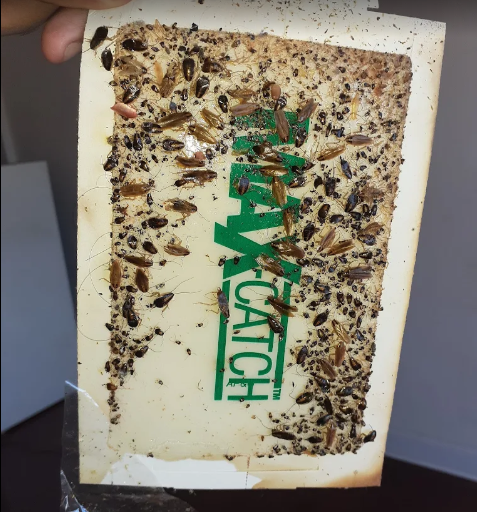
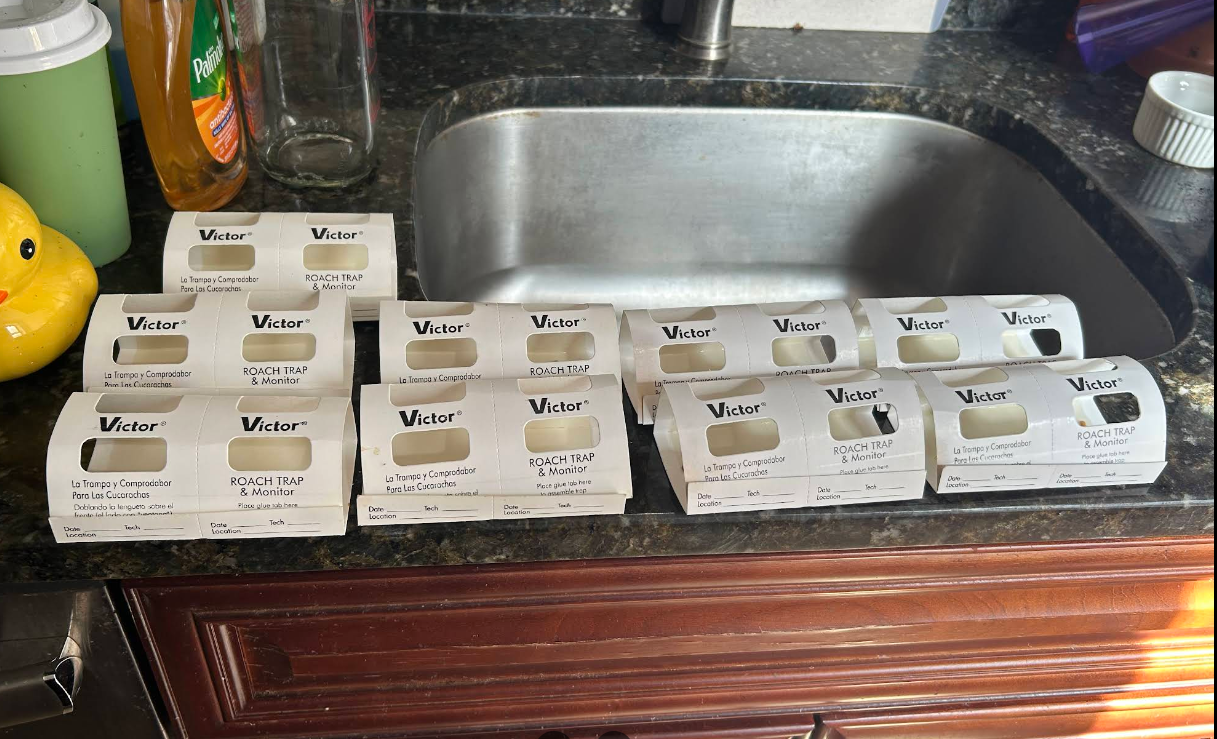
The 24-hour monitor test you can do tonight
- Place five or six glue monitors flat against walls: by the stove, under the sink, beside the refrigerator, in the bathroom, and one in a bedroom closet or hallway.
- Leave them 24 to 48 hours and write down the location of each.
- Count adults and nymphs separately. Mostly adults suggests an older, established population. Many small nymphs points to active breeding.
- Compare rooms. A full monitor in the bathroom or bedroom means the infestation has moved beyond the kitchen.
Photograph the monitors and bring the counts to the inspection: this evidence turns a quote into a plan. To identify what is on the board, see German cockroach nymph stages, German cockroach eggs and cockroach droppings.
Where German cockroaches hide: appliances, bathrooms and shared walls
Adults and nymphs are drawn to warmth, moisture and food residue, so the same handful of places turn up in nearly every NYC kitchen. The refrigerator motor housing and gasket, the dishwasher edge and drain hose, the microwave and toaster seams, and the space behind the stove are the most common. In the bathroom, the vanity, the pipe collar under the sink and the medicine-cabinet edges shelter roaches, and in heavier infestations they move into electronics, cable boxes and bedrooms.
Check the hiding places with a flashlight after dark, and compare what you find to the German cockroach severity scale. The evidence usually comes in a set: droppings, egg cases and nymphs of several sizes. Roaches that appear in more than one unit usually travel through shared walls and pipe chases, which is why the building, not your housekeeping, is the usual source. See why a clean apartment still has cockroaches.
If your monitors point to a light, early infestation, our step-by-step guide to getting rid of German cockroaches walks through the DIY protocol. If they show daytime activity or a full range of life stages, it is time to call a pro.
German Cockroach Activity FAQ
Does seeing one German cockroach mean an infestation?
Often, yes. German cockroaches hide in groups, so a single roach in the open usually points to a larger hidden population nearby.
What do German cockroach droppings look like?
Like fine black pepper or coffee‑ground specks and dark smears, concentrated near harborage such as drawer slides, cabinet corners, and hinges.
Why do German cockroaches come back after I spray?
Sprays can kill the adults you see but miss eggs protected inside oothecae. New nymphs hatch and the cycle continues. Controlling the breeding cycle — with thorough placement and IGRs — is what lasts.
How fast do German cockroaches multiply?
Quickly. Each egg case holds dozens of eggs and a female can produce several in her lifetime, so a small problem can become a large one within weeks.
How do I know how bad my German cockroach infestation is?
Check four things: whether you see roaches in daylight, how many rooms have droppings, how many egg cases and nymphs of different sizes you find, and how many roaches land on glue monitors left overnight. Daytime sightings, several rooms and many small nymphs point to a heavier infestation.
What does the day-one flush-out show?
It brings roaches out of hiding so we can see how many there are, in which life stages, and where they were sheltering. It gives us a severity read on the first visit and shapes where the microinjection and gel bait go.