Straight answers from a licensed New York exterminator and Associate Certified Entomologist (ACE) — serving all five boroughs, in English and Spanish.
Get a Free Estimate →⏱ 2 min read
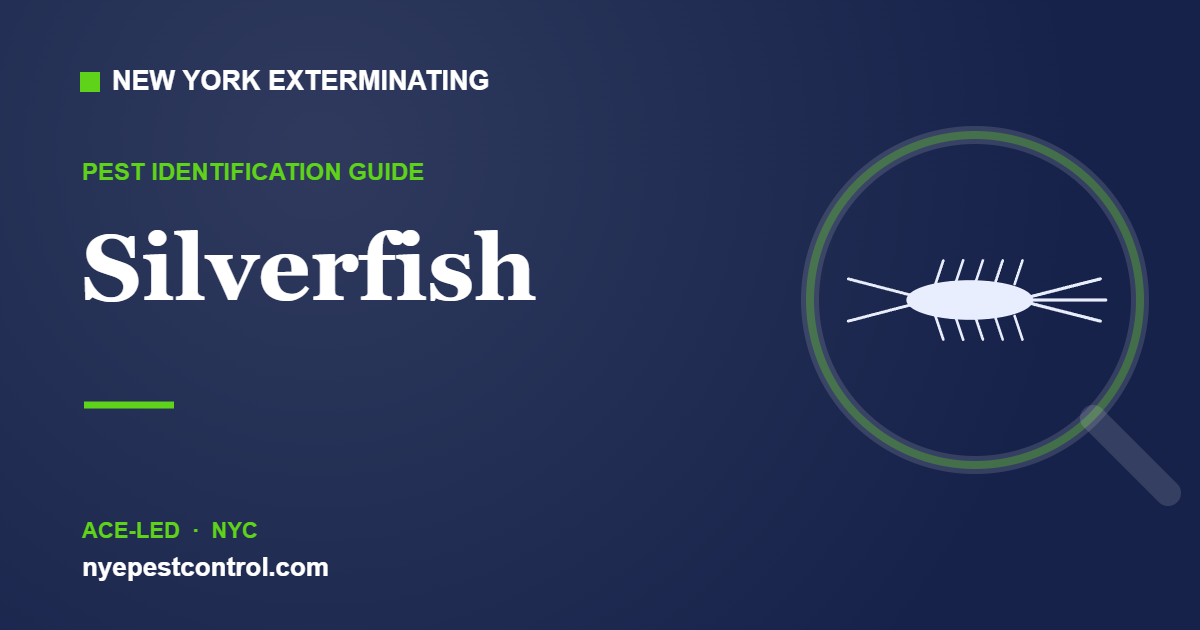
Quick answer: Silverfish are small wingless insects, about 12–19 mm, with a silvery-gray, metallic, teardrop/carrot-shaped body, two long antennae in front, and three bristle-like tails at the back. They move with a quick, wriggling, fish-like motion. They’re drawn to moisture, humidity, and starches (paper, book bindings, cardboard, wallpaper glue, and some fabrics). They’re harmless to people but can damage belongings.
What silverfish look like
Their shape and shine are the giveaway: a flattened, tapered body that’s wider at the head and narrows to the tail, covered in fine silvery scales that look metallic. Add the two long antennae and the three tail filaments, plus that side-to-side darting movement, and they’re hard to confuse with much else. The similar-looking firebrat is browner and prefers hotter spots.
What attracts silverfish
Two things: humidity and starch. They thrive in damp, dark areas — bathrooms, basements, under sinks, behind baseboards, and in storage boxes — and feed on paper, glue, cardboard, dry goods, and natural fabrics. NYC apartments with poor ventilation, old plumbing, or damp closets are ideal for them.
Are silverfish harmful?
They don’t bite, sting, or carry disease. The damage is to your stuff — they’ll graze on books, documents, wallpaper, and stored clothing or linens, leaving small holes and yellowish stains. A few silverfish are common; large numbers usually point to a moisture problem.
How to control them
Target the conditions: reduce humidity (ventilation, a dehumidifier, fix leaks), store paper and dry goods in sealed containers, declutter cardboard, and seal cracks where they hide. Because the root cause is usually moisture, lasting control combines drying things out with targeted treatment.
Recurring silverfish? They signal excess moisture worth addressing. New York Exterminating can identify the source and treat it with a low-exposure plan, led by an Associate Certified Entomologist (ACE). Call (347) 210-4646 or request a free assessment.
A Brooklyn-based, NYSDEC-registered company (Reg. #15140) led by Jorge Bedoya, an Associate Certified Entomologist (ACE). For pests in your home or building, NYE provides IPM-based, low-exposure control matched to the exact pest and verified with a follow-up. ACE-led work comes with a client portal of service reports and photos, fully bilingual service, and no long-term contract.
Silverfish — FAQ
What do silverfish look like?
Small (12–19 mm), silvery, metallic, carrot-shaped insects with two long antennae and three tail bristles, moving in a quick fish-like wriggle.
What attracts silverfish?
Humidity and starches — damp areas plus paper, cardboard, glue, dry goods, and natural fabrics.
Are silverfish dangerous?
No — they don’t bite or spread disease. They do damage books, paper, wallpaper, and stored fabrics.
How do I get rid of silverfish?
Lower humidity, fix leaks, seal and declutter, and store paper/dry goods in airtight containers. Persistent problems benefit from professional treatment that addresses the moisture source.