Straight answers from a licensed New York exterminator and Associate Certified Entomologist (ACE) — serving all five boroughs, in English and Spanish.
Get a Free Estimate →⏱ 2 min read
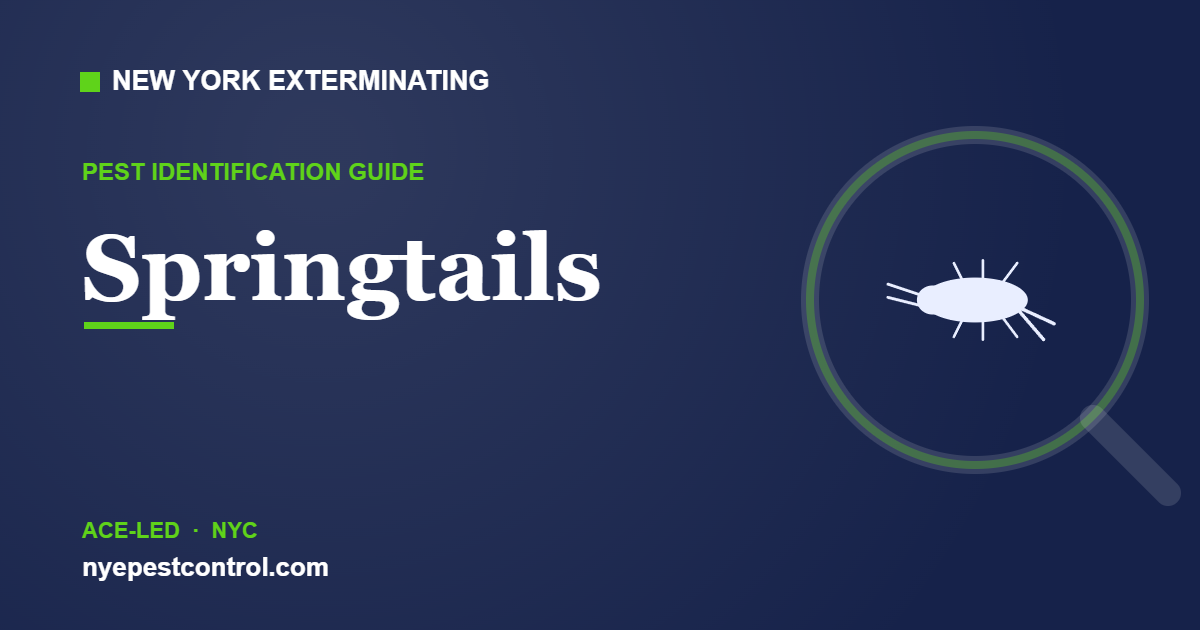
Quick answer: Springtails are tiny (1–2 mm), soft-bodied insects — often white, gray, or dark — that gather in damp areas: around sinks, tubs, drains, basements, and potted-plant soil. They jump when disturbed (using a tail-like springing organ), so they’re frequently mistaken for fleas, but they do not bite and are harmless. Lots of them is a sign of excess moisture or mold.
What springtails look like
Specks the size of a pinhead that suddenly hop. Up close they’re elongated or globular, with short antennae. You’ll often see hundreds clustered on damp surfaces, in sink overflow holes, in soil, or even floating on standing water.
Springtails vs. fleas
Both are tiny and jump, which causes confusion. But springtails don’t bite, aren’t tied to pets, and cluster on damp surfaces and soil, while fleas bite around the ankles and live on/around pets — see what fleas look like. If the “jumping specks” are around your bathroom sink or houseplants and nobody’s being bitten, they’re almost certainly springtails.
Why you have springtails
They feed on mold, algae, and decaying organic matter and need moisture to survive. Indoors they signal a damp spot — an overwatered plant, a leak, condensation, or high humidity in a bathroom or basement.
How to control them
Fix the moisture: let plant soil dry between waterings, repair leaks, ventilate and dehumidify damp rooms, and clean drains. Once the area dries out, springtails disappear on their own. Persistent indoor populations usually mean a hidden moisture or mold source worth investigating.
Tiny jumping bugs that won’t quit? New York Exterminating can pinpoint the moisture source and treat it, led by an Associate Certified Entomologist (ACE). Call (347) 210-4646 or request a free assessment.
A Brooklyn-based, NYSDEC-registered company (Reg. #15140) led by Jorge Bedoya, an Associate Certified Entomologist (ACE). For pests in your home or building, NYE provides IPM-based, low-exposure control matched to the exact pest and verified with a follow-up. ACE-led work comes with a client portal of service reports and photos, fully bilingual service, and no long-term contract.
Springtails — FAQ
Do springtails bite?
No. They don’t bite people or pets and don’t spread disease. They’re a nuisance tied to moisture.
Are these springtails or fleas?
If the jumping specks are around sinks, drains, or plant soil and no one is being bitten, they’re springtails. Fleas bite (usually the ankles) and are linked to pets.
Why do I have springtails in my bathroom?
They’re drawn to dampness and mold. A leak, condensation, or high humidity is feeding them.
How do I get rid of springtails?
Dry out the area — fix leaks, ventilate, dehumidify, and avoid overwatering plants. They die off once it’s dry.