Straight answers from a licensed New York exterminator and Associate Certified Entomologist (ACE) — serving all five boroughs, in English and Spanish.
Get a Free Estimate →⏱ 4 min read
Quick answer: Subterranean termites are the most economically damaging termites in the U.S. They live in the soil, build mud tubes to reach wood, and can silently damage a structure over time. Signs include pencil-width mud tubes on foundations, spring swarmers, and hollow-sounding wood. Control requires soil termiticide barriers and/or colony-baiting systems installed by a licensed professional, plus correcting moisture and wood-to-soil contact.
What do subterranean termites look like?
Subterranean termite workers — the caste that eats wood — are pale, soft-bodied, and wingless, about 1/8 inch long. Soldiers have larger heads and mandibles. The winged reproductives (alates) you may see swarming are dark with four equal-length wings and straight, bead-like antennae. Because workers stay hidden in wood and soil, most people first notice termites through their signs rather than the insects themselves.
Signs of a subterranean termite infestation
The clearest signs are pencil-width mud tubes running up foundation walls (termites build these to retain moisture as they travel from soil to wood), swarms of winged termites — often in spring on warm, humid days — and discarded wings near windows and light sources. Infested wood may sound hollow when tapped and show soil-packed galleries inside.
How damaging are they?
Subterranean termites cause the majority of termite damage in the U.S. and can weaken structural wood over months to years, often before the damage is visible. The invasive Formosan subterranean termite forms especially large, aggressive colonies and causes rapid damage.
Biology and behavior
Subterranean termites live in the soil in colonies with workers, soldiers, and reproductives, and they digest wood cellulose with the help of gut symbionts. They require soil moisture and build mud tubes to reach wood while staying protected. Mature colonies release alates that swarm, pair, and start new colonies.
How to get rid of subterranean termites
Because the colony lives in the soil, control targets the soil and the colony, not just the wood: a licensed professional installs a continuous soil termiticide barrier (often a non-repellent product termites contact and transfer through the colony) and/or a colony-baiting system in in-ground stations that workers feed on and share via trophallaxis. Just as important is correcting conducive conditions — fixing moisture and drainage, removing wood-to-soil contact, and clearing cellulose debris — followed by periodic re-inspection to verify protection.
When to call a professional
Subterranean termites are hidden, persistent, and capable of serious structural damage, and effective control requires licensing, the right products, and a complete treatment. If you see mud tubes, swarmers, or discarded wings, a professional termite inspection is the essential first step.
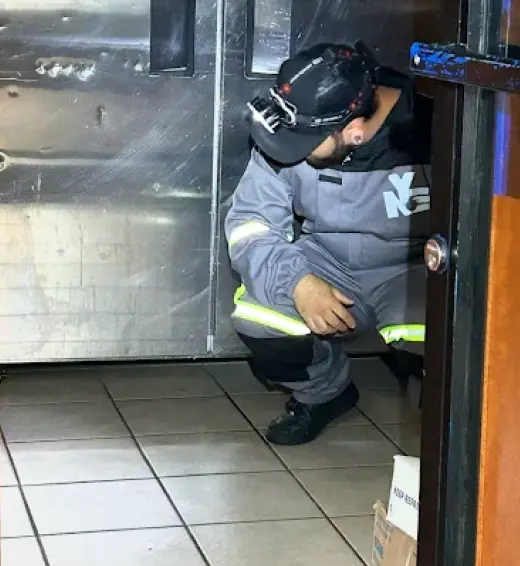
A Brooklyn-based, NYSDEC-registered company (Reg. #15140) led by Jorge Bedoya, an Associate Certified Entomologist (ACE). For termites, NYE provides termite inspection and targeted treatment with documented findings. ACE-led work comes with a client portal of service reports and photos, fully bilingual service, and no long-term contract.
Subterranean termite FAQ
What are the signs of subterranean termites?
Look for pencil-width mud tubes on foundation walls, swarming winged termites (often in spring), discarded wings near windows, and wood that sounds hollow when tapped. Mud tubes and swarmers are the clearest signs.
How are termites different from ants?
Termite swarmers have straight antennae, a broad waist, and four equal-length wings, and they eat wood. Ant swarmers have elbowed antennae, a pinched waist, and unequal wings. Termites build mud tubes; carpenter ants leave clean shaving frass.
How do you get rid of subterranean termites?
Subterranean termites are controlled with soil termiticide barriers and/or colony-baiting systems installed by a licensed professional, combined with correcting moisture and removing wood-to-soil contact. Because colonies live in the soil, whole-home treatment of the perimeter or baiting the colony is required.
Can I treat termites myself?
Effective subterranean termite control requires a complete, continuous soil barrier or a colony-baiting program, proper products, and licensing. Do-it-yourself spot treatments usually leave gaps that termites bypass.
What attracts subterranean termites?
Soil moisture and wood-to-soil contact. Leaks, poor drainage, mulch and wood against the foundation, and cellulose debris all increase risk and should be corrected.
More in our Pest Library · Not sure what you have? Try the NYC Pest Identifier. Reviewed by Jorge Bedoya, ACE.