Straight answers from a licensed New York exterminator and Associate Certified Entomologist (ACE) — serving all five boroughs, in English and Spanish.
Get a Free Estimate →⏱ 11 min read
Last updated: July 2026. This guide is educational and reflects the FDA Preventive Controls for Human Food rule (21 CFR Part 117) as published. Always confirm current requirements with FDA and your chosen training provider.
How to Become a PCQI (Preventive Controls Qualified Individual) Under FSMA
Free PCQI Practice Exam
Test your readiness on hazard analysis, preventive controls, verification, and the FDA rule before you invest in a course or sit down to build a Food Safety Plan.
Quick Answer
A Preventive Controls Qualified Individual (PCQI) is the person a food facility relies on to prepare and oversee its FSMA Food Safety Plan. Under the FDA’s Preventive Controls for Human Food rule, most covered facilities must have a PCQI perform or oversee key tasks such as the hazard analysis, preventive controls, validation, verification, and reanalysis. You qualify to be a PCQI in one of two ways: (1) successfully complete a training program based on a standardized curriculum recognized as adequate by the FDA — the well-known path is the FSPCA “Preventive Controls for Human Food” course (Version 2.0), a roughly 20-hour program — or (2) become qualified through job experience that provides equivalent knowledge. PCQI is a competency and a role, not a government license. The FSPCA certificate is not legally mandatory, but it is the standard, widely accepted way to demonstrate you meet the requirement.
What Is a PCQI, and Why Does FSMA Require One?
The FDA Food Safety Modernization Act (FSMA), signed in 2011, shifted the focus of U.S. food safety from responding to contamination toward preventing it. One of the cornerstone regulations is the Preventive Controls for Human Food rule (codified in 21 CFR Part 117). It requires covered domestic and foreign facilities that manufacture, process, pack, or hold human food to develop and implement a written Food Safety Plan built on hazard analysis and risk-based preventive controls.
That plan cannot be written by just anyone. The rule states that certain activities — preparing the Food Safety Plan, validating the preventive controls, reviewing records, and reanalyzing the plan — must be performed (or overseen) by a Preventive Controls Qualified Individual. In FDA’s words, a PCQI is a qualified individual who has “successfully completed training in the development and application of risk-based preventive controls at least equivalent to that received under a standardized curriculum recognized as adequate by the FDA,” or who is “otherwise qualified through job experience” to develop and apply a food safety system.
It helps to separate two similar terms. A Qualified Individual (QI) is anyone with the education, training, or experience to manufacture safe food and perform their assigned duties — a broad category that includes most trained plant staff. A PCQI is a narrower, more advanced role: the person accountable for the technical backbone of the Food Safety Plan. A facility may have many QIs but typically designates one or a few PCQIs. The same person may serve as both, and a PCQI does not have to be a facility employee — it can be a qualified consultant.
How Do You Qualify? The FSPCA Course vs. Job Experience
There are two legally recognized routes to becoming a PCQI, and it is worth understanding both.
Route 1: The FSPCA Standardized Course (the common path)
The Food Safety Preventive Controls Alliance (FSPCA) — a public-private partnership including the FDA, the Illinois Institute of Technology’s Institute for Food Safety and Health, and industry — developed the standardized curriculum that FDA recognizes as adequate. The current version is the Preventive Controls for Human Food, Version 2.0 (PCHF V2.0). Completing this course is the most widely accepted way to show you meet the PCQI requirement, which is why food-plant job postings so often ask for “PCQI certification.”
A crucial point: attending the course does not grant a government “certification.” Instead, participants who attend all modules receive an FSPCA Certificate of Completion (a certificate of training) issued through the Association of Food and Drug Officials (AFDO), which administers certificate issuance. There is no pass/fail final exam — the certificate is based on full attendance and participation, not a test score.
Route 2: Qualification Through Job Experience
The rule explicitly allows an individual to become a PCQI through job experience — provided that experience has given them knowledge at least equivalent to the standardized curriculum. In practice, most facilities still send staff to the FSPCA course because it is the cleanest, most defensible way to document competency. Remember that FDA generally assesses the adequacy of the facility’s Food Safety Plan rather than an individual’s paperwork. If the plan has deficiencies, that signals the PCQI may need additional training — regardless of any certificate on file.
Where to Take the PCQI Course
Because the curriculum is standardized, the content is essentially the same no matter which FSPCA-recognized provider you choose — so pick based on format, schedule, and price. Below are established providers. (All external links open in a new tab.)
- FSPCA (official source) — the alliance that owns the curriculum; find recognized courses and lead instructors: fspca.net – PC Human Food
- AFDO (Association of Food and Drug Officials) — issues the official certificates and runs its own online certificate courses: afdo.org
- NSF — live, instructor-led virtual sessions using the FSPCA curriculum: nsf.org
- Registrar Corp — FSPCA-recognized provider offering a fully online, self-paced V2.0 course: registrarcorp.com
- Cornell University (CALS) — FSPCA lead-instructor-taught course through a major land-grant food-science program: cals.cornell.edu
- Penn State (food science workshops) — university-run workshops for PCQI recognition: foodscience.psu.edu
- Michigan State University — FSPCA courses through MSU Extension: canr.msu.edu
- SCS Global Services — instructor-led FSPCA PCHF V2.0 sessions: scsglobalservices.com
Other recognized delivery partners include NEHA, Intertek Alchemy, AIB International, and various state universities and extension programs. When comparing, confirm the course is the current Version 2.0 and that the provider is FSPCA-recognized so your certificate is issued through AFDO.
Course Format and What to Expect
The FSPCA Preventive Controls for Human Food course runs roughly 20 hours, typically delivered over about 2.5 to 3 days. You will generally find three formats:
- In-person (classroom): a multi-day workshop with a lead instructor.
- Live virtual (instructor-led online): the same interactive course delivered over video, with attendance and participation monitored throughout.
- Blended / two-part: you complete a self-paced online Part 1, then attend a shorter live Part 2 with an instructor. Note that for the two-part path, Part 1 usually must be completed within a set window (commonly six months) to remain eligible for Part 2.
- Fully online, self-paced: offered by select FSPCA-recognized providers (e.g., Registrar Corp) for those who cannot attend live sessions.
What to expect in the room: the course walks through the regulation module by module — hazard analysis, process controls, food allergen controls, sanitation controls, supply-chain controls, the recall plan, verification, and record-keeping — and includes hands-on exercises where participants draft portions of a model Food Safety Plan. Because there is no final exam, the deliverable is the knowledge you build plus the Certificate of Completion confirming you attended every module. Many people leave with a working draft framework they can adapt to their own facility.
How Much Does It Cost?
Pricing varies by provider and format, but most PCQI courses fall in the range of roughly $500 to $1,200. Fully online and self-paced options commonly run about $700 to $800; live instructor-led and in-person sessions tend toward the higher end, and multi-seat or corporate rates may apply. Published examples have included AIB International around $588, ImEPIK around $775, and Registrar Corp and Zosi around $799. Always confirm current pricing, what the fee includes (course manual, certificate issuance, any Part 1/Part 2 split), and whether travel is required for in-person sessions.
What Are a PCQI’s Responsibilities?
The PCQI role centers on the technical integrity of the Food Safety Plan. Core duties under the rule include:
- Prepare (or oversee preparation of) the written Food Safety Plan — the master document required by 21 CFR Part 117.
- Conduct the hazard analysis — identify known or reasonably foreseeable biological, chemical (including radiological and allergen), and physical hazards, and evaluate which require a preventive control.
- Identify and establish preventive controls — process controls, food allergen controls, sanitation controls, supply-chain controls, and a recall plan, as applicable to the facility.
- Validate preventive controls — ensure controls are capable of significantly minimizing or preventing the identified hazards (where validation applies).
- Oversee verification and monitoring — confirm that controls are consistently implemented and effective, including reviewing monitoring, corrective action, and verification records (records review generally within 7 working days).
- Reanalyze the Food Safety Plan — at least once every three years, and whenever there is a significant change (new product, process, ingredient, or newly identified hazard) that could affect food safety.
- Support corrective actions and documentation — ensure that when something goes wrong, the response and records meet the rule’s expectations.
Because pests are a recognized food-safety hazard and a driver of sanitation and facility controls, PCQIs frequently coordinate closely with a facility’s integrated pest management (IPM) program. Pest professionals who service food plants benefit enormously from understanding the PCQI framework — it is the language their food-manufacturing clients use to document sanitation and preventive controls during audits and FDA inspections.
Career Value and Salary
PCQI competency is a practical career asset in food manufacturing. “PCQI” appears constantly in QA and food-safety job descriptions, and the underlying skills — hazard analysis, preventive controls, and Food Safety Plan management — are exactly what employers, auditors, and regulators look for. It also pairs naturally with related credentials such as HACCP and SQF/BRC practitioner training.
On compensation, the role a PCQI typically supports pays well. As of 2026, national salary trackers put the average Food Safety / Quality Assurance Manager compensation in roughly the $104,000 to $133,000 range, with typical spreads from about $80,000 at the 25th percentile to $137,000+ at the 75th percentile, and higher figures in states like California, Massachusetts, and the District of Columbia. Individuals who list a PCQI credential have reported salaries spanning roughly $58,000 to $128,000, reflecting everything from entry-level QA technicians to seasoned food-safety managers. Job-board activity in 2026 shows steady, ongoing demand for qualified food-safety professionals across the sector.
Study Resources and Official Links
- FSPCA — the source for the standardized curriculum, recognized courses, and lead instructors: fspca.net
- FDA – FSMA / Preventive Controls for Human Food — the rule itself and FDA’s FSMA FAQ: fda.gov/FSMA
- AFDO — certificate issuance and online certificate courses: afdo.org
- Free PCQI practice questions — check your readiness first: NYE Pest Control PCQI Practice Exam
Exploring food-safety and entomology-adjacent careers more broadly? See our related guide on how to become an entomologist.
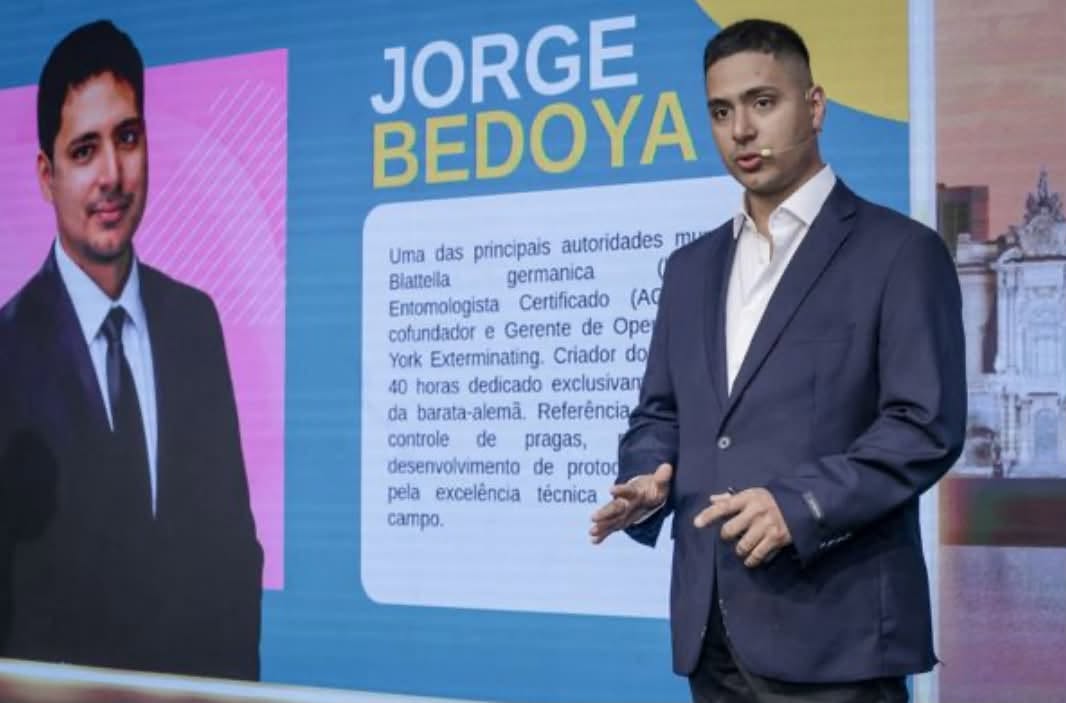
A Brooklyn-based, NYSDEC-registered company (Reg. #15140) led by Jorge Bedoya, an Associate Certified Entomologist (ACE). For pests in your home or building, NYE provides IPM-based, low-exposure control matched to the exact pest and verified with a follow-up. ACE-led work comes with a client portal of service reports and photos, fully bilingual service, and no long-term contract.
Frequently Asked Questions
Is a PCQI certificate legally required to run a food facility?
No specific certificate is legally mandated. The rule requires that a PCQI perform or oversee certain Food Safety Plan activities, and it recognizes both the FSPCA standardized course and equivalent job experience. The FSPCA certificate is the standard, widely accepted way to demonstrate competency, but it is not itself a legal requirement.
Is there a PCQI exam I have to pass?
No. The FSPCA Preventive Controls for Human Food course does not have a pass/fail final exam. Participants who attend all modules receive a Certificate of Completion issued through AFDO. A practice exam is still a useful way to gauge your understanding before or after the course.
How long does the PCQI course take?
The standardized course is about 20 hours, generally delivered over roughly 2.5 to 3 days. Blended options let you complete a self-paced Part 1 online followed by a shorter live Part 2.
How much does PCQI training cost?
Most courses run about $500 to $1,200. Fully online, self-paced formats often fall around $700 to $800, while live and in-person sessions tend toward the higher end. Confirm exactly what each provider’s fee includes.
Can I become a PCQI through experience instead of the course?
Yes. The rule allows qualification through job experience that provides knowledge at least equivalent to the standardized curriculum. In practice, many facilities still choose the FSPCA course because it is the clearest way to document competency for audits and FDA inspections.
What is the difference between a Qualified Individual and a PCQI?
A Qualified Individual is anyone with the training, education, or experience to safely perform their assigned food-manufacturing duties — a broad category. A PCQI is a more advanced role responsible for preparing and overseeing the Food Safety Plan, including the hazard analysis, validation, records review, and reanalysis.