Straight answers from a licensed New York exterminator and Associate Certified Entomologist (ACE) — serving all five boroughs, in English and Spanish.
Get a Free Estimate →⏱ 7 min read
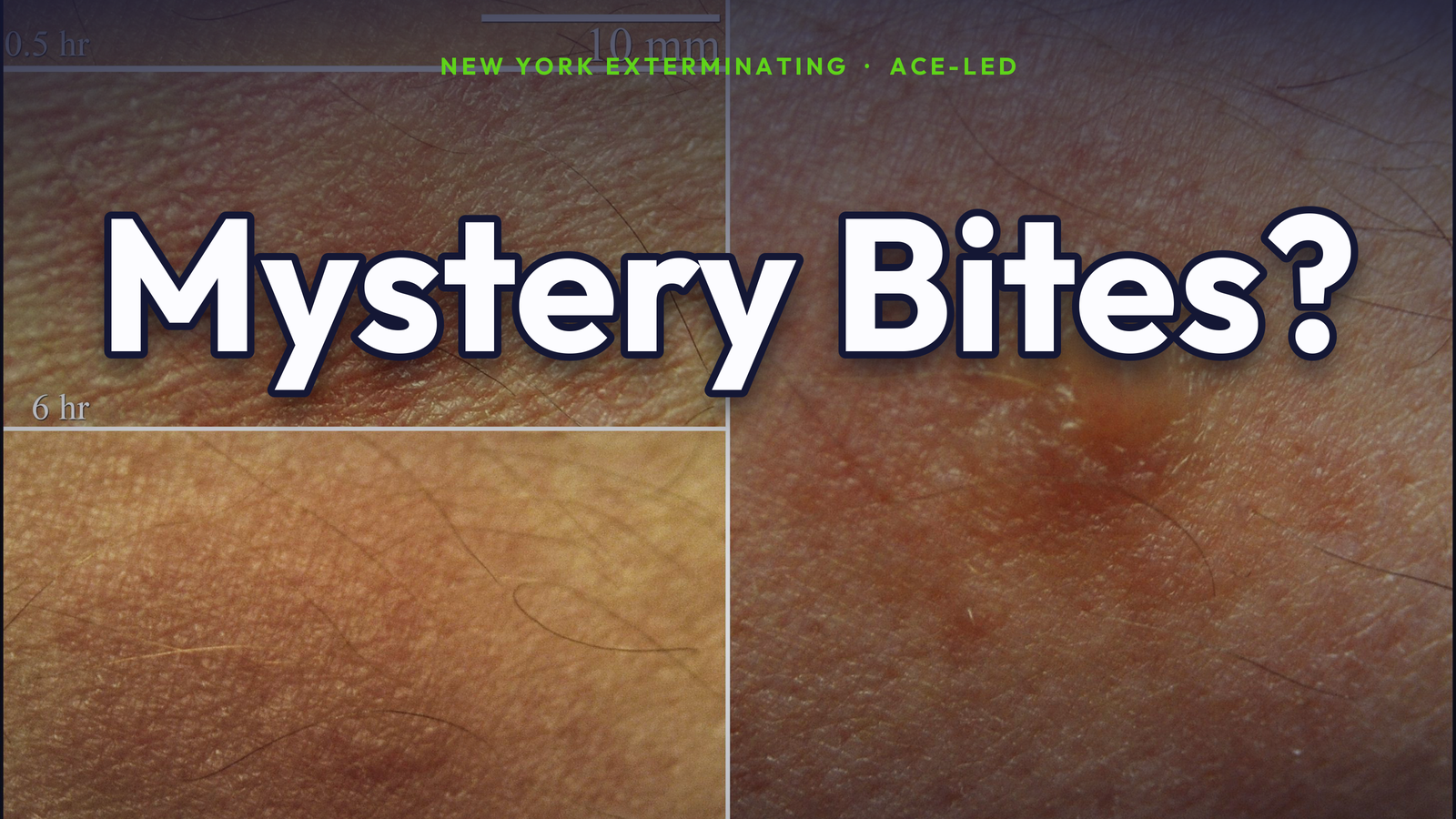
If you feel bites, itching, or crawling but can’t find a bug, your symptoms are real — and there are several possible explanations. Some are hidden pests (like bird or rodent mites coming from a nest nearby), some are environmental irritants, and some are skin or medical conditions that have nothing to do with insects. A proper, entomology-led inspection — canine bed bug detection, a search for bird/rodent nesting, and objective monitoring — gives you a definitive answer instead of a guess.
Few situations are more distressing than feeling bitten in your own home while every doctor and exterminator tells you they can’t find anything. We take these cases seriously. Led by an on-staff Associate Certified Entomologist (ACE), Jorge Bedoya, our job is to determine — objectively — whether a pest is actually present, find its source if it is, and give you clear evidence either way so you can take the right next step.
1. Hidden pests that are genuinely hard to find
Some real infestations evade both homeowners and physicians because the culprit is microscopic, nocturnal, or simply isn’t on your body when you’re examined.
- Bird mites and rodent (rat) mites. These are blood parasites of birds and rodents, not people. They live in nests built in eaves, vents, AC units, attics and wall voids — and they start biting humans most often after the birds or rodents leave, die, or are removed. They’re tiny, return to the nest between meals, and are usually gone from your skin by the time a doctor looks. Removing the host nest at the source is what actually ends the biting — something a dermatologist can’t do. (UC IPM; Texas A&M AgriLife)
- Early, low-level bed bugs. When only a few bugs are present, most people see signs — not the insects — and reactions to bites can be delayed or absent. Visual inspection alone often misses them. (University of Tennessee Extension)
- Scabies. The human itch mite burrows into the skin, causing intense night-time itching — this one is treated on the person by a physician, and it’s the classic look-alike that proves why correct identification matters. (CDC)
- Straw-itch mites, fleas, and carpet beetle larvae. Straw-itch mites bite people handling stored grain/hay; fleas bite ankles after pets or rodents move through; and carpet beetle larvae don’t bite at all, but their tiny hairs can cause bite-like irritation. (SDSU Extension; Penn State Extension; Texas A&M AgriLife)
2. When it’s not a bug at all — environmental and physical irritants
University entomologists document many non-pest causes of “mystery bites.” Common ones include low indoor humidity and dry skin (especially in winter), fiberglass insulation fibers, paper and fabric fibers, static electricity, and reactions to detergents, new carpet or insulation. Notably, entomologists confirm that “cable mites,” “paper mites” and “computer mites” do not exist — the irritation is real, but it comes from a physical source (like airborne insulation dust), not a mite. The good news: once that real source is found, the problem resolves. (Cornell NYS IPM; UC Riverside Entomology)
3. Skin and medical conditions that mimic bites
Many skin conditions produce itchy, red, bite-like marks with no insect involved — including eczema, hives (urticaria), contact dermatitis, folliculitis, and dermatographism (where simply stroking the skin raises a welt). And whole-body itching or a crawling sensation can sometimes signal an internal medical issue — thyroid, kidney or liver conditions, diabetes, iron deficiency, or others — or be a side effect of certain medications. We’re not doctors and we don’t diagnose these, but recognizing them is exactly why an objective pest inspection matters: it tells you whether to keep chasing a bug or to focus on a medical evaluation. (Mayo Clinic; NIH; DermNet)
4. Why doctors and dermatologists often can’t pinpoint it
This isn’t a knock on physicians — it’s a structural gap. As university entomologists put it, a bite reaction on the skin is an unreliable guide to its cause; the same marks can come from arthropods, irritants, or medical conditions. Parasitic bird and rodent mites typically aren’t on your body during the exam, so skin checks and biopsies miss them. And physicians don’t inspect your home for a nest or harborage. The result is the all-too-common runaround: the doctor suspects an insect and sends you to pest control; pest control finds nothing and won’t treat. Breaking that loop takes someone who can identify the arthropod under magnification and find its source in the building. (University of Kentucky Entomology; Hinkle, American Entomologist)
How our entomology-led inspection finds the real answer
Our protocol is built to either find and eliminate a genuine source or give you objective evidence there isn’t one — not a shrug.
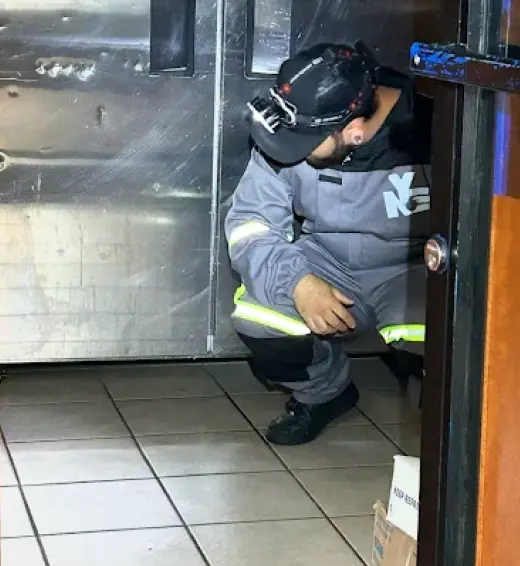
- Canine (K-9) bed bug detection. Trained detection dogs locate low-level, cryptic bed bug infestations by scent that visual inspection misses. We treat a dog’s alert as a lead to confirm with a captured specimen or monitor — never as the final word — because accuracy depends on doing it rigorously. (Pfiester et al., J. Econ. Entomol.; Cooper et al., Rutgers)
- Inspection for nearby bird and rodent nesting. Because bird and rat mites come from a nest, we inspect eaves, vents, AC units, rooflines, attics and wall voids for the actual host. Find and remove the nest, seal the entry points, and the mites die off — ending the biting at its source. (UC IPM; Texas A&M AgriLife)
- Objective monitoring and lab identification. Interceptors and monitors left in place can detect bed bugs at very low levels — outperforming visual checks — and document whether anything is present and whether treatment worked over time. Any specimen we collect is identified under magnification, so we can confirm a species or definitively rule one out. (Rutgers NJAES; CDC; Cornell Insect Diagnostic Lab)
If there’s a pest, we find it and eliminate it at the source. If there isn’t, we tell you honestly and give you the documentation — so you can focus your energy (and your doctor’s) on the right cause instead of fighting a bug that isn’t there.
We never dismiss what you’re feeling, and we never apply pesticides just to make a problem “go away.” Your comfort and your trust matter more than an easy invoice — and as an Associate Certified Entomologist bound by a Code of Ethics, honest assessment isn’t optional for us.
This is exactly the kind of delicate, hard-to-solve case other pest control companies refer to Jorge. Over his career he has assessed and resolved infestations across homes, building-wide situations and commercial facilities — and built a strong, documented protocol for the cases everyone else gives up on. Learn more about what an ACE is »
Stop guessing. Call (347) 210-4646 or request an inspection for an objective, entomology-led assessment across NYC. Discreet, same-day options. NYSDEC Registration #15140.
Sources
- UC IPM (A. Sutherland), Detecting and Controlling Biting Mites Within Structures
- Texas A&M AgriLife, Diagnosing Mysterious ‘Bug Bites’
- Cornell NYS IPM, Mystery Bites
- University of Kentucky Entomology, Mystery Bites: Insect and Non-Insect Causes
- CDC, About Scabies & Bed Bugs (DPDx)
- Mayo Clinic, Itchy skin — causes
Dealing with this pest now? See our bed bug treatment & K9 inspection — ACE-led, no contracts, all five boroughs. Call (347) 210-4646 for a free estimate.
Why New Yorkers choose NYE
Led by an ACE
Every job is overseen by Jorge Bedoya, an Associate Certified Entomologist (ESA) — not a call center.
No contracts
One thorough treatment with an optional 50%-off verification visit. No auto-renewal, no lock-in.
Elimination, not spraying
Resistance-aware methods — including our signature microinjection — that target the source, with documentation.
Licensed & local
NYSDEC Reg. #15140, serving all five boroughs since 2010. Fully bilingual (EN/ES).
Backed by science, not guesswork. Your treatment is led by Jorge Bedoya, an Associate Certified Entomologist (ACE) credentialed by the Entomological Society of America — correct pest ID, resistance-aware products, and a documented plan.
A Brooklyn-based, NYSDEC-registered company (Reg. #15140) led by Jorge Bedoya, an Associate Certified Entomologist (ACE). For mystery bites, NYE provides a careful inspection to confirm whether a pest is present before any treatment. ACE-led work comes with a client portal of service reports and photos, fully bilingual service, and no long-term contract.
What happens after you call
- Fast response. Call (347) 210-4646 — same-day appointments are often available, including after-hours emergencies.
- Inspection & ID. We confirm the pest and find the source, not just where you saw it.
- Targeted treatment. A resistance-aware plan matched to the pest, explained before we start.
- Verification & prevention. Optional follow-up to confirm zero activity, plus reports and photos in your client portal.