
Straight answers from a licensed New York exterminator and Associate Certified Entomologist (ACE) — serving all five boroughs, in English and Spanish.
Get a Free Estimate →⏱ 3 min read
Premium pest control, made affordable. Finance your treatment with Klarna, Affirm, or Afterpay and pay over time.
Finance with Klarna, Affirm, or Afterpay. Checking your rate is a soft check — no credit impact.
Example at 14.9% APR; 0% APR plans may be available. Actual rate shown when you prequalify. New York Exterminating is not a lender.
German cockroaches (Blattella germanica) are the species behind most NYC apartment and kitchen infestations. They breed fast and hide in tight, warm spaces, so by the time you see one in daylight there are usually many more out of sight. Knowing what their activity actually looks like helps you catch it early — and explains why treatment has to target the whole life cycle.
1. The adults
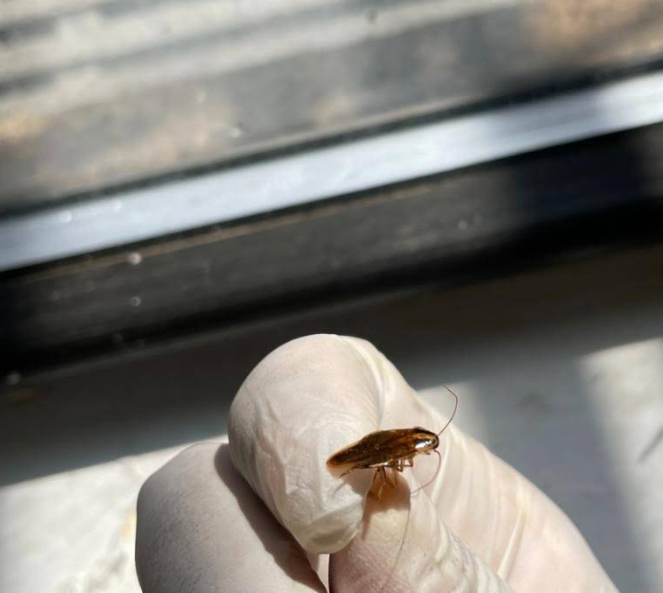
Adult German cockroaches are light tan to brown, roughly 1.1–1.6 cm long, with two dark parallel stripes running behind the head (the pronotum). They’re strong runners and rarely fly. Seeing one in the open — especially in daylight — usually signals a larger hidden population.
2. The droppings
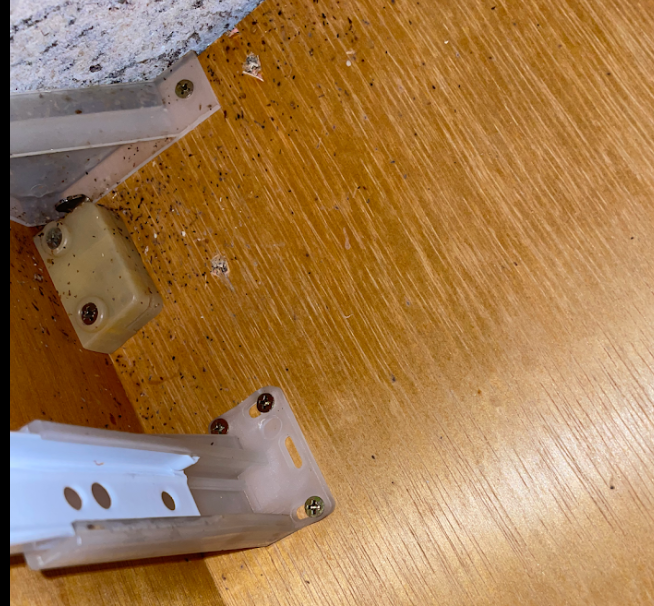
German cockroach droppings look like fine black pepper, ground coffee, or tiny dark specks and smears. You’ll find them concentrated where the roaches harbor: inside cabinet corners, along drawer slides, behind hinges, and near the tops of walls. Heavy speckling is a strong sign of an established population.
3. A full range of life stages
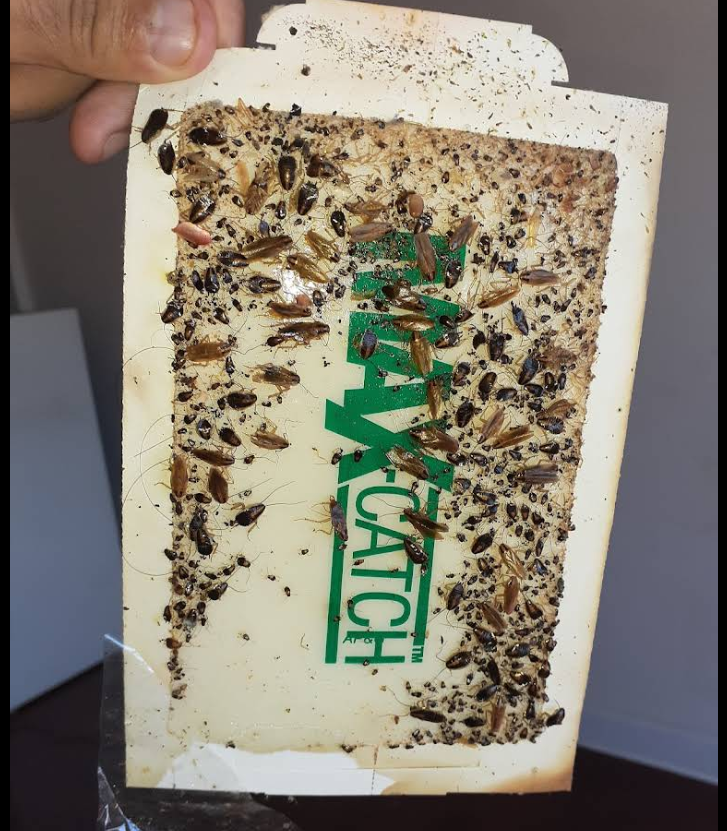
This is the sign that matters most. A monitor or harborage showing everything from first‑instar nymphs to adults means the roaches are reproducing on site. Egg cases (oothecae) each carry dozens of eggs, which is why numbers climb so quickly and why removing only the adults you can see never works.
The science behind controlling the cycle
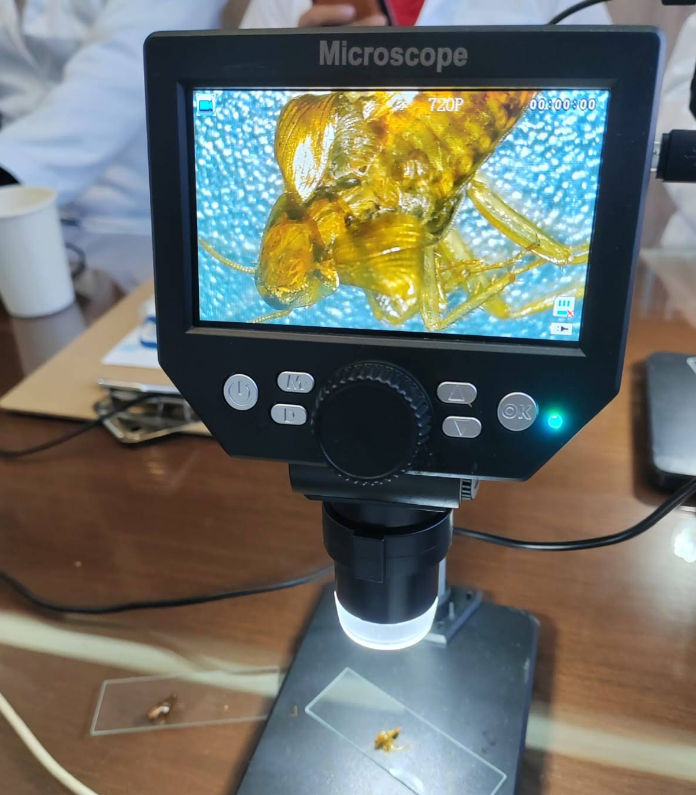
Because the population is defined by breeding, lasting control has to interrupt reproduction — not just knock down adults. Our work is led by an Associate Certified Entomologist (ACE) who teaches this biology to other professionals. Under the microscope you can read German cockroach egg development directly: the green coloration in the egg case signals embryos close to hatching.
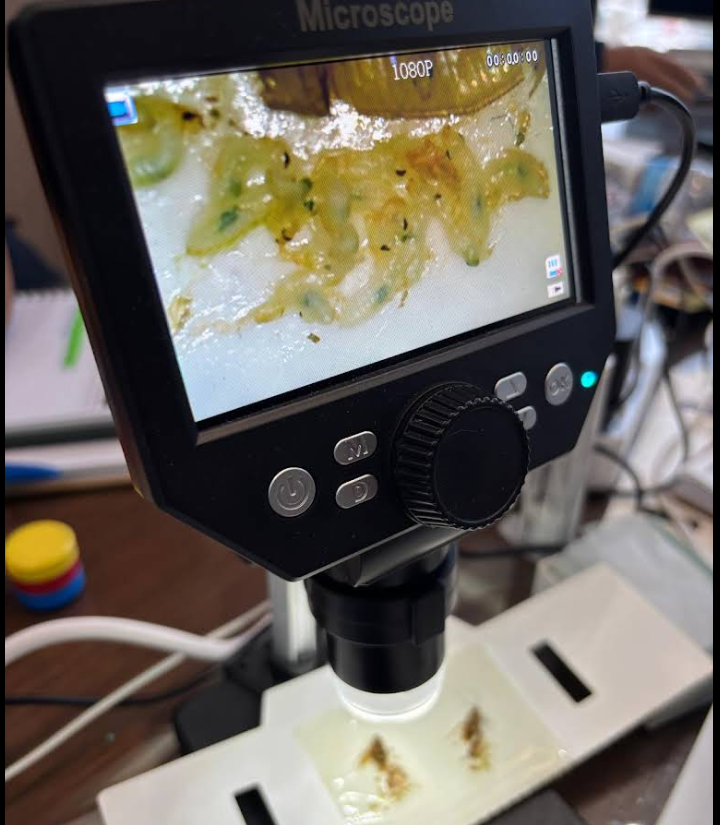
That understanding guides how we use insect growth regulators (IGRs): they sterilize the cockroaches and disrupt the breeding cycle, producing malformed “adultoid” insects that can’t reproduce normally. The difference shows under magnification — and on the floor, weeks later.
Want to compare species? See our NYC cockroach ID guide (German vs American vs Oriental), or learn how we treat them on the German cockroach extermination page.
A Brooklyn-based, NYSDEC-registered company (Reg. #15140) led by Jorge Bedoya, an Associate Certified Entomologist (ACE). For cockroaches, NYE provides a non-repellent microinjection protocol for German cockroaches, placed at the harborage, plus a triple-active IGR. ACE-led work comes with a client portal of service reports and photos, fully bilingual service, and no long-term contract.
German Cockroach Activity FAQ
Does seeing one German cockroach mean an infestation?
Often, yes. German cockroaches hide in groups, so a single roach in the open usually points to a larger hidden population nearby.
What do German cockroach droppings look like?
Like fine black pepper or coffee‑ground specks and dark smears, concentrated near harborage such as drawer slides, cabinet corners, and hinges.
Why do German cockroaches come back after I spray?
Sprays can kill the adults you see but miss eggs protected inside oothecae. New nymphs hatch and the cycle continues. Controlling the breeding cycle — with thorough placement and IGRs — is what lasts.
How fast do German cockroaches multiply?
Quickly. Each egg case holds dozens of eggs and a female can produce several in her lifetime, so a small problem can become a large one within weeks.