Straight answers from a licensed New York exterminator and Associate Certified Entomologist (ACE) — serving all five boroughs, in English and Spanish.
Get a Free Estimate →⏱ 2 min read
The problem: five visits, same rodents
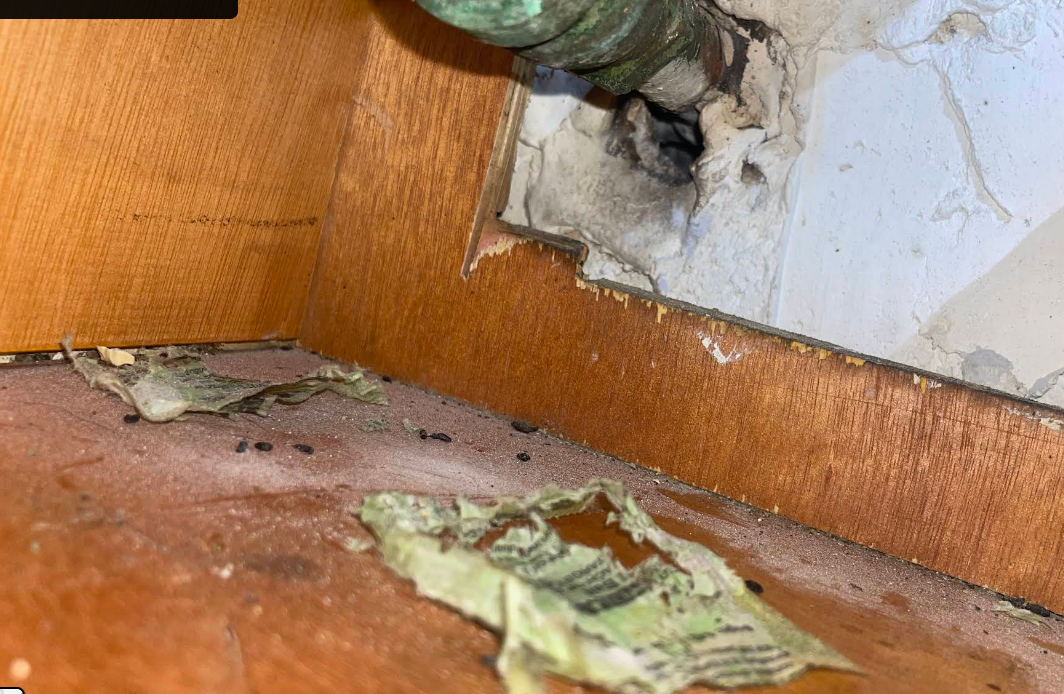
By the time the client called us, they’d already paid five companies. Every visit followed the same pattern — set some traps, drop some bait, leave. Activity would dip for a week, then the mice were back. On one related job we saw the classic version of this mistake up close: bait that had been eaten completely, with the entry hole under the pipe line left wide open.
The diagnosis: it’s the structure, not the bait
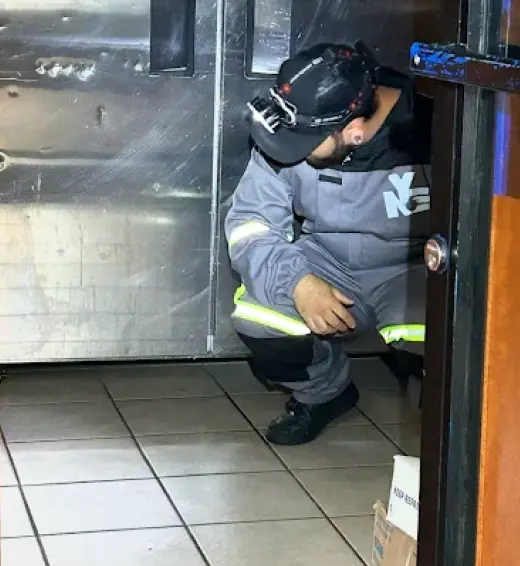
When our technician inspected, the entry points were obvious once you knew where to look: large gaps around the under‑sink plumbing where pipes pass through the wall and floor. That’s a route rodents will use indefinitely as long as it’s open. No amount of bait closes a hole.
The fix: seal it once, properly
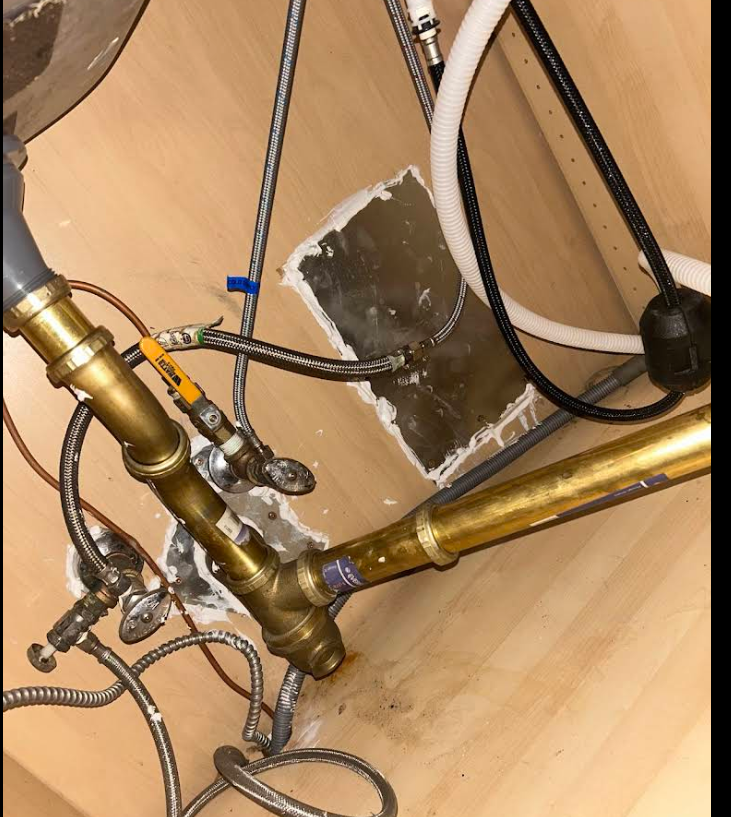
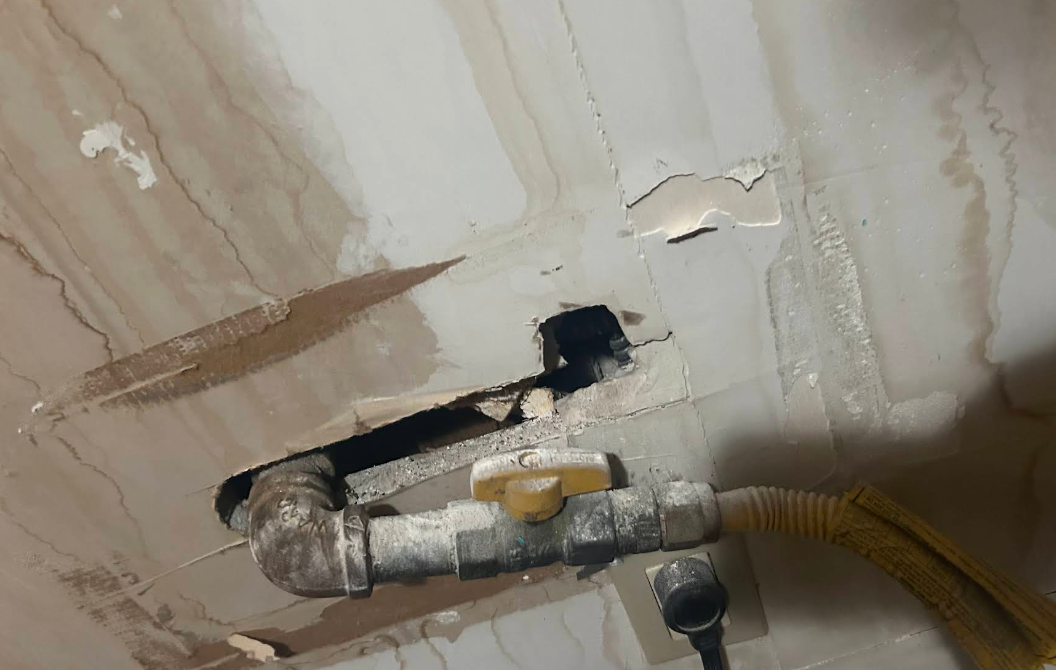
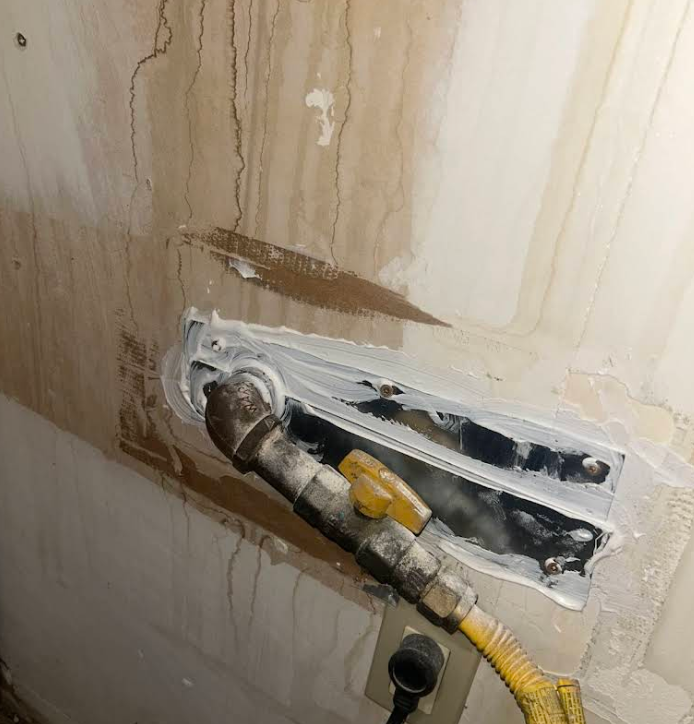
We cut metal to fit each opening and bedded it in elastomeric sealant that stays flexible and bonded. To show what that looks like on an even tougher penetration, here’s a before‑and‑after from the same kind of work — a large, awkward gap around a live gas line, exactly the type most companies skip:
The result
Once the routes were physically closed, the client’s recurring problem ended. That’s the difference between treating what you can see and correcting why the rodents were there in the first place. (For the why behind the materials, see Foam vs. Metal: Why Cheap Rodent Exclusion Fails.)
A Brooklyn-based, NYSDEC-registered company (Reg. #15140) led by Jorge Bedoya, an Associate Certified Entomologist (ACE). For rodents, NYE provides rodent exclusion that seals the entry points, not just trapping. ACE-led work comes with a client portal of service reports and photos, fully bilingual service, and no long-term contract.
Recurring Rodent Problem FAQ
Why do five different companies miss the same thing?
Most rodent visits are priced and scheduled around treatment — traps and bait — not the slower, hands‑on work of finding and sealing entry points. If exclusion isn’t part of the job, the cause stays open.
How do you find the actual entry point?
A thorough inspection of where pipes, conduit, and utilities penetrate walls and floors, plus rub marks, droppings, and gnawing that show active routes. The openings are usually obvious once you know the patterns to look for.
Is sealing permanent?
Metal cut to fit and bedded in elastomeric sealant is built to last and won’t be chewed through like foam. Buildings change over time, so we still recommend periodic checks, but a properly sealed penetration stays closed.